

Repositioning Appliance
a technology for repositioning appliances and mouthpieces, applied in non-surgical orthopedic devices, medical science, dentistry, etc., can solve problems such as internal derangement, internal derangement, and degeneration of discs, and achieve the effect of minimizing tmj tensions
- Summary
- Abstract
- Description
- Claims
- Application Information
AI Technical Summary
Benefits of technology
Problems solved by technology
Method used
Image

Examples
Embodiment Construction
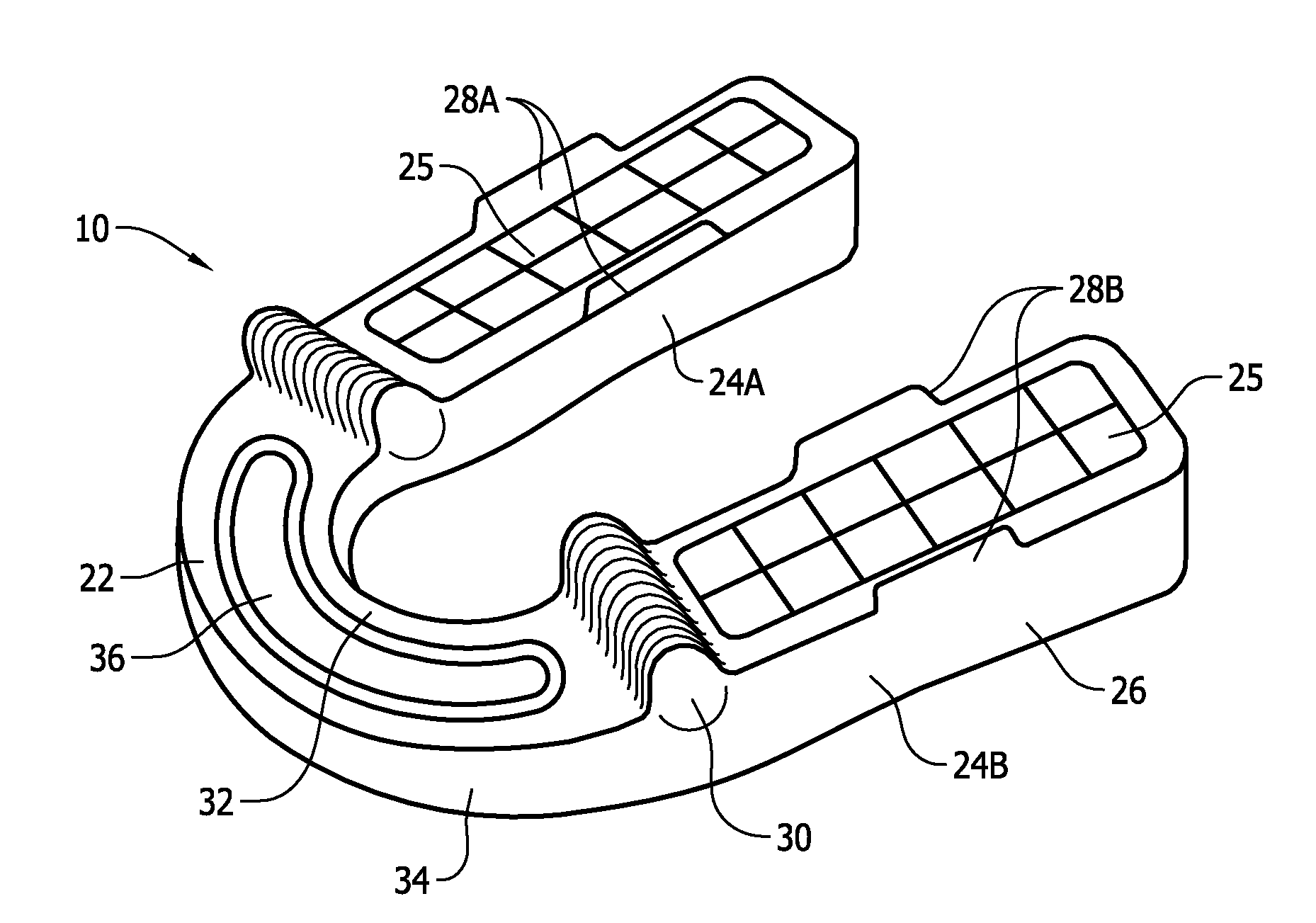
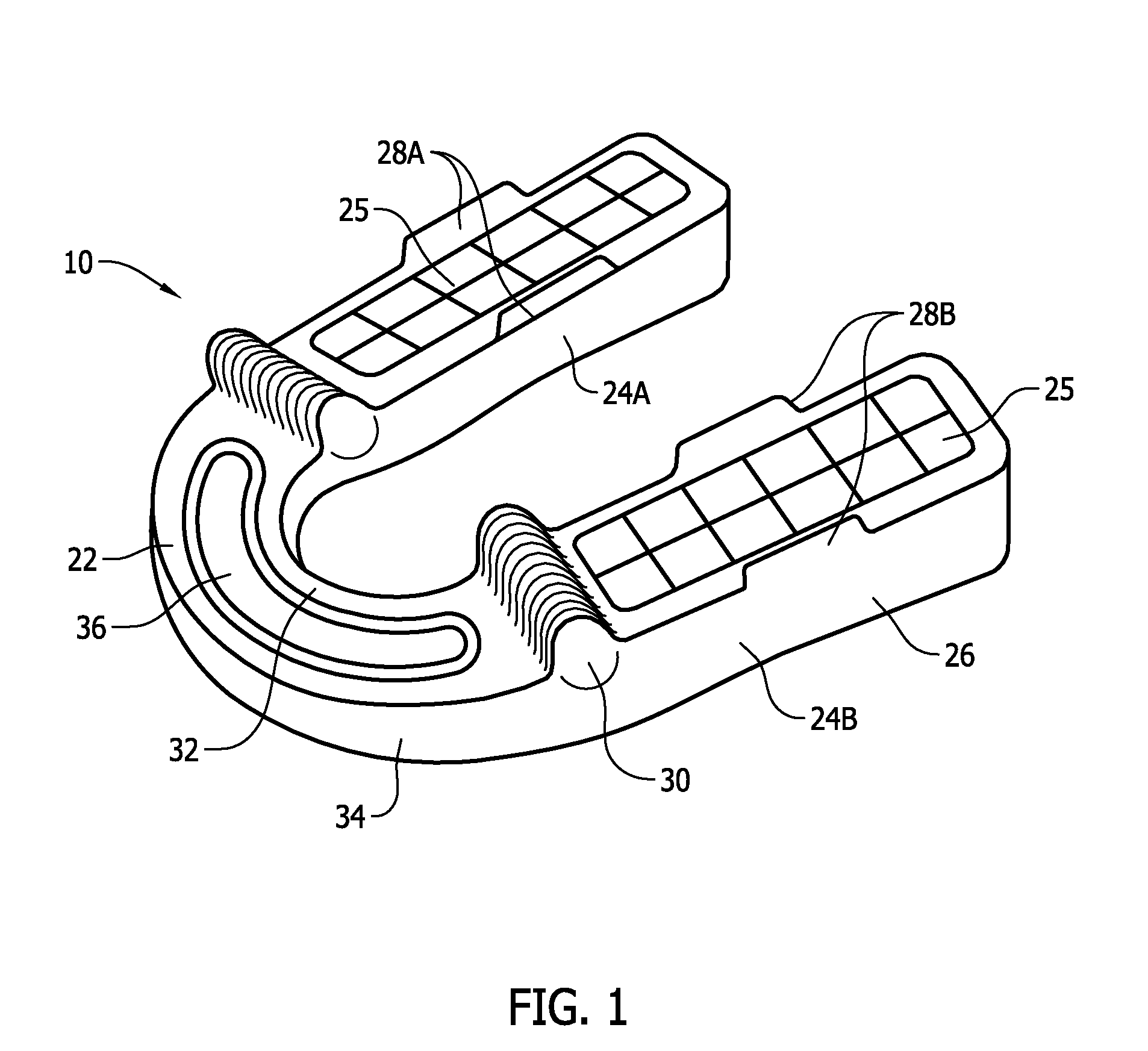
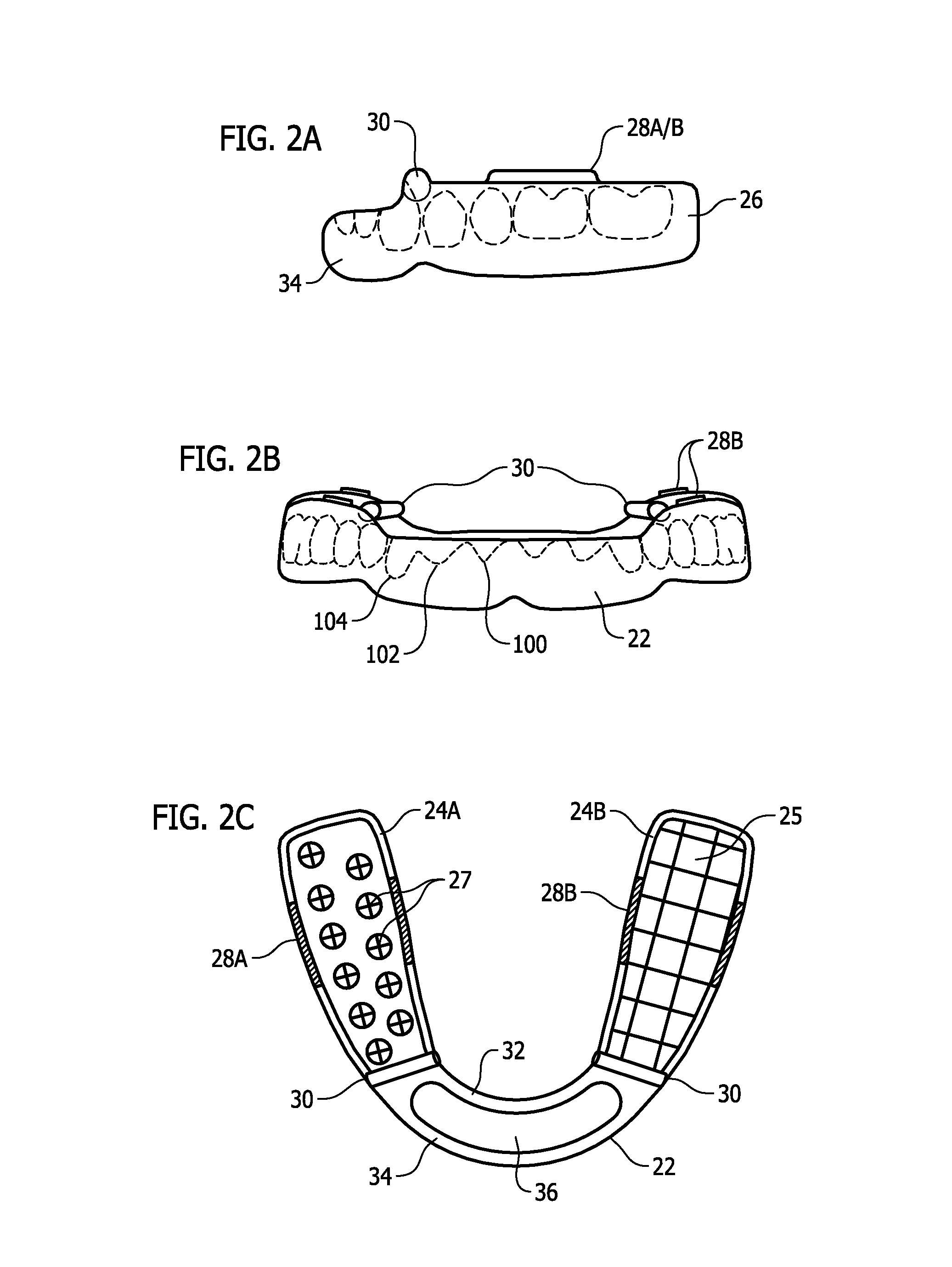
[0039]A mandible repositioning appliance 10 is provided that may be adapted for use on the lower jaw or for use on the upper jaw. In either case, the appliance includes an anterior (front) portion 22 adapted to engage or receive anterior teeth and first and second posterior (rear) portions 24a / 24b (lower member), each adapted to engage or receive one or more posterior teeth.
[0040]A repositioning appliance 10 for use on a lower jaw (a lower appliance) is illustrated in FIG. 1. The anterior portion 22 of the appliance connects to, or may comprise means which connect, the first posterior portion 24a and the second posterior portion 24b. In one embodiment the anterior portion is adapted to accommodate anterior teeth. As shown in FIG. 1, the anterior portion 22 may comprise a lingual connector 32 and a buccal connector 34 to connect the first posterior portion 24a to the second posterior portion 24b. In one embodiment, the buccal connector is notched to accommodate any labial frenum atta...
PUM
 Login to View More
 Abstract
Description
Claims
Application Information
 Login to View More