Check patentability & draft patents in minutes with Patsnap Eureka AI!

Processes for the continuous regeneration of a catalyst

a technology of hydrocarbon conversion catalyst and process, which is applied in the direction of physical/chemical process catalyst, other chemical processes, separation processes, etc., can solve the problems of low activity, loss of csub>5/sub>+ yield, and metal dispersion not being allowed in the chlorination zone or drying zone, etc., to achieve effective and efficient processes

Active Publication Date: 2015-10-15
UOP LLC
View PDF0 Cites 0 Cited by
  • Summary
  • Abstract
  • Description
  • Claims
  • Application Information

AI Technical Summary

Benefits of technology

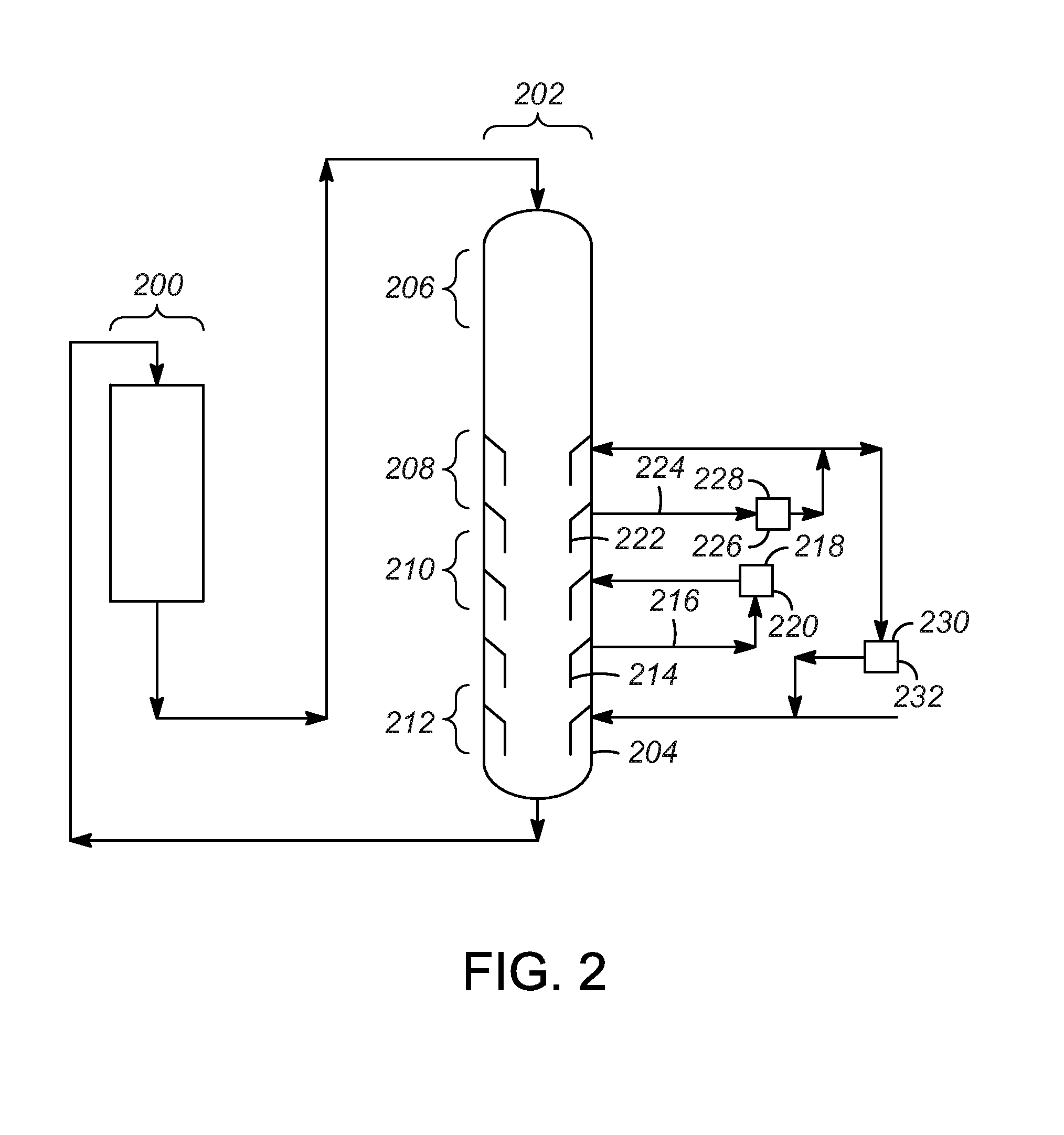
[0023]In another aspect of the present invention, another process is provided for the regeneration of a catalyst which includes: passing a catalyst from a reaction zone to a regeneration zone, wherein the regeneration zone includes at least a burn zone to remove coke from the catalyst; recycling the catalyst from the regeneration zone back to the reaction zone; heating the catalyst in a catalyst heating zone so that a temperature of the catalyst has increased at least after the catalyst has flowed out of the burn zone; and, passing a heated ambient oxygen to the catalyst heating zone to increase the temperature in the catalyst heating zone so that the temperature of the catalyst increases.

Problems solved by technology

Furthermore, some current designs may not allow metal to be dispersed in the chlorination zone or drying zone during some modes of operation.
This operation condition prohibits metal (including platinum) dispersion during the black burn mode resulting in decline in catalyst performance, loss of C5+ yield, hydrogen product yield and low activity.
Furthermore, during other operation modes, coke slippage or slightly higher coked catalyst passing into the chlorination zone, may result in poor metal dispersion, catalyst damage, catalyst fines generation, and equipment fouling.
These can shorten the process turnaround interval leading to potential of a unit shutdown resulting in loss of production in the reforming unit.

Method used

the structure of the environmentally friendly knitted fabric provided by the present invention; figure 2 Flow chart of the yarn wrapping machine for environmentally friendly knitted fabrics and storage devices; image 3 Is the parameter map of the yarn covering machine
View more

Image

Smart Image Click on the blue labels to locate them in the text.
Viewing Examples
Smart Image
  • Processes for the continuous regeneration of a catalyst
  • Processes for the continuous regeneration of a catalyst
  • Processes for the continuous regeneration of a catalyst

Examples

Experimental program
Comparison scheme
Effect test

Embodiment Construction

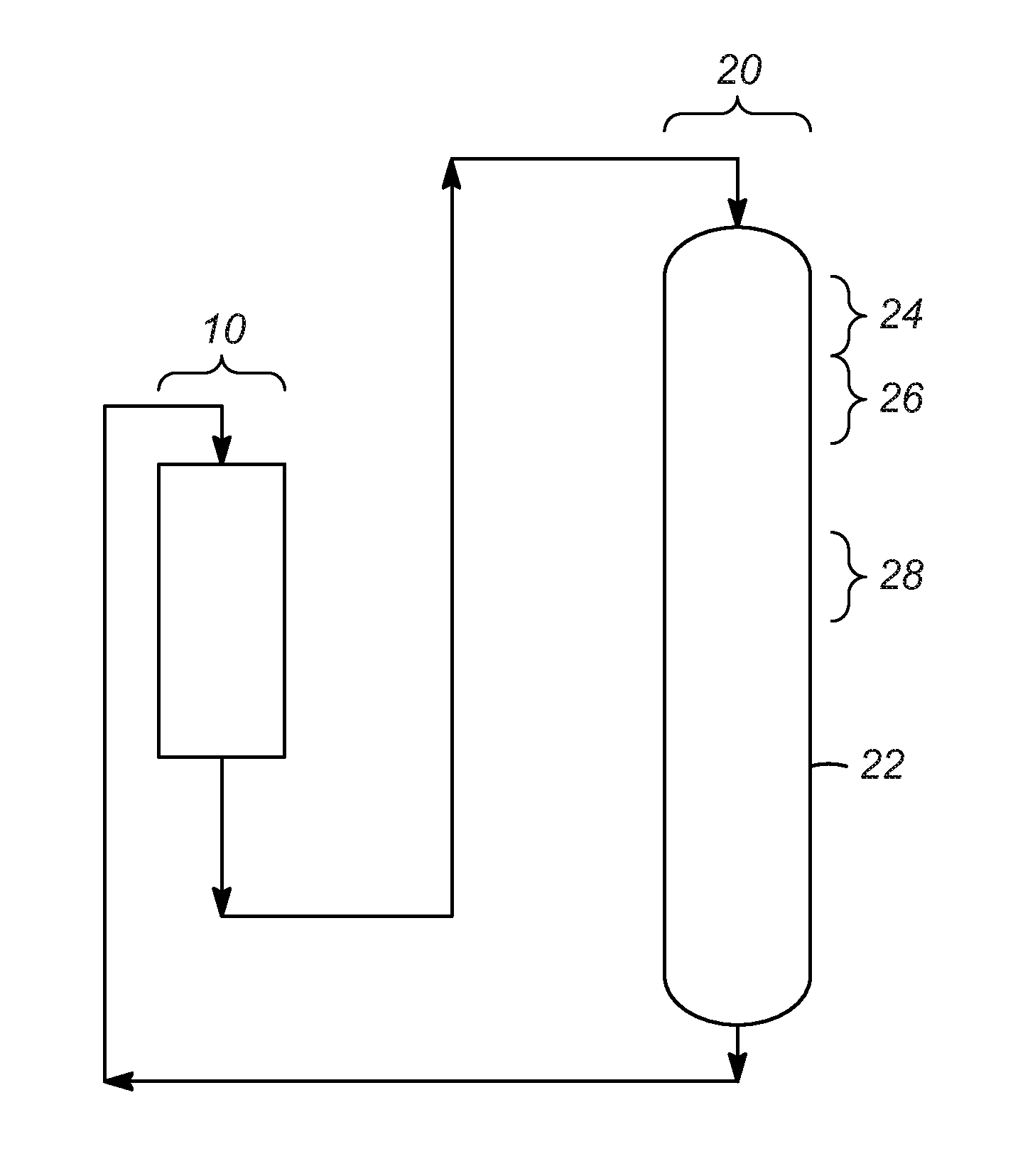
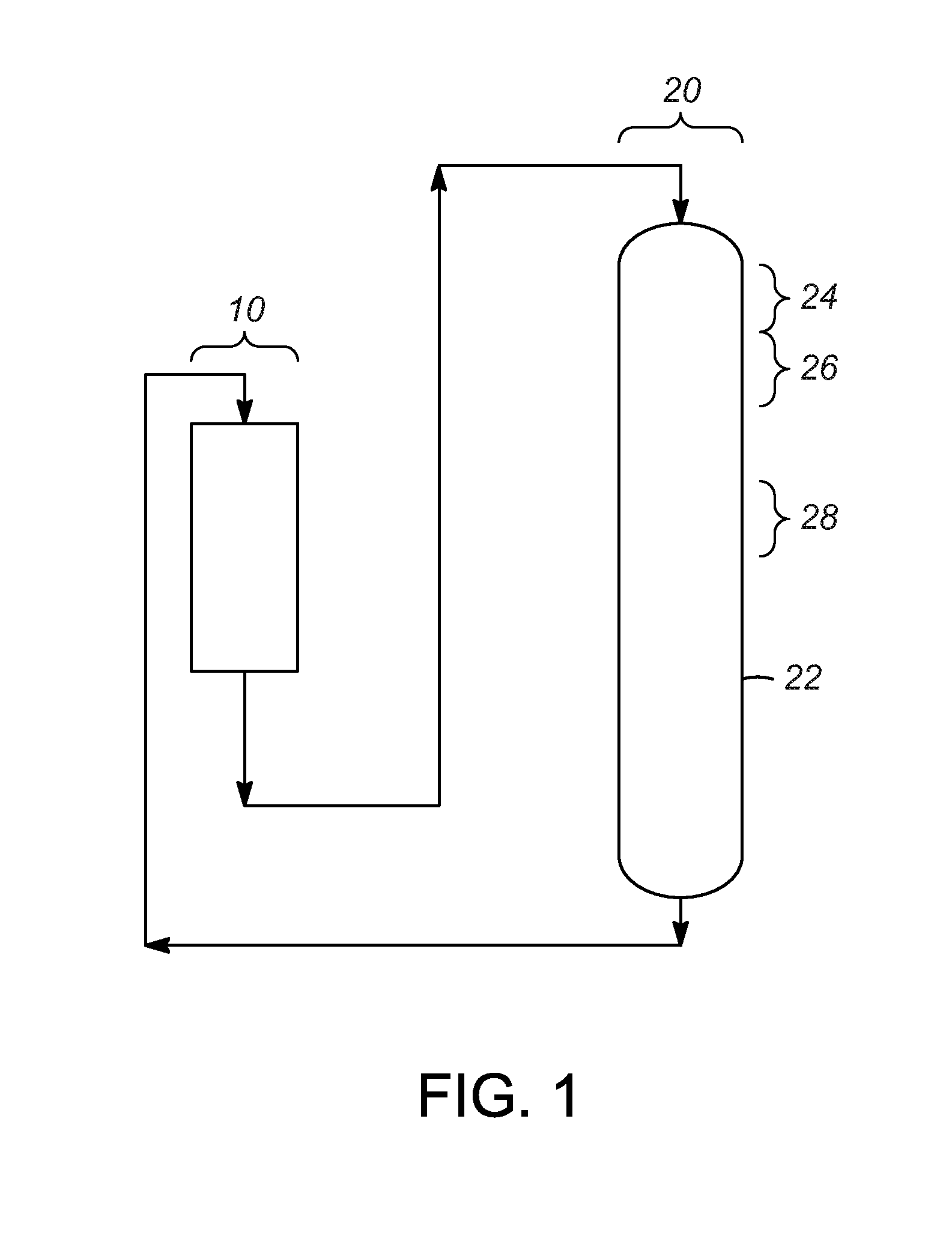
[0036]One or more processes have been developed for the regeneration of a catalyst used in a catalytic reforming reaction.

[0037]A catalytic reforming reaction is normally effected in the presence of catalyst particles comprised of one or more Group VIII noble metals (e.g., platinum, iridium, rhodium, palladium) and a halogen combined with a porous carrier, such as a refractory inorganic oxide. The halogen is normally chloride. Alumina is a commonly used carrier. The preferred alumina materials are known as the gamma, eta and theta alumina with gamma and eta alumina giving the best results. An important property related to the performance of the catalyst is the surface area of the carrier.

[0038]Catalyst particles are usually cylindrical or spheroidal, having a diameter of from about 1 / 16 th to about 1 / 8 th inch (1.5-3.1 mm), though they may be as large as 1 / 4 th inch (6.35 mm). When cylindrical, the catalyst particles have a length of from about 1 / 8 th to about 1 / 4 th inch (3.1-...

the structure of the environmentally friendly knitted fabric provided by the present invention; figure 2 Flow chart of the yarn wrapping machine for environmentally friendly knitted fabrics and storage devices; image 3 Is the parameter map of the yarn covering machine
Login to View More

PUM

PropertyMeasurementUnit
temperatureaaaaaaaaaa
Login to View More

Abstract

A process for regenerating a catalyst used in a reaction zone. In a regeneration zone, the catalyst may be cooled before passing into a chloride rich zone. The regeneration zone may also receive a heated ambient oxygen in a catalyst heating zone. The regeneration zone may also receive recovered chloride from a chloride recovering zone which removes and recovers chloride from regeneration gas taken from the regeneration zone. Heated ambient oxygen may also be introduced into a chlorination zone.

Description

FIELD OF THE INVENTION[0001]This invention relates generally to the regeneration of hydrocarbon conversion catalysts in the presence of a halogen-containing material.BACKGROUND OF THE INVENTION[0002]Numerous hydrocarbon conversion processes are widely used to alter the structure or properties of hydrocarbon streams. Such processes include isomerization from straight chain paraffinic or olefinic hydrocarbons to more highly branched hydrocarbons, dehydrogenation for producing olefinic or aromatic compounds, reforming to produce aromatics and motor fuels, alkylation to produce commodity chemicals and motor fuels, transalkylation, and others.[0003]Many such processes use catalysts to promote hydrocarbon conversion reactions. These catalysts tend to deactivate for a variety of reasons, including the deposition of carbonaceous material or coke upon the catalyst, sintering or agglomeration or poisoning of catalytic metals on the catalyst, and / or loss of catalytic metal promoters such as ha...

Claims

the structure of the environmentally friendly knitted fabric provided by the present invention; figure 2 Flow chart of the yarn wrapping machine for environmentally friendly knitted fabrics and storage devices; image 3 Is the parameter map of the yarn covering machine
Login to View More

Application Information

Patent Timeline
no application Login to View More
Patent Type & Authority Applications(United States)
IPC IPC(8): B01J38/44B01J27/32B01J27/13B01J38/42B01J38/20
CPCB01J38/44B01J38/42B01J27/32B01J27/13B01J38/20C10G35/085
Inventor GLOVER, BRYAN K.LOK, KAWIER, MARY J.SHAKUR, MOHAMED S.MOORE, MICHAEL A.SABITOV, ALEXANDER
Owner UOP LLC
Features
  • R&D
  • Intellectual Property
  • Life Sciences
  • Materials
  • Tech Scout
Why Patsnap Eureka
  • Unparalleled Data Quality
  • Higher Quality Content
  • 60% Fewer Hallucinations
Social media
Patsnap Eureka Blog
Learn More