
Load dependent electronic valve actuator regulation and pressure compensation
- Summary
- Abstract
- Description
- Claims
- Application Information
AI Technical Summary
Benefits of technology
Problems solved by technology
Method used
Image

Examples
Embodiment Construction
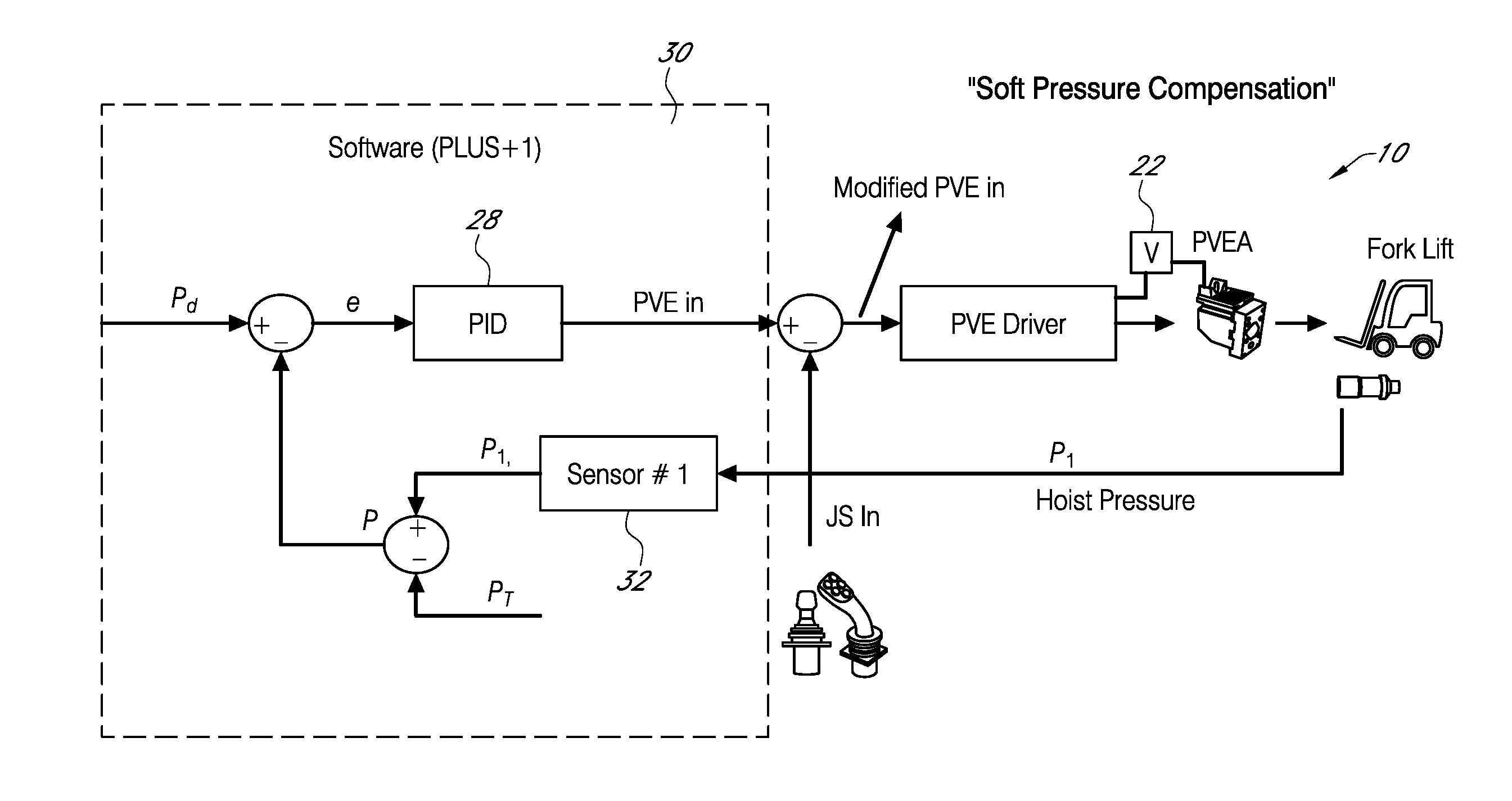
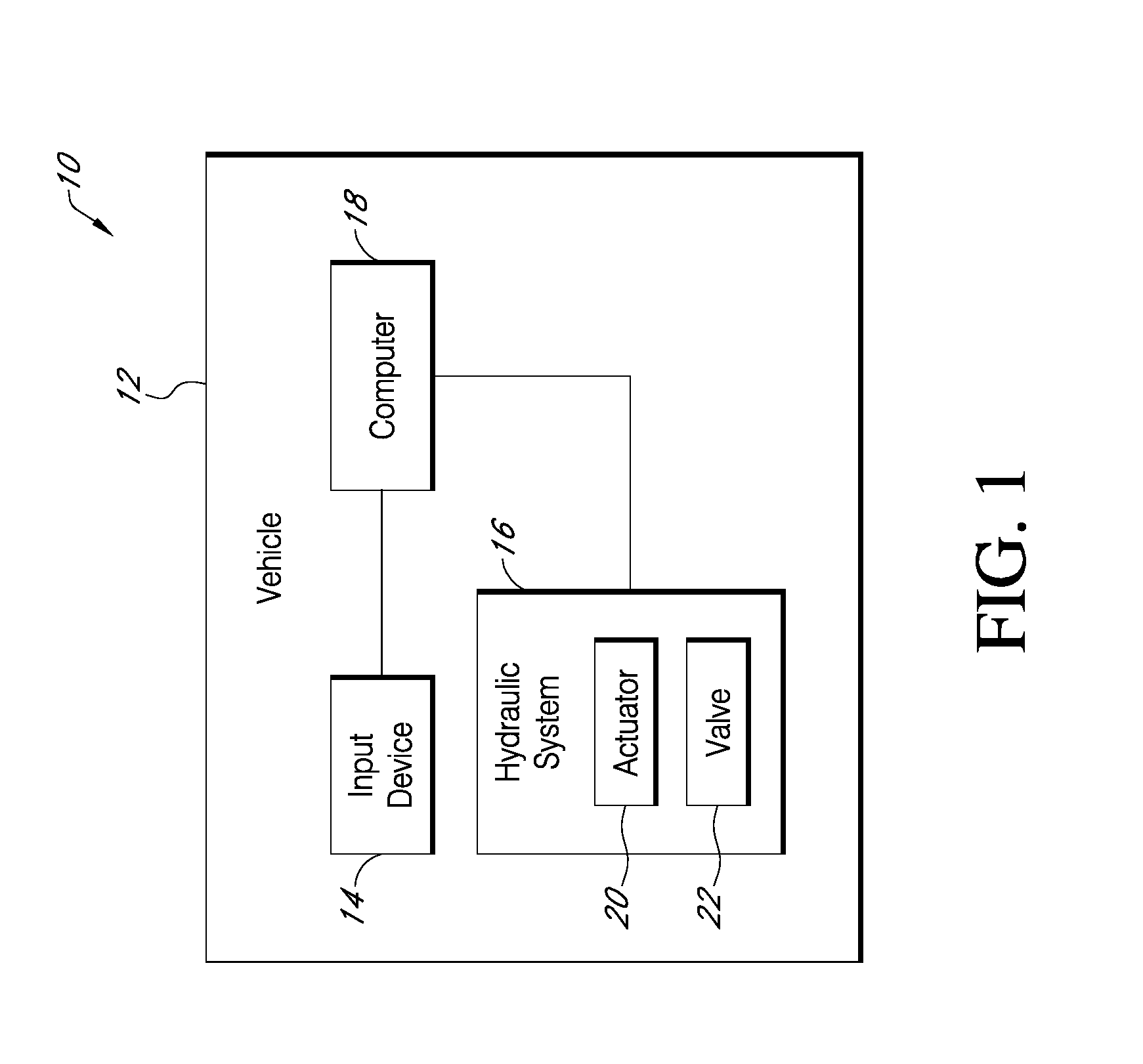
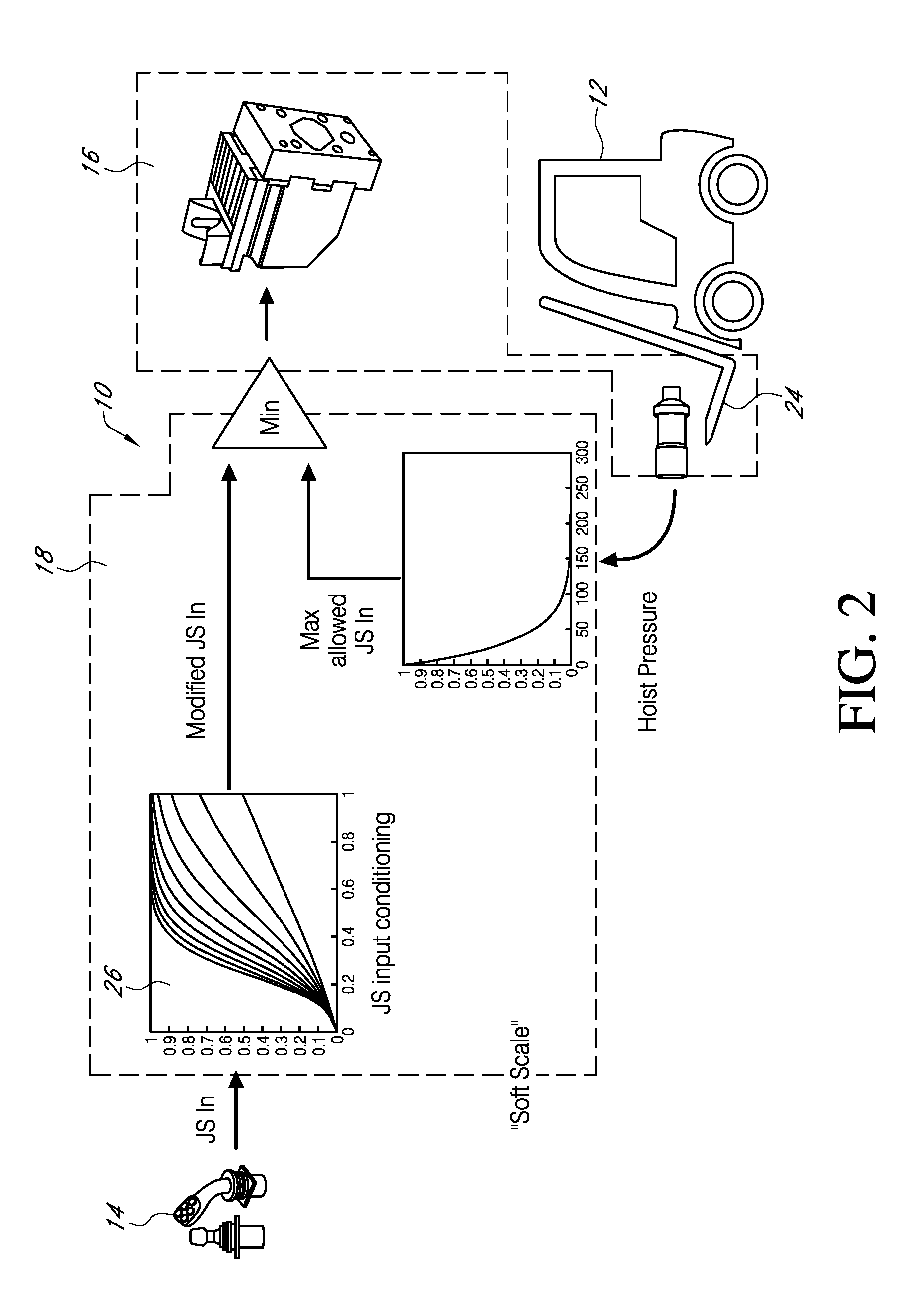
[0017]FIG. 1 shows a schematic view of a system 10 that has load dependent electronic valve actuator regulation and pressure compensation. The system includes a vehicle 12 having an operator input device 14, a hydraulic system 16 for moving a load, and a controller 18 that is connected to input device 14. The hydraulic system has an actuator 20 and a valve 22 that controls flow to and from the actuator 20. For clarity, FIG. 1 shows only the essential elements of system 10 where the system 10 uses pressure information from the hydraulic system 16 to determine a maximum opening area for valve 22 that can be allowed to limit excessive speed of actuator 20. The controller 18 also conditions or re-scales the operator input command to the allowed valve area so that actuator 20 velocity is commanded instead of valve area which results in good input resolution. Poor resolution occurs where actuator velocity is not proportional to the operator input command and the valve opening area. By re-...
PUM
 Login to View More
 Abstract
Description
Claims
Application Information
 Login to View More