
Stator positioner for electrostatic generator electrodes and new electrode design
- Summary
- Abstract
- Description
- Claims
- Application Information
AI Technical Summary
Benefits of technology
Problems solved by technology
Method used
Image

Examples
Embodiment Construction
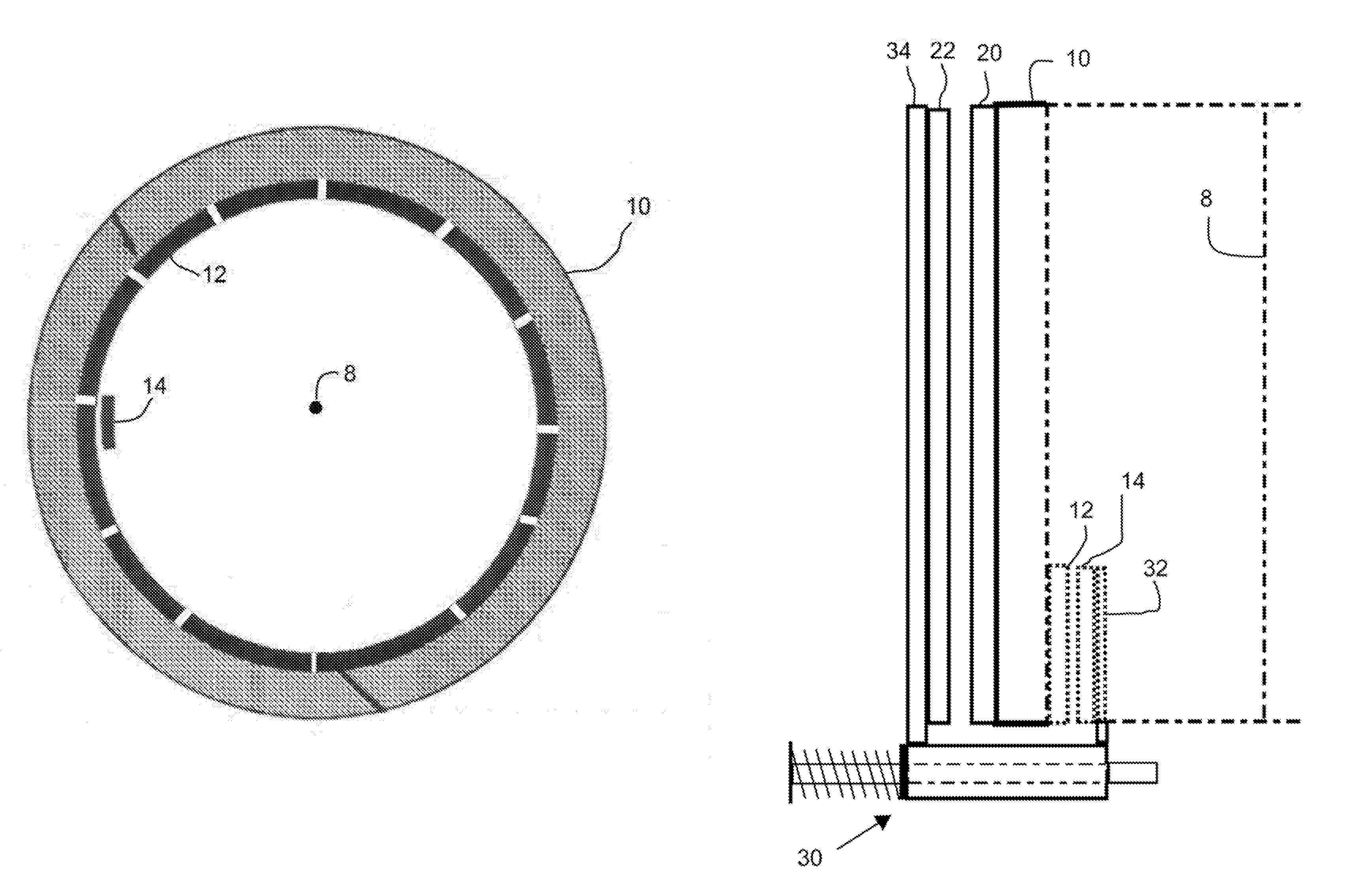
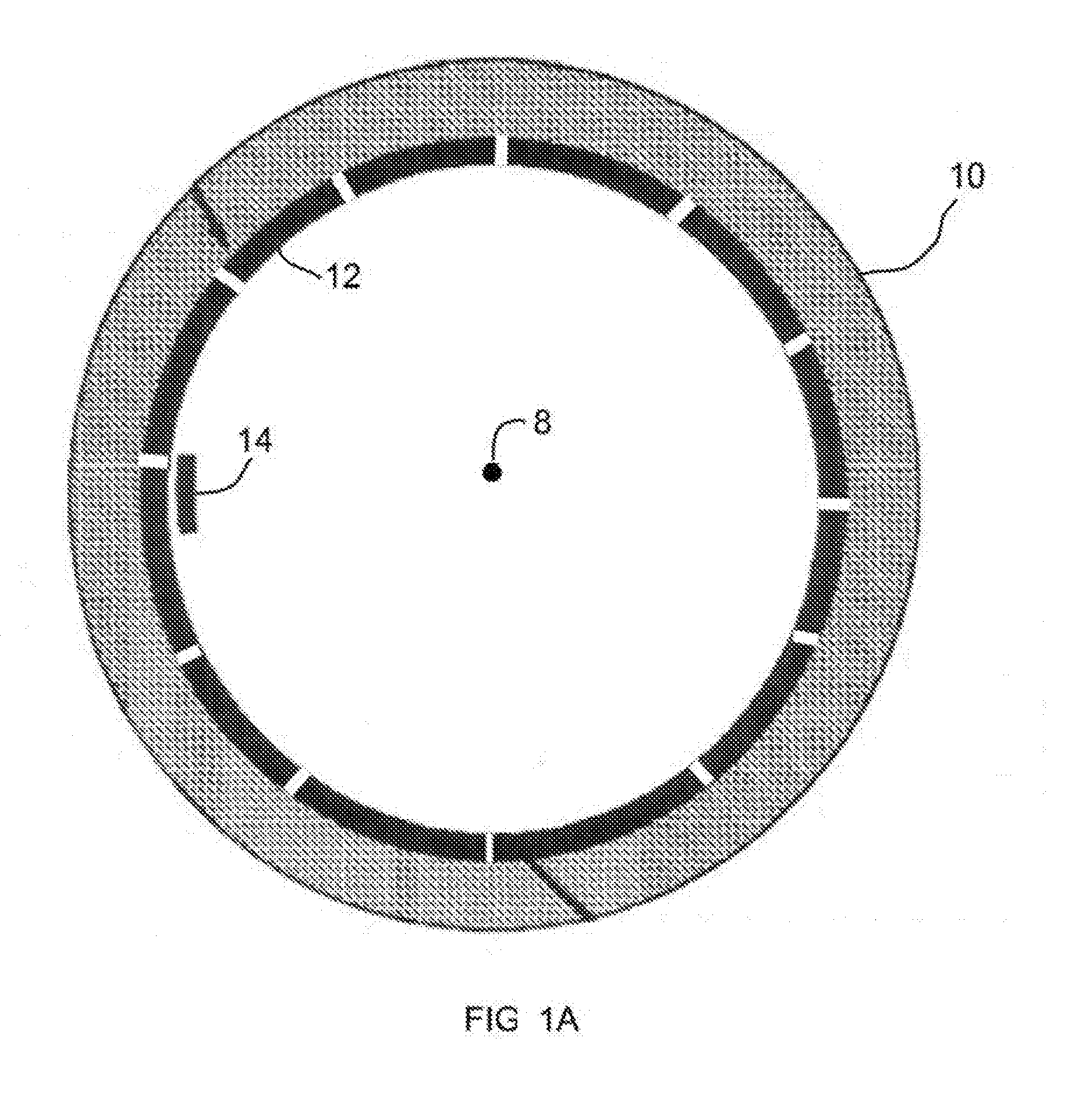
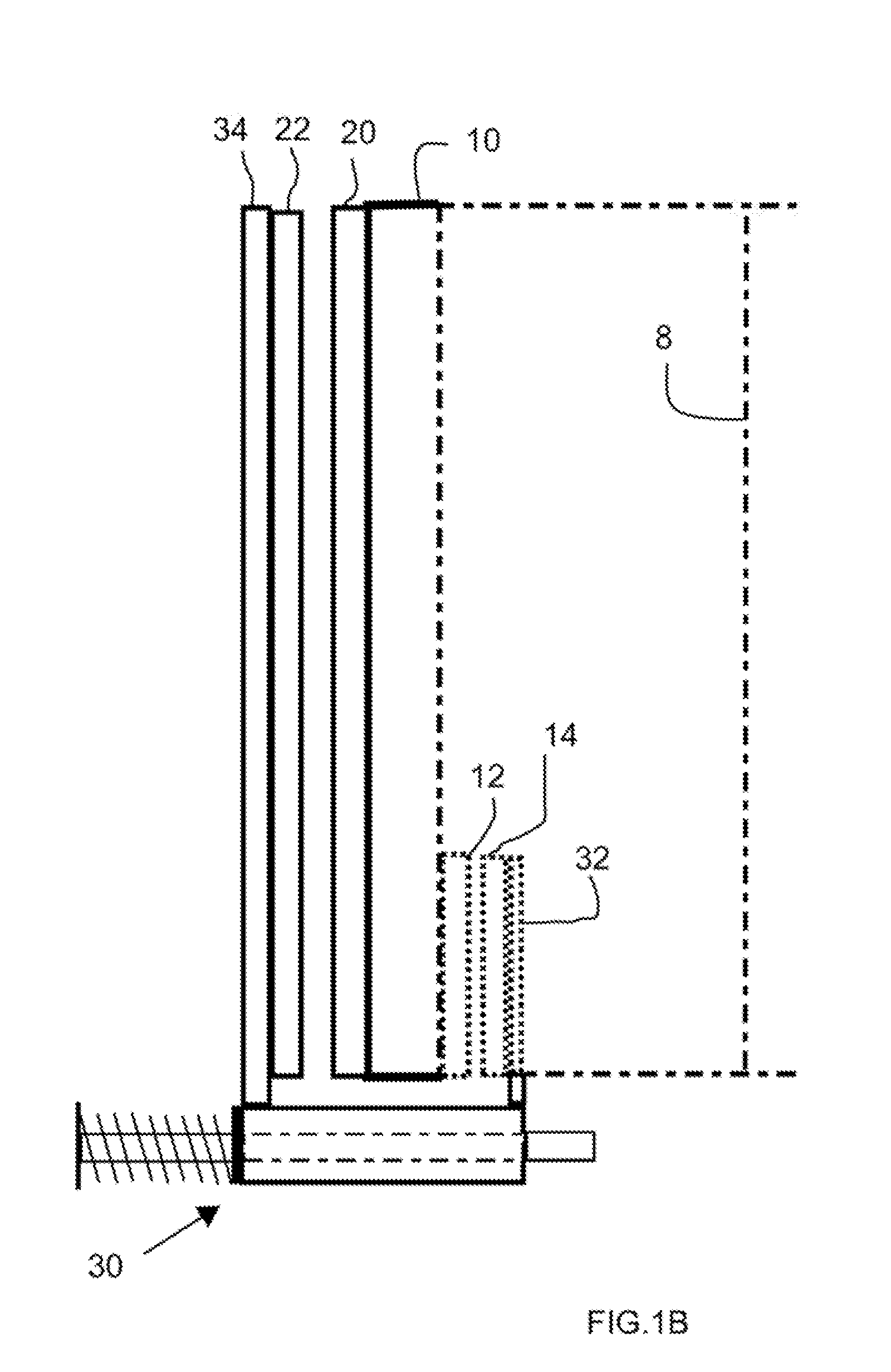
[0021]This invention solves a problem that is associated with the use of an electrostatic generator / motor in an electromagnetic battery (EMB) / flywheel energy storage device. When charged from a low speed, the rotor of the EMB expands because of centrifugal forces. In a large EMB, this expansion can be of order 2 centimeters or more. If the rotor electrodes are mounted on the outer or inner surface of the rotor, this expansion can change the rotor / stator gap by an unacceptably large amount. This invention employs a mechanical means for moving the stator electrodes so as to maintain a constant gap. Although it is possible to attached electrical to the mechanical means, they do not contribute to the mechanical operation of the invention. For example, electrical elements could be attached to the mechanical means to electrically monitor the expansion or contraction of the rotor as well as to monitor the gap, but in the present invention, such electrical elements are not part of the mecha...
PUM
 Login to View More
 Abstract
Description
Claims
Application Information
 Login to View More