Check patentability & draft patents in minutes with Patsnap Eureka AI!

Systems and Methods for Protecting Cache and Main-Memory from Flush-Based Attacks

Pending Publication Date: 2021-11-11
GEORGIA TECH RES CORP
View PDF0 Cites 2 Cited by
  • Summary
  • Abstract
  • Description
  • Claims
  • Application Information

AI Technical Summary

Benefits of technology

The patent text describes a method that prevents a cache from replacing a line of data that is no longer needed. This helps improve the performance of the cache by avoiding unnecessary replacement requests.

Problems solved by technology

Unfortunately, the timing difference between the cache-hit and a cache-miss can be used as a side-channel by an adversary to infer the access pattern and obtain unauthorized information from the system.
Unfortunately, such sharing makes the LLC vulnerable to the Flush+Reload attacks.
Prior solutions that are highly effective at guarding the cache against conflict-based attacks (such as Prime+Probe) become ineffective for Flush-based attacks, as the attacker can precisely invalidate a given line from the cache without relying on any conflicts.
None of these prior systems and methods are ideal, however.
The optimizations of page sharing are valuable in many cases, and disabling such optimizations is not an ideal approach.
Additionally, rewriting entire applications to avoid leakage of information is not efficient or desirable.

Method used

the structure of the environmentally friendly knitted fabric provided by the present invention; figure 2 Flow chart of the yarn wrapping machine for environmentally friendly knitted fabrics and storage devices; image 3 Is the parameter map of the yarn covering machine
View more

Image

Smart Image Click on the blue labels to locate them in the text.
Viewing Examples
Smart Image
  • Systems and Methods for Protecting Cache and Main-Memory from Flush-Based Attacks
  • Systems and Methods for Protecting Cache and Main-Memory from Flush-Based Attacks
  • Systems and Methods for Protecting Cache and Main-Memory from Flush-Based Attacks

Examples

Experimental program
Comparison scheme
Effect test

Embodiment Construction

[0063]Although certain embodiments of the disclosure are explained in detail, it is to be understood that other embodiments are contemplated. Accordingly, it is not intended that the disclosure is limited in its scope to the details of construction and arrangement of components set forth in the following description or illustrated in the drawings. Other embodiments of the disclosure are capable of being practiced or carried out in various ways. Also, in describing the embodiments, specific terminology will be resorted to for the sake of clarity. It is intended that each term contemplates its broadest meaning as understood by those skilled in the art and includes all technical equivalents which operate in a similar manner to accomplish a similar purpose.

[0064]Herein, the use of terms such as “having,”“has,”“including,” or “includes” are open-ended and are intended to have the same meaning as terms such as “comprising” or “comprises” and not preclude the presence of other structure, m...

the structure of the environmentally friendly knitted fabric provided by the present invention; figure 2 Flow chart of the yarn wrapping machine for environmentally friendly knitted fabrics and storage devices; image 3 Is the parameter map of the yarn covering machine
Login to View More

PUM

No PUM Login to View More

Abstract

Disclosed herein are systems and methods for identifying and mitigating Flush-based cache attacks. The systems and methods can include adding a zombie bit to a cache line. The zombie bit can be used to track the status of cache hits and misses to the flushed line. A line that is invalidated due to a Flush-Caused Invalidation can be marked as a zombie line by marking the zombie bit as valid. If another hit, or access request, is made to the cache line, data retrieved from memory can be analyzed to determine if the hit is benign or is a potential attack. If the retrieved data is the same as the cache data, then the line can be marked as a valid zombie line. Any subsequent hit to the valid zombie line can be marked as a potential attack. Hardware- and software-based mitigation protocols are also described.

Description

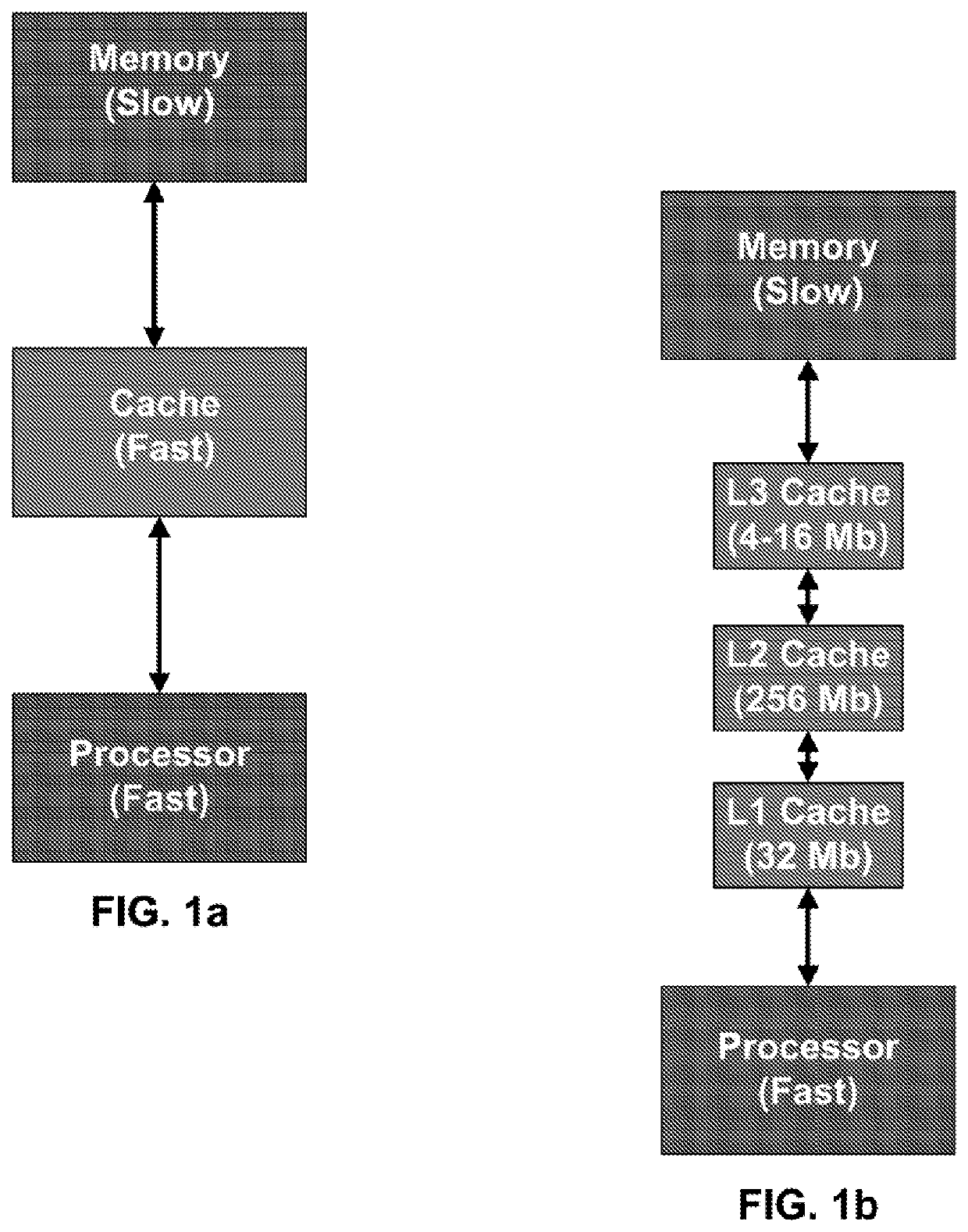
CROSS REFERENCE TO RELATED APPLICATIONS[0001]This application claims the benefit of U.S. Provisional Application Ser. No. 62 / 732,188, filed on Sep. 17, 2018, which is incorporated herein by reference in its entirety as if fully set forth below.FIELD OF THE DISCLOSURE[0002]The present disclosure relates generally to systems and methods for protecting memory from Flush-based attacks. Particularly, embodiments of the present disclosure relate to creating zombie bits in a cache line, preserving the zombie lines in the cache, and using cache hits and misses at the zombie line to detect and mitigate Flush-based attacks.BACKGROUND[0003]Caches alleviate the long latency of main memories by providing data with low latency. Unfortunately, the timing difference between the cache-hit and a cache-miss can be used as a side-channel by an adversary to infer the access pattern and obtain unauthorized information from the system. The recently disclosed Spectre and Meltdown vulnerabilities rely on su...

Claims

the structure of the environmentally friendly knitted fabric provided by the present invention; figure 2 Flow chart of the yarn wrapping machine for environmentally friendly knitted fabrics and storage devices; image 3 Is the parameter map of the yarn covering machine
Login to View More

Application Information

Patent Timeline
no application Login to View More
IPC IPC(8): G06F21/55G06F12/0802
CPCG06F21/554G06F2212/1052G06F2221/034G06F12/0802G06F12/0891
Inventor QURESHI, MOINUDDIN
Owner GEORGIA TECH RES CORP
Features
  • R&D
  • Intellectual Property
  • Life Sciences
  • Materials
  • Tech Scout
Why Patsnap Eureka
  • Unparalleled Data Quality
  • Higher Quality Content
  • 60% Fewer Hallucinations
Social media
Patsnap Eureka Blog
Learn More