
Pharmaceutical Inhalation Aerosol and Preparation Method Therefor
a technology of aerosol and pharmaceuticals, which is applied in the directions of aerosol delivery, spray delivery, drug compositions, etc., can solve the problems of irritating the patient's throat, high cost of reservoir-type dry powder inhalers, and more demanding storage conditions, so as to reduce labor costs and raw material costs, the effect of simple and fas
- Summary
- Abstract
- Description
- Claims
- Application Information
AI Technical Summary
Benefits of technology
Problems solved by technology
Method used
Image

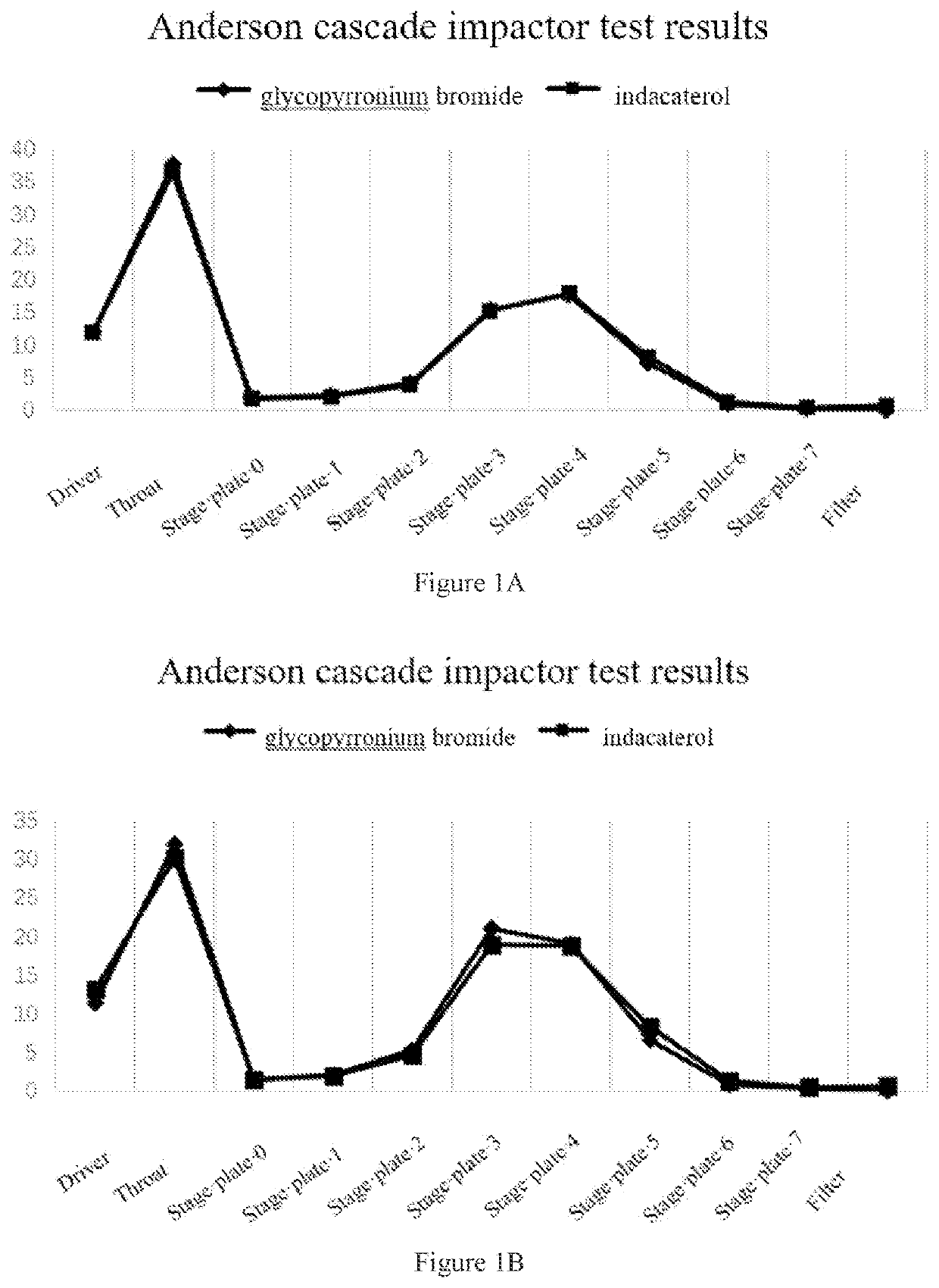
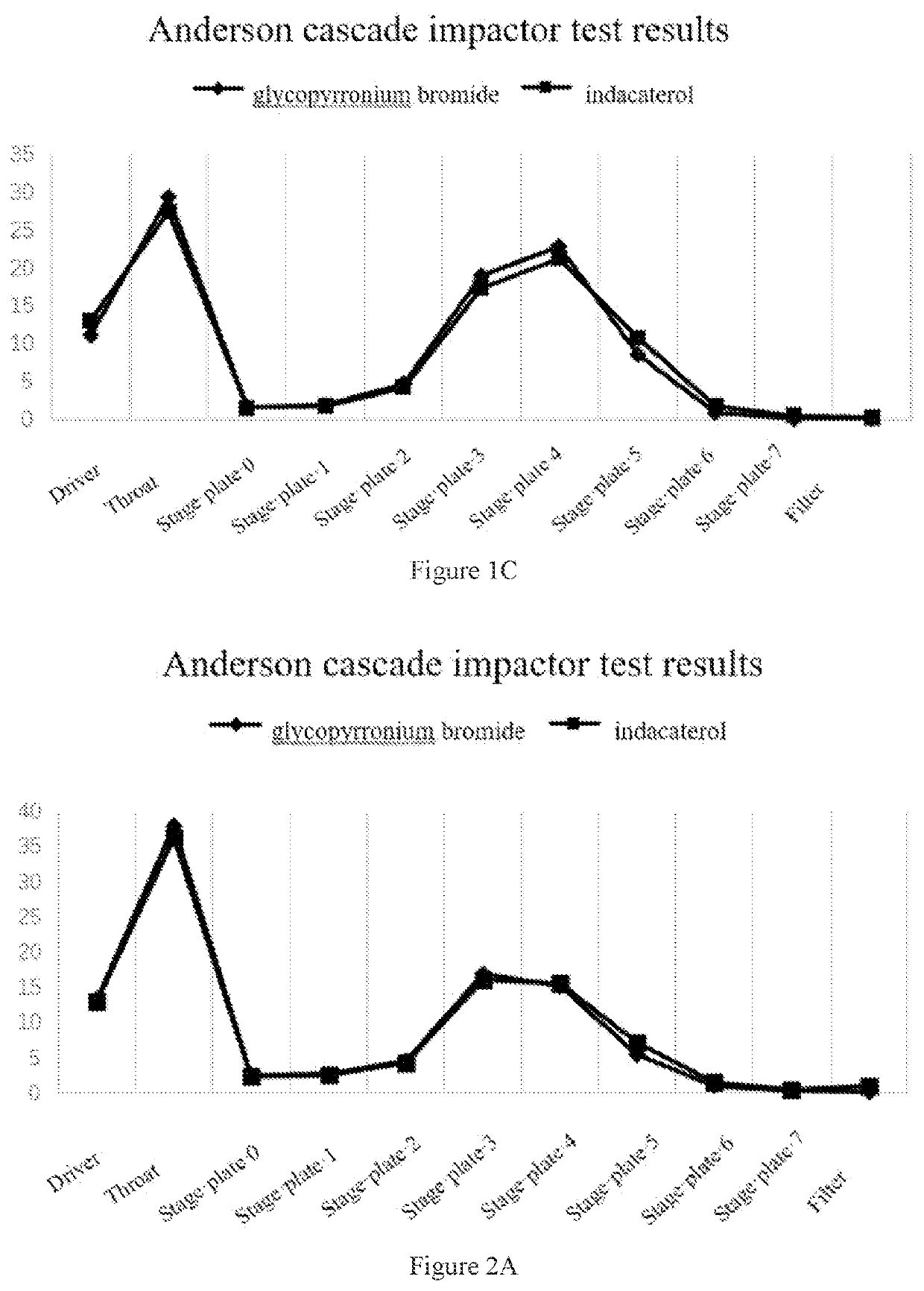
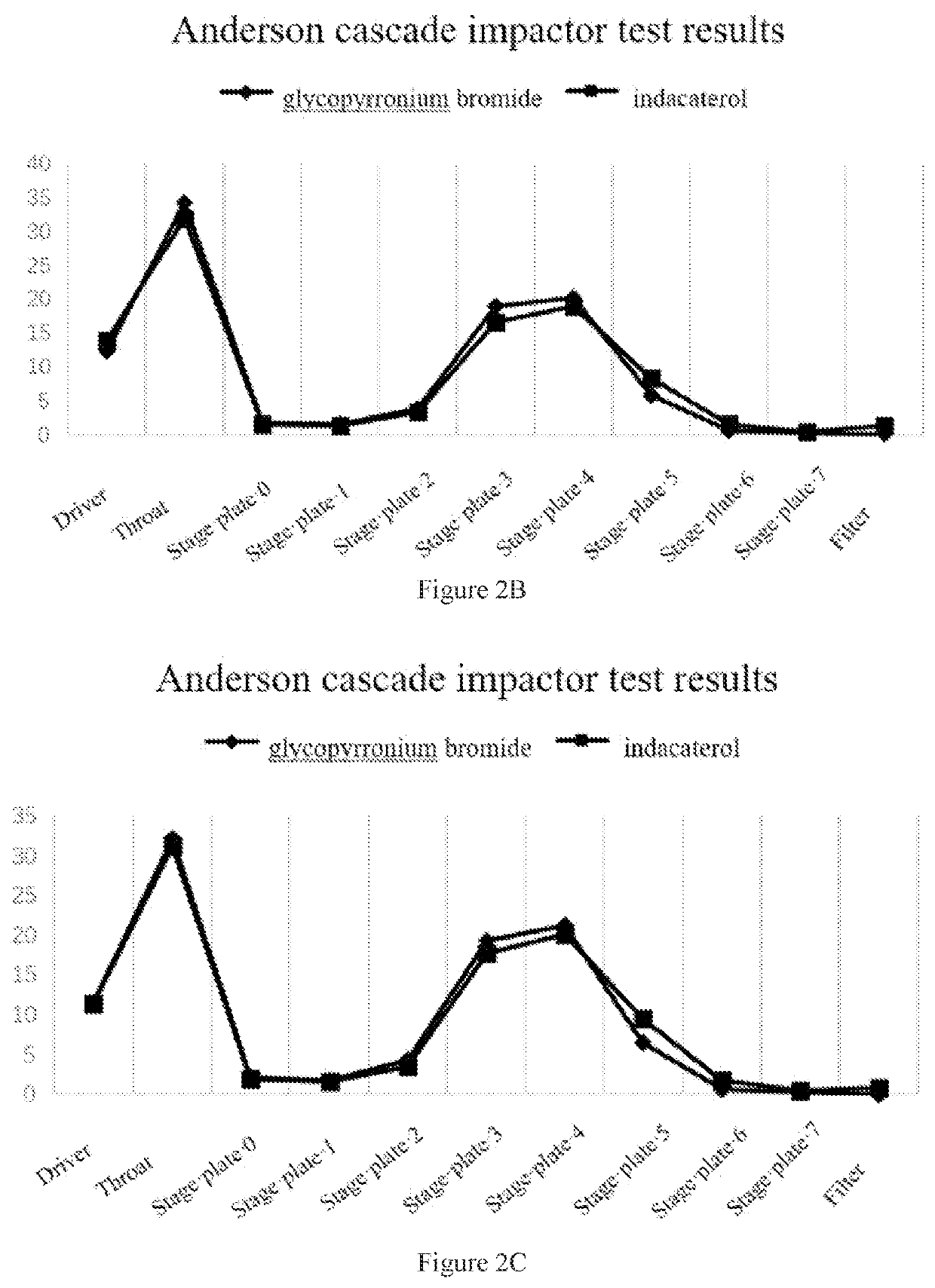
Examples
example 1
[0066]1.0 g glycopyrronium bromide coarse powder and 0.2 g indacaterol maleate coarse powder (5:1) were weighed and mixed manually for 10 minutes, then the mixture was added to a jet mill, and micronized at a pressure of 8 bar. The micronized API was sealed and stored until use. 24 mg of the glycopyrronium bromide / indacaterol maleate mixture was weighed, and placed in a 14 mL FCP-coated aluminum can, valve-sealed, filled, ultrasonicated for 10 minutes, and then kept for 2 days for testing. The ACI test method is as described above. The Anderson cascade impactor test results are shown in FIG. 1A.
[0067]0.5 g glycopyrronium bromide coarse powder and 0.5 g indacaterol maleate coarse powder (1:1) were weighed and mixed manually for 10 minutes, then the mixture was added to a jet mill, and micronized at a pressure of 8 bar. The micronized API was sealed and stored until use. 24 mg of the glycopyrronium bromide / indacaterol maleate mixture was weighed, placed in a 14 mL FCP-coated aluminum ...
example 2
[0071]1.5 g glycopyrronium bromide coarse powder and 0.3 g indacaterol maleate fine powder (5:1) were weighed and mixed manually for 10 minutes, then the mixture was added to a jet mill, and micronized at a pressure of 8 bar. The micronized API was sealed and stored until use. 24 mg of the glycopyrronium bromide / indacaterol maleate mixture was weighed, and placed in a 14 mL FCP-coated aluminum can, valve-sealed, filled, ultrasonicated for 10 minutes, and then kept for 2 days for testing. The Anderson cascade impactor test results are shown in FIG. 2A.
[0072]0.5 g glycopyrronium bromide coarse powder and 0.5 g indacaterol maleate fine powder (1:1) were weighed and mixed manually for 10 minutes, then the mixture was added to a jet mill, and micronized at a pressure of 8 bar. The micronized API was sealed and stored until use. 24 mg of the glycopyrronium bromide / indacaterol maleate mixture was weighed, and placed in a 14 mL FCP-coated aluminum can, valve-sealed, filled, ultrasonicated f...
example 3
[0076]1.5 g glycopyrronium bromide fine powder and 0.3 g indacaterol maleate coarse powder (5:1) were weighed and mixed manually for 10 minutes, then the mixture was added to a jet mill, and micronized at a pressure of 8 bar. The micronized API was sealed and stored until use. 24 mg of the glycopyrronium bromide / indacaterol maleate mixture was weighed, and placed in a 14 mL FCP-coated aluminum can, valve-sealed, filled, ultrasonicated for 10 minutes, and then kept for 2 days for testing. The Anderson cascade impactor test results are shown in FIG. 3A.
[0077]0.5 g glycopyrronium bromide fine powder and 0.5 g indacaterol maleate coarse powder (1:1) were weighed and mixed manually for 10 minutes, then the mixture was added to a jet mill, and micronized at a pressure of 8 bar. The micronized API was sealed and stored until use. 24 mg of the glycopyrronium bromide / indacaterol maleate mixture was weighed, and placed in a 14 mL FCP-coated aluminum can, valve-sealed, filled, ultrasonicated f...
PUM
| Property | Measurement | Unit |
|---|---|---|
| pressure | aaaaa | aaaaa |
| pressure | aaaaa | aaaaa |
| particle size D90 distribution | aaaaa | aaaaa |
Abstract
Description
Claims
Application Information
 Login to View More