This principle does not apply if the bucking pin material is subject to an intervening mode of failure due to
eccentric loading, material defects or yield stress limitations.
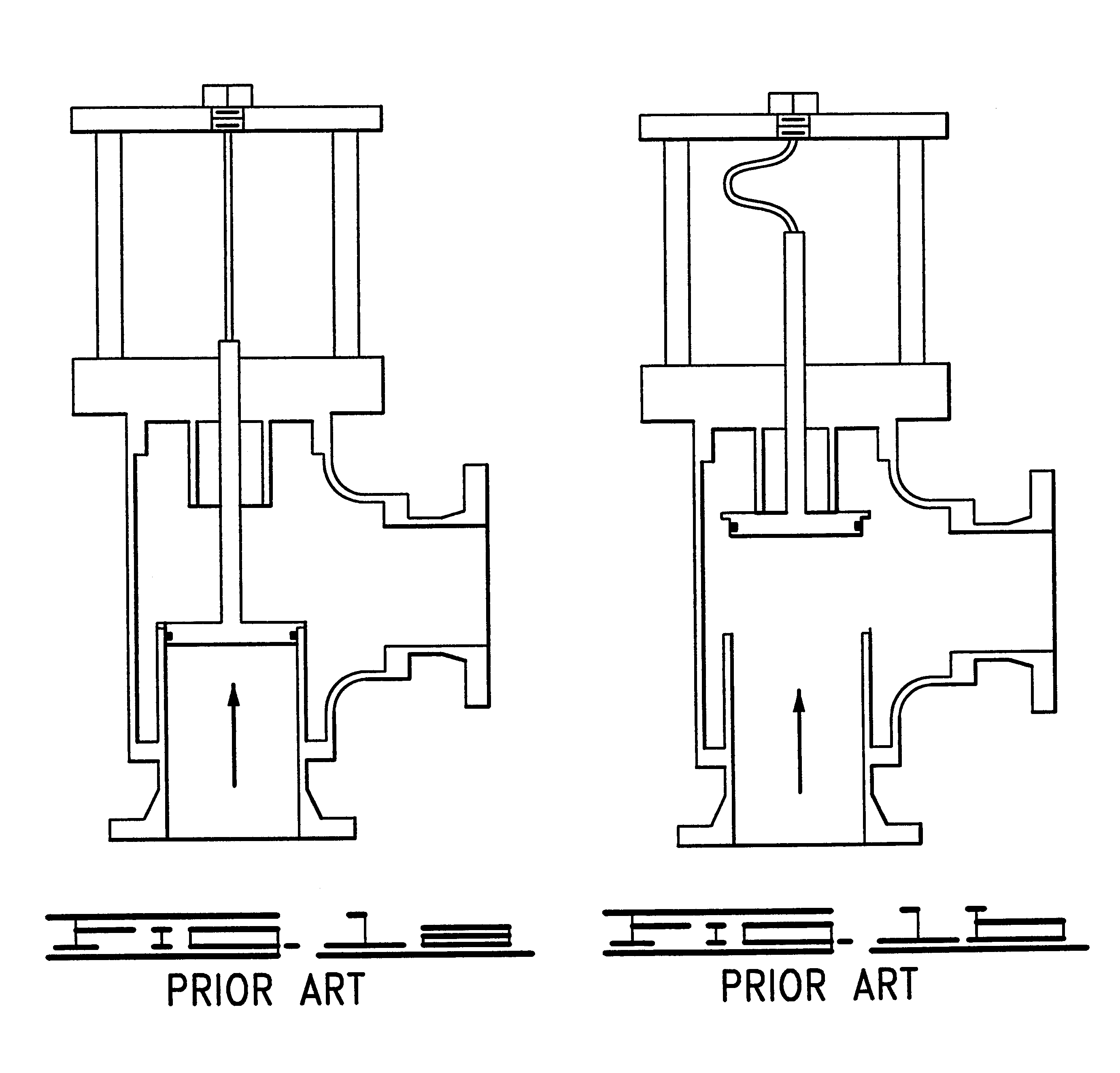
Consequently, the conventional use of buckling pins limits the relief capacity of the valve, requiring either redundant valves or excessively large valves in order to obtain the desired flow capacity.
With existing buckling pin design large valves or
high pressure valves require a very long or large buckling pins, often resulting in a buckling pin that is of an awkward length or size for reliable prediction of buckling pin failure.
Unfavorable slenderness ratios and intervening failure
modes related to material yield stress, material defects or
eccentric loading causes problems with buckling pin design and selection.
Longer collapse displacements required by large valves require longer, larger and more expensive buckling pins.
Reliability and accuracy of predicted buckling pin failure loads are lost due to unfavorable slenderness ratios and the increasing intervention of other pin failure
modes.
Intervening failures related to material defects, material yield stress limitations and manufacturing irregularities may determine the
ultimate load of the buckling pin.
Inaccuracies and poor reliability result from wear or friction losses introduced by movable mechanical joints, all of which are magnified by the scaled
mechanical advantage gained in the linkage, and result in an overall loss of valve accuracy and reliability.
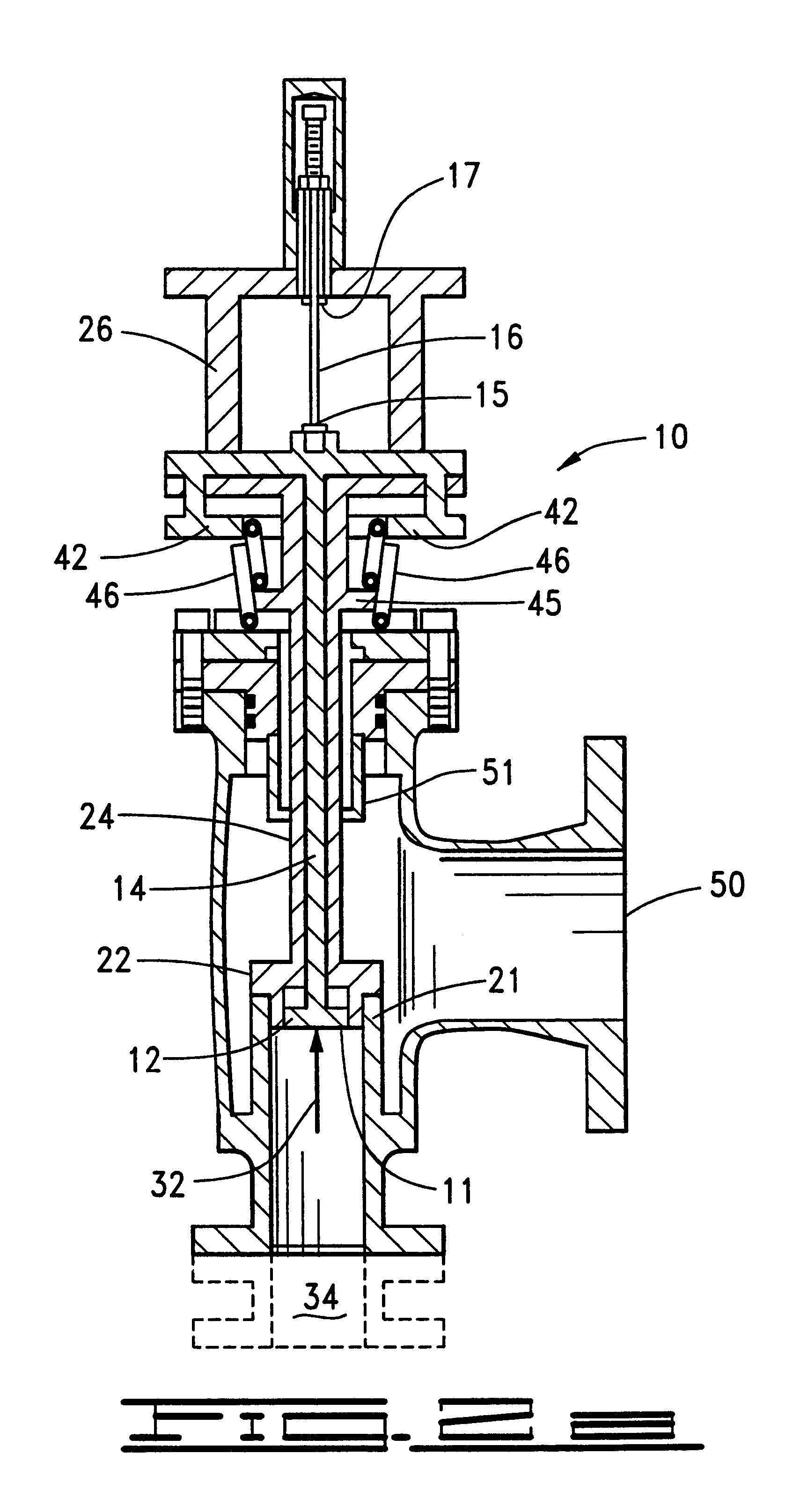
When the force exerted on the face of the sensing
piston exceeds the
compressive load bearing capacity of the buckling pin, buckling mode failure of the pin occurs, with simultaneous release and displacement of the latch arms relative to the latch mechanism.
The flow capacity achieved by this valve design far exceeds the flow capacity that could be obtained by the limited displacement of the
piston provided by the collapse of the buckling pin.
These systems tend to be somewhat unreliable due to inaccurate set pressures and may become inoperative should the
pilot valve or pilot
piping become clogged due to the pilot's or the
piping's relatively small size.
Such pilot systems may become cost prohibitive in the larger sizes.
Using a rupture pin valve by itself may result in control problems such as "slamming" open.
These systems also may require large, expensive replacement buckling pins and may result in very large valves and relief systems.
The balance chamber
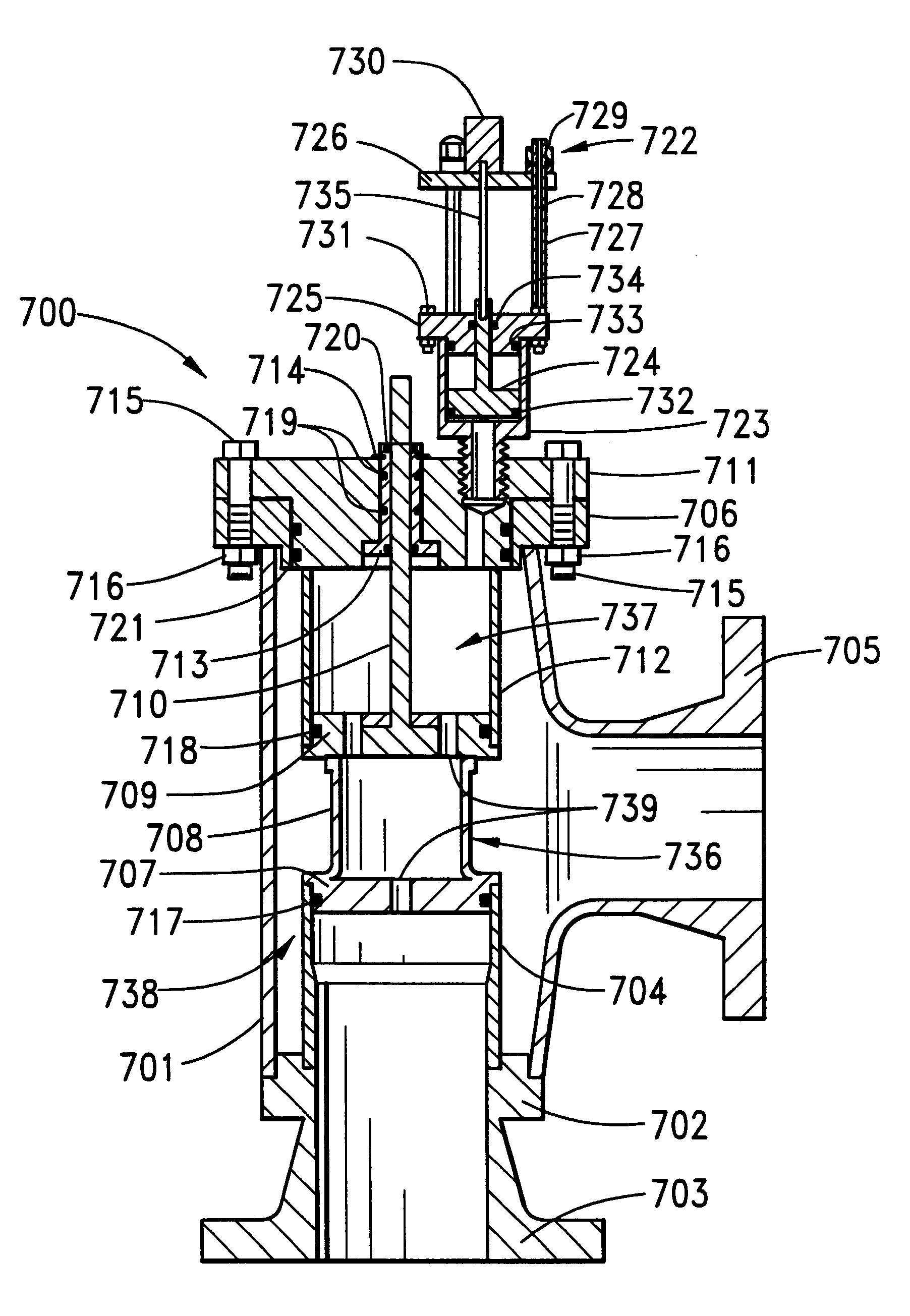
assembly includes at least two pistons of different areas so that the failure of the buckling pin results in differential forces acting on the pistons causing them to open the flow from the inlet to the outlet.
The balance chamber
assembly includes at least two pistons of different areas so that the failure of the buckling pin results in differential forces acting on the pistons causing them to open the flow from inlet to outlet.
The forces are transmitted to a buckling pin in the
pilot valve to cause it to fail at a predetermined pressure, that is, the buckling pin is caused to fail when the pressure exceeds a predetermined pressure.
The failure of the buckling pin causes the displacement of the pistons to permit the flow of fluid from inlet to outlet.


 Login to View More
  Login to View More