
Multi-layer paper machine wire for dewatering and sheetforming purposes
a paper machine and wire technology, applied in the wet end of the machine, papermaking, textiles and papermaking, etc., can solve the problem that the problem of reducing the wire marking cannot be solved completely by such a measure, and achieve the effect of reducing the creation of wire marks and increasing the wear volume or capacity
- Summary
- Abstract
- Description
- Claims
- Application Information
AI Technical Summary
Benefits of technology
Problems solved by technology
Method used
Image

Examples
Embodiment Construction
An embodiment of the invention will be described in detail in the following in connection with the drawings, in which
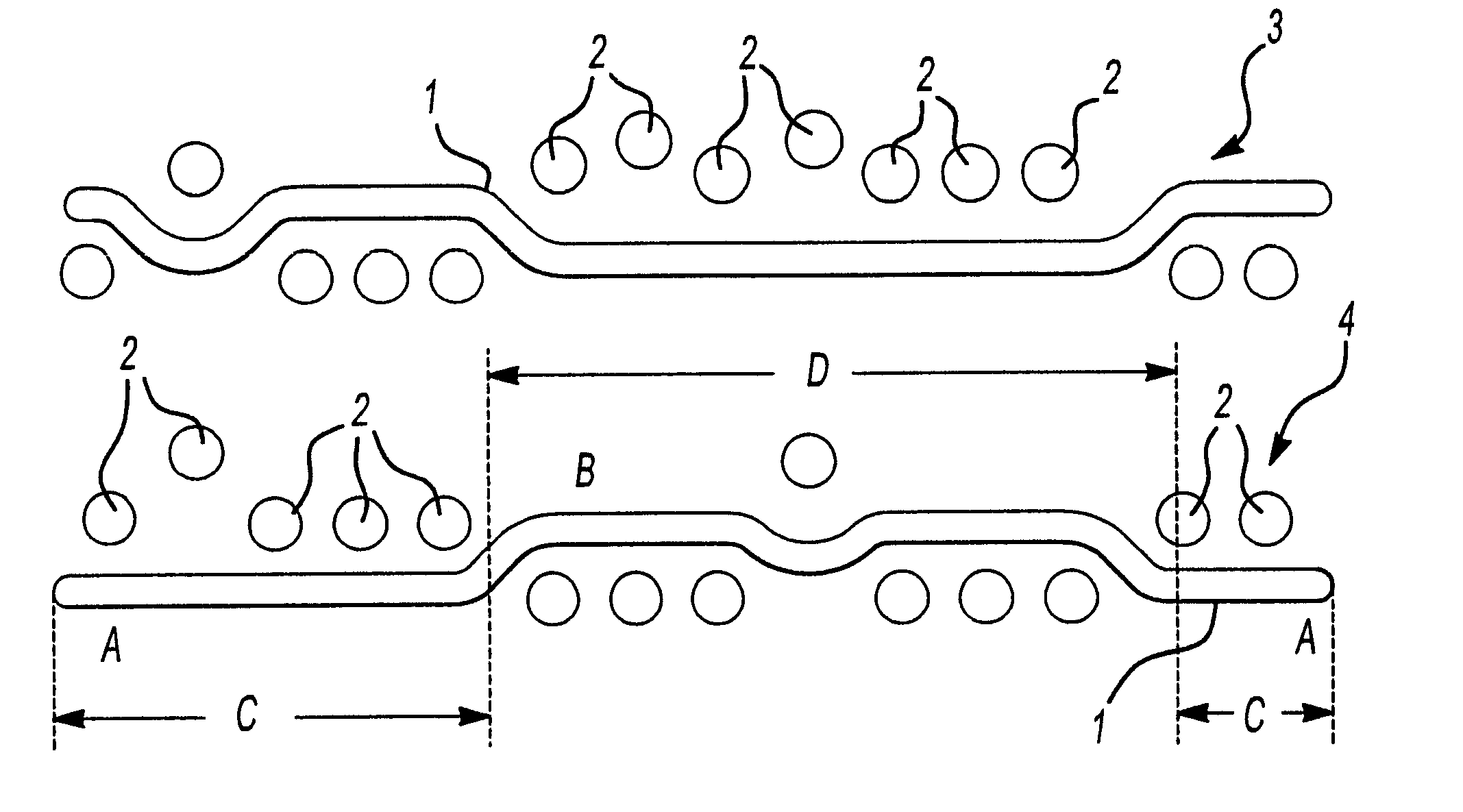
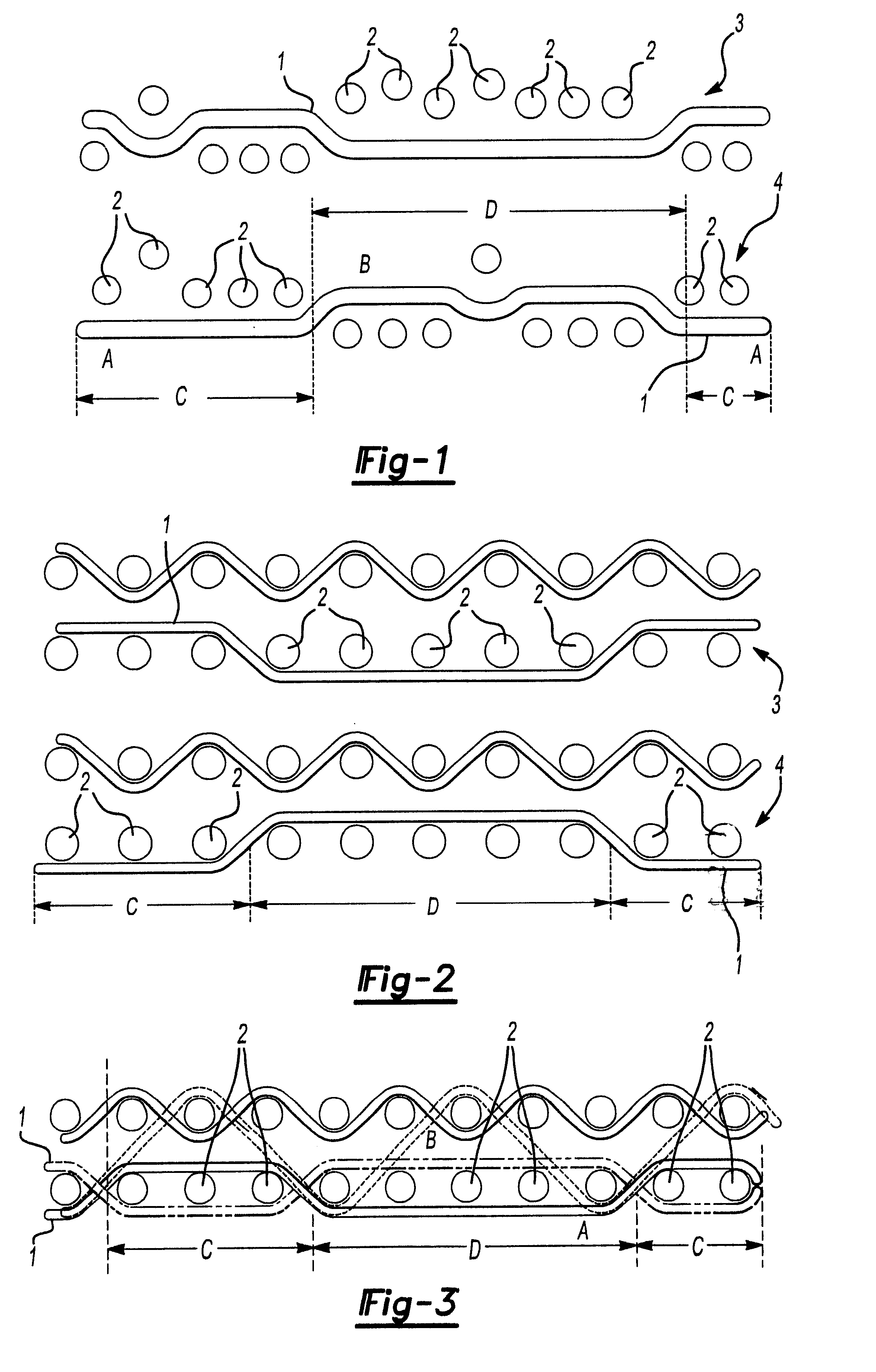
FIG. 1 is a schematic cross-section view (warp section view) of a double-layer fabric according to the invention, and
FIG. 2 is a schematic cross-section view (warp section view) of a three-layer fabric according to the invention.
FIG. 3 is a schematic cross-section view of the double-layer fabric of FIG. 1 including a binding thread.
The double-layer fabric of FIG. 1 comprises succeding exchangeably working weft threads on the running side of the fabric or wire. This fabric comprises weft threads 1 and warp threads 2 bound into the upper fabric 3 and lower fabric 4 which are connected to one another by warp threads woven through.
The weft threads 1 of the lower fabric are functioning exchangeably, that means that they alternatively change from the running side A to the center position B and overlap within the region of exchange C the warp threads 2 in order to protect th...
PUM
 Login to View More
 Abstract
Description
Claims
Application Information
 Login to View More