Unlock instant, AI-driven research and patent intelligence for your innovation.

Method for producing drum and paddle assembly for accelerated remediation

a drum and paddle assembly technology, applied in the field of accelerated remediation of contaminated materials, can solve the problems of contaminated soil reclamation, less efficient and time-consuming than aerobic decomposition, and difficult to do on a larger scale. achieve the effect of preventing moisture evaporation and accelerating remediation

Inactive Publication Date: 2005-05-17
H&H ECO SYST
View PDF29 Cites 11 Cited by
  • Summary
  • Abstract
  • Description
  • Claims
  • Application Information

AI Technical Summary

Benefits of technology

[0040]In one form of the invention, a method of using an apparatus is provided for the accelerated remediation of treated contaminated material. Treating of the contaminated material with at least one chemical amendment, with or without at least one biological amendment, can occur prior to, and / or during, and / or subsequent to, microenfractionating of the contaminated material. The chemical amendment can be at least one chemical reducing agent with or without at least one chemical oxidizing agent. For example, a contaminated material can be treated with at least one chemical amendment comprising a chemical reducing and / or oxidizing agent to form a treated contaminated material prior to microenfractionation of thereof. Then, an air stream is generated at a velocity sufficient for entraining the treated contaminated material therein, and the treated contaminated material is entrained in the air stream, and the treated contaminated material is microenfractionated under conditions sufficient to form a microenfractionated treated contaminated material such that subsequent accelerated remediation is provided under conditions sufficient for conducting said accelerated remediation. Alternatively, the chemical amendment(s) can be added during, or subsequent to, microenfractionating of the contaminated material. In any of the above-described methods, the accelerated remediation of the treated contaminated material can be facilitated.
[0043]An activating agent can also be added to the chemical reducing agent to make the remediation with the chemical reducing agent more effective and / or efficient. Such activating agents are typically acidic activating agents, preferably organic acid acidic activating agents such as acetic acid, or inorganic acidic materials such as hydrochloric acid, phosphoric acid, or nitric acid. Other acidic activating agents may include aliphatic alpha-hydroxycarboxylic acids of the type RCHOHCOOH and the corresponding beta-hydroxycarboxylic acids RCHOHCH2COOH, complexing agents such as ethylenediaminetetraacetic acid (EDTA), nitrolotriacetic acid (NTA) and diethylenediamine-pentaacetic acid (DPTA) and amines, hydroxyl containing amines such as mono-, di- and triethanolamine and diamines, triamines, polyamines having complexing properties. Exemplary alpha- and beta-hydroxy carboxylic acids are glycolic acid, lactic acid, glyceric acid, α,β-dihydroxybutyric acid, α-hydroxy-butyric acid, α-hydroxy-isobutyric acid, α-hydroxy-n-valeric acid, α-hydroxy-isovaleric acid, β-hydroxy butyric acid, α-hydroxy-isobutyric acid, β-hydroxy-n-valeric acid, β-hydroxy isovaleric acid, erythronic acid, threonic acid, trihydroxy-isobutyric acid and saccharinic acids and aldonic acids, such as gluconic acid, galactoni acid, talonic acid, mannonic acid, arabonic acid, ribonic acid, xylonic acid, lyxonic acid, gulonic acid, idonic acid, altronic acid, allonic acid, ethenyl glycolic acid, and β-hydroxy-isocrotonic acid. Also useful are organic acids having two or more carboxylic groups, and no or from one to ten hydroxyle groups, such as oxalic acid, malonic acid, tartaric acid, malic acid, and citric acid, ethyl malonic acid, succinic acid, isosuccinic acid, glutaric acid, adipic acid, suberic acid, azelaic acid, maleic acid, fumaric acid, glutaconic acid, citramalic acid, trihydroxy glutaric acid, tetrahydroxy adipic acid, dihydroxy maleic acid, mucie acud, mannosaccharic acid, idosaccharic acid, talomucie acid, tricarballylic acid, aconitic acid, and dihydroxy tartaric acid.
[0056]As for the treatment of the contaminated material with the chemical amendments, it is preferred that they are dispersed throughout the redistributed microenfractionated treated contaminated material thereby facilitating accelerated remediation.
[0057]Other preferred embodiments of the subject method include (a) locating an impervious undercover below the treated contaminated material prior to the microenfractionating step thereby preventing the chemical amendments from leaching into soil underlying the treated contaminated material, and (b) a cover over the microenfractionated treated contaminated material, the cover allowing substantial solar radiation to pass there through and into the microenfractionated treated contaminated material, thereby facilitating the accelerated remediation and preventing moisture from soaking the microenfractionated treated contaminated material and to prevent moisture evaporation from the microenfractionated treated contaminated material.

Problems solved by technology

When practiced on a small scale, it is relatively easy to maintain the aerobic conditions required by the bacteria; it is much more difficult to do on a larger scale.
Failure to maintain aerobic conditions throughout the contaminate material results in anaerobic decay of the material, which is much less efficient and much more time consuming than aerobic decomposition.
This same enzyme may also crack the hydrocarbon.
Any specific nutrient that is deficient in a given biological system will limit the efficiency of that system.
A key issue in a hazardous waste site closure is permitting land farms.
Often obtaining such a permit is not feasible under existing regulations.
The above steps are difficult and timely in their performance.
They are also extremely costly to perform for the end user.

Method used

the structure of the environmentally friendly knitted fabric provided by the present invention; figure 2 Flow chart of the yarn wrapping machine for environmentally friendly knitted fabrics and storage devices; image 3 Is the parameter map of the yarn covering machine
View more

Image

Smart Image Click on the blue labels to locate them in the text.
Viewing Examples
Smart Image
  • Method for producing drum and paddle assembly for accelerated remediation
  • Method for producing drum and paddle assembly for accelerated remediation
  • Method for producing drum and paddle assembly for accelerated remediation

Examples

Experimental program
Comparison scheme
Effect test

Embodiment Construction

[0094]In the ex-situ method of this invention, the soil should be removed from the contaminated site and placed in windrows on top of durable liner which acts as an underliner in the subject accelerated remediation process. This underliner substantially prevents undesirable materials present in the ex-situ soil from leaching into the surrounding uncontaminated soil prior to the completion of the remediation process. It has been determined that a woven polyolefin fabric of the type exemplified by NOVA-THENE® RB616-6HD, manufactured by Polymer International (N.S.) Inc., of Truco Nova Scotia, Canada, is one of the most durable liners available for this purpose. One reason is that it will remain intact during the microenfractionation of the treated contaminated material by the hereinafter-described subject apparatus.

[0095]After the liner has been laid down in a pile (on as smooth a surface as possible), a layer of sand is applied over the liner. Windrows are typically spaced 6-8 feet ap...

the structure of the environmentally friendly knitted fabric provided by the present invention; figure 2 Flow chart of the yarn wrapping machine for environmentally friendly knitted fabrics and storage devices; image 3 Is the parameter map of the yarn covering machine
Login to View More

PUM

PropertyMeasurementUnit
Fractionaaaaaaaaaa
Fractionaaaaaaaaaa
Timeaaaaaaaaaa
Login to View More

Abstract

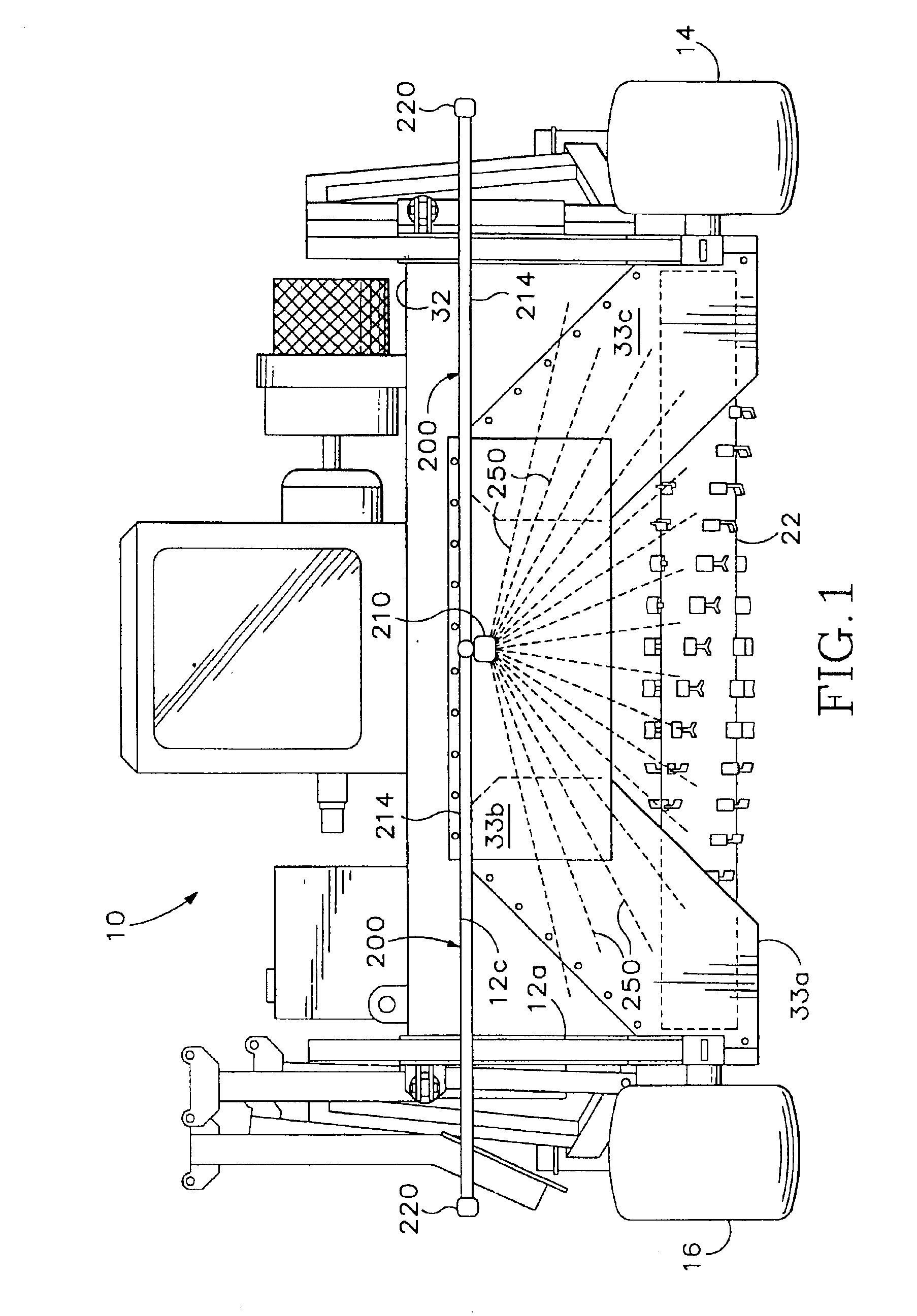
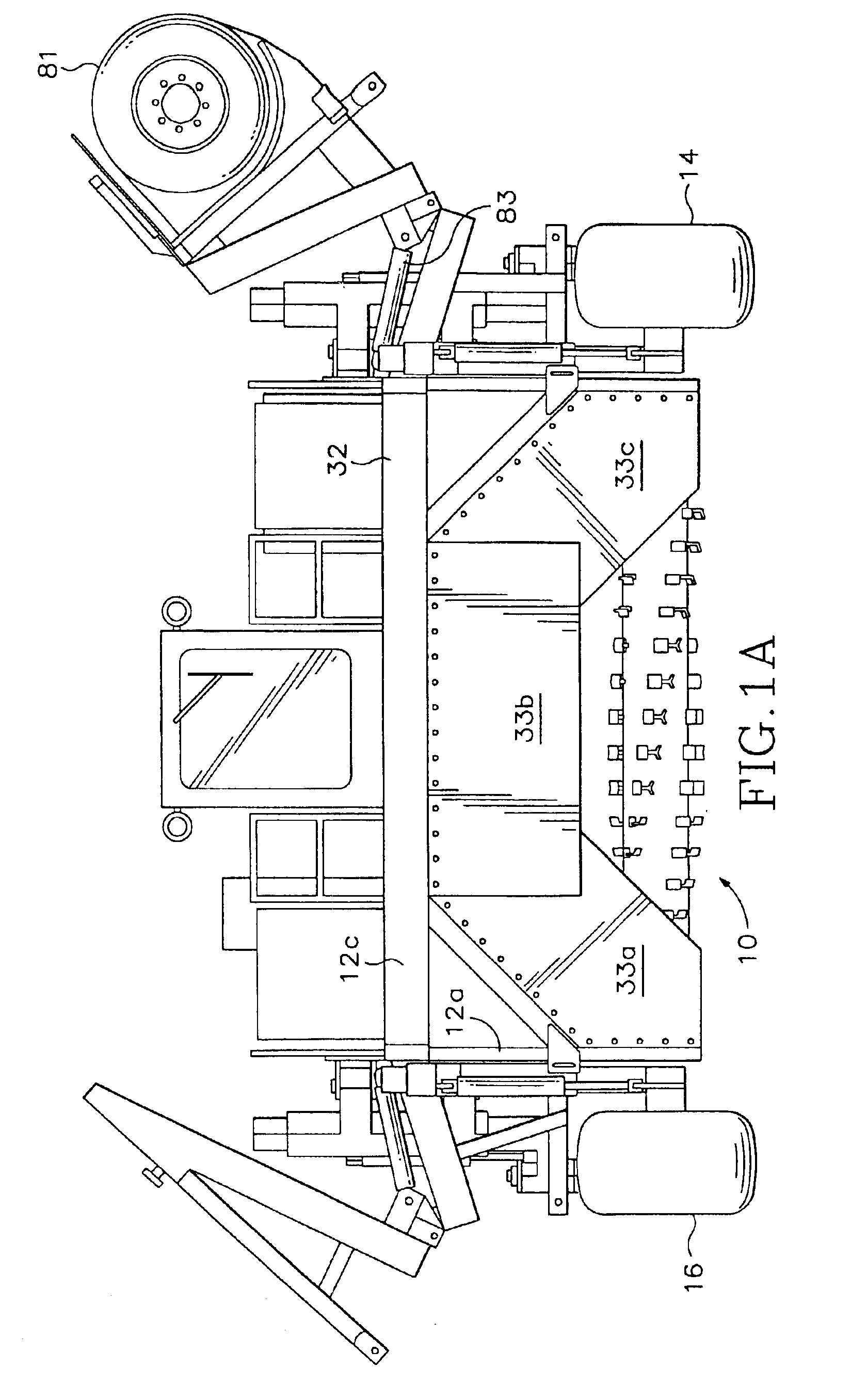
This invention relates to a method of producing a drum and paddle assembly for the accelerated remediation of a contaminated material. The method comprises providing at least one paddle which is connectable to, and extendable outwardly from the periphery of, an elongate cylindrical drum. The drum has a longitudinal axis and generates an air stream at a velocity sufficient for entraining the contaminated material therein. Also, it is employed for microenfractionating the contaminated material so that the contaminated material is treated with at least one chemical amendment prior to, and / or during, and / or subsequent to, microenfractionating the contaminated material. Each of the paddles comprises a body having a first planar portion having a leading edge and a second planar portion connected at a first angle to the first paddle portion. The second planar portion is oriented so as to generate a first material-entraining air stream when the drum is rotated, and a base portion connected to the body for mounting the paddle onto the drum. At least one the paddle is mounted onto the drum.

Description

RELATED APPLICATION[0001]This is a divisional application of U.S. Ser. No. 09 / 943,725, filed Aug. 30, 2001, now U.S. Pat. No. 6,541,241; which is a continuation application of U.S. Ser. No. 09 / 197,079, filed Nov. 20, 1998 now U.S. Pat. No. 6,306,641, which is a continuation-in-part application of U.S. Ser. No. 08 / 782,410, filed Jan. 14, 1997 now U.S. Pat. No. 5,854,061, which is a continuation-in-part application of U.S. Ser. No. 08 / 685,116, filed Jul. 23, 1996 now U.S. Pat. No. 5,824,541, which is a continuation-in-part application of U.S. Ser. No. 08 / 223,523, filed Apr. 5, 1994 now U.S. Pat. No. 5,593,888, which is a continuation-in-part application of U.S. Ser. No. 08 / 043,666, filed Apr. 6, 1993 now abandoned, which is a divisional application of U.S. Ser. No. 07 / 918,528, filed Jul. 21, 1992 now abandoned.BACKGROUND OF THE INVENTION[0002]The present invention relates to a method for the accelerated remediation of contaminated material and to a method of using a paddle therefor, a...

Claims

the structure of the environmentally friendly knitted fabric provided by the present invention; figure 2 Flow chart of the yarn wrapping machine for environmentally friendly knitted fabrics and storage devices; image 3 Is the parameter map of the yarn covering machine
Login to View More

Application Information

Patent Timeline
no application Login to View More
IPC IPC(8): B01F13/00B01F3/00B01F3/06B01F7/02B01F7/04B09C1/10B09C1/08B09B3/00B09C1/00C05F17/00C05F17/02C22B7/00B01F5/00B01F7/00B01F23/30
CPCB01F3/06B01F7/04B01F13/00B01F13/0035B01F13/0037B01F15/025B09B3/00B09C1/00B09C1/08B09C1/10B09C1/105C05F17/0045C05F17/009C05F17/0241C05F17/027C05F17/0276C22B7/001C22B7/005Y02E50/343B01F7/00158B01F2005/0017B01F2215/0054B01F7/00125Y02P20/145C05F17/986C05F17/943C05F17/10C05F17/80C05F17/979Y02E50/30Y02P10/20Y02W30/40B01F23/30B01F2025/913B01F27/0722B01F27/0726B01F27/70B01F33/00B01F33/5021B01F33/502B01F35/7177B01F2101/33
Inventor HORN, TERRY DEANHORN, RONALD DEANGLAZE, BRADLEY S.WARNER, KENNETH R.
Owner H&H ECO SYST