
Four-field motion adaptive de-interlacing
a four-field motion adaptive and interpolation technology, applied in the field of deinterlacing, can solve the problems of critical distortion in the output frame, poor efficiency and quality, and poor image quality, and achieve the effects of high brightness, good efficiency and quality, and high resolution
- Summary
- Abstract
- Description
- Claims
- Application Information
AI Technical Summary
Benefits of technology
Problems solved by technology
Method used
Image

Examples
Embodiment Construction
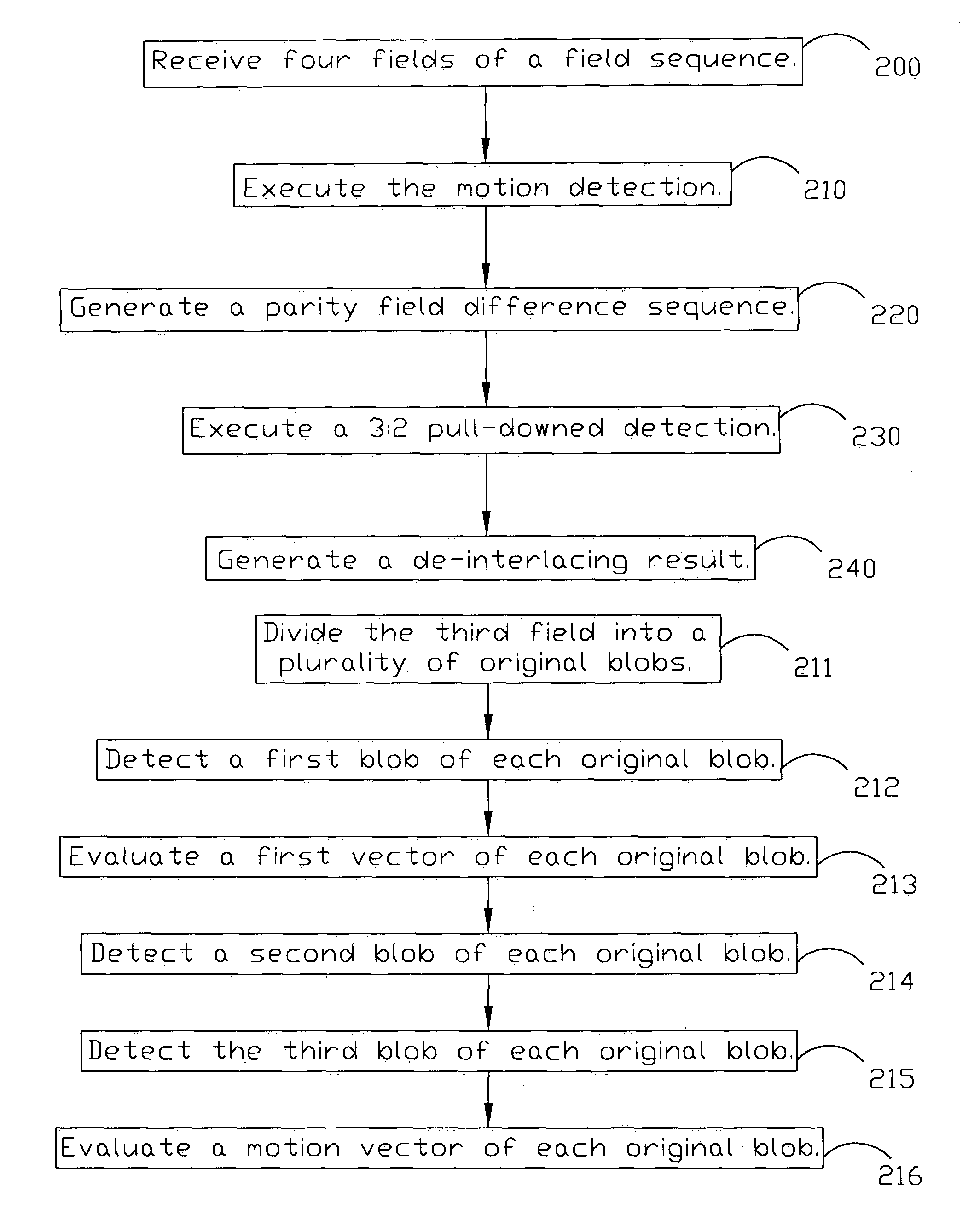
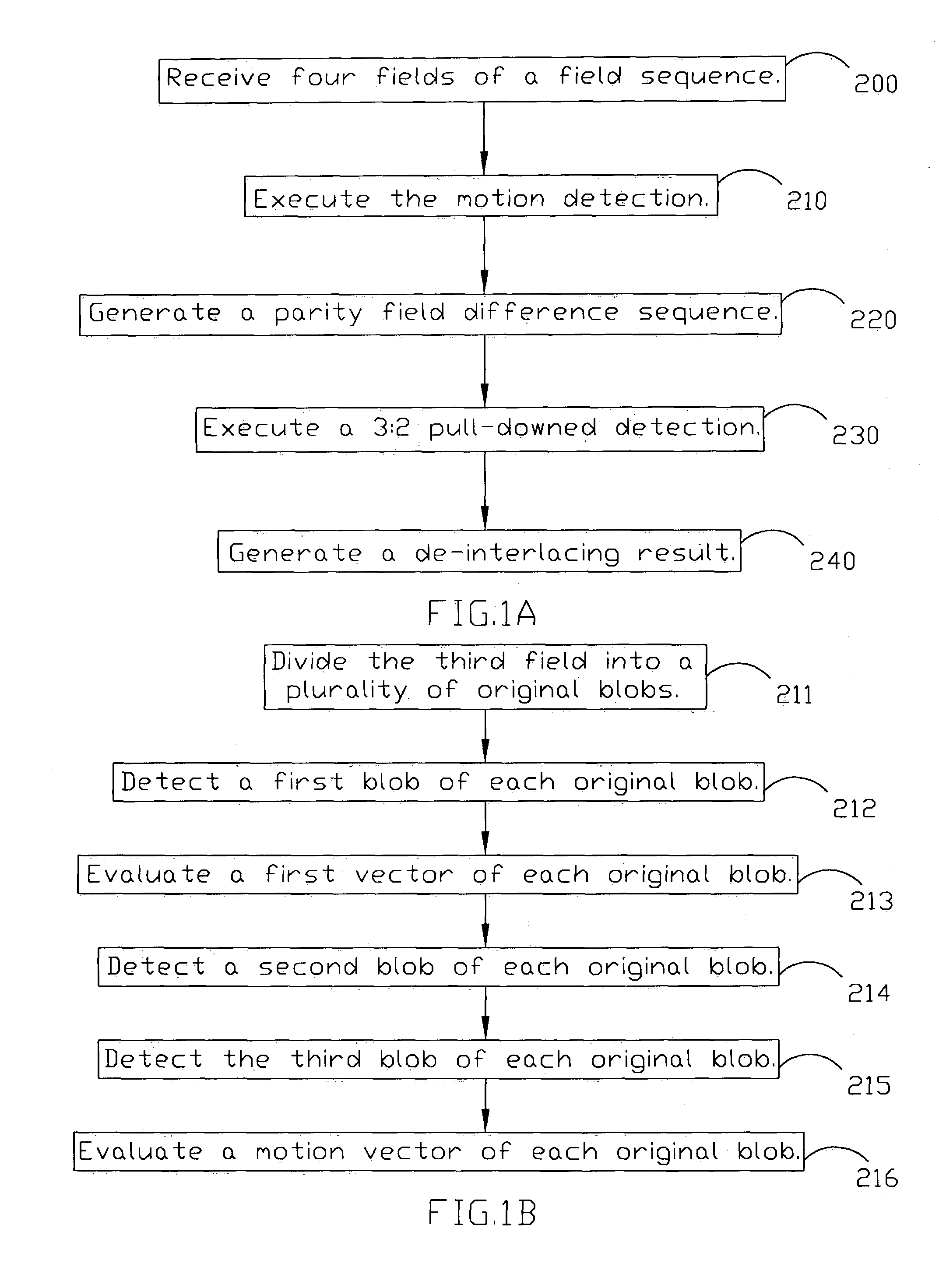
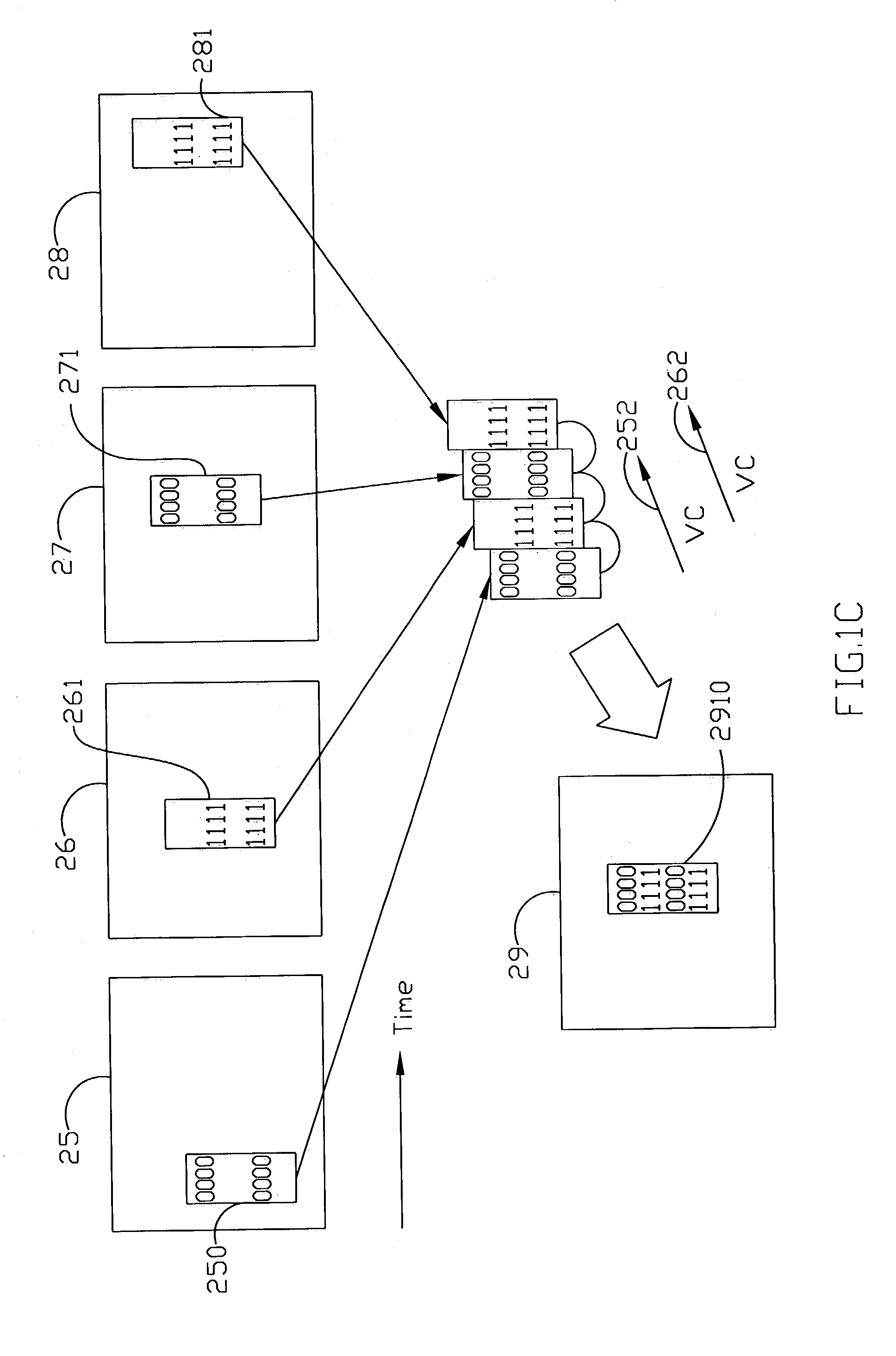
[0019]The present invention firstly presents a four-field adaptive de-interlacing method. FIG. 1A illustrates a diagram of the first embodiment of the present invention. Referring to step 200, which receives four fields of a field sequence, wherein the four fields in the order before and after are a first field, a second field, a third field and a fourth field. Each field of the field sequence is formed by the same pixel positions, and so are its parity fields (the forward parity field and the backward parity field) under difference time. The pixel positions formal plurality of scan lines. That is, each field has some scan lines that each of the scan lines is formed by some pixels. Each signal pixel is located on a signal pixel position. Many pixels that each of them is within a different field may be on the same pixel position at different time. Then step 210 executes the motion detection for generating a motion detection result. Later, a parity field difference sequence is generat...
PUM
 Login to View More
 Abstract
Description
Claims
Application Information
 Login to View More