

Blends of polypropylene impact copolymer with other polymers
a technology of polypropylene and impact copolymer, which is applied in the direction of thin material processing, transportation and packaging, chemical production, etc., can solve the problems of polypropylene (pp) for blown film technology
- Summary
- Abstract
- Description
- Claims
- Application Information
AI Technical Summary
Benefits of technology
Problems solved by technology
Method used
Image

Examples
Embodiment Construction
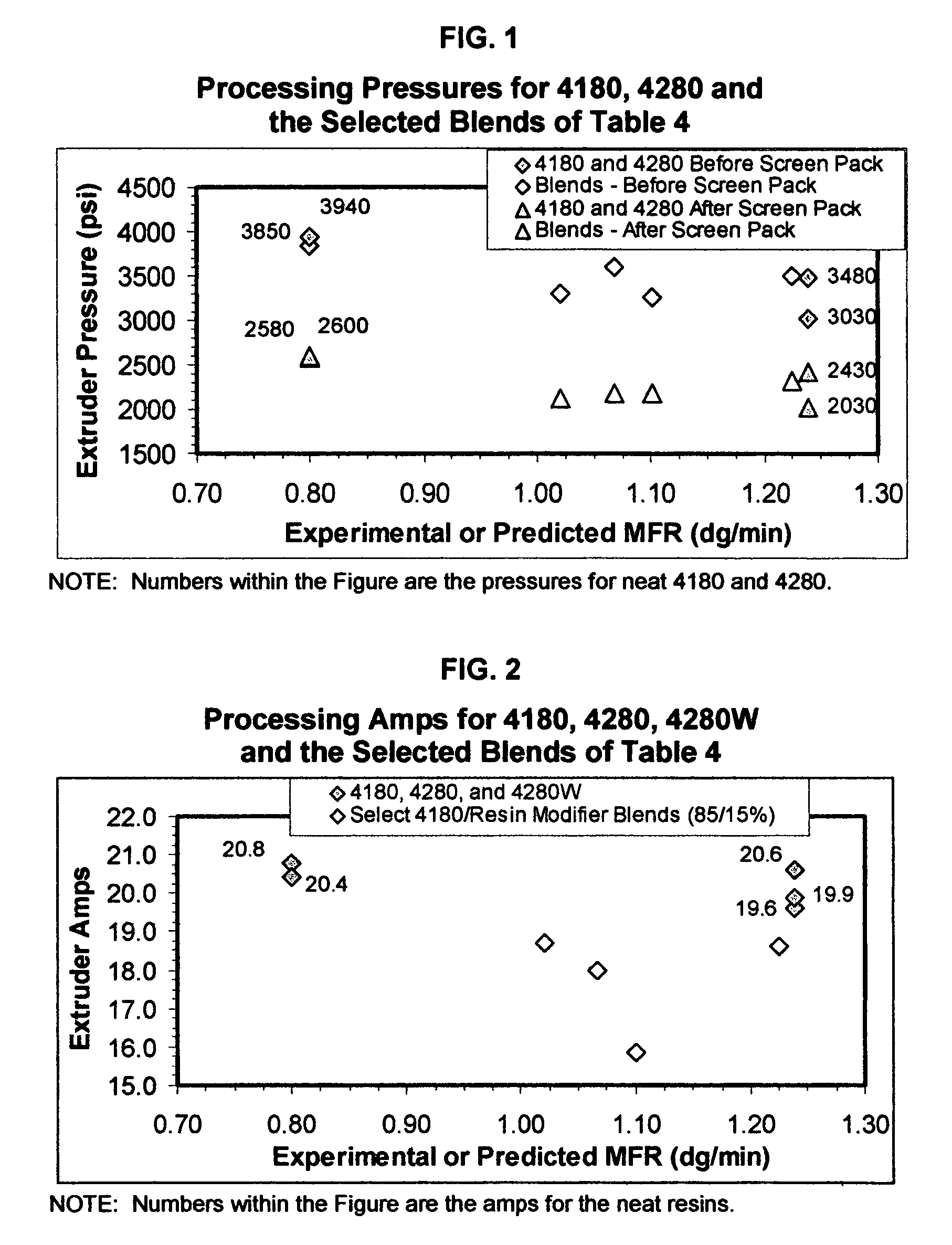
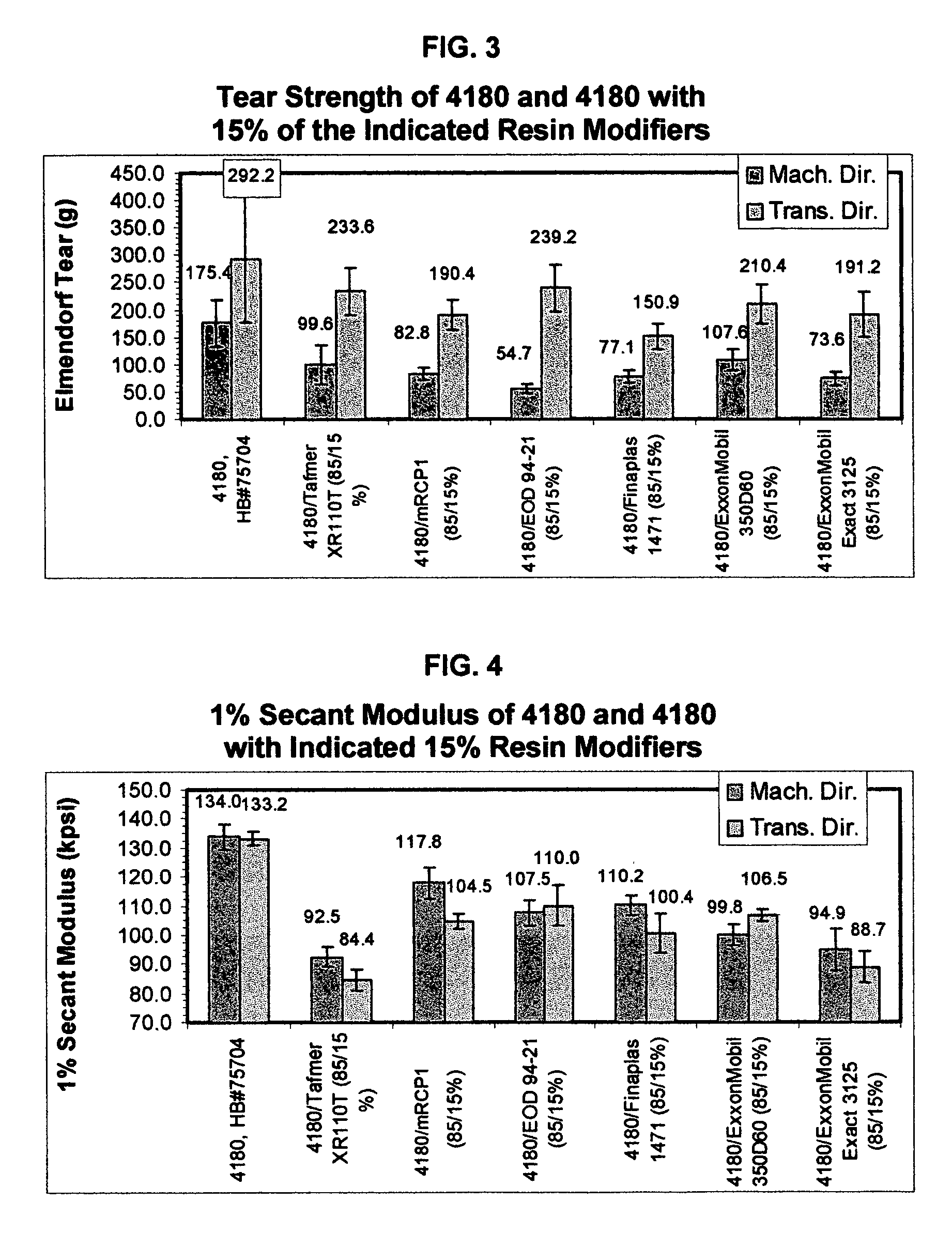
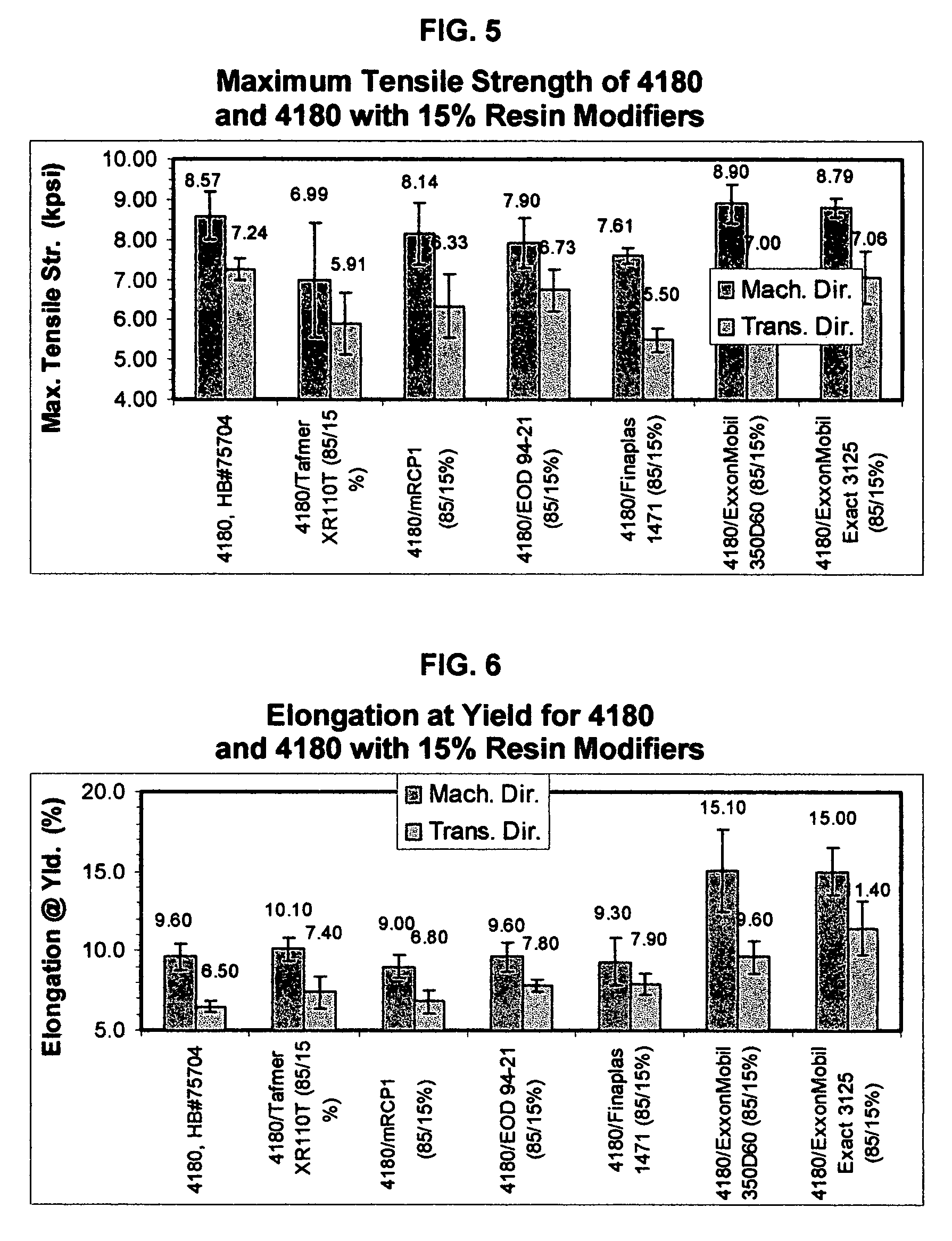
[0026]It has been discovered that broad molecular weight distribution ethylene / propylene rubber impact-modified heterophasic copolymers (ICPs) such as ATOFINA's 4180 polypropylene can be advantageously blended with other polyolefins to give blown films and sheet materials having improved properties. Several different blends involving 4180 polypropylene mixed with other, second polyolefins include, but are not necessarily limited to, syndiotactic polypropylene (sPP), low crystalline copolymer of propylene / α-olefin (e.g. Tafmer), metallocene random copolymers, Ziegler-Natta random copolymers, medium density polyethylene, etc. that improve or change properties including, but not necessarily limited to, reduced motor amperes, lower secant modulus, improved dart drop strength, improved visual properties, improved tear properties, improved heat seal and other improved physical and mechanical properties. These studies will help to develop expertise in blown film that will support polyethyl...
PUM
| Property | Measurement | Unit |
|---|---|---|
| melt flow rate | aaaaa | aaaaa |
| polydispersity | aaaaa | aaaaa |
| melting point | aaaaa | aaaaa |
Abstract
Description
Claims
Application Information
 Login to View More