
LED headlight for a motor vehicle
a headlight and motor vehicle technology, applied in the direction of lighting and heating apparatus, instruments, lighting support devices, etc., can solve the problem that the described headlight does not have a sufficient light intensity, and achieve the effect of reducing the construction depth simple cost effective, and greater employability of the vehicle headligh
- Summary
- Abstract
- Description
- Claims
- Application Information
AI Technical Summary
Benefits of technology
Problems solved by technology
Method used
Image

Examples
Embodiment Construction
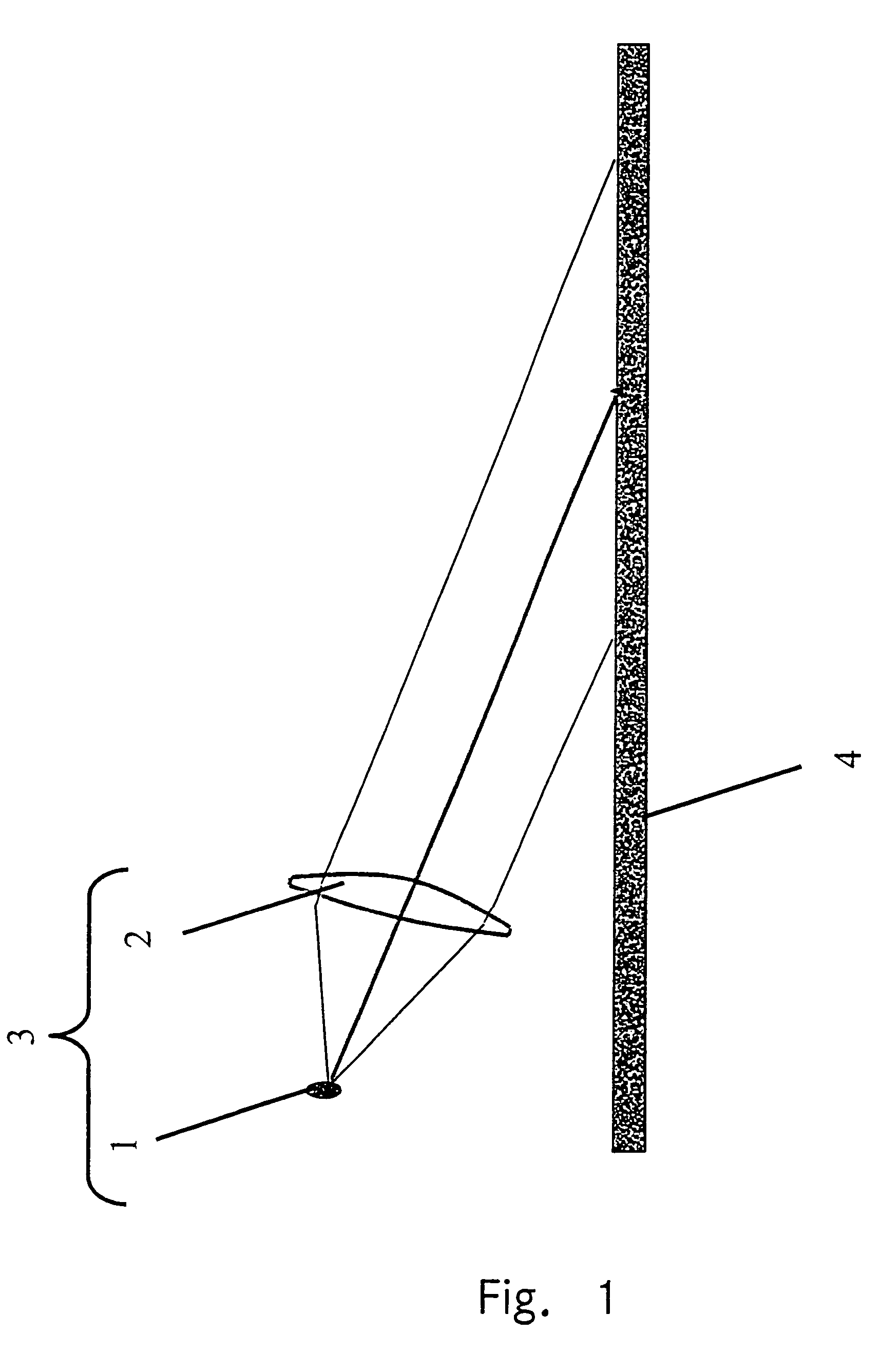
[0044]In FIG. 1 the beam pattern of a LED-chip 1 of the asymmetric array of LED-chips of the inventive vehicle headlight is shown. A LED-chip 1 is spaced apart from the lens 2 acting as collection lens of the LED-module 3, such that it lies in the focal plane of the lens 2. Thereby it is ensured, that the infrared emission transmitted from the LED-chip 1 is emitted bundled through the lens 2. The bundling brings about that the emitted infrared radiation of the LED-chip 1 is projected to be infinite. This means, that the bundled infrared radiation shows a parallel beam course. Therewith the quasi point-shaped infrared radiation source is shaped to a flat point. This flat or planar point impinges upon the surface of the ground 4 and obtains there an oval shape. The oval plane exhibits an essentially even light distribution.
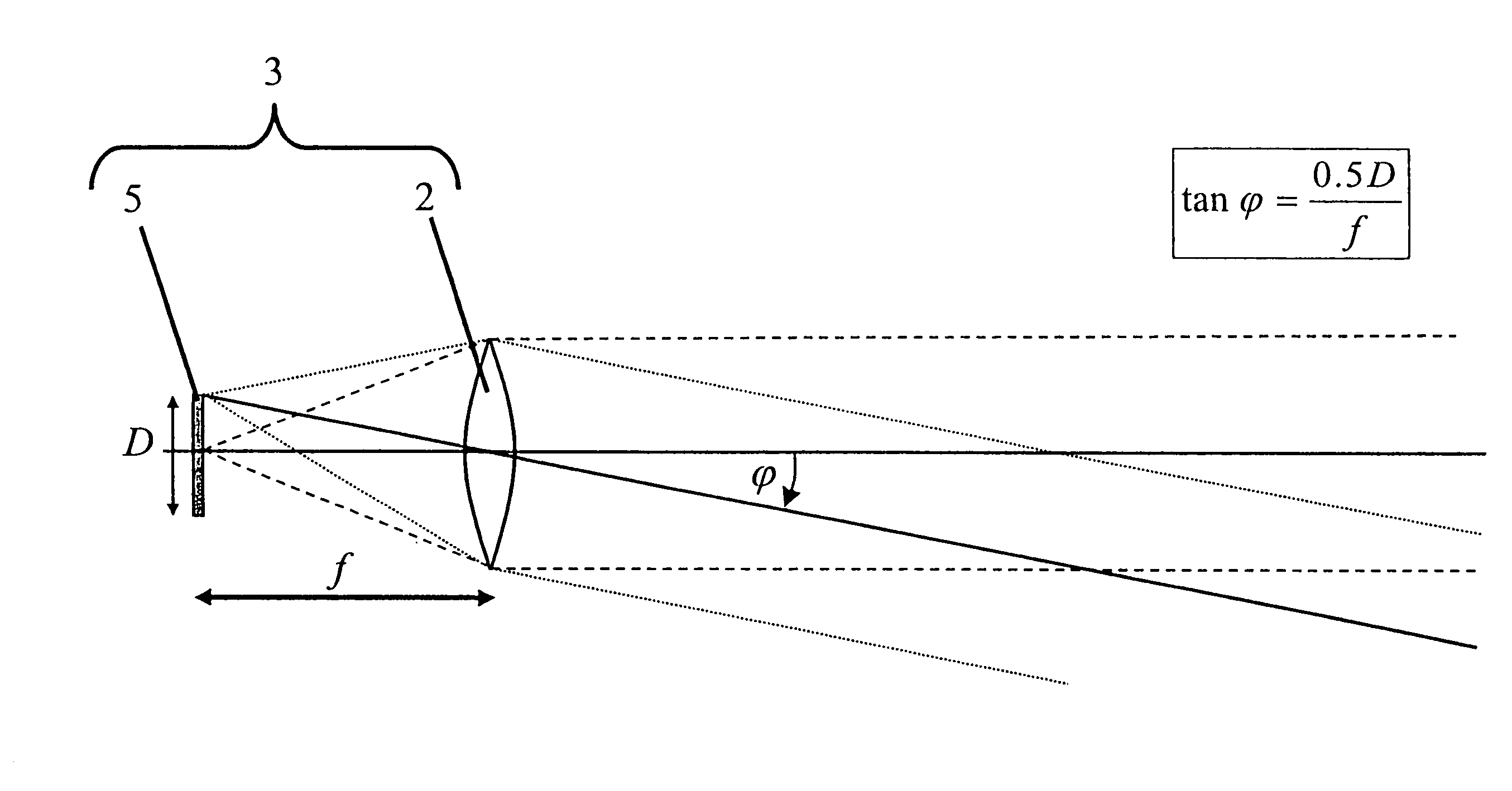
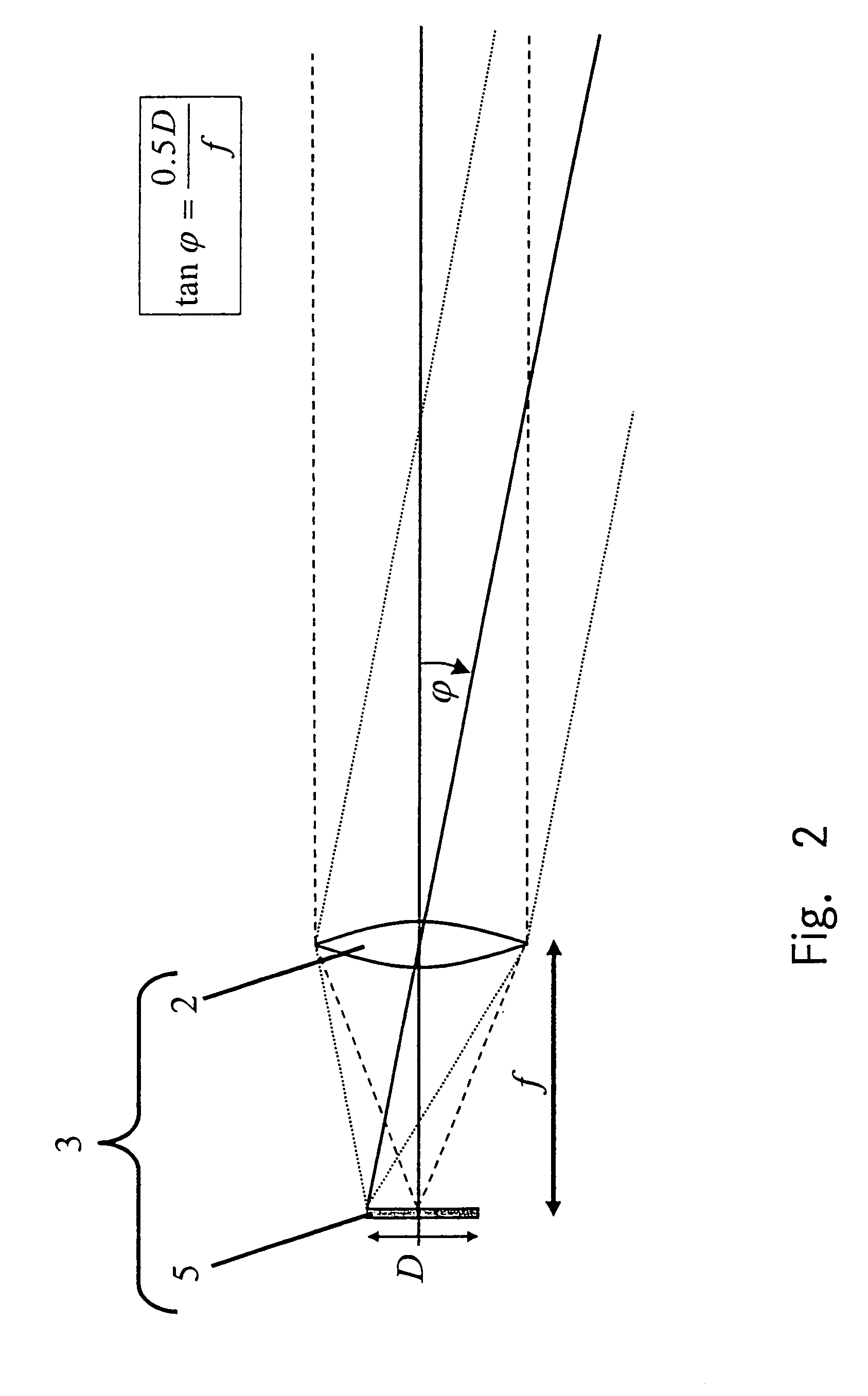
[0045]In FIG. 2 the illumination characteristic of the LED-module 3 is shown schematically. The array 5 is comprised of a number of individual LED-chips, and has a ...
PUM
 Login to View More
 Abstract
Description
Claims
Application Information
 Login to View More