System and method for measuring and recording latency in internet protocol networks

a technology of internet protocol network and measurement system, applied in the field of data networks, can solve the problems of affecting the quality of data calls, the frequency network is often the most unreliable, and the functionality is not integrated into the service set of wireless networks of today

US7610396B2Active Publication Date: 2009-10-27U S CELLULAR
8 Cites 217 Cited by

Patent Information

Authority / Receiving Office
US · United States
Patent Type
Patents(United States)
Current Assignee / Owner
Publication Date
2009-10-27

Smart Images

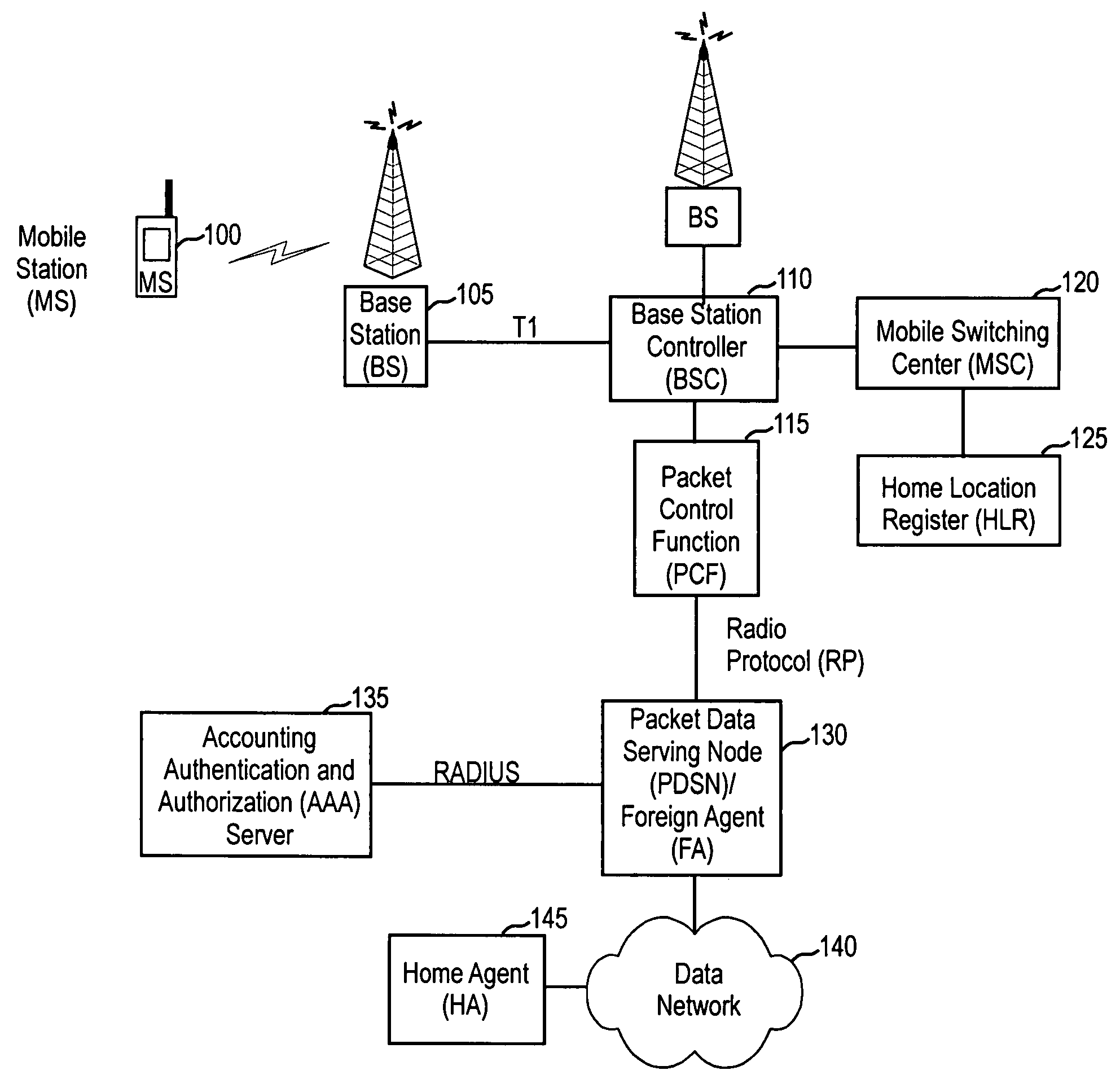
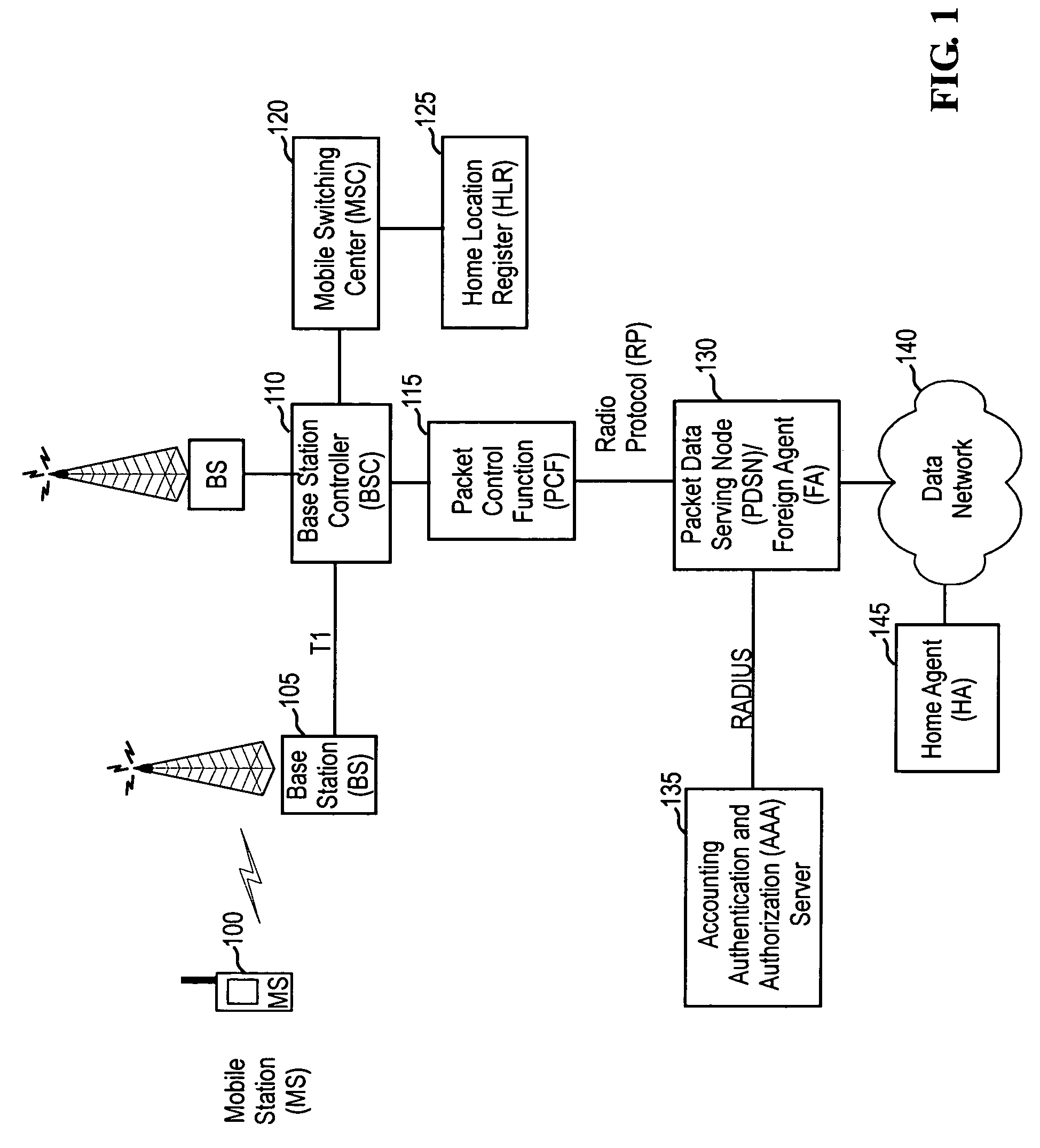
  • Figure 1
    Figure 1
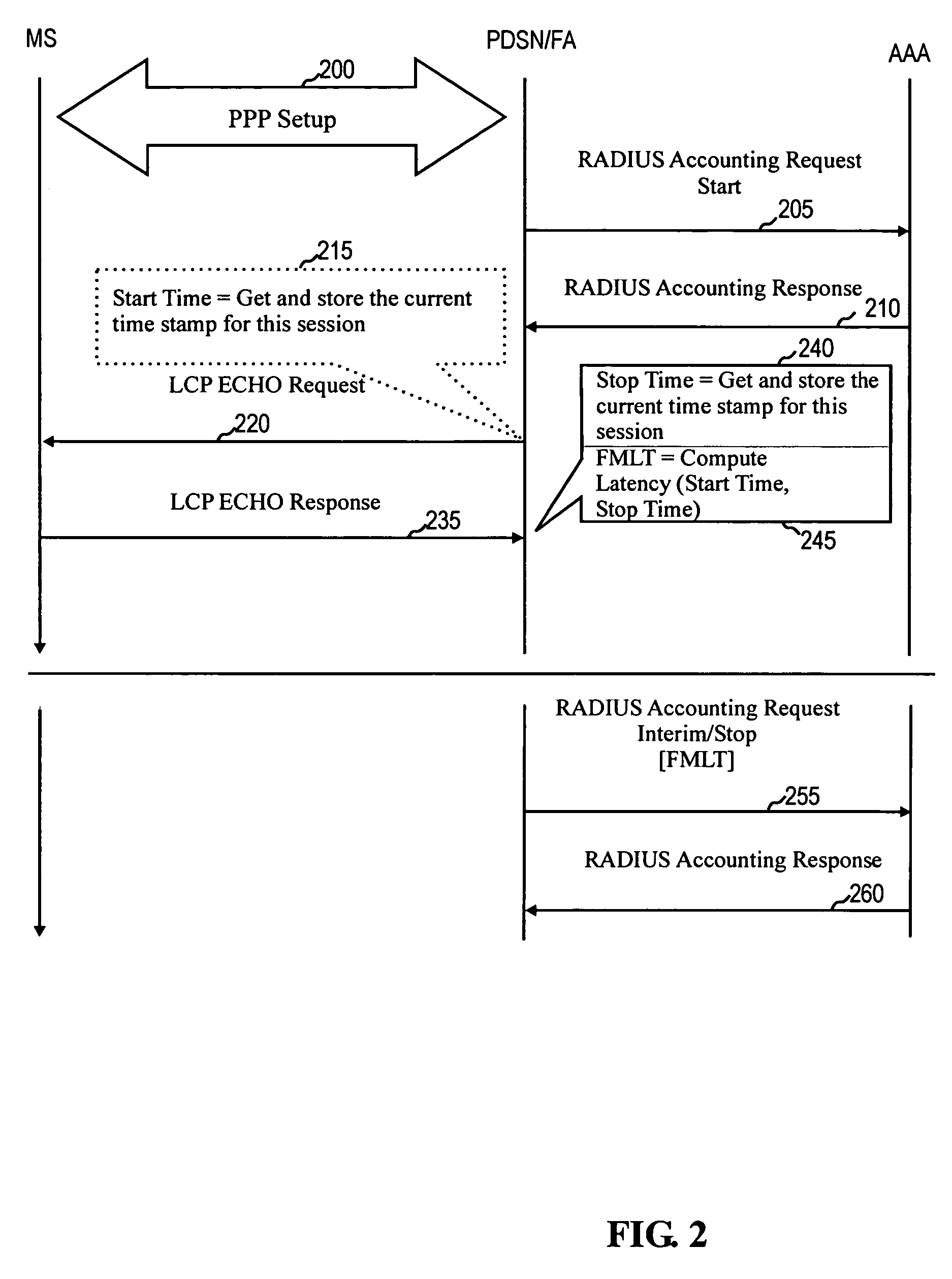
  • Figure 2
    Figure 2
  • Figure 3
    Figure 3
Patent Text Reader

Abstract

A system and method for measuring and recording latency in data networks. The system and method can be used to measure and record latency in a Simple IP network or a Mobile IP network. One embodiment of the present invention is a system and method for measuring latency between a first device and a second device, the first and second devices communicating in accordance with a communications specification. The system and method comprises the second device transmitting, during a communication session, a message to the first device; receiving a response message from the first device; computing an elapsed time from transmission of the message to receipt of the response message to determine the latency; and recording the latency in a latency parameter. The message and the response message are provided by the communications specification.
Need to check novelty before this filing date? Find Prior Art

Description

FIELD OF THE INVENTION

[0001] The present invention relates generally to data networks, such as internet protocol networks, and more particularly, to a system and method for measuring and recording latency in a data network.BACKGROUND OF THE INVENTION

[0002] While tools do exist today which measure latency in a data network, such as a wireless data network, this functionality is not integrated into the set of services provided by wireless networks today. Furthermore these tools are used to measure latency at the equipment level, not at the user session level.

[0003] In wireless networks, a mobile station is connected to a radio access node via a wireless or radio frequency (RF) network. The radio access node is then connected to the data network (e.g., the Internet) typically via a wire-line network. The radio frequency network is frequently the most unreliable part of the end-to-end connection. Bad connections or a high volume of voice calls in the sector will affect the quality of data ...

Examples

Embodiment Construction

[0015]FIG. 1 schematically illustrates a representative environment of the present invention. A mobile station (MS) 100 (e.g., a cellular phone or a wireless data terminal) is wirelessly connected to a base station (BS) 105 via a radio frequency (RF) network. The base station 105 is connected to a base station controller (BSC) 110, typically via a wire-line, such as a T1 line. The base station controller 110 is configured for connecting to and controlling multiple base stations 105. The base station controller 110 is connected to a Packet Control Function (PCF) 115, which typically resides proximate the base station controller 110. The base station controller 110 is also connected to a Mobile Switching Center (MSC) 120, which is connected to a Home Location Register (HLR) 125.

[0016]The PCF 115 is connected to a mobility agent, such as a packet data serving node (PDSN) 130 via the data network using the Radio Protocol (RP). The PDSN 130 is connected to an accounting authentication an...