

Syringe pumps
a technology of syringe and pump, which is applied in the direction of flow monitors, medical devices, flow control, etc., can solve the problems of presenting a patient's hazard and the medication fluid upstream of the occlusion is subject to compressive forces, and achieve the effect of reducing the excess pressure of the medication
- Summary
- Abstract
- Description
- Claims
- Application Information
AI Technical Summary
Benefits of technology
Problems solved by technology
Method used
Image

Examples
Embodiment Construction
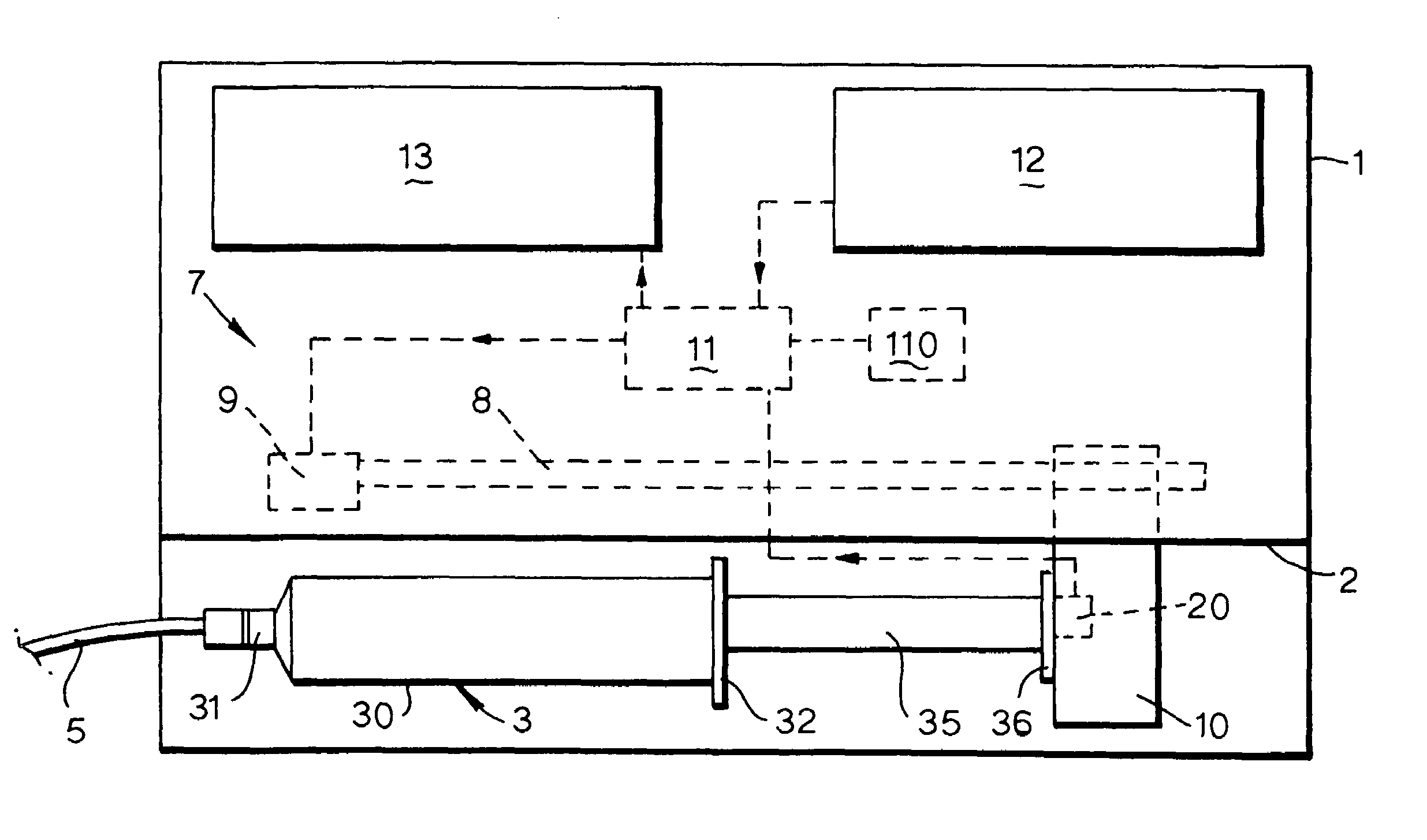
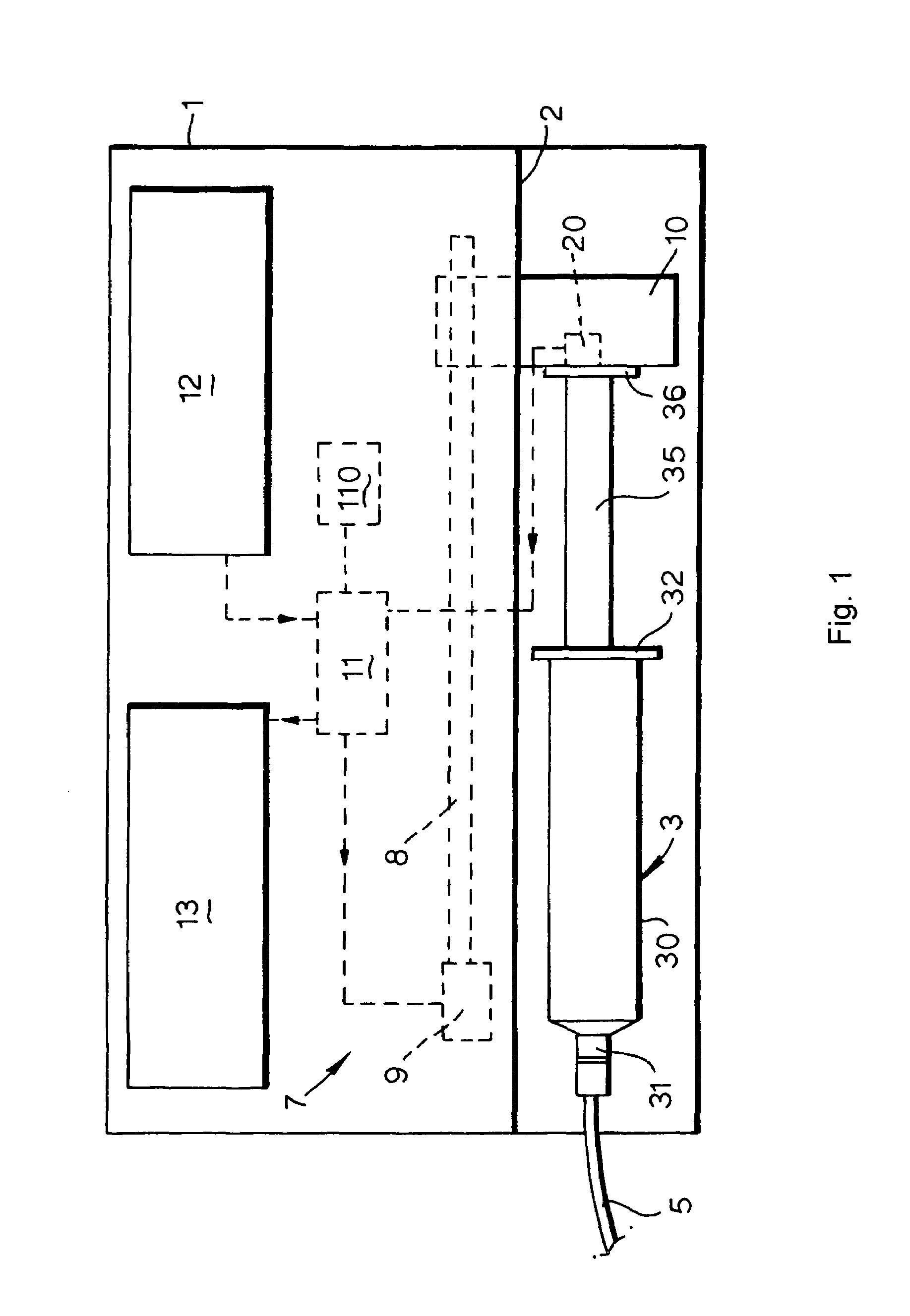
[0012]The pump includes an outer housing 1 with a recess 2 on its front surface shaped to receive a syringe 3 of conventional kind. The syringe 3 has a cylindrical barrel 30 with an outlet or nose 31 at its forward end and a flange or ear 32 at its rear end. The nose 31 is connected to an infusion line 5 so that a medication liquid in the syringe 3 can be dispensed to a patient via the infusion line, by pushing in the plunger 35. The pump has a drive mechanism 7, including a lead screw 8 driven by an electric motor 9. A retainer mechanism 10 is movable along the lead screw as it rotates and engages the head 36 of the plunger 35, so as to move the plunger along the barrel 30. The motor 9 is driven by a control unit 11, which receives inputs from a keypad 12, or other user input means, and various sensors. The control unit 11 also provides an output to a display 13.
[0013]The plunger head retainer 10 includes a force sensor 20, as described in greater detail in GB2352637, which respond...
PUM
 Login to View More
 Abstract
Description
Claims
Application Information
 Login to View More