
Device for moving a body linearly between two predetermined positions
a technology of moving a body and a predetermined position, applied in the direction of magnets, magnets, propulsion systems, etc., can solve the problems of not satisfying the desire for the power supply to be minimized, other solutions suffer from drawbacks, and cannot guarantee the travel tim
- Summary
- Abstract
- Description
- Claims
- Application Information
AI Technical Summary
Benefits of technology
Problems solved by technology
Method used
Image

Examples
Embodiment Construction
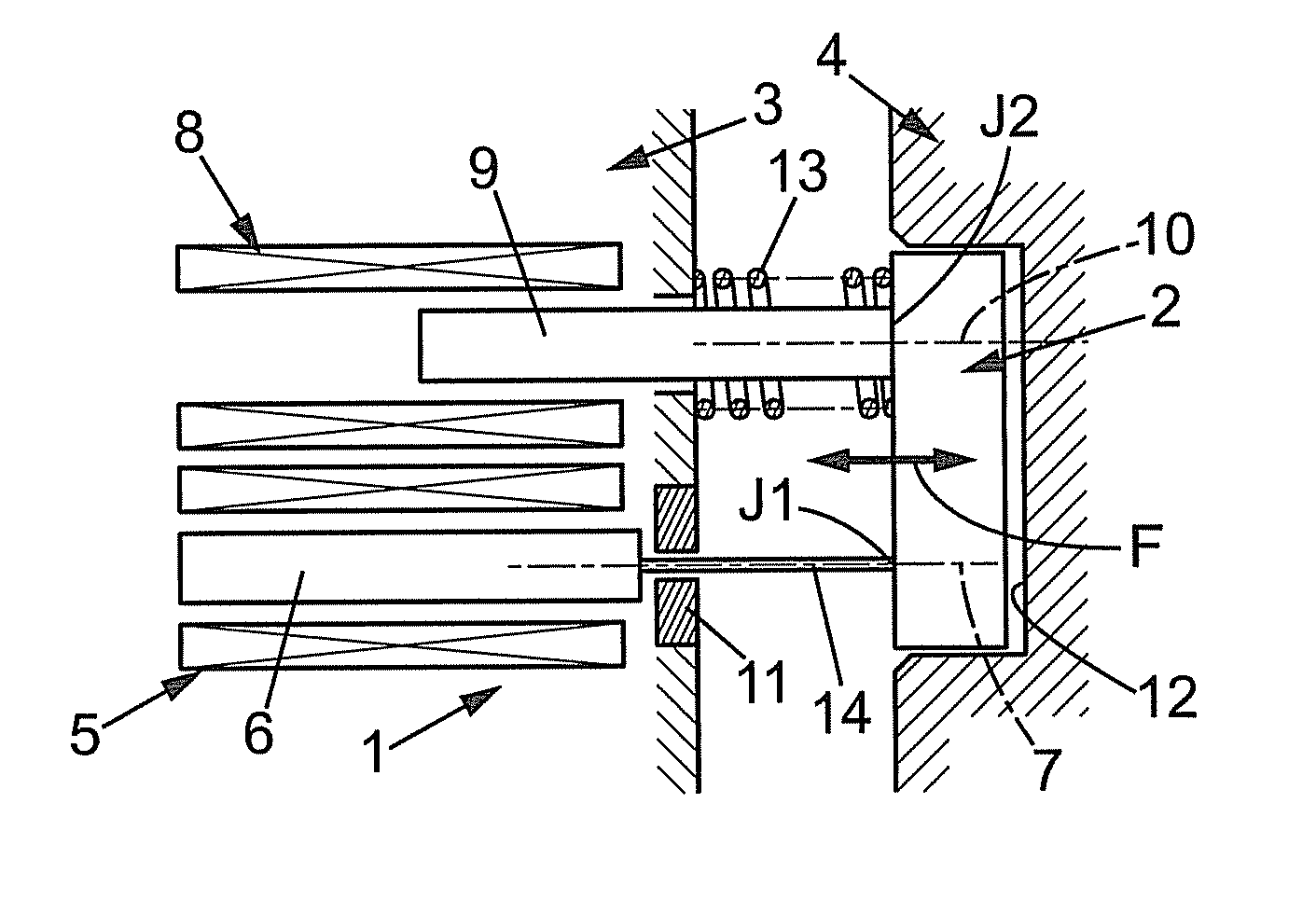
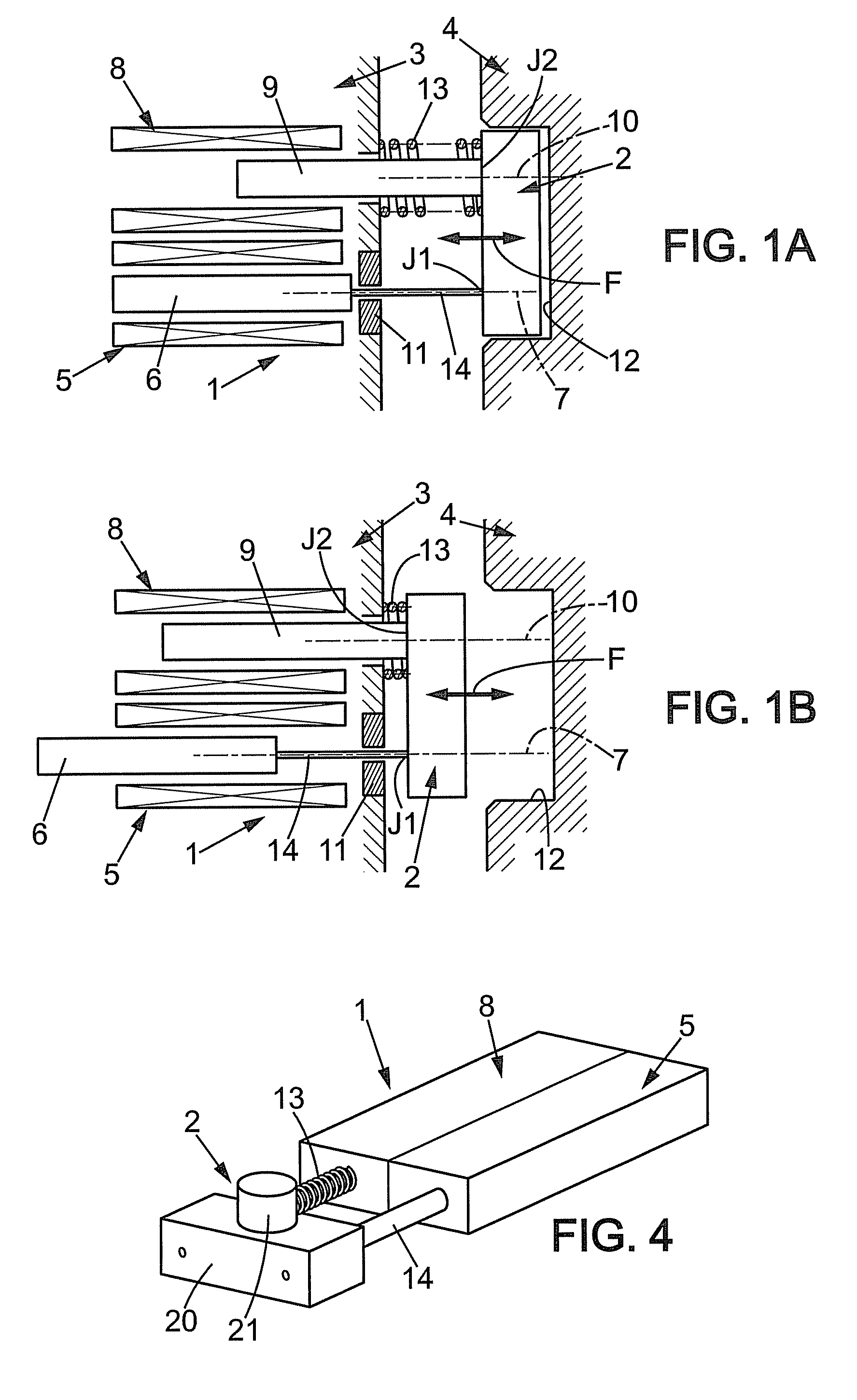
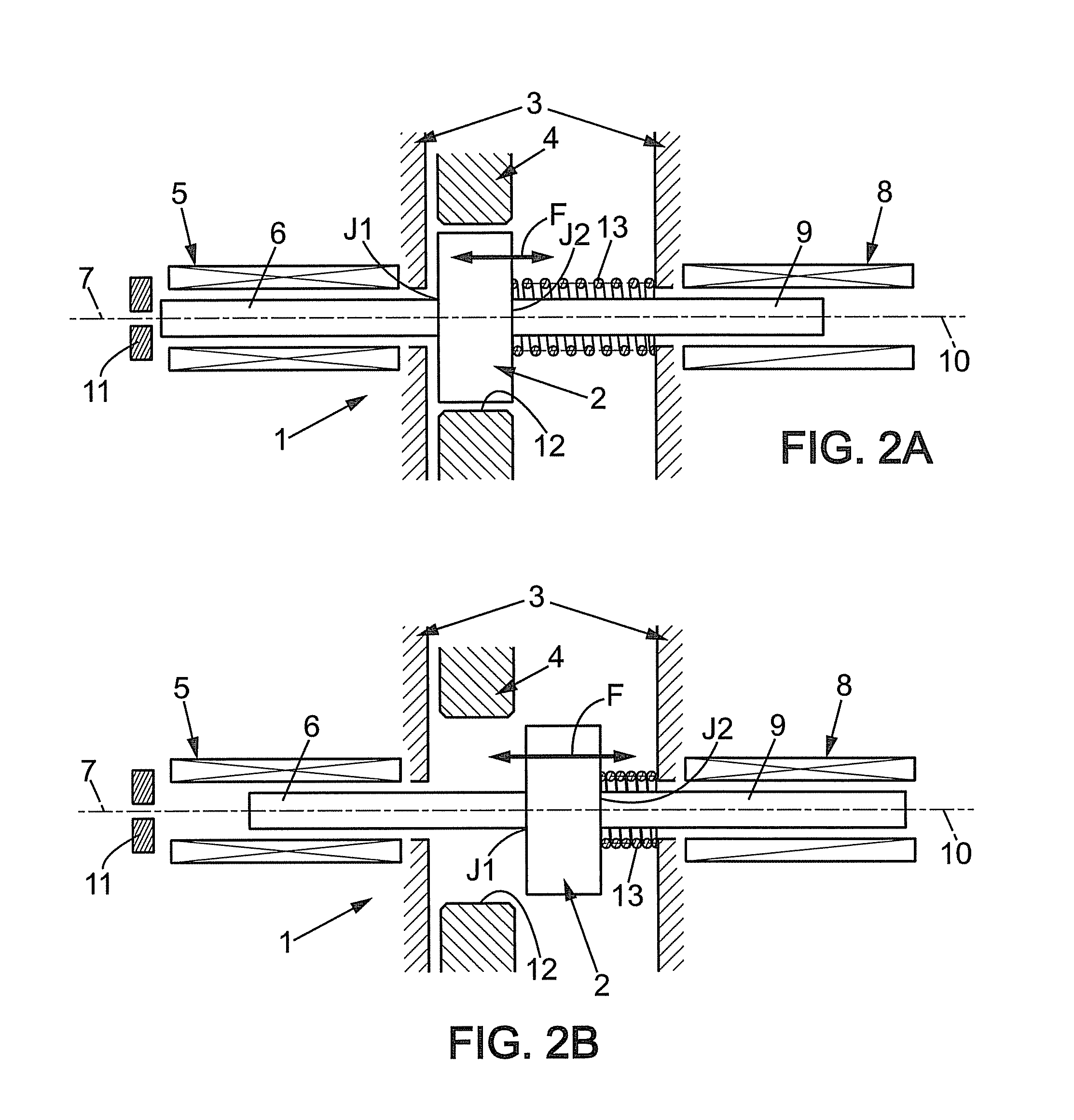
[0029]With reference firstly to FIGS. 1A and 1B, those figures show a preferred embodiment of a device designated overall by reference 1, and suitable for moving a body 2 along a substantially linear path (arrow F) between a first predetermined position (FIG. 1A) and a second predetermined position (FIG. 1B). In order to give some idea, but bearing in mind that this is not the sole application of a device of the invention, the body 2 can be a moving latch making it possible to secure two pars 3 and 4 together (FIG. 1A) or to release them from each other (FIG. 1B), one of which parts can be a stationary part while the other is a moving part that needs to be held stationary on command. For example, the first position (FIG. 1A) can need to be a rest position and a failsafe position that must be taken up in the event of an incident, in particular in the event of an interruption in the electrical power supply.
[0030]The device 1 comprises:[0031]a first electromagnet 5 which has a first mo...
PUM
| Property | Measurement | Unit |
|---|---|---|
| DC voltage | aaaaa | aaaaa |
| voltage | aaaaa | aaaaa |
| length | aaaaa | aaaaa |
Abstract
Description
Claims
Application Information
 Login to View More