Dynamic network tunnel endpoint selection

a tunnel endpoint and dynamic network technology, applied in the field of computer networks, can solve the problems of generalized unsecurity of public networks

US7992201B2Active Publication Date: 2011-08-02A10 NETWORKS
10 Cites 43 Cited by

Patent Information

Authority / Receiving Office
US · United States
Patent Type
Patents(United States)
Current Assignee / Owner
Publication Date
2011-08-02

Smart Images

  • Figure 1
    Figure 1
  • Figure 2
    Figure 2
  • Figure 3
    Figure 3
Patent Text Reader

Abstract

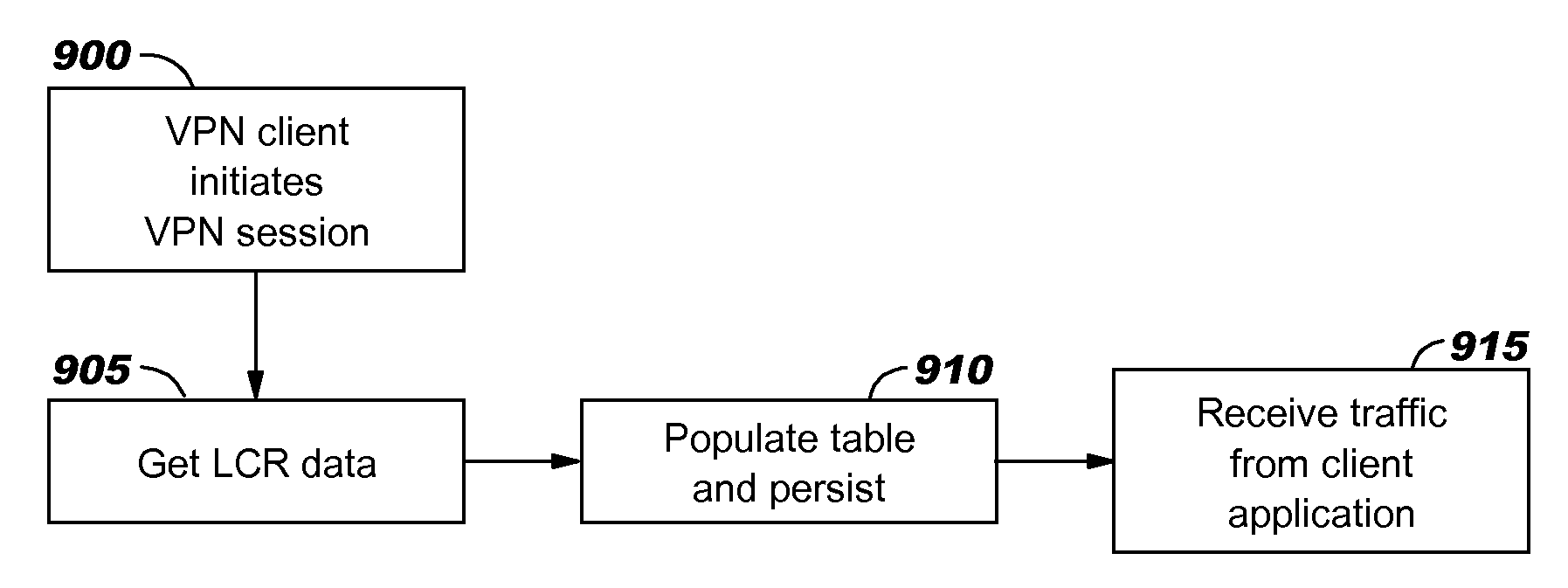
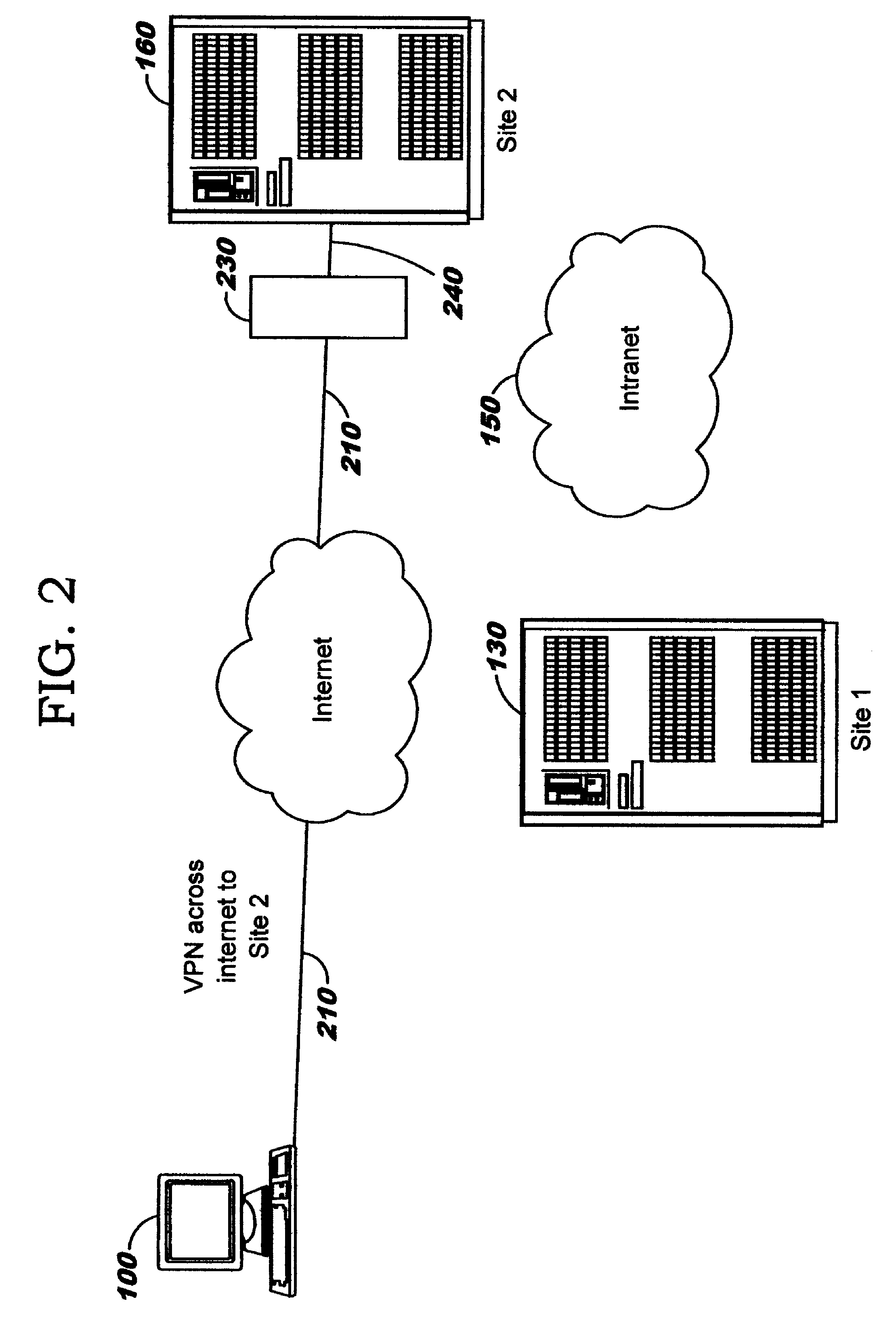
Dynamically selecting an endpoint for a tunnel into an enterprise computing infrastructure. A client dynamically selects a gateway (which may alternatively be referred to as a boundary device or server) as a tunnel endpoint for connecting over a public network (or, more generally, an untrusted network) into an enterprise computing infrastructure. The selection is made, in preferred embodiments, according to least-cost routing metrics pertaining to paths through the enterprise network from the selected gateway to a destination host. The least-cost routing metrics may be computed using factors such as the proximity of selectable tunnel endpoints to the destination host; stability or redundancy of network resources for this gateway; monetary costs of transmitting data over a path between the selectable tunnel endpoints and destination host; congestion on that path; hop count for that path; and / or latency or transmit time for data on that path.
Need to check novelty before this filing date? Find Prior Art

Description

BACKGROUND OF THE INVENTION

[0001] The present invention relates to computer networks, and deals more particularly with dynamically selecting a tunnel endpoint for connecting to an enterprise computing infrastructure.

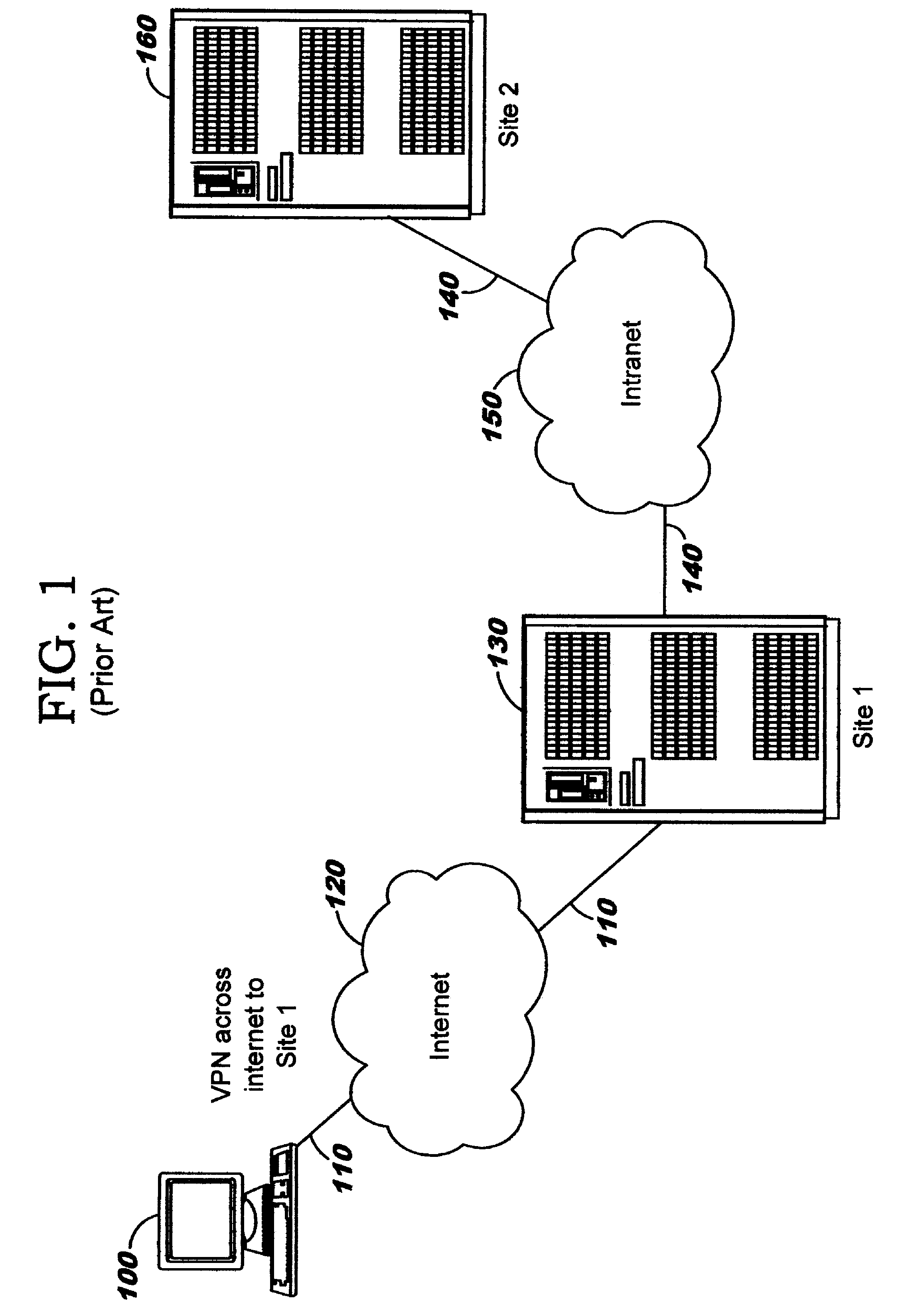
[0002] An enterprise may provide applications that are accessible to users whose computing devices connect to the enterprise computing infrastructure over a public network, such as the public Internet. Public networks are generally considered to be inherently unsecure. To provide a measure of security for data transmitted over the public network to and from such enterprise applications, a virtual private network (commonly referred to as a “VPN”) is often used. A client application operating on a user's computing device typically connects to a server application on a boundary device (such as a firewall, router, or other security gateway) located in the enterprise computing infrastructure, where this boundary device logically separates the unsecured public network from secur...

Examples

Embodiment Construction

[0023]Transmitting data through an enterprise network can have a relatively high associated cost. As network traffic increases, the enterprise may need to deploy additional servers, routers, firewalls, and so forth, so that the increased network traffic correlates to increased network infrastructure cost to the enterprise. By contrast, transmitting data over a public network such as the Internet generally has little to no impact on the cost of the enterprise computing environment, and increasing the volume of traffic on the public network generally does not result in higher infrastructure cost to the enterprise. Accordingly, it is desirable to offload network traffic from an enterprise network to a public network as disclosed herein.

[0024]Embodiments of the present invention are directed toward dynamically selecting an endpoint for a network tunnel (which may also be referred to as a security tunnel) into an enterprise computing infrastructure. The selection of the tunnel endpoint i...