Flexible member for use in a spinal column and method for making

a technology of flexible members and spinal columns, applied in the field of spinal column treatment, can solve the problems of loss of mobility in the motion segment, injury to other parts of the spine, and serious pain in the spine, and achieve the effect of desired flexibility

US8043339B2Active Publication Date: 2011-10-25ZIMMER BIOMET SPINE INC
18 Cites 8 Cited by

Patent Information

Authority / Receiving Office
US · United States
Patent Type
Patents(United States)
Current Assignee / Owner
Publication Date
2011-10-25

Smart Images

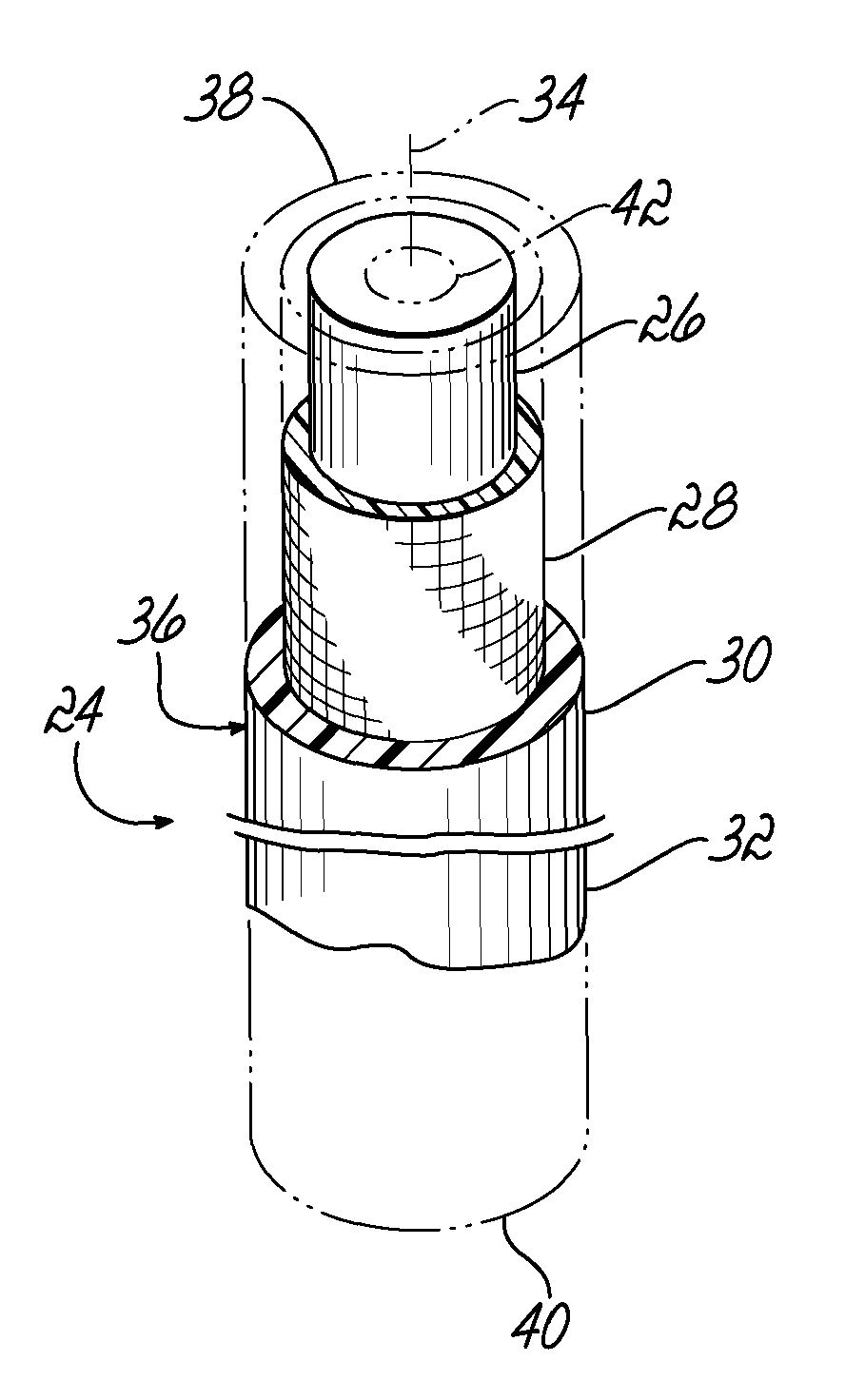
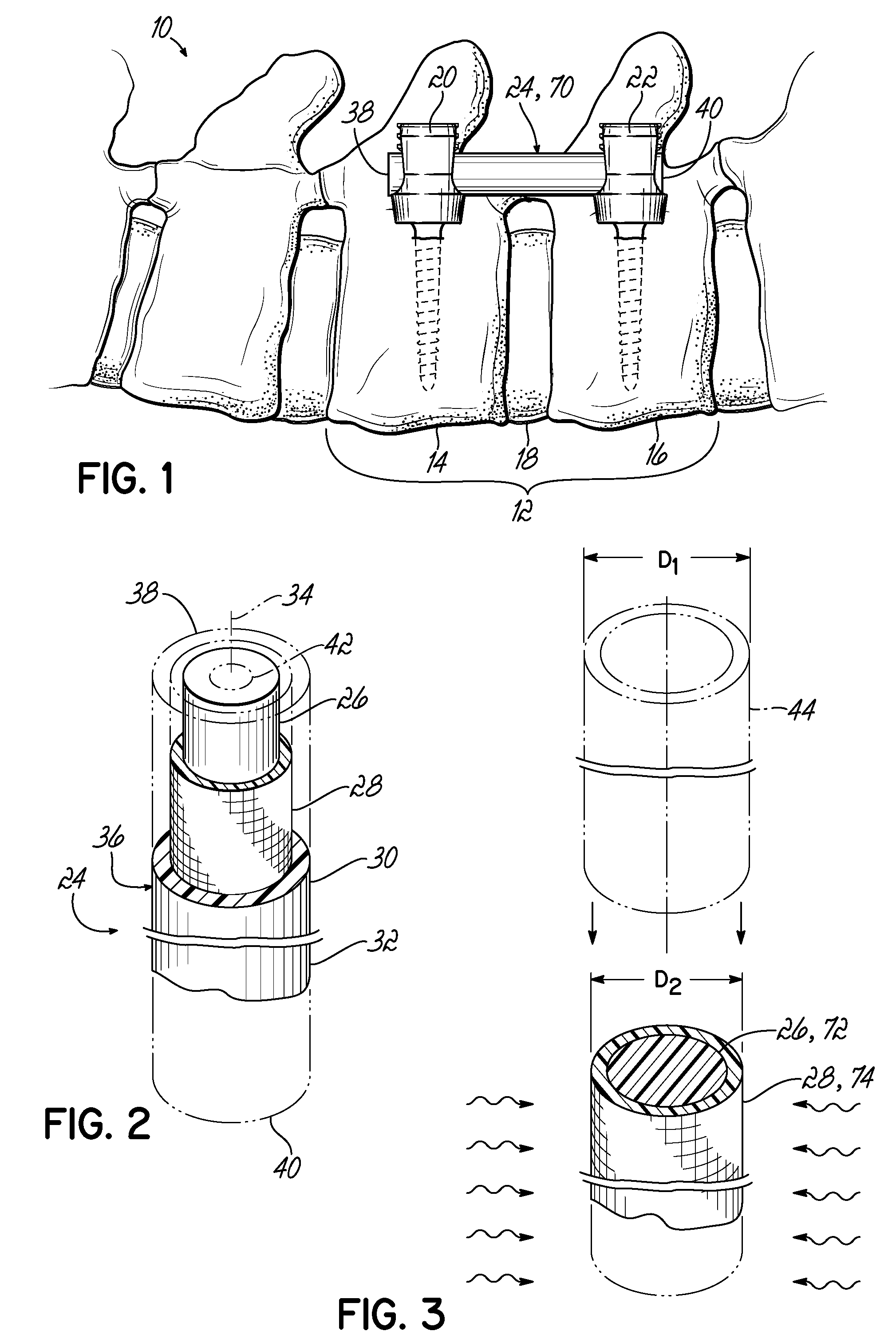
  • Figure 1
    Figure 1
  • Figure 2
    Figure 2
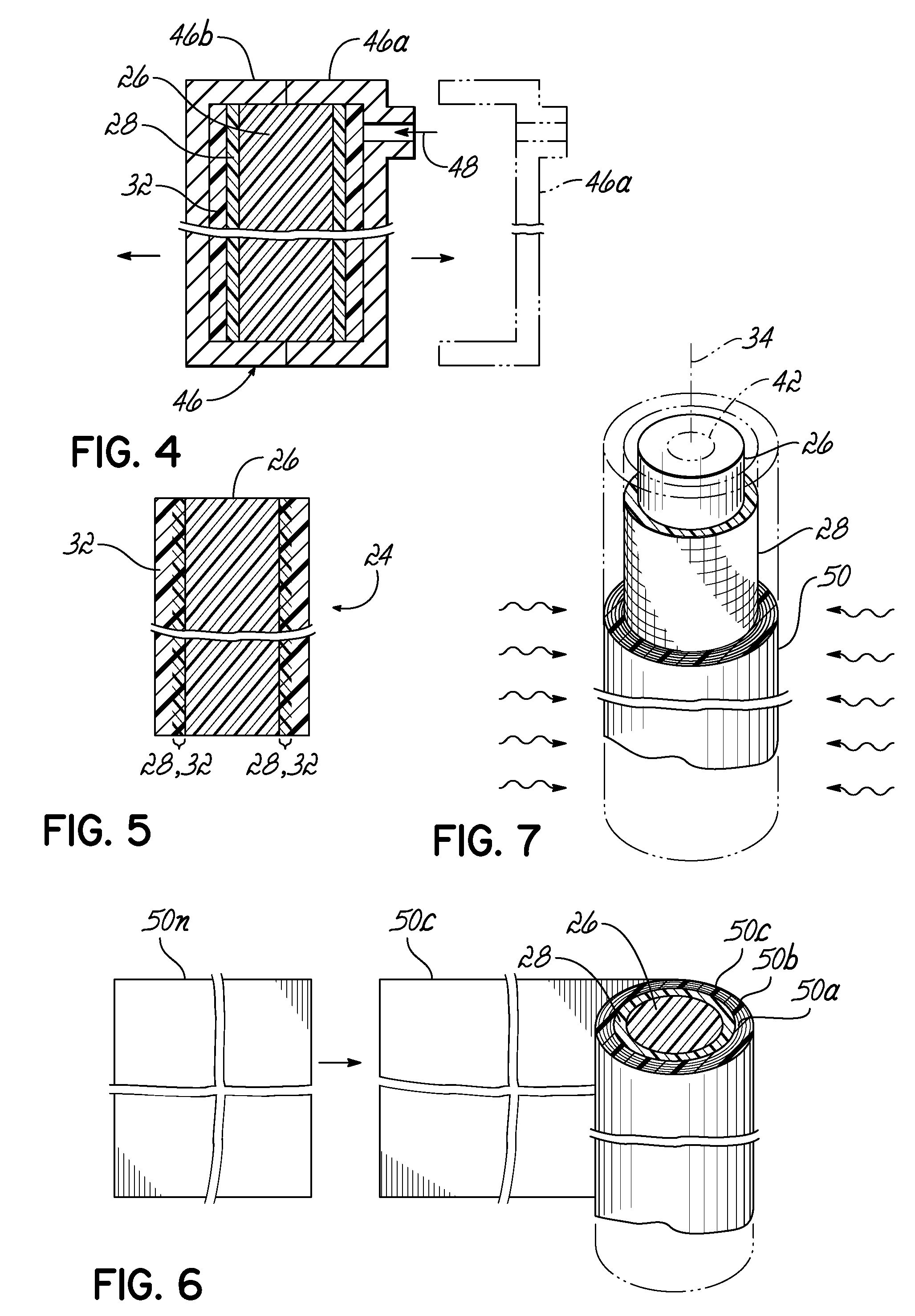
  • Figure 3
    Figure 3
Patent Text Reader

Abstract

The present invention relates to flexible members for stabilizing a spinal column and methods for making the flexible members. In one embodiment, a flexible member comprises an inner elastomeric member and an outer fabric layer situated securely around the inner elastomeric member. The inner elastomeric member has a first elasticity to provide the flexible member with a desired flexibility. In another embodiment, the flexible member includes an outer covering that defines an outer elastomeric member. The outer elastomeric member may be situated securely around the outer fabric layer with the inner elastomeric member, the outer fabric layer, and the outer elastomeric member having the common lengthwise axis and defining the body including the opposing first and second ends. The outer elastomeric member may have a second elasticity that is less than the first elasticity.
Need to check novelty before this filing date? Find Prior Art

Description

FIELD OF THE INVENTION

[0001] The present invention relates to spinal column treatment, and, more particularly, to flexible members for stabilizing motion segments therein.BACKGROUND OF THE INVENTION

[0002] The spine includes a series of joints or motion segments. The components of each motion segment include two adjacent vertebrae and their apophyseal joints, an intervertebral disc, and connecting ligamentous tissue. Each motion segment is capable of flexion, extension, lateral bending, and translation. Each component of the motion segment contributes to the mechanical stability of that joint. Overall, the motion segments enable the familiar kinematic motion of the spinal column.

[0003] Components of a motion segment that move out of position, become damaged, deteriorate, or are disordered in some fashion, can lead to serious pain. Furthermore, these disorders may lead to injury to other components of the spine. Depending upon the degree of disorder or damage that has occurred, treatment...

Examples

Embodiment Construction

[0025]FIG. 1 depicts a portion of a spinal column 10 having a motion segment 12. Each motion segment 12 has adjacent vertebrae 14, 16 with an intervertebral disc 18 positioned therebetween. A first anchor member 20 is secured in one vertebra 14 and a second anchor member 22 is secured in the adjacent vertebra 16. By way of example and not limitation, the anchor members 20, 22 may be top-loading, fixed and polyaxial pedicle screws, such as SILHOUETTE® pedicle screws, available from Zimmer Spine Inc., Edina, Minn. As is known in the art, the motion segment 12 facilitates spinal motion during extension and flexion motion as well as during lateral bending all while under axial loading. One or more components of the motion segment 12 can deteriorate from injury, disease, or age leading to severe pain. As such, treatment methods to stabilize the motion segment 12 may be necessary to relieve pain and restore a patient's mobility.

[0026]To that end, and with continued reference to FIG. 1, in...