
Electrostatic speaker
a technology of electrostatic speakers and speakers, applied in the direction of deaf-aid sets, transducer details, electrical transducers, etc., can solve the problems of easy deviation of electrodes and vibrators in positioning, and achieve the effect of desired acoustic characteristics
- Summary
- Abstract
- Description
- Claims
- Application Information
AI Technical Summary
Benefits of technology
Problems solved by technology
Method used
Image

Examples
Embodiment Construction
[0032]The present invention will be described in further detail by way of examples with reference to the accompanying drawings.
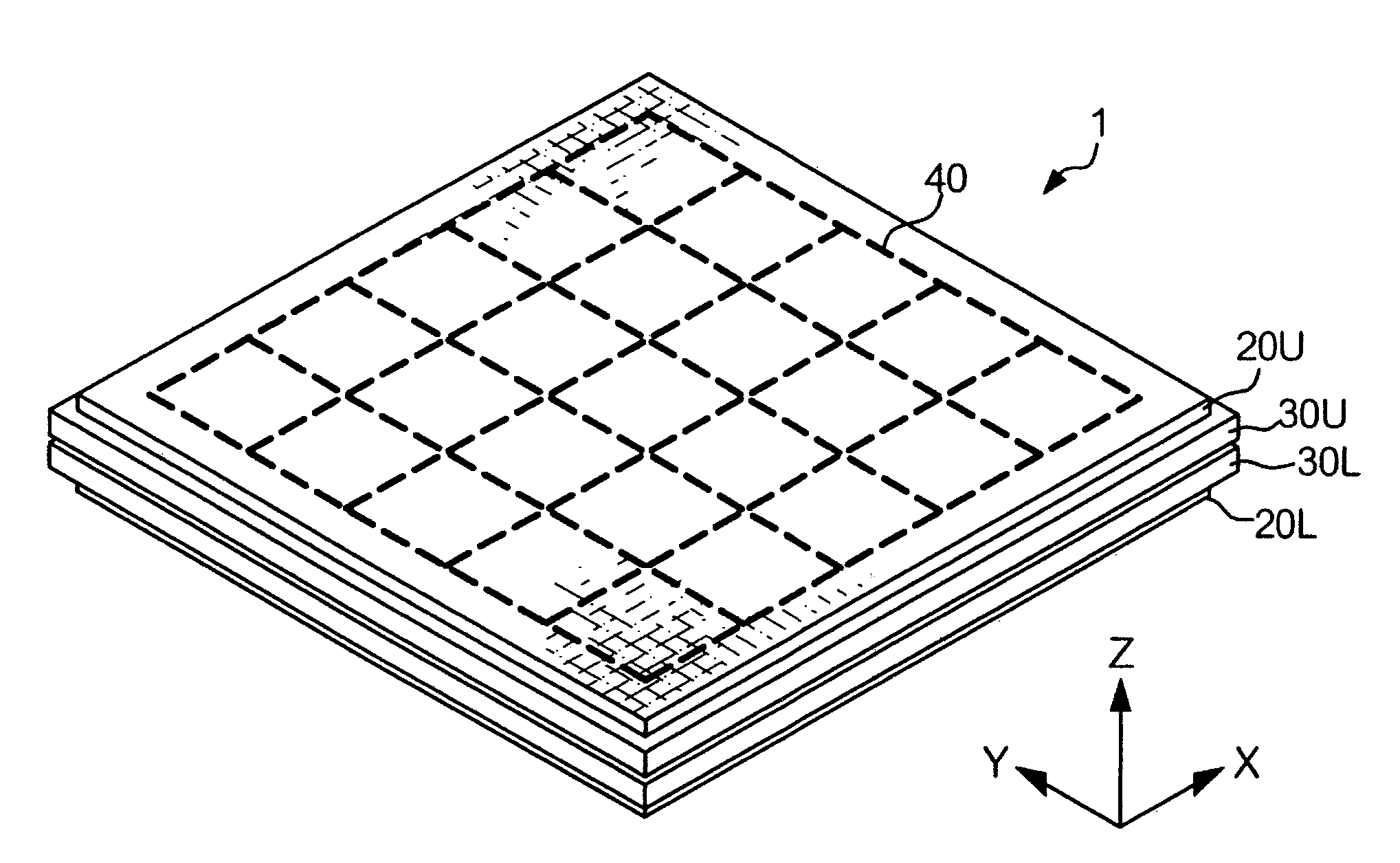
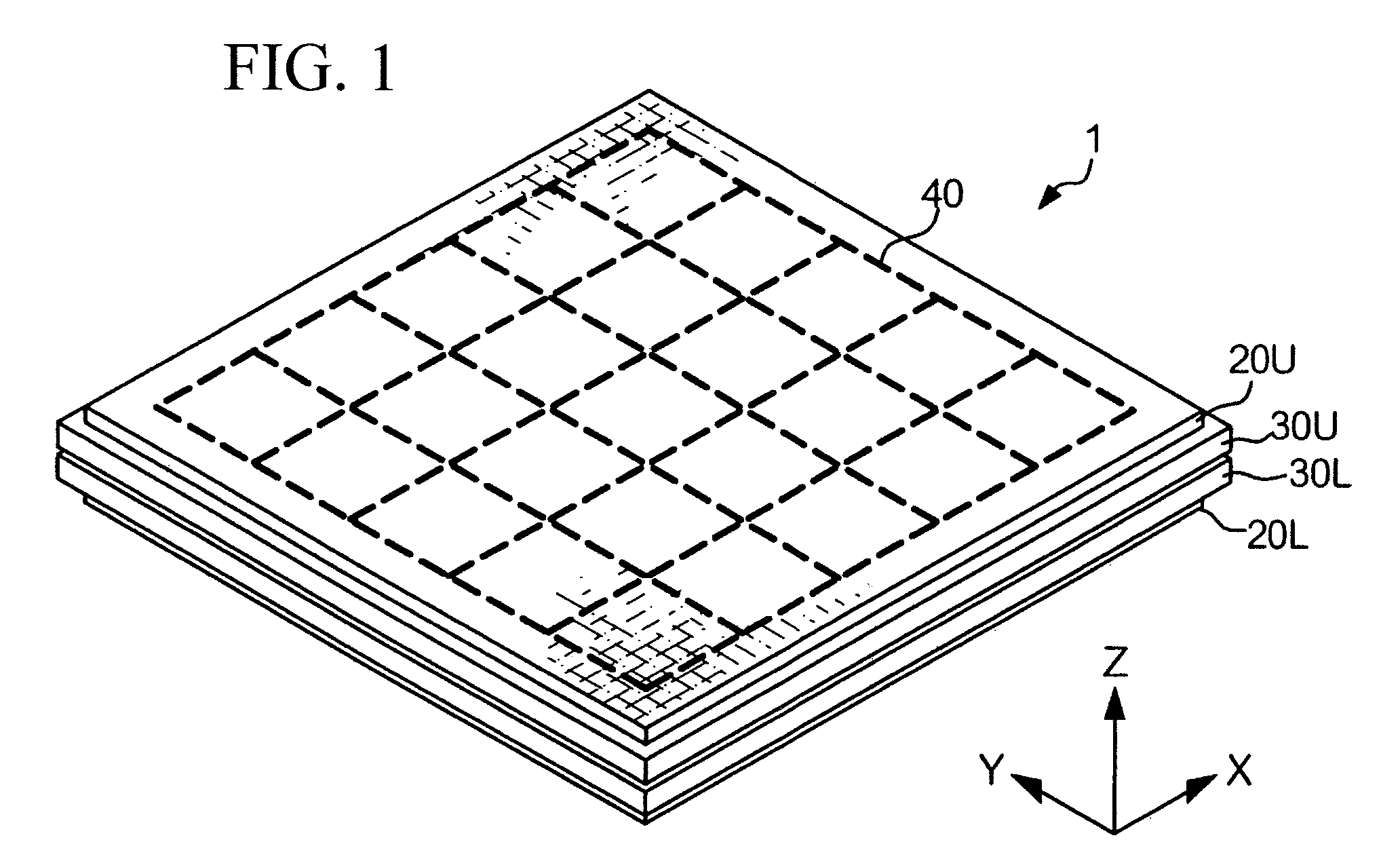
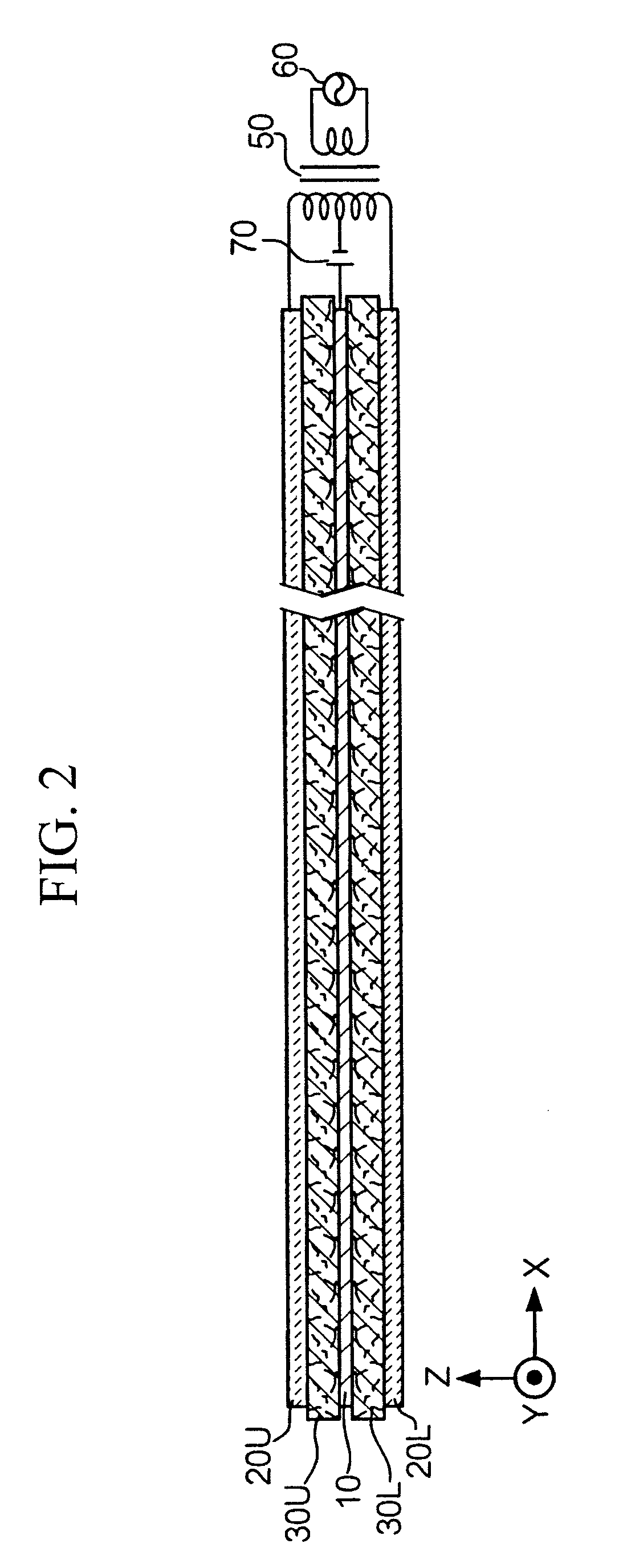
[0033]FIG. 1 diagrammatically shows the exterior appearance of an electrostatic speaker 1 in accordance with a preferred embodiment of the present invention. FIG. 2 shows the electronic configuration and sectional configuration of the electrostatic speaker 1.
[0034]The electrostatic speaker 1 is constituted of a vibrator 10, conductive cloths 20U and 20L, elastic members 30U and 30L, and strings 40. In the present embodiment, both the conductive cloths 20U and 20L have the same constitution, and both the elastic members 30U and 30L have the same constitution. For the sake of convenience, both the reference numerals 20U and 20L are designated by the same reference numeral “20”, and both the reference numerals 30U and 30L are designated by the same reference numeral “30”. To simplify the illustrations in a visually easy-to-grasp manner, the aforementioned const...
PUM
 Login to View More
 Abstract
Description
Claims
Application Information
 Login to View More