
Apparatus for supplying surgical staple line reinforcement
a technology for surgical staples and accessories, applied in the field of accessories for supplying surgical staples, can solve the problems of significantly reducing recovery time in the musculoaponeurotic area, and achieve the effect of tightening the buttress material
- Summary
- Abstract
- Description
- Claims
- Application Information
AI Technical Summary
Benefits of technology
Problems solved by technology
Method used
Image

Examples
example 1
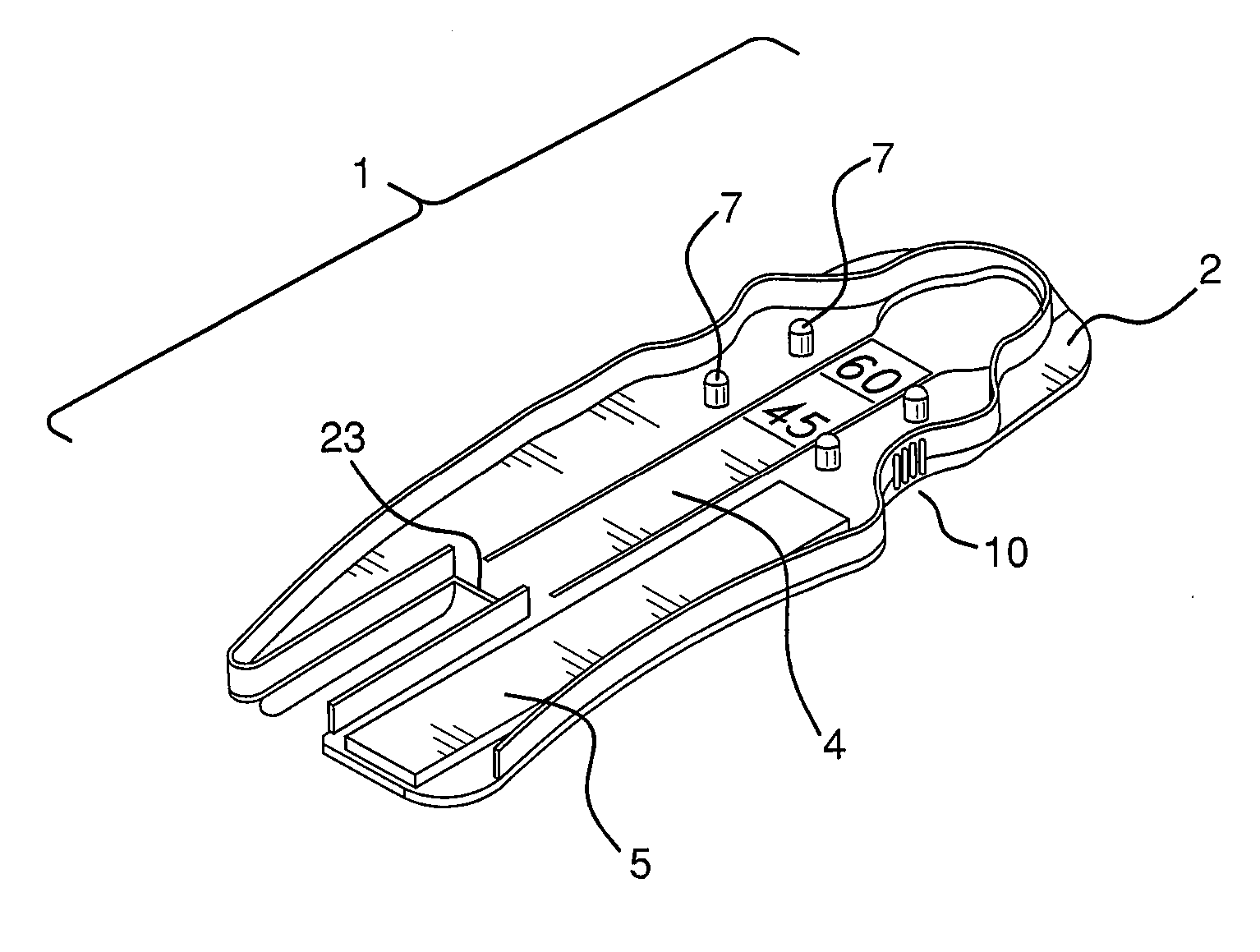
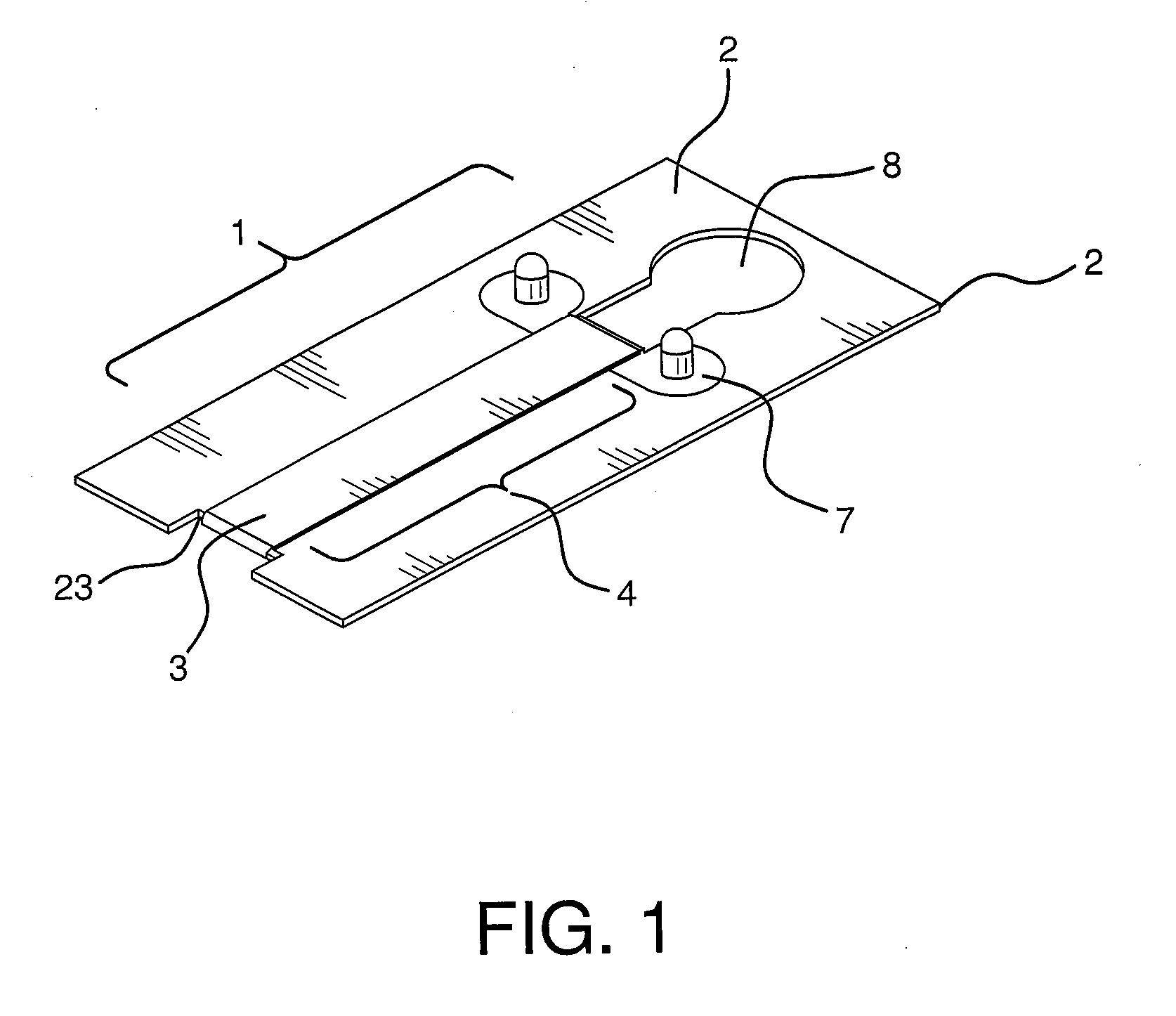
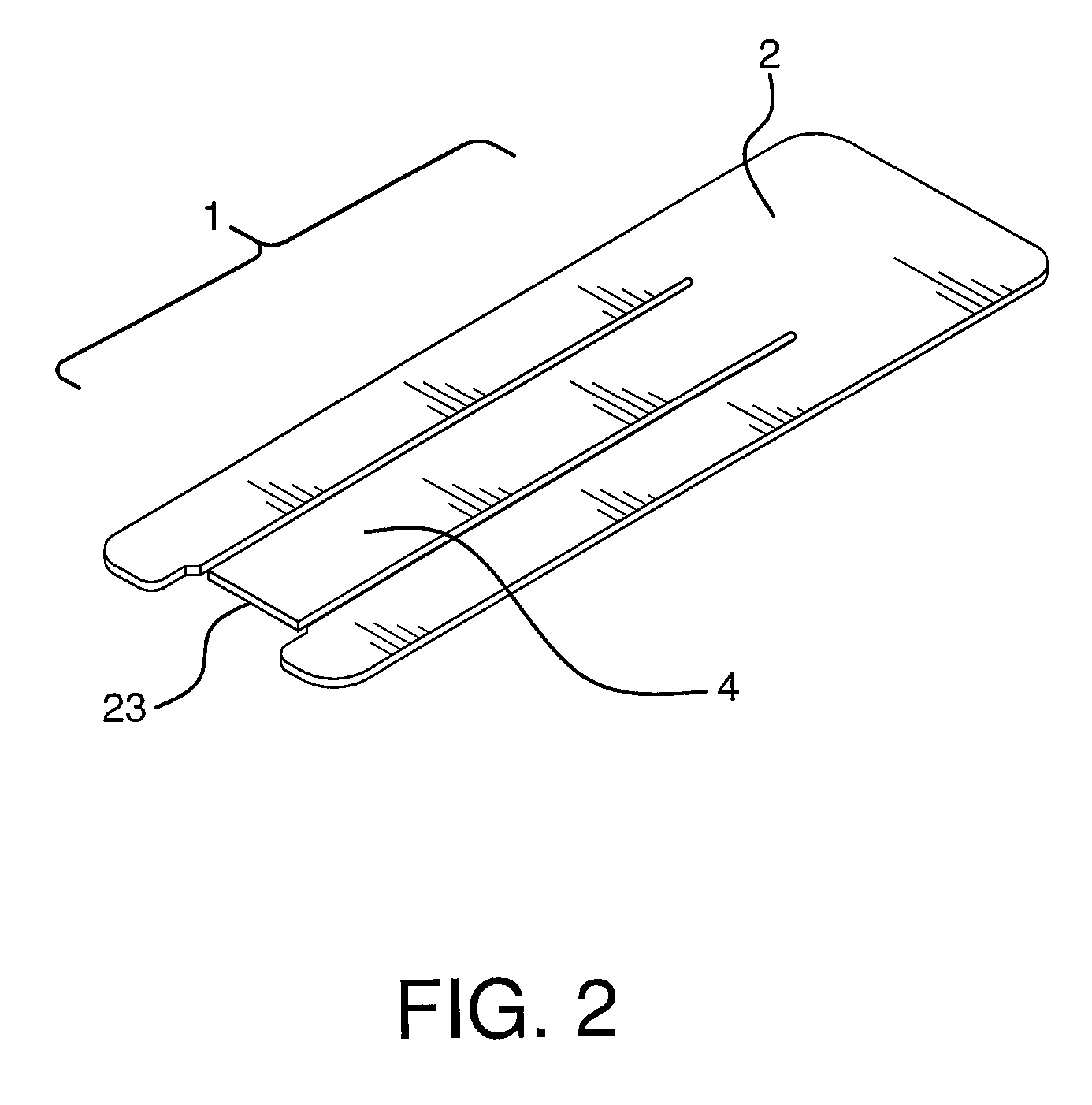
[0035]A 30 mil (0.076 cm) thick card forming the body of the apparatus (dimension 10 cm L×5.7 cm W) was made by injection molding polycarbonate and configured to aid in applying surgical staple line buttress (SLR) material to the jaws of a commercially available stapler. The SLR receiving area, stapler restraining area and the pivot of the SLR card were created through a three-sided cutout (S1×S2×S3) of the polycarbonate card using a razor tool. The lengths of the longitudinal cuts (S1& S3) on the card are about ˜50% of the polycarbonate card (approximately 4.7 cm) and starting approximately 0.6 cm from one end of the card. The length of the latitudinal cut (S2) is sized to accommodate the width of the SLR and jaws of a commercially available stapler (approximately 1 cm).
[0036]The receiving area is defined by the three sides of the S1, S2 and S3 cuts. The uncut side of the receiving area defines the pivot. The end of the card closest to the pivot is the stapler restraining area. The...
example 2
[0037]One piece of SLR material with one side having a pressure sensitive adhesive (PSA) with a release liner for covering the PSA is placed on the receiving area of the polycarbonate card prepared as in Example 1.
[0038]The SLR material is precut with connected perforated tabs that extend beyond the width of the receiving area.
[0039]The SLR material is adapted to fit onto the receiving area and can be attached to the polycarbonate card on each side with perforated tabs that extend past the width of the receiving area. The perforated tabs of the SLR are attached to the polycarbonate card using a second PSA on the opposite side of the first PSA liner.
example 3
[0040]For a ready-to-use SLR card, the SLR is attached to the polycarbonate card prior to packaging.
PUM
| Property | Measurement | Unit |
|---|---|---|
| thick | aaaaa | aaaaa |
| thickness | aaaaa | aaaaa |
| thick | aaaaa | aaaaa |
Abstract
Description
Claims
Application Information
 Login to View More