
Insulated pipe coupling
a technology of insulated pipes and couplings, applied in the field of couplings, can solve problems such as hydrate formation in equipment, blockage of flow through tubing, damage to equipment, etc., and achieve the effect of preventing hydrate formation
- Summary
- Abstract
- Description
- Claims
- Application Information
AI Technical Summary
Benefits of technology
Problems solved by technology
Method used
Image

Examples
Embodiment Construction
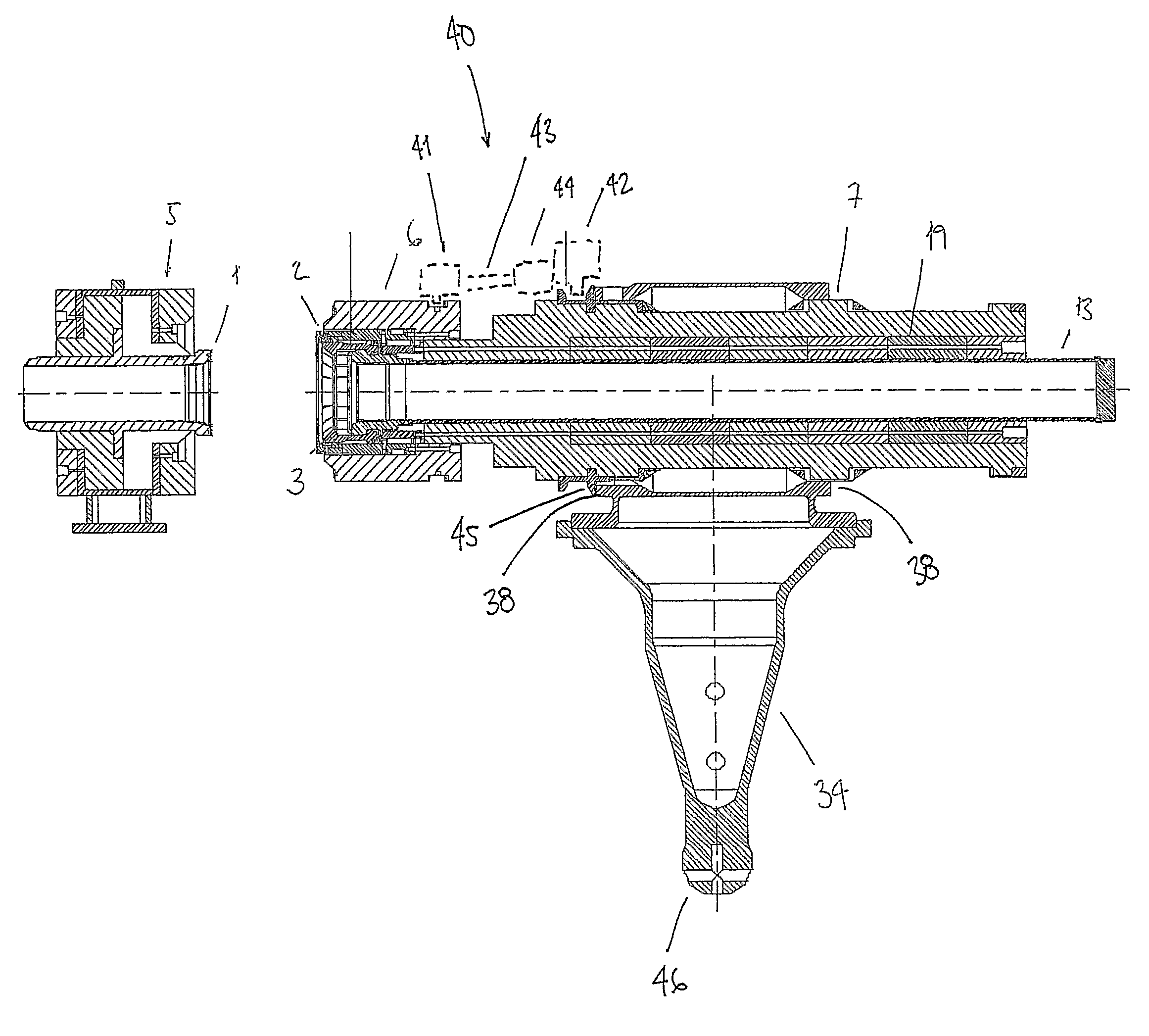
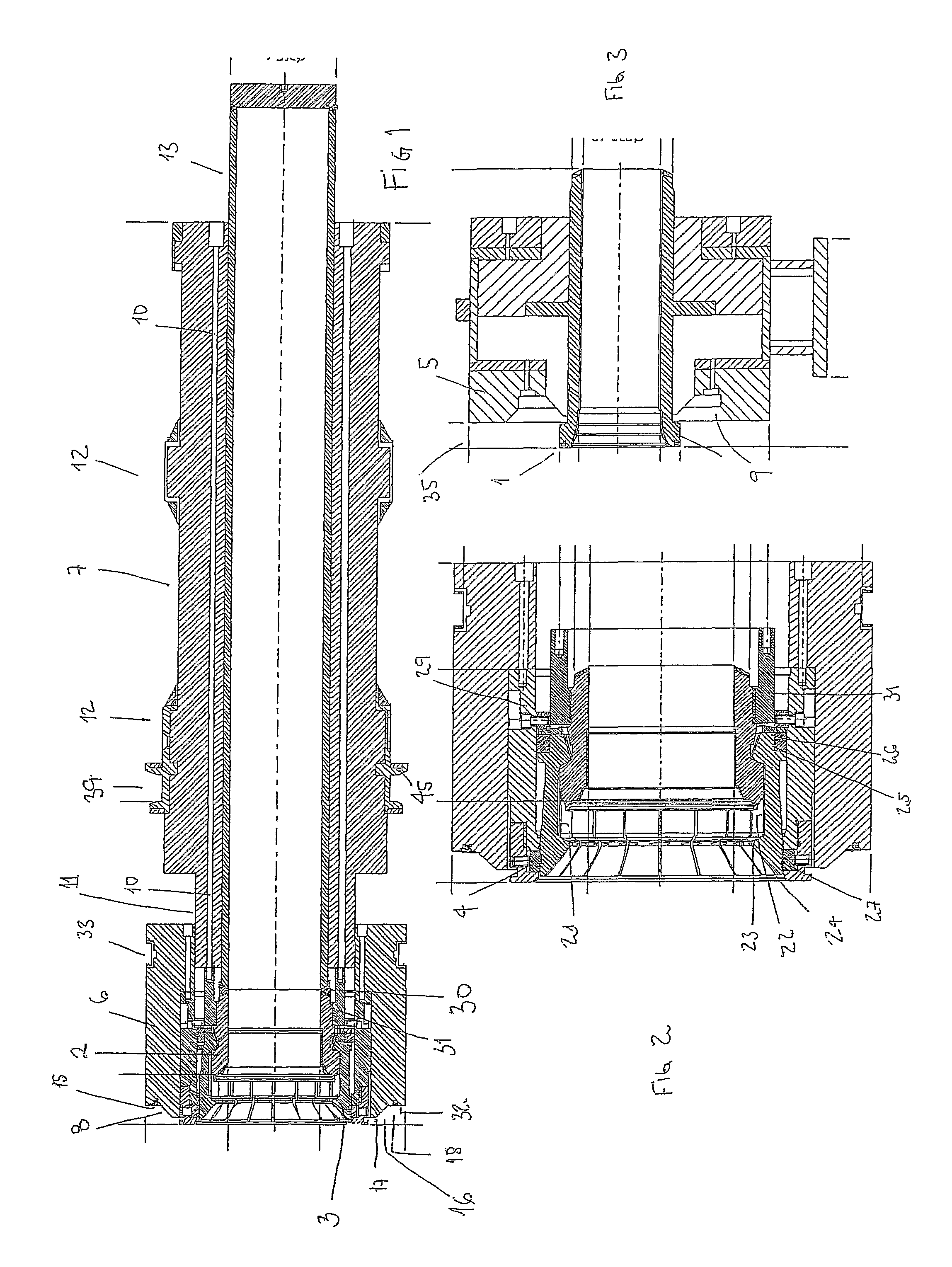
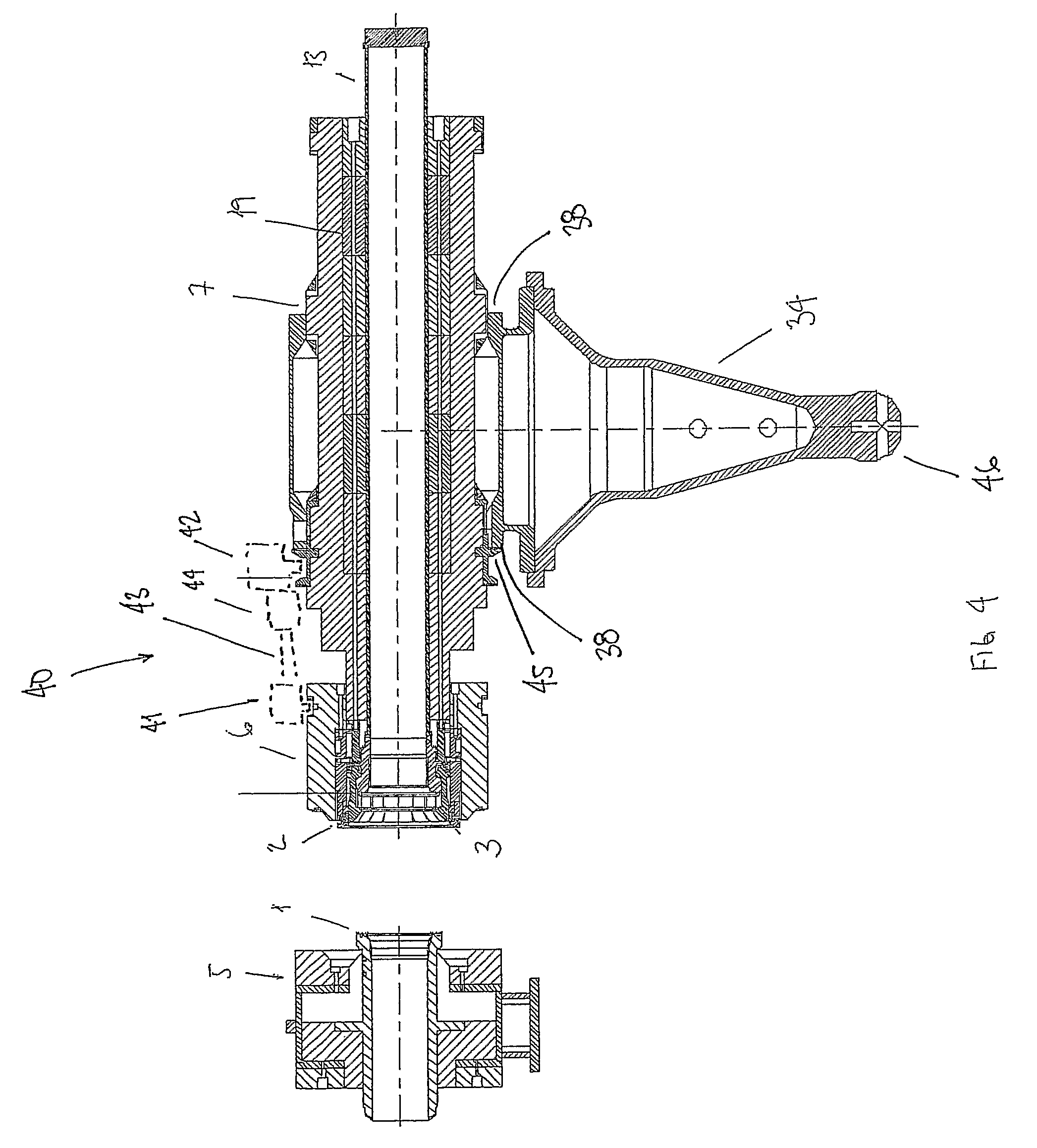
[0033]FIGS. 1 and 2 show a termination head which constitutes an end termination for a pipeline, umbilical, cable or the like that is provided to be connected to a stationary structure on the seabed. It comprises a pipe flange 2 which via a weld 30 is connected to a pipe 13. One or more gripping elements 3 are arranged on the pipe flange 2, which gripping elements 3 may, for example, be fingers that are arranged around the periphery of the second pipe flange 2. The fingers run parallel to the axial direction of the pipe 13.
[0034]The fingers 3 are arranged loosely around the periphery of the second pipe flange 2, but are held in their positions by surrounding elements. In addition, non-illustrated guides, which may, for example, be pins in the fingers, will ensure that the fingers do not twist about radial axes.
[0035]To obtain a locking on the coupling together of two opposing pipe flanges 1, 2, the fingers 3, on one side that is to rest against a first pipe flange 1 (shown in FIG. 2...
PUM
| Property | Measurement | Unit |
|---|---|---|
| insulating | aaaaa | aaaaa |
| diameter | aaaaa | aaaaa |
| force-transmitting properties | aaaaa | aaaaa |
Abstract
Description
Claims
Application Information
 Login to View More