Up-concentration of organic microobjects for microscopic imaging
a microorganism and up-concentration technology, applied in the field of apparatus or system for analyzing a sample fluid containing organic microorganisms, can solve the problems of limiting medical practitioners to a guessing game using a broad antibiotic spectrum, not only economically expensive, but also the need for complex mechanics with high accuracy, and achieve the effect of reducing the total assay tim
- Summary
- Abstract
- Description
- Claims
- Application Information
AI Technical Summary
Benefits of technology
Problems solved by technology
Method used
Image

Examples
first embodiment
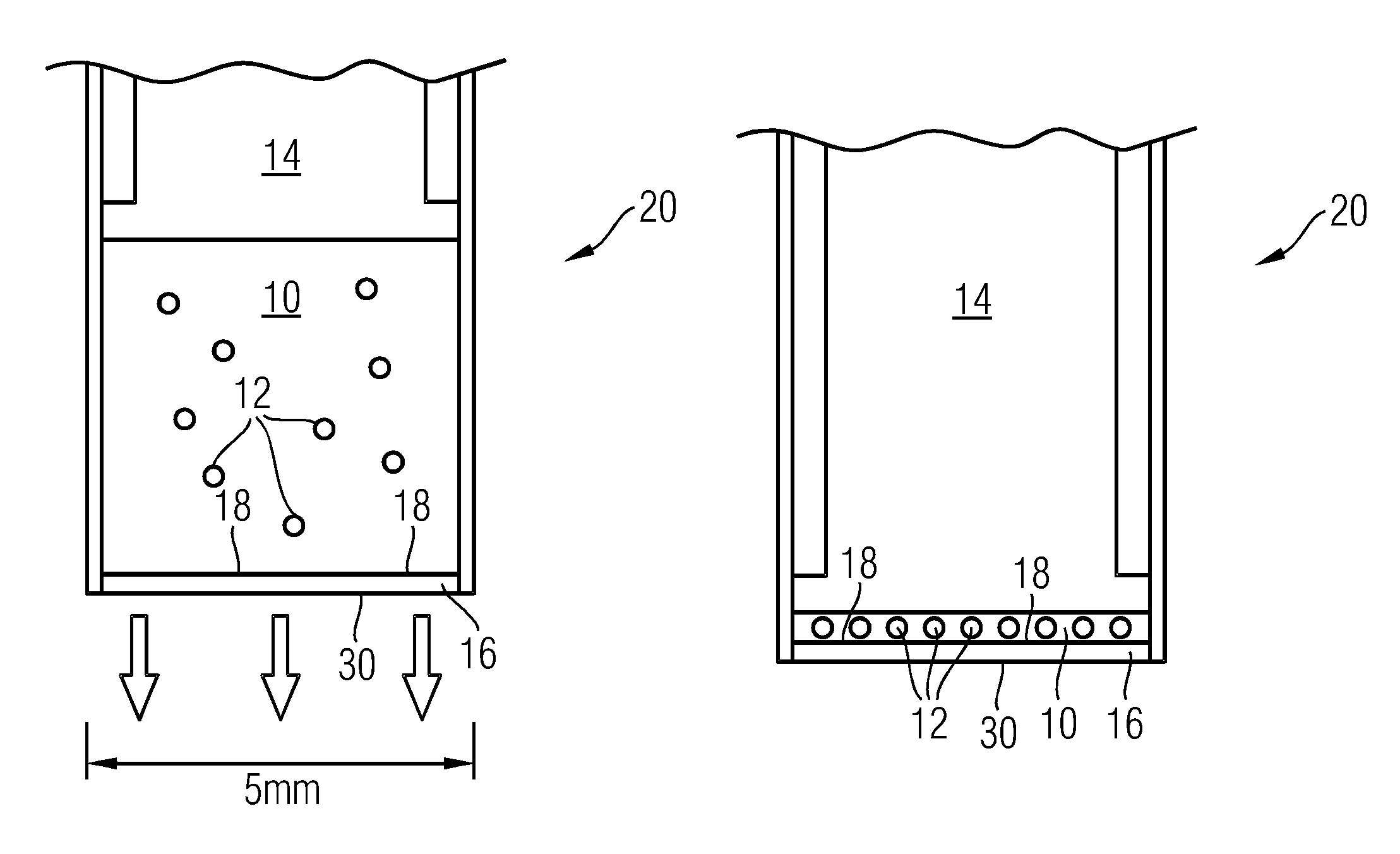
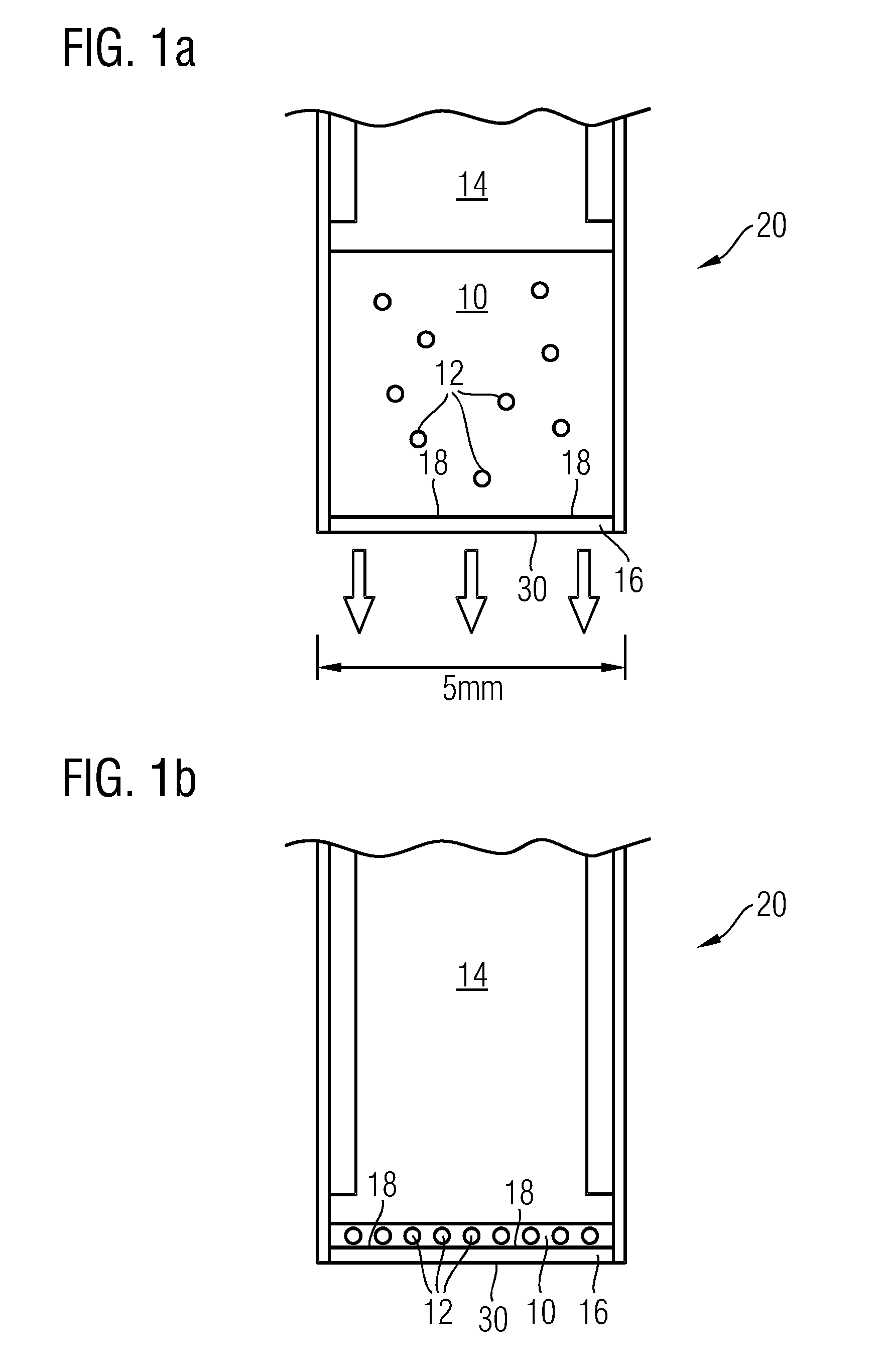
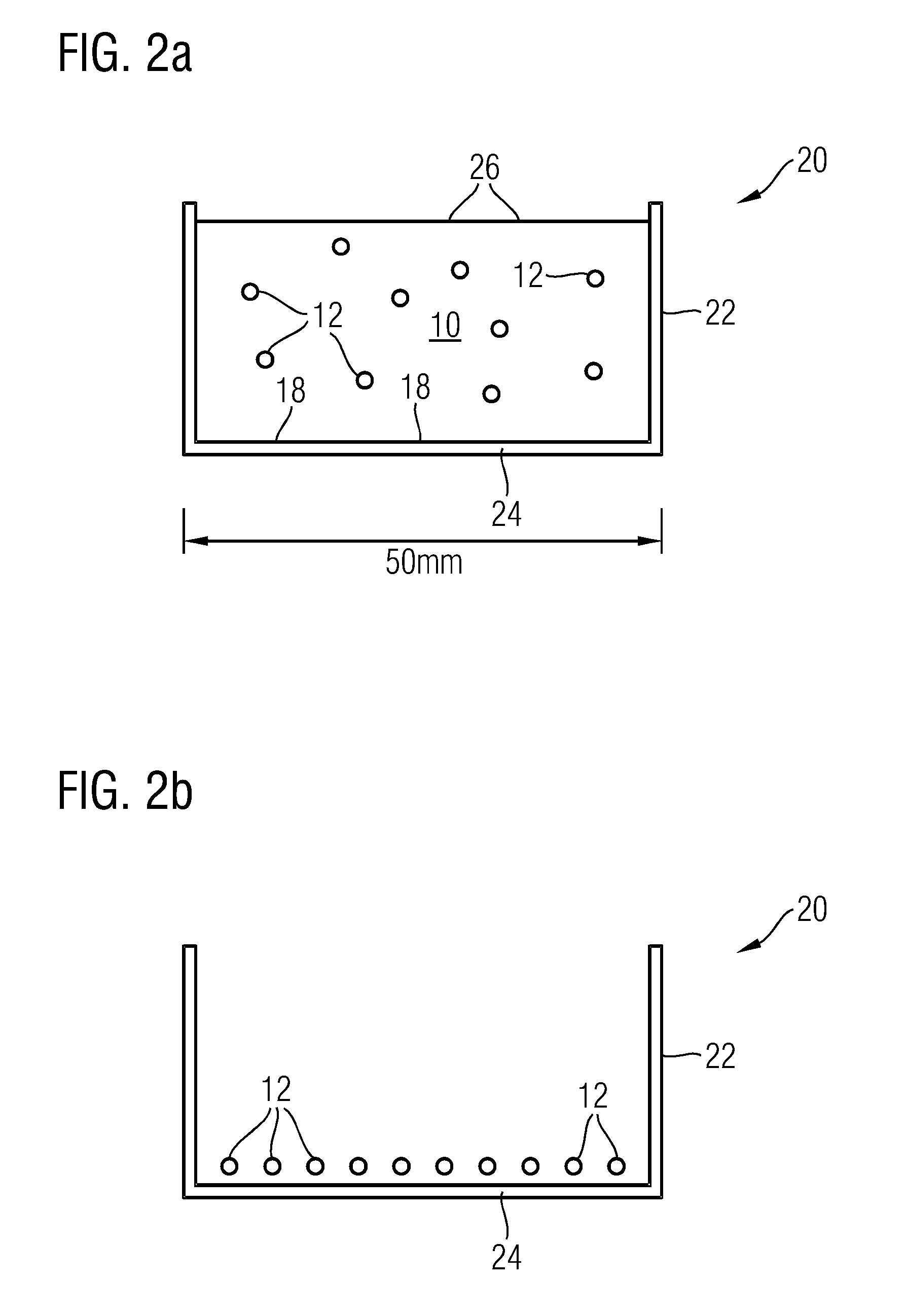
[0070]In a first embodiment the large area filter is made of soluble material, and in the second step a solvent is used for dissolving the filter that does not affect bacteria. More precisely, the large area filter is made of a material that is insoluble in the fluid to be examined (usually water-based), but soluble in other solvents. Preferably, the material does not affect the (stained) bacteria. An example could be perforated aluminum foil. The foil does not dissolve in water, but would dissolve in vinegar (diluted acetic acid). Vinegar does not dissolve bacteria. Other examples could be filters made of organic polymers that are affected by organic solvents, e.g. organic polymers which disintegrate when brought into contact with the organic solvent. In the first step the fluid sample is filtered over the large-area filter and in the second step the filter including bacteria is dissolved in the second fluid. The resulting liquid sample is smaller in volume than the original sample...
second embodiment
[0071]In a second embodiment the pumping direction is reversed after the first filtering step and a small part of the fluid and all retained micro-organisms are directed towards a small area filter.
third embodiment
[0072]In a third embodiment a lateral flow is induced after the first filtering step such that the filter residue is collected onto a sub-area of the filter.
[0073]In all of these embodiments a dye, in particular a fluorescent dye, may be added to the fluid during the filtering, so that the micro-organisms are stained during the filtering steps. A preferred embodiment of this would be to include the dye in at least one of the filters. There are several methods for doing this:
[0074](a) Adding the dye as a coating to the filter. Upon exposing the filter to the to-be-analyzed liquid, the dye is released into the liquid.
PUM
| Property | Measurement | Unit |
|---|---|---|
| pore size | aaaaa | aaaaa |
| diameter | aaaaa | aaaaa |
| diameter | aaaaa | aaaaa |
Abstract
Description
Claims
Application Information
 Login to View More
PatSnap Eureka turns technology decisions into work you can execute. Powered by our Innovation Knowledge Graph, it runs expert workflows across engineering, life sciences, materials and intellectual property. Get your review-ready output in minutes.


