
Device and method for harvesting energy
a technology of energy harvesting device and energy harvesting method, which is applied in piezoelectric/electrostrictive/magnetostrictive devices, piezoelectric/electrostriction/magnetostriction machines, electrical equipment, etc., can solve the problems of many difficulties, degrade the environment, and the type of conventional vibration energy harvester has not been successful as a battery replacement in most electronic devices, etc., to achieve more useful power
- Summary
- Abstract
- Description
- Claims
- Application Information
AI Technical Summary
Benefits of technology
Problems solved by technology
Method used
Image

Examples
Embodiment Construction
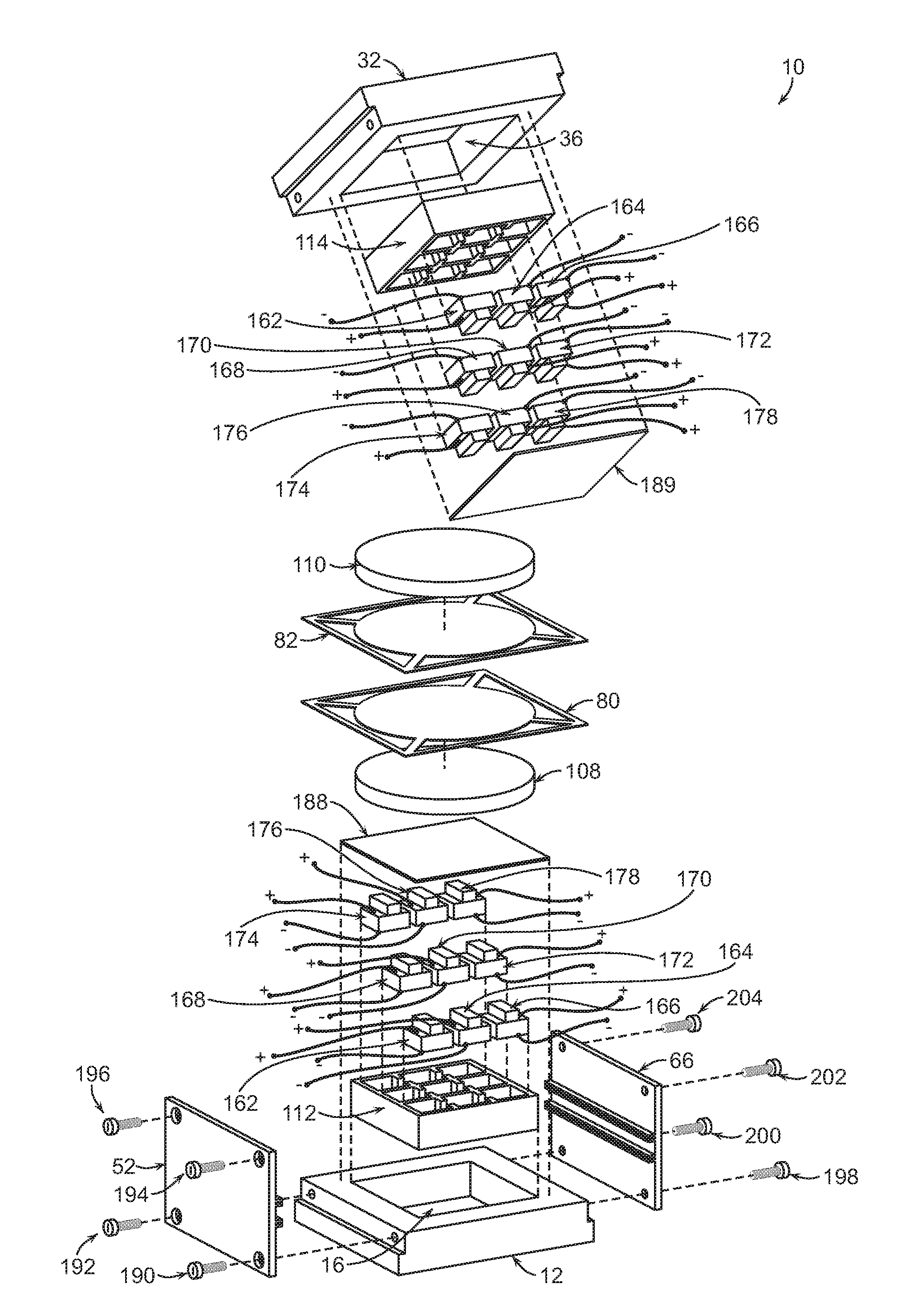
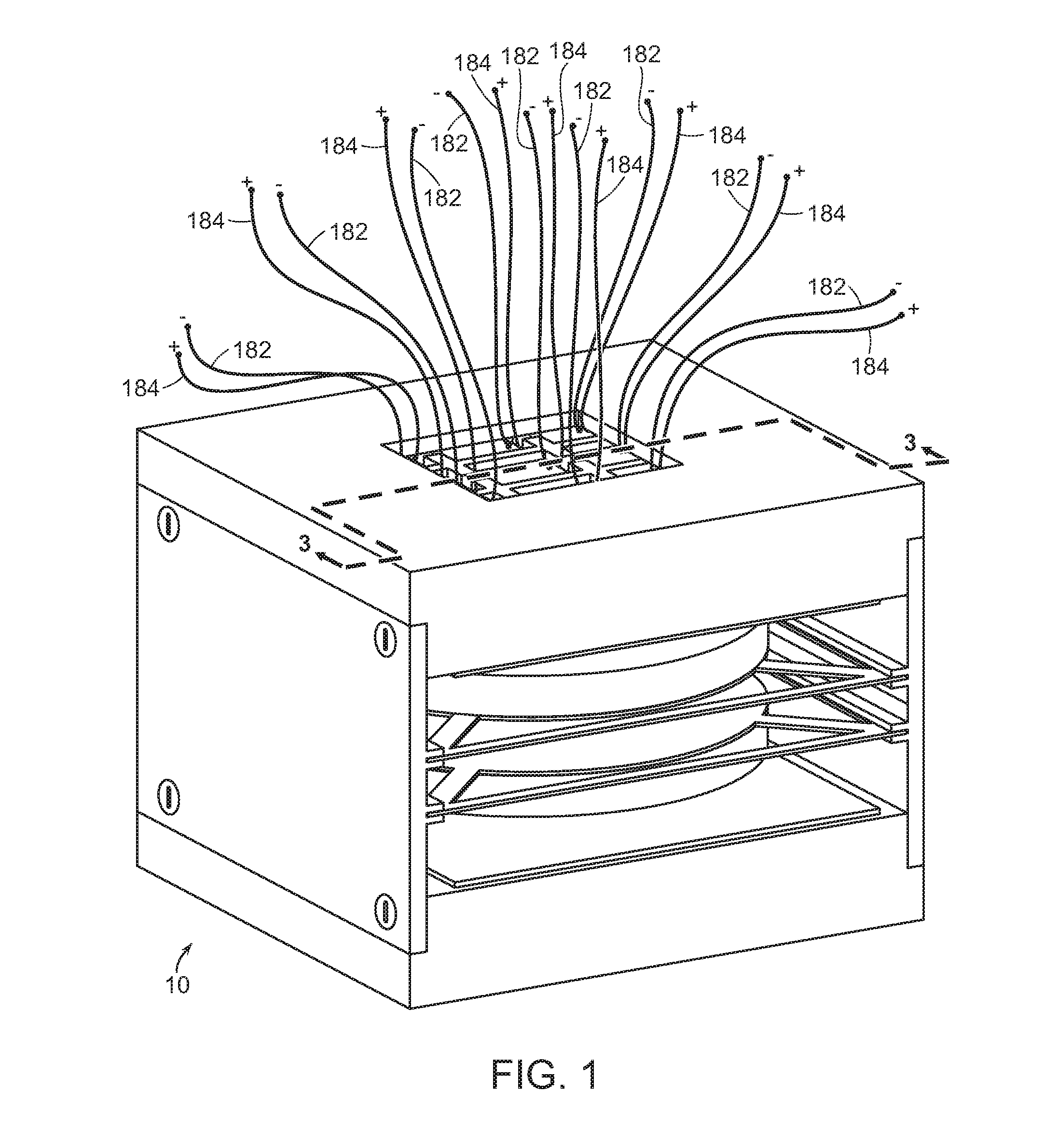
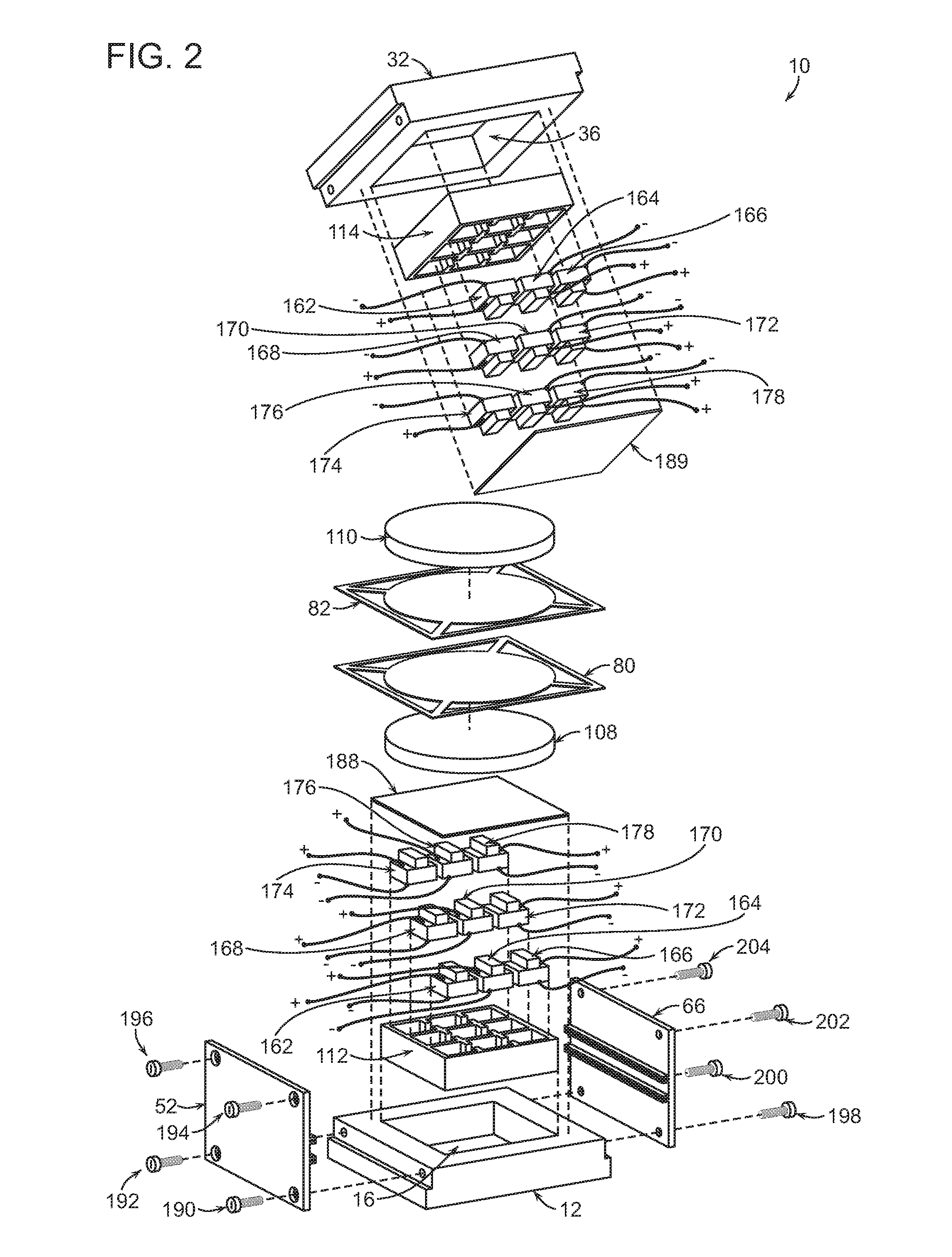
[0052]Referring to FIG. 1, where an energy harvesting device 10 according to the present invention is shown. Device 10 collects energy from movements, noise, sound, and stray electromagnetic signals and generates electricity. Movements can be generated from many sources such as transportation systems (for example, cars, trains, bicycles, and airplanes); infrastructures (for example, buildings, bridges, tunnels, and airports); anatomical (for example, human, animals, and plants); and machinery (for example, industrial plants, vacuum pumps, milling machines, and heavy duty vehicles). Noises can be of thermal, electromagnetic perturbations, colored noise, and white noise. Device 10 captures energy sources in the form of sinusoid, random noise, impulse and their different combinations. In the embodiment shown, device 10 has an overall length of 31 mm, a width of 24 mm, and a height of 24 mm. Unlike conventional energy harvesting devices, device 10 captures energy from movements, noise, ...
PUM
 Login to View More
 Abstract
Description
Claims
Application Information
 Login to View More