
Relative non-high-frequency leakage equivalent N-drop smooth spectrum analog deconvolution method
A deconvolution and spectral simulation technology, applied in the field of geophysical exploration, can solve problems such as complex algorithms, strong data sensitivity, and insufficient description of the complexity of the seismic wavelet amplitude spectrum, and achieve improved seismic profile resolution and computational efficiency High and stable effect
- Summary
- Abstract
- Description
- Claims
- Application Information
AI Technical Summary
Problems solved by technology
Method used
Image

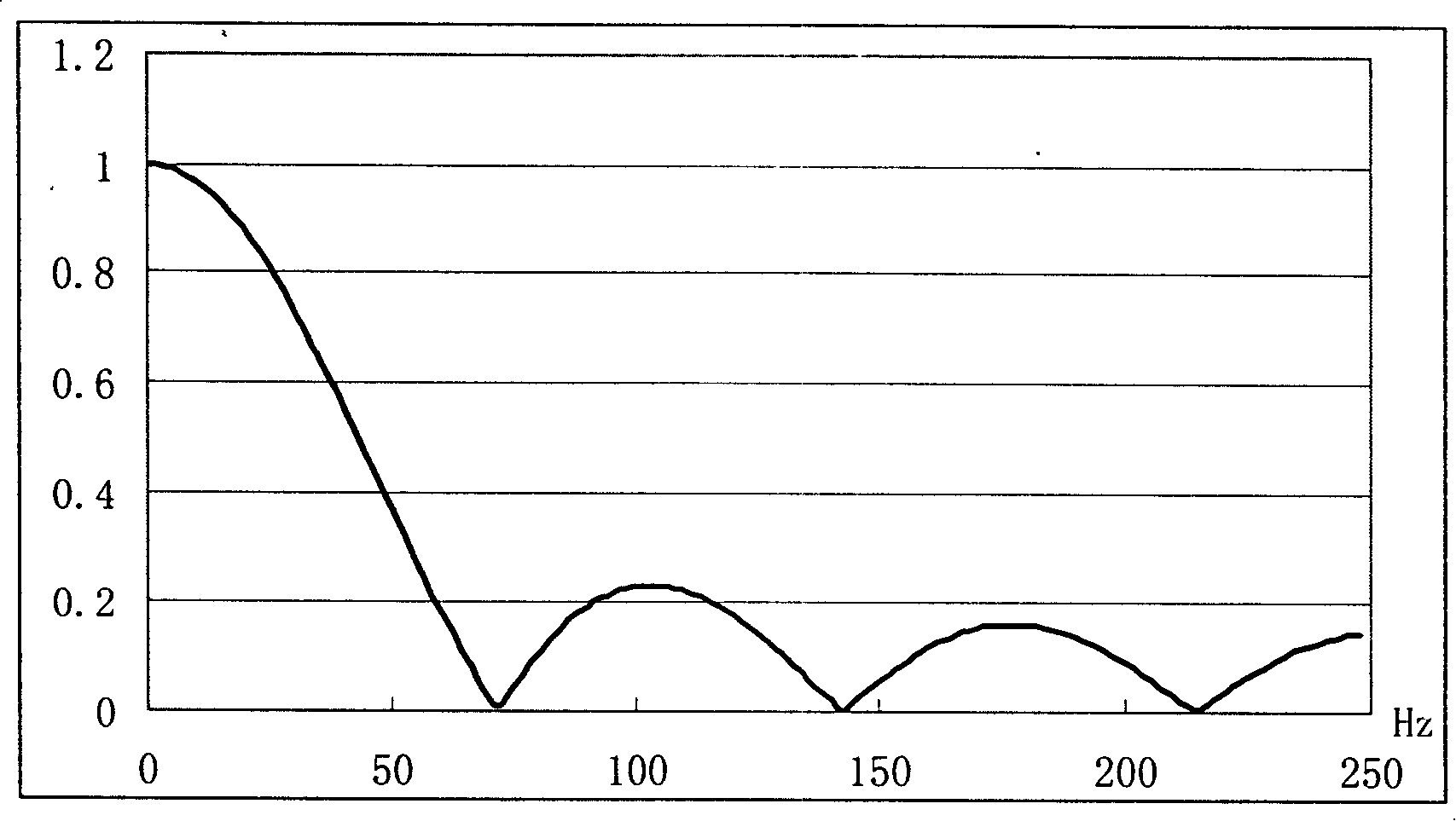
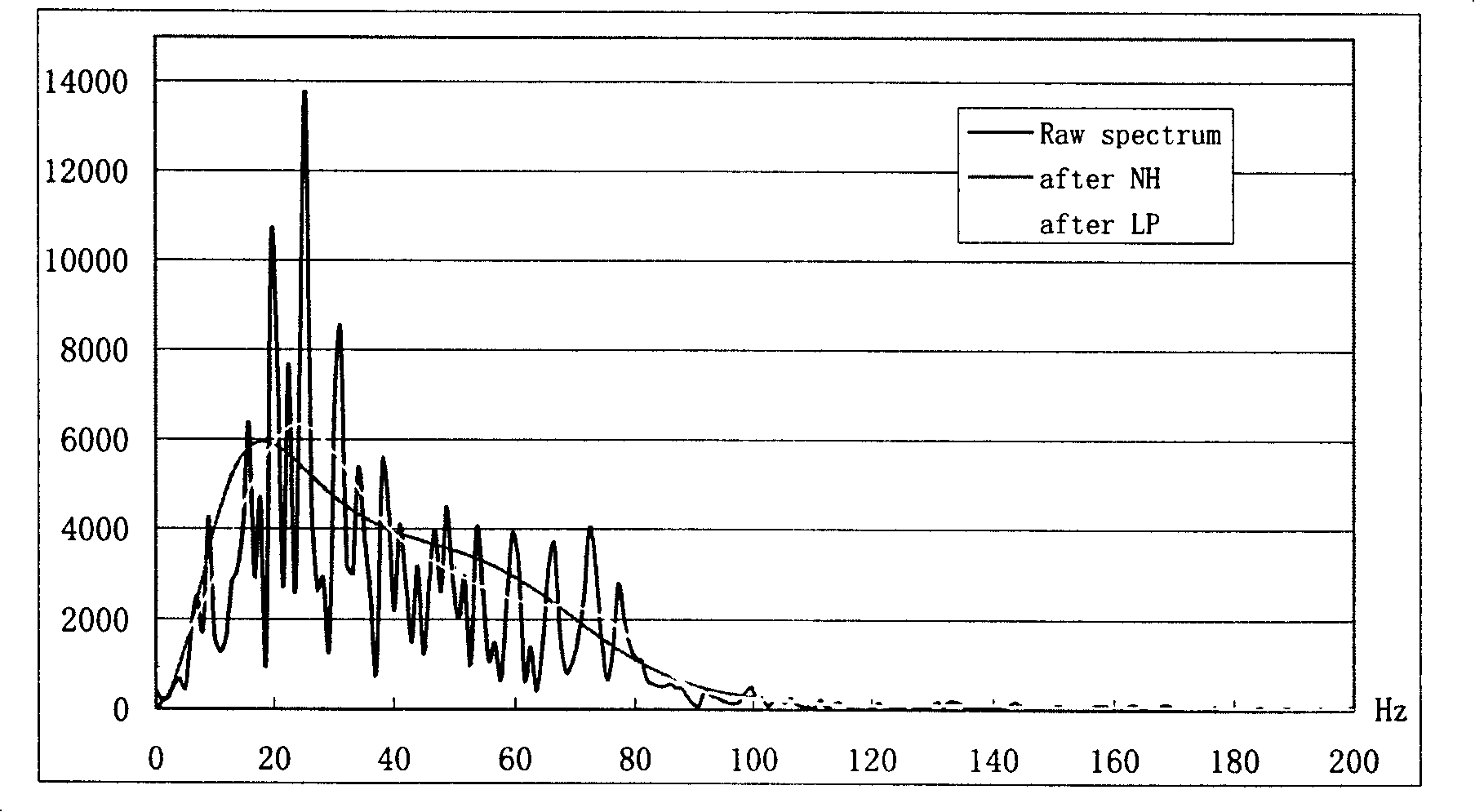
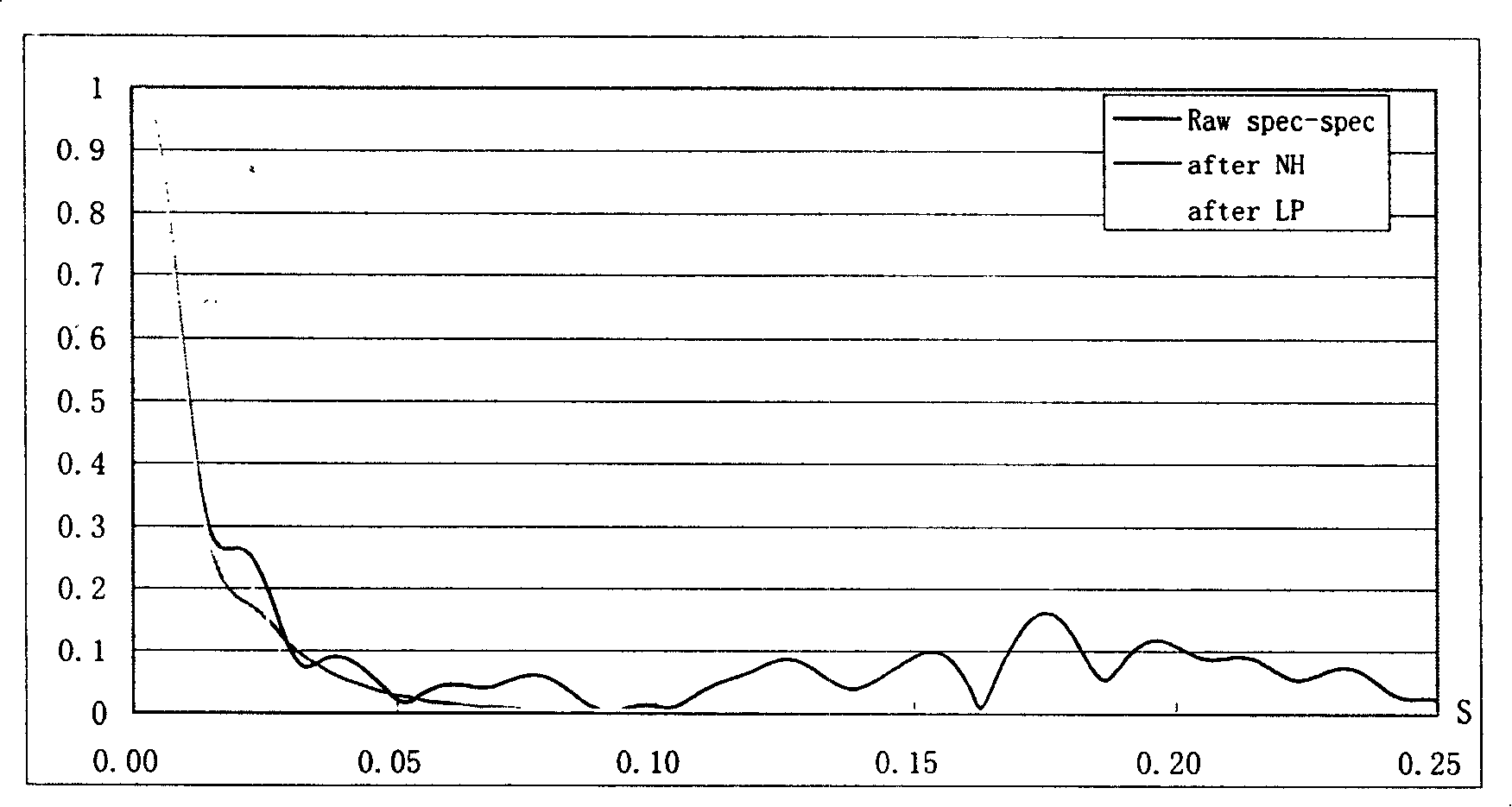
Examples
Embodiment 1
[0083] Embodiment 1 example of the present invention adopts the following steps:
[0084] 1) Seismic data were collected in the field and superimposed, with a duration of 6s and a sampling interval of 4ms, a total of 1000 traces;
[0085] 2) According to the frequency characteristics of seismic data from shallow to deep, artificially divide seismic data into 3 time windows: 0-1500ms, 1500-2500ms, 2500-6000ms;
[0086] 3) Perform Fourier transform on the seismic data of time window 1 (or time window 2, time window 3), and obtain the seismic record amplitude with frequency sampling interval DF of 0.4882812 Hz (time window 2 is 0.976563 Hz, time window 3 is 0.2441406 Hz) Spectrum;
[0087] 4) The cut-off frequency FE is calculated as 30 Hz, the sampling interval DT is 1 ms (time window 2 is 2 ms, time window 3 is 0.5 ms), and a time-domain low-pass filter with 201 samples is used as an equivalent N-point smoothing operator; Here FE*DT=X*DF*1.024, take X=0.06s, fix FE=30Hz, from...
Embodiment 1
[0094] The result of embodiment 1 sees Figure 5 shown.
[0095] Embodiment 2 of the present invention adopts the following steps: wherein the steps different from the above embodiment 1 are:
[0096] 2) According to the frequency characteristics of seismic data from shallow to deep, artificially divide seismic data into three time windows: 0-1000ms, 1000-3000ms, 3000-6000ms;
[0097] 3) Perform Fourier transform on the seismic data of time window 1 (or time window 2, time window 3), and obtain the seismic record amplitude with frequency sampling interval DF of 0.976563 Hz (time window 2 is 0.4882812 Hz, time window 3 is 0.2441406 Hz) Spectrum;
[0098] 4) Take the sampling interval DT as 2 ms, the cut-off frequency FE as 25 Hz (the time window 2 is 12.5 Hz, the time window 3 is 6.25 Hz), and the time-domain low-pass filter with 201 samples as the equivalent N-point smoothing operator; Here FE*DT=X*DF*1.024, take X=0.05s, fixed sampling rate DT=2ms, and calculate the value ...
PUM
 Login to View More
 Abstract
Description
Claims
Application Information
 Login to View More