
Method for establishing and searching feature matrix of Web document based on semantics
A feature matrix and document technology, applied in the field of information retrieval, can solve problems such as difficulty in improving semantic levels and loss of semantic information
Patent Information
- Authority / Receiving Office
- CN · China
- Patent Type
- Applications(China)
- Current Assignee / Owner
- Publication Date
- 2008-08-27
- Estimated Expiration
- Not applicable · inactive patent
Smart Images
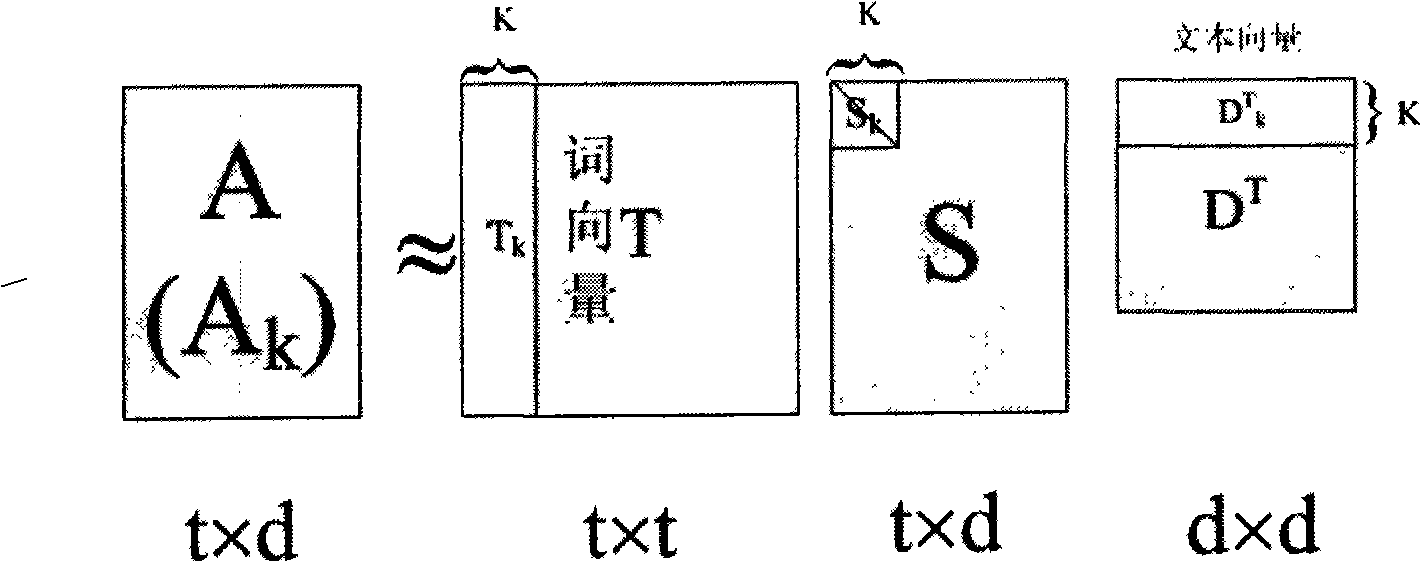
Figure 1 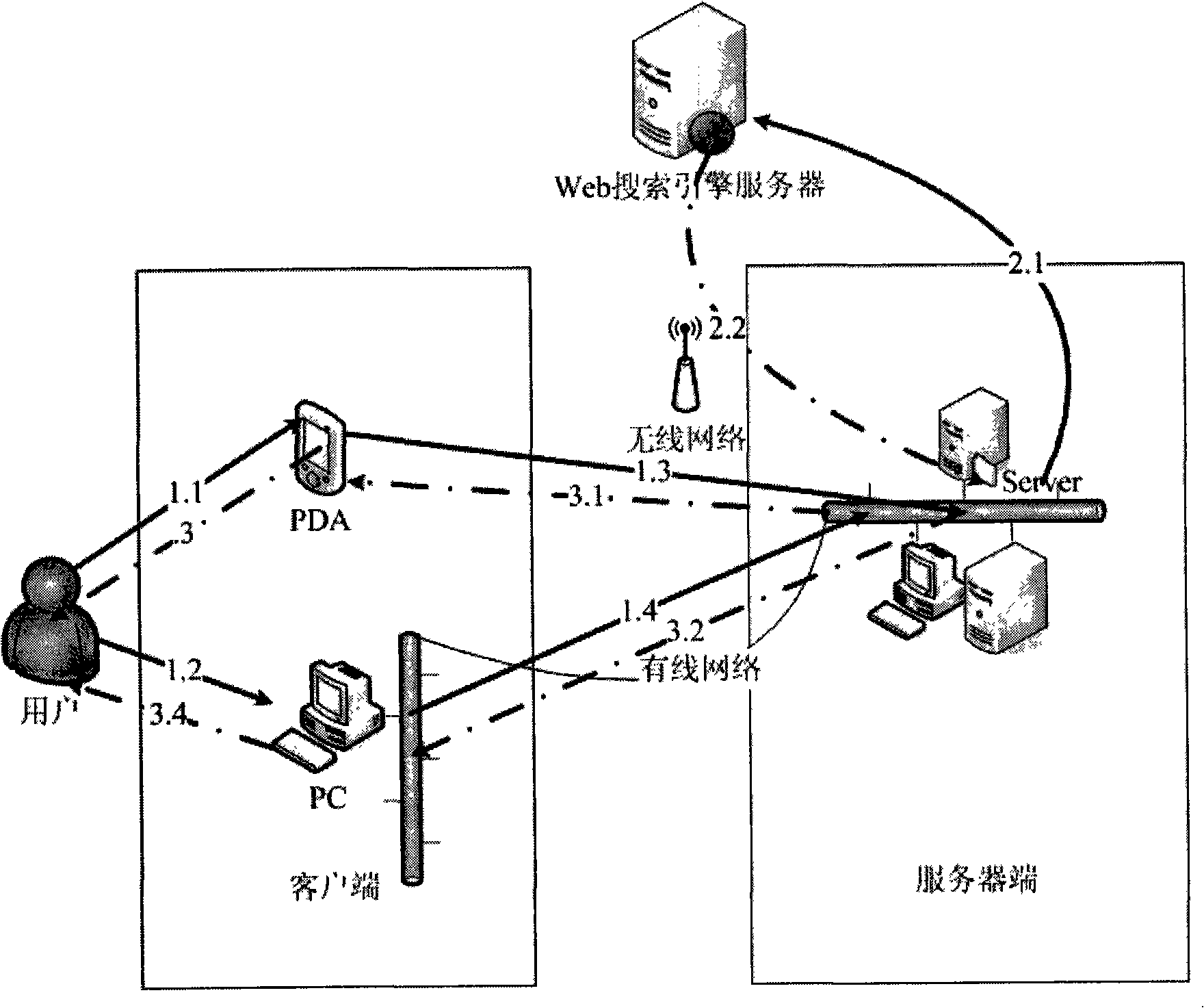
Figure 2 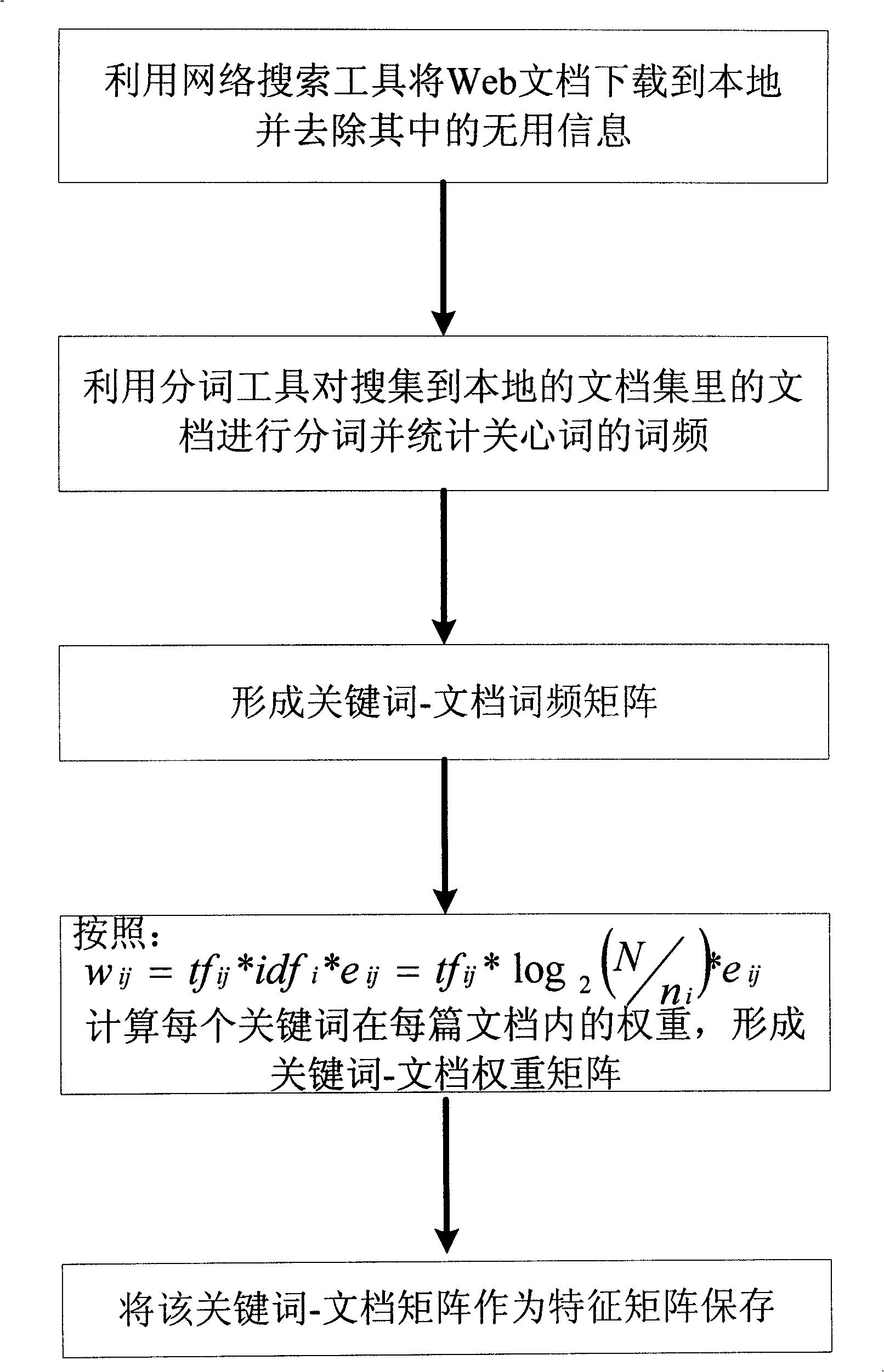
Figure 3
Abstract
Description
technical field
[0001] The invention relates to a method for establishing and retrieving a feature matrix of a semantic-based Web document, and belongs to the technical field of Information Retrieval. Background technique
[0002] Since the development of database technology, the retrieval of formatted data has been relatively mature, and the document retrieval function based on the string matching function can already be realized. However, there is no effective retrieval method for a large number of unformatted documents (mainly referring to data in non-databases, such as Web documents). How to let users find the information they need in the most effective way and most accurately in the vast free text collection has become a hot spot in the field of Chinese retrieval.
[0003] The development of Web search engine technology makes it possible to retrieve massive Web page information in the Internet. However, this kind of retrieval also has its own disadvantages: the basic ...
Examples
Embodiment 1
[0085] Embodiment 1. Establishment of a feature matrix of a semantically based Web document
[0086] Assume that there are five web documents from the Internet (first step), and their contents are:
[0087] Document 1: Public transit
[0088] Train, plane, car, bus, subway
[0089] Document 2: Traffic Jam
[0090] Document 3: Transportation Industry
[0091] Document 4: lifeline of public transportation
[0092] Document 5: Buses and subways are the main means of transportation
[0093] First, use the word segmentation tool to perform word frequency statistics on nouns, pronouns, place words, personal names, place names, institutions, and other proper names in each document (step two). Form a keyword-document term frequency matrix (Table 3 below, corresponding to the third step, the fourth step, and the fifth step).
[0094] Table 3. Keyword-document term frequency matrix and n i and idf i
[0095] Keyword\document (word frequency)
[...
Embodiment 2
[0100] Example 2.Semantics-based retrieval method for Web documents
[0101] Assume that the retrieval content is: public transportation; assuming that the retrieved data source is the five documents corresponding to the feature matrix established in 1;
[0102] Establish ontology: Assume that the established traffic ontology is as Figure 5 Shown (corresponding to the first of the preparation):
[0103] according to SN ( N 1 , N 2 ) = Depth ( com _ parent ( N 1 , N 2 ) ) Height ( root ...
Embodiment 3
[0129] Embodiment 3. Utilize the traditional LSA algorithm
[0130] Suppose there are five documents, and their contents are:
[0131] Document 1: Public Transportation
[0132] train, plane, car, bus, subway
[0133] Document 2: Traffic Jam
[0134] Document 3: Transportation Industry
[0135] Document 4: The lifeblood of public transport
[0136] Document 5: Buses and subways are the main means of transportation
[0137] Suppose the search content is: public transportation
[0138] First, use the word segmentation tool to perform word frequency statistics on nouns, pronouns, local words, personal names, place names, institutions, and other proper names in each document. A keyword-document term frequency matrix is formed.
[0139] Table 5 keywords-document term frequency matrix and n i and idf i
[0140] Keyword\document (word frequency)
document 1
document 2
document 3
document 4
Document 5
n i
idf...