
Preparation method of ferrite magnetic film
A magnetic thin film and ferrite technology, which is applied in the field of preparation of spinel ferrite thin film, can solve the problems of Curie temperature and magnetocrystalline anisotropy constant reduction, consumption of too much reaction solution, low resonance frequency, etc. , to achieve the effect of simple preparation method, easy operation and low cost
Patent Information
- Authority / Receiving Office
- CN · China
- Patent Type
- Patents(China)
- Current Assignee / Owner
- Publication Date
- 2011-09-07
- Estimated Expiration
- Not applicable · inactive patent
Smart Images
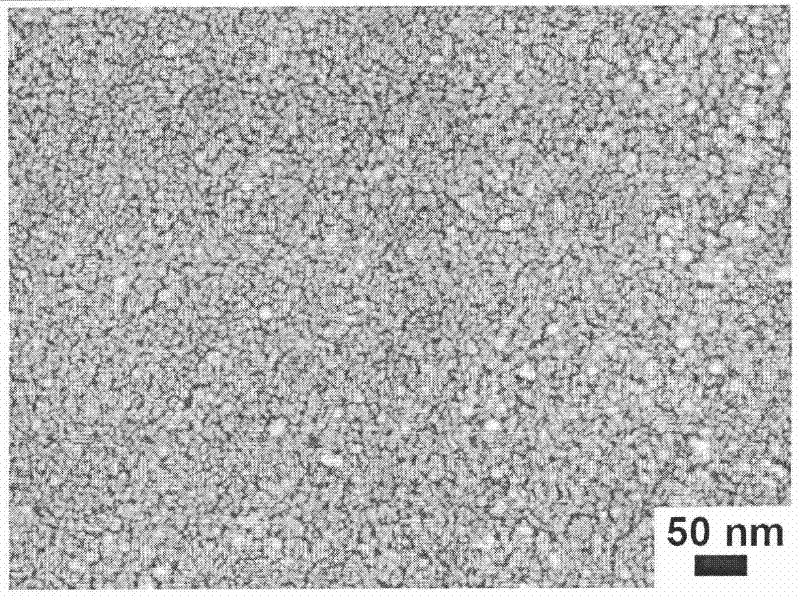
Figure 1 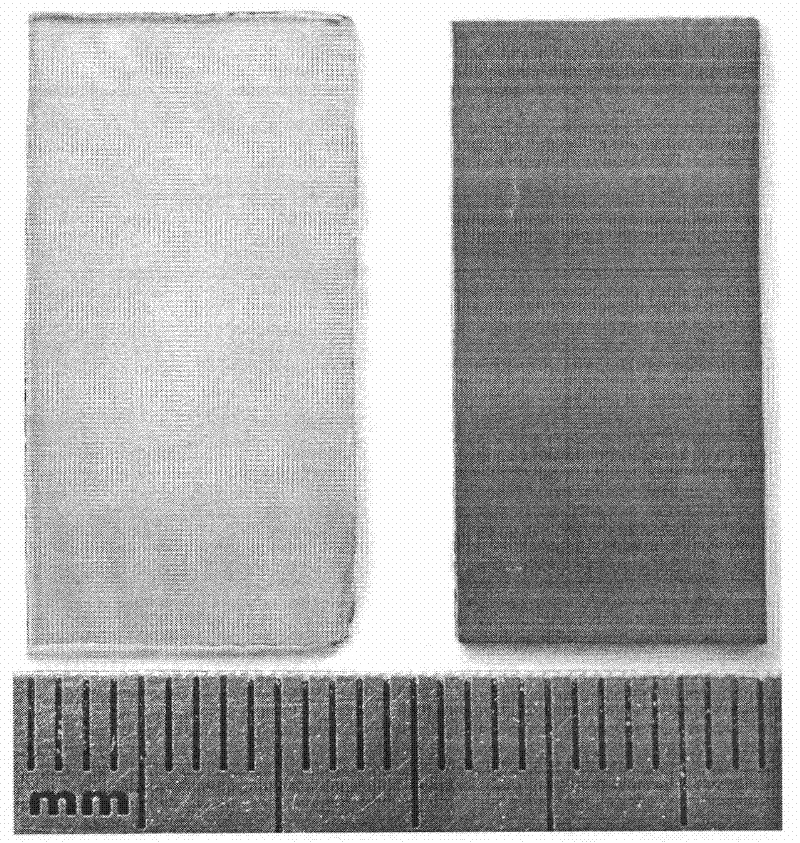
Figure 2 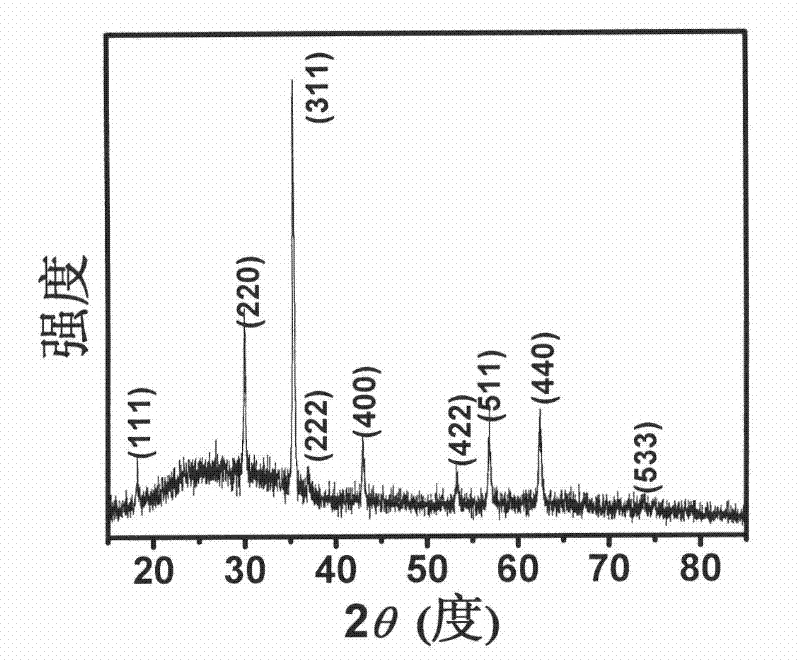
Figure 3
Abstract
Description
technical field
[0001] The invention relates to a preparation method of a spinel type ferrite thin film. In particular, it is a method for preparing NiZnCo spinel type ferrite magnetic film. Background technique
[0002] Spinel-type ferrite magnetic materials have high resonance frequency, high resistivity, high Curie temperature, good mechanical wear resistance and stable chemical properties, so they are used in transformers, magnetic recording materials, high-frequency inductance cores, microwave absorption Materials and other fields have a wide range of applications. With the miniaturization, light weight, and thinning of electronic devices becoming more and more obvious, the thin film of ferrite materials has become an inevitable trend. Traditional methods for preparing ferrite thin films include magnetron sputtering, vapor deposition, molecular beam epitaxy, etc. These preparation methods all require relatively high preparation temperatures, usually as high as 1000°C....
Examples
Embodiment 1
[0016] 1. Preparation of active substrate
[0017] Cut the glass into a substrate with a size of 12mm×24mm×0.5mm, and plate Ag on the glass substrate as follows:
[0018] a. Ultrasonic cleaning the glass substrate in distilled water, alcohol, and acetone solutions to remove impurities and oil stains on the surface;
[0019] b. Immerse the cleaned substrate into 5-10g / l SnCl at room temperature 2 In the sensitizing solution mixed with 0.08M hydrochloric acid, soak for 0.5 to 5 minutes;
[0020] c. After taking it out, immerse it in distilled water for about 2 to 20 seconds;
[0021] d. Then take it out, and then immerse the glass substrate in 1-10g / l normal temperature AgNO 3 In the activated water solution, soak for 1 to 6 minutes;
[0022] e. Repeat steps b-d several times until the glass substrate material changes from bright and transparent to brown, indicating that the activation is successful.
[0023] It should be noted that: (1) when configuring the sensitizing sol...
Embodiment 2
[0027] The preparation of the Ag-coated glass substrate was the same as in Example 1.
[0028] Configured with 15mM Fe(NO 3 ) 3 , 0.4mM Zn(NO 3 ) 2 Mix 50ml of the solution with 30mM DMAB, place it in a water bath at 80°C, and react for 1 hour to form a component of Zn 0.41 Fe 2.59 o 4 ferrite film. This thin film had a coercive force of 45 Oe and a saturation magnetization of 447 emu / cc.
[0029] Near this composition point, the film has the maximum saturation magnetization, regardless of the increase or decrease of Zn content, the saturation magnetization will decrease, but the coercive force will only gradually decrease with the increase of Zn content.
Embodiment 3
[0031]The preparation of the Ag-coated glass substrate was the same as in Example 1.
[0032] Configured with 10mM Fe(NO 3 ) 3 , 0.8mM Co(NO 3 ) 2 Mix 50ml of solution with 30mM DMAB, put it in a water bath at 80°C, and react for 1 hour to produce a hard ferrite film with a coercive force of 443Oe.
[0033] Strongly anisotropic Co 2+ The addition of ions can rapidly increase the coercive force of the ferrite film, and the film transitions from a soft magnetic material to a hard magnetic material.