Check patentability & draft patents in minutes with Patsnap Eureka AI!

Method for distributing radio resource control (RRC) connection frequency points in time division synchronous code division multiple access (TD-SCDMA) system

A TD-SCDMA and frequency point technology, applied in connection management, electrical components, wireless communication, etc., can solve the problems of low RRC connection success rate, unbalanced network load, and occupation of system resource overhead, so as to improve the RRC connection success rate , reducing resource overhead and the effect of access time

Inactive Publication Date: 2010-07-07
TD TECH COMM TECH LTD
View PDF0 Cites 30 Cited by
  • Summary
  • Abstract
  • Description
  • Claims
  • Application Information

AI Technical Summary

Problems solved by technology

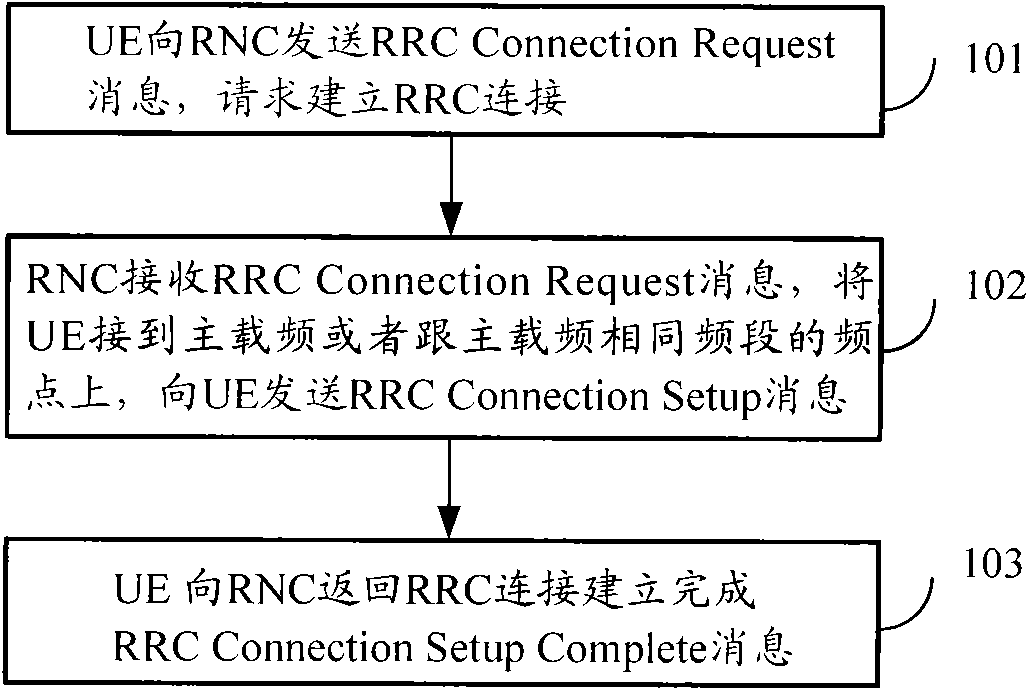
[0018] It can be seen from the above that, because the existing TD-SCDMA system is a single-band network, during the establishment of the RRC connection of random access, it is connected to the main carrier frequency of a single frequency band or with the main carrier frequency according to the load of the main carrier frequency band. Frequency points of the same frequency band, and when the TD-SCDMA system adopts multi-band networking, the maximum frequency band support capability of the UE in the cell of the TD-SCDMA system will include A frequency band, B frequency band and C frequency band. Access to the main carrier frequency or a frequency point in the same frequency band as the main carrier frequency will result in fewer (only one) target carrier frequency bands that the network side (RNC) can select. When there are more UEs (heavier load) connected to this frequency band , which will lead to a low success rate of the UE's RRC connection; furthermore, because the network side can only connect the UE to the main carrier frequency or a frequency point in the same frequency band as the main carrier frequency, the load of this frequency band is heavy, while other frequency bands The load of the frequency point is light, resulting in unbalanced network load; moreover, when the RRC connection request of the UE is rejected, when the RRC connection is re-initiated after a certain time interval, the resource overhead of the system needs to be occupied, and the access time of the UE is increased, so that Internet service quality is poor

Method used

the structure of the environmentally friendly knitted fabric provided by the present invention; figure 2 Flow chart of the yarn wrapping machine for environmentally friendly knitted fabrics and storage devices; image 3 Is the parameter map of the yarn covering machine
View more

Image

Smart Image Click on the blue labels to locate them in the text.
Viewing Examples
Smart Image
  • Method for distributing radio resource control (RRC) connection frequency points in time division synchronous code division multiple access (TD-SCDMA) system
  • Method for distributing radio resource control (RRC) connection frequency points in time division synchronous code division multiple access (TD-SCDMA) system
  • Method for distributing radio resource control (RRC) connection frequency points in time division synchronous code division multiple access (TD-SCDMA) system

Examples

Experimental program
Comparison scheme
Effect test

Embodiment Construction

[0040] In order to make the object, technical solution and advantages of the present invention clearer, the present invention will be further described in detail below with reference to the accompanying drawings and examples.

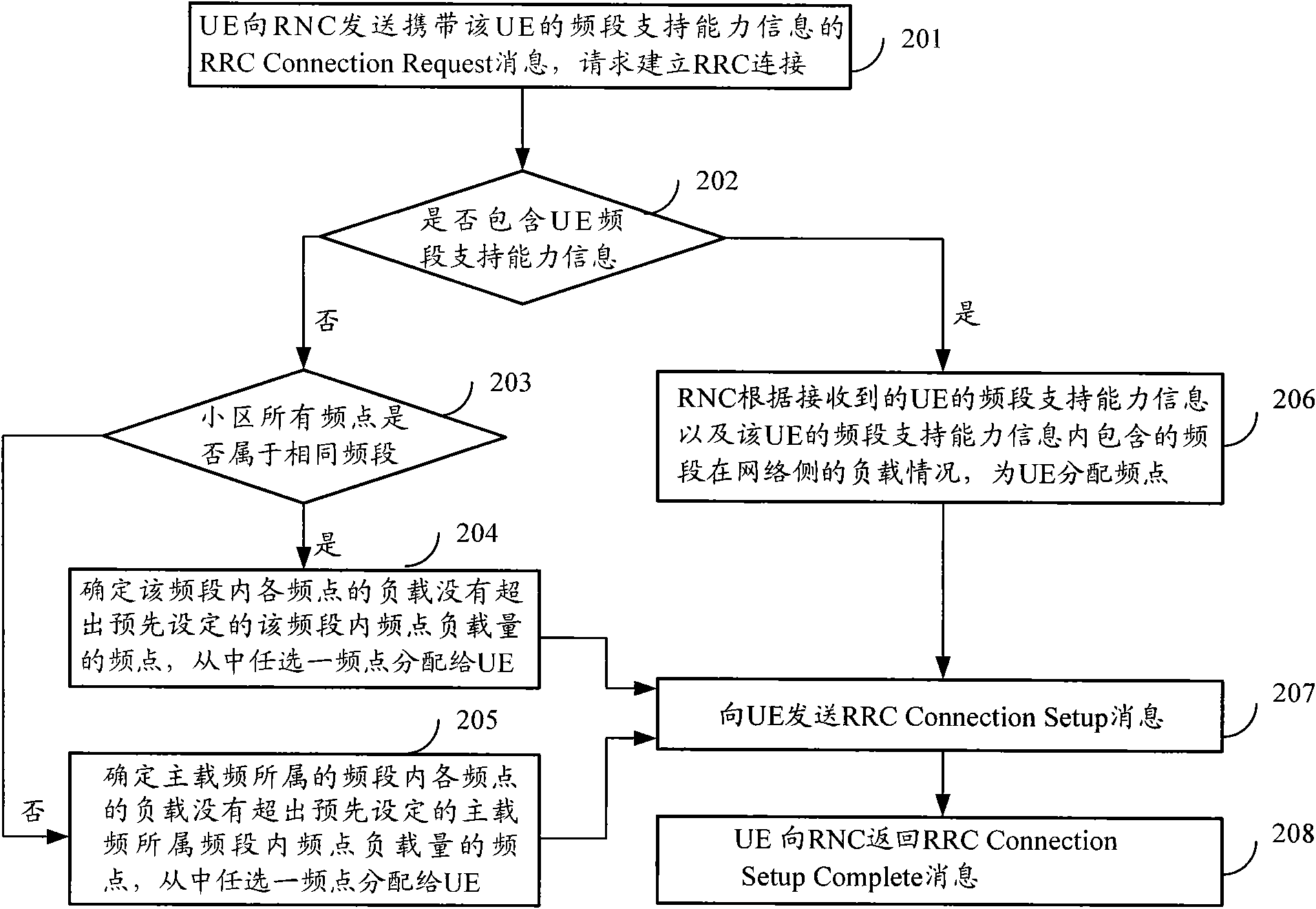
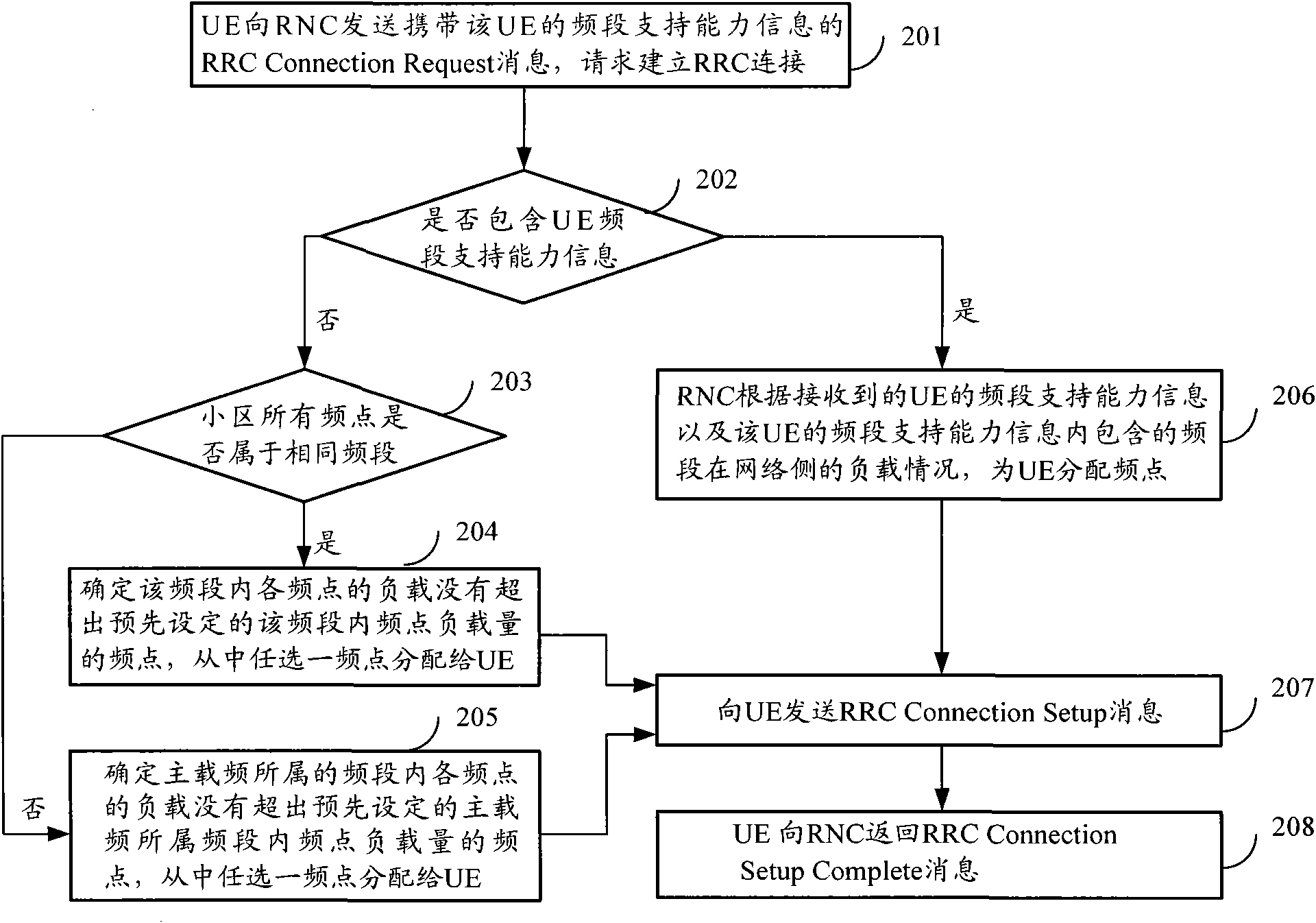
[0041] In the embodiment of the present invention, the UE carries the frequency band support capability information of the UE in the RRC Connection Request message sent to the RNC to increase the target carrier frequency band selectable by the UE, and the RNC receives the UE frequency support capability information and the UE's frequency band support The load condition of the frequency band included in the capability information on the network side allocates frequency points for the UE.

[0042] figure 2 For the schematic flow chart of the method for allocating RRC connection frequency points in the TD-SCDMA system multi-band networking of the present invention, see figure 2 , the process includes:

[0043] Step 201, the UE sends an RRCConnection Re...

the structure of the environmentally friendly knitted fabric provided by the present invention; figure 2 Flow chart of the yarn wrapping machine for environmentally friendly knitted fabrics and storage devices; image 3 Is the parameter map of the yarn covering machine
Login to View More

PUM

No PUM Login to View More

Abstract

The invention discloses method for distributing radio resource control (RRC) connection frequency points in a time division synchronous code division multiple access (TD-SCDMA) system, comprising the following steps of: determining that a received RRC connection request message carries with frequency band support capability information of user equipment (UE); and distributing the frequency points for the UE according to a frequency band contained in the frequency band support capability information and the loading condition corresponding to the frequency band. The invention can prevent the UE from only being accessed to the frequency points of the frequency band of main carrier frequency or frequency band which is the same as that of the main carrier frequency according to the load of the frequency band of the main carrier frequency, thereby enhancing the success rate of the RRC connection of the UE and reducing the resource overhead needed by the UE carrying out the RRC connection again and the access time.

Description

technical field [0001] The present invention relates to a mobile communication system access technology, in particular to a method for allocating radio resource control (RRC, Radio Resource Control) connection frequency points in a Time Division-Synchronous Code Division Multiple Access (TD-SCDMA, Time Division-Synchronous Code Division Multiple Access) system . Background technique [0002] TD-SCDMA technology is the third generation (3G, 3 rd Generation) is one of the mobile communication technology standards. By adopting a series of high-tech technologies such as smart antenna, joint detection, uplink synchronization, and power control, it can not only meet the needs of voice services, but also flexibly adapt to the needs of uplink and downlink asymmetric data and multimedia services. , has the characteristics of flexible spectrum configuration and high spectrum utilization; at the same time, it can be applied to various urban and suburban environments such as macro cell...

Claims

the structure of the environmentally friendly knitted fabric provided by the present invention; figure 2 Flow chart of the yarn wrapping machine for environmentally friendly knitted fabrics and storage devices; image 3 Is the parameter map of the yarn covering machine
Login to View More

Application Information

Patent Timeline
no application Login to View More
IPC IPC(8): H04W72/04H04W72/10H04W76/02
Inventor 申伟乔志骏高红梅
Owner TD TECH COMM TECH LTD
Features
  • R&D
  • Intellectual Property
  • Life Sciences
  • Materials
  • Tech Scout
Why Patsnap Eureka
  • Unparalleled Data Quality
  • Higher Quality Content
  • 60% Fewer Hallucinations
Social media
Patsnap Eureka Blog
Learn More