
Alumina carrier and preparation method thereof
A technology of alumina carrier and nano-alumina, which is applied in catalyst carriers, chemical instruments and methods, catalyst activation/preparation, etc., can solve the problems of low production efficiency and harsh operating conditions for oil column forming.
- Summary
- Abstract
- Description
- Claims
- Application Information
AI Technical Summary
Problems solved by technology
Method used
Image

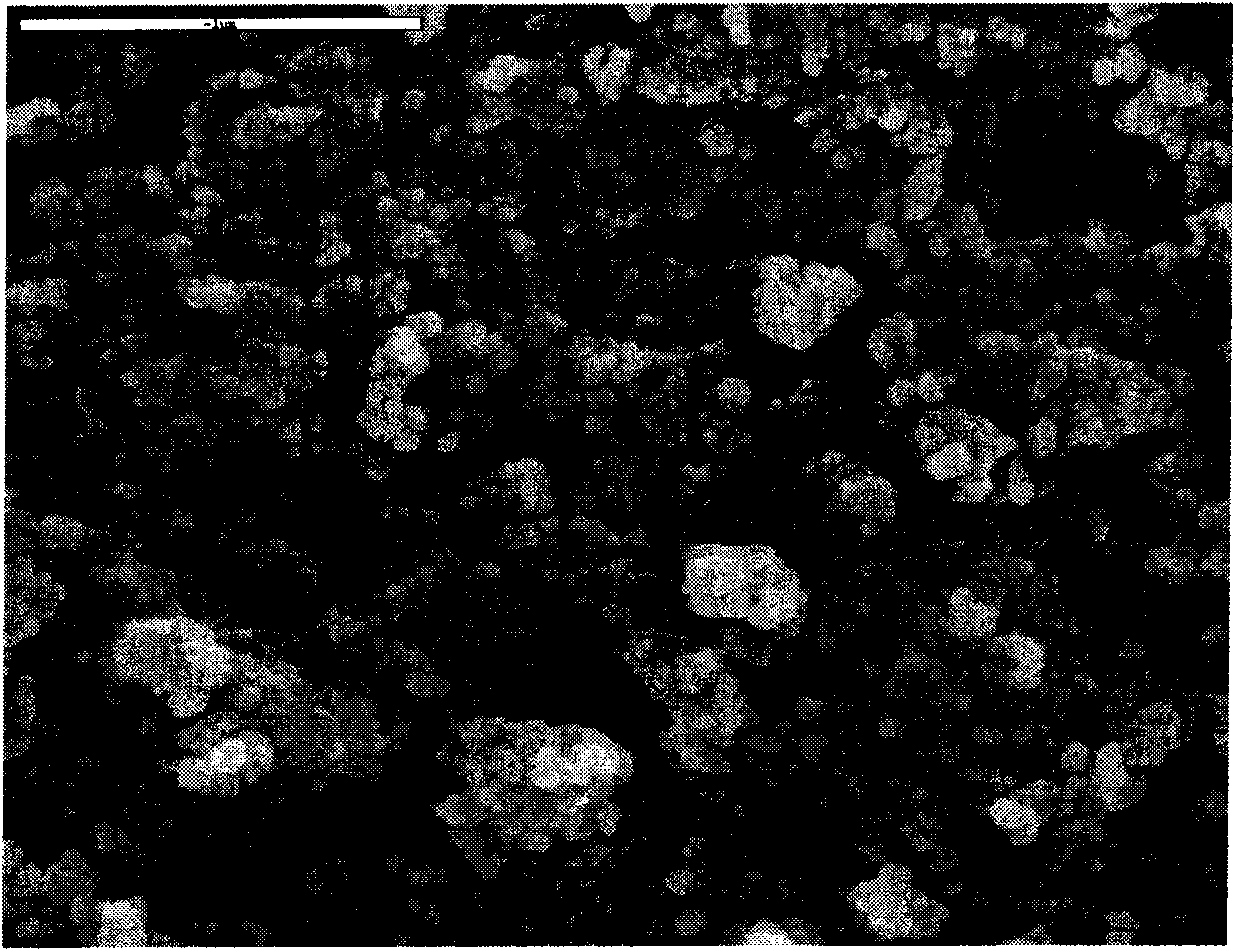
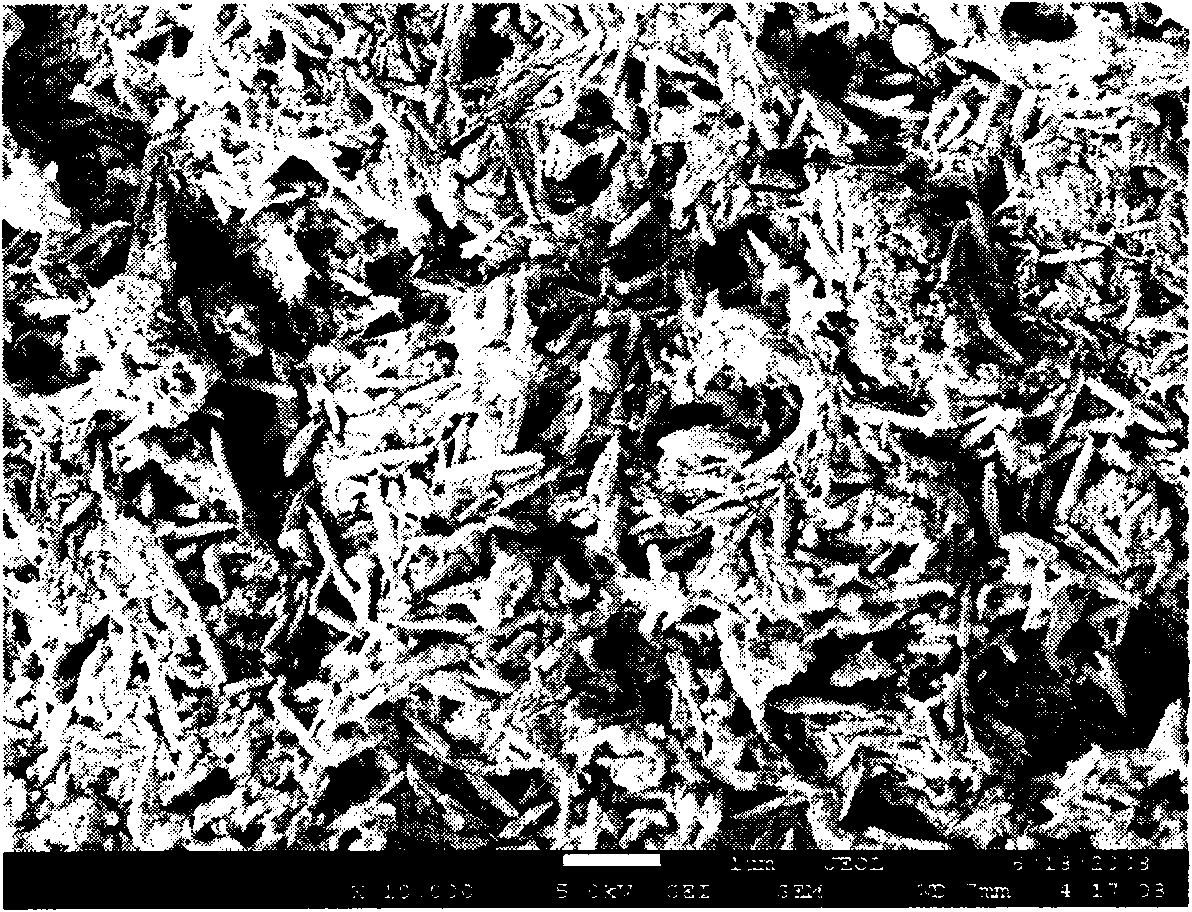
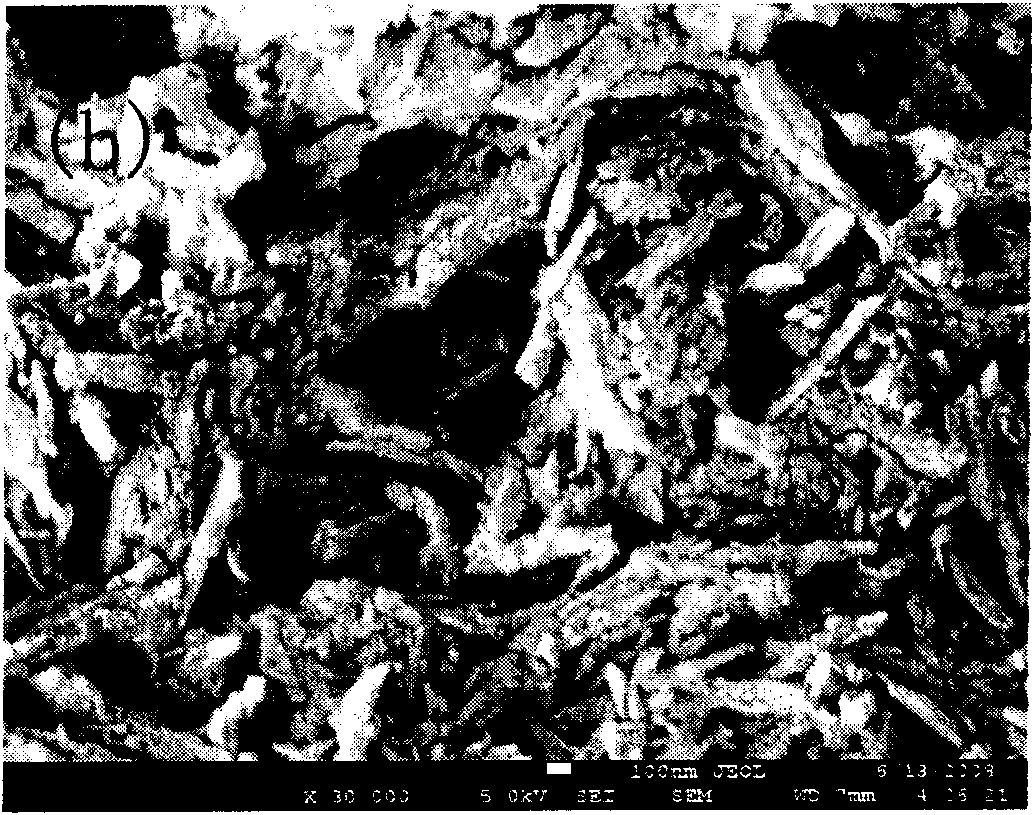
Examples
Embodiment 1
[0046] Under stirring conditions, 375g of aluminum nitrate nonahydrate and 90g of urea were mixed and heated to 100°C, and added to a mixture of 32g of polyisobutylene maleate triethanolamine maleate and 88g of 150 HVI neutral oil at the same temperature to form a supersolubilizer group, and then reacted at 100°C for 3 hours to obtain nano-aluminum hydroxide gel. Wash three times with 200ml of distilled water, and dry at 120°C for 10 hours. Nano-aluminum hydroxide gel dry powder and binding agent pseudo-boehmite are mixed uniformly in a weight ratio of 3: 1; 26g dilute nitric acid (mass concentration 17%), 160g water and 10g cosolvent are mixed uniformly, and then added to In the mixture of nano-aluminum hydroxide gel dry powder and binder, stir evenly, mix evenly on a mixer, and then shape it in an extruder, controlling the pressure at 10MPa. The molded product was dried at 100°C for 10 hours, calcined at 240°C for 3 hours, and then calcined at 850°C for 4 hours with a heati...
Embodiment 2
[0048] The alumina carrier A1 obtained in Example 1 is impregnated with active metals, and the resulting residue hydrodemetallization catalyst HDM-1 contains 4% (mass fraction) MoO 3 , 2% (mass fraction) NiO.
[0049] The residual oil hydrodemetallization catalyst HDM-1 was used in the hydrodemetallization experiment of the residual oil raw material (see Table 1 for properties), and the test conditions were as follows: temperature 390°C, hydrogen-to-oil volume ratio 1000, liquid hourly volume space velocity 1.0h -1 , hydrogen partial pressure 15.4MPa, continuous operation for 3000 hours, the pore properties of the catalyst after operation are shown in Table 3. Investigate the diffusion and metal distribution of metal precipitation in the catalyst pores in residual oil, and use JSM-7500F cold field emission scanning electron microscope (FESEM) to measure the metal distribution, cross-cut the catalyst along half of the longitudinal direction, and then measure along the long axis...
Embodiment 3
[0059] Mix 90g minus three-line dewaxed oil and 70g SP-80, heat to dissolve at 80°C, and mix well; heat 620g of aluminum nitrate nonahydrate to 80°C to melt, slowly add to the above mixture, and mix for 20 minutes to form a uniform supersolubilized colloid. 220 g of saturated ammonia water at 20° C. was added dropwise and aged for 3 hours to obtain a nano-aluminum hydroxide gel. Wash three times with 200ml of distilled water, and dry at 120°C for 10 hours. Nano-aluminum hydroxide gel dry powder and binder pseudo-boehmite are mixed uniformly in a weight ratio of 3: 1; 32g dilute nitric acid (mass concentration 17%), 150g water and 32g cosolvent ethanol are mixed uniformly, and then add Put it into the mixture of nano-aluminum hydroxide gel dry powder and binder, stir evenly, mix evenly on a mixer, and then shape it in an extruder, controlling the pressure at 23MPa. The molded product was dried at 100°C for 10 hours, calcined at 240°C for 3 hours, and then calcined at 850°C for...
PUM
| Property | Measurement | Unit |
|---|---|---|
| diameter | aaaaa | aaaaa |
| diameter | aaaaa | aaaaa |
| specific surface area | aaaaa | aaaaa |
Abstract
Description
Claims
Application Information
 Login to View More