Blind equalization method and blind equalization device

A blind equalization and signal technology, applied in baseband system components, shaping networks in transmitters/receivers, etc., can solve the problems of wasting multiplication calculations, multiplication resources, affecting the convergence speed and stability of blind equalization devices, etc.

CN101931596AInactive Publication Date: 2010-12-29北京国科环宇科技股份有限公司
2 Cites 5 Cited by

Patent Information

Authority / Receiving Office
CN · China
Current Assignee / Owner
Publication Date
2010-12-29
Estimated Expiration
Not applicable · inactive patent

Smart Images

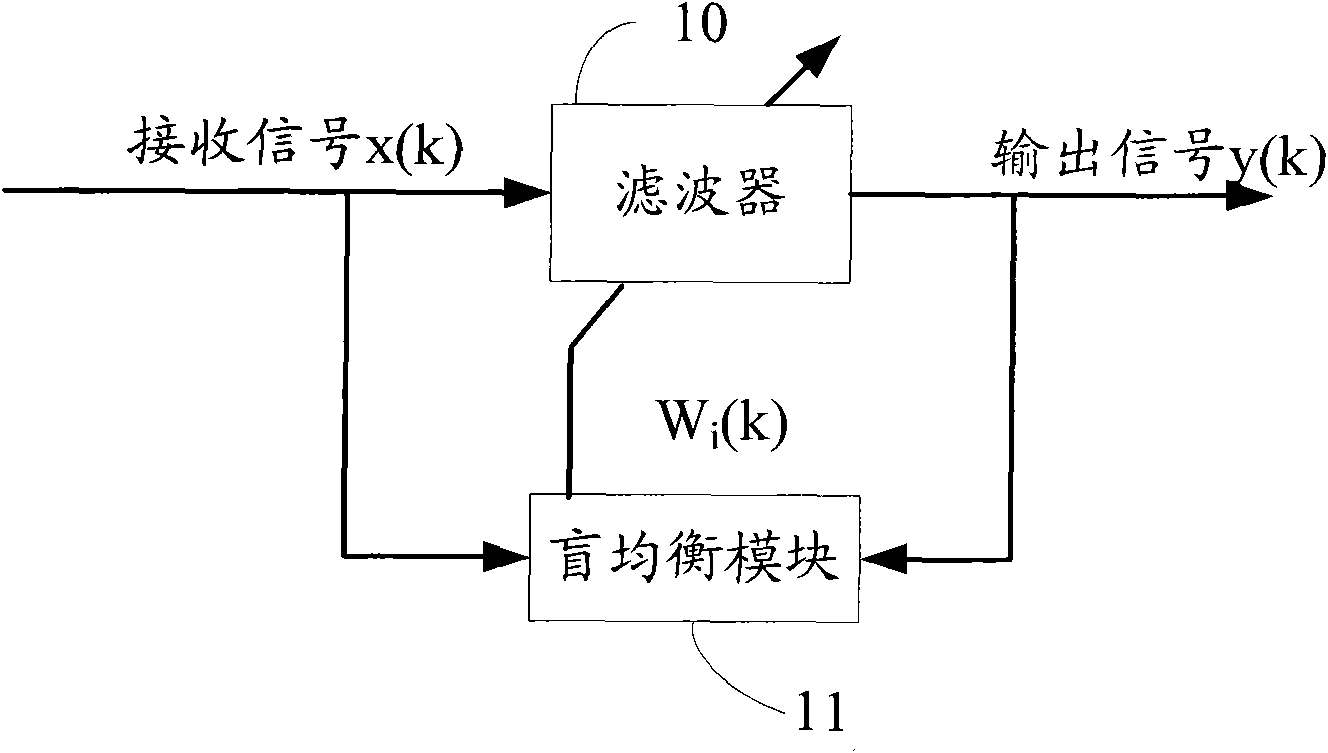
  • Figure 1
    Figure 1
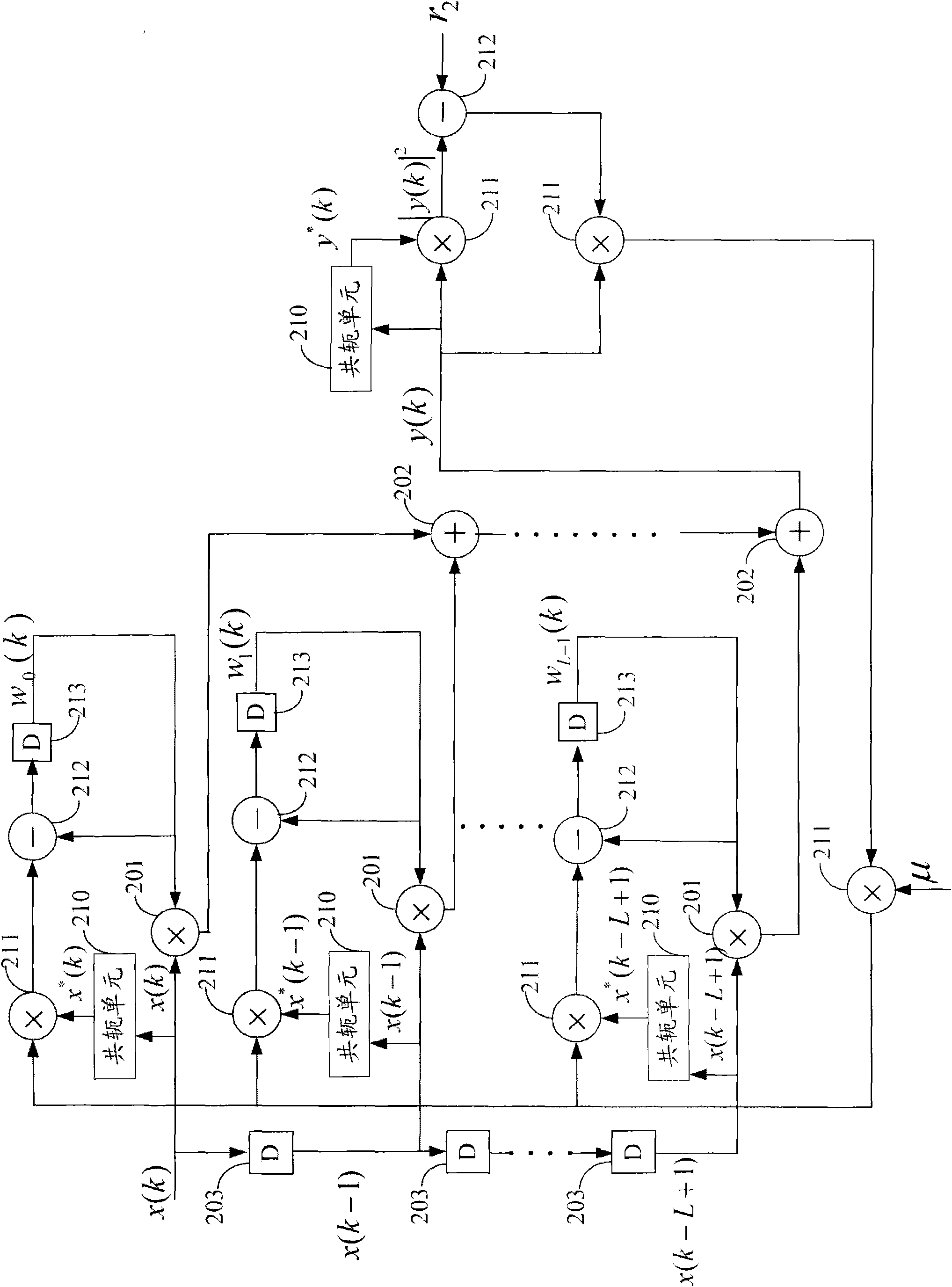
  • Figure 2
    Figure 2
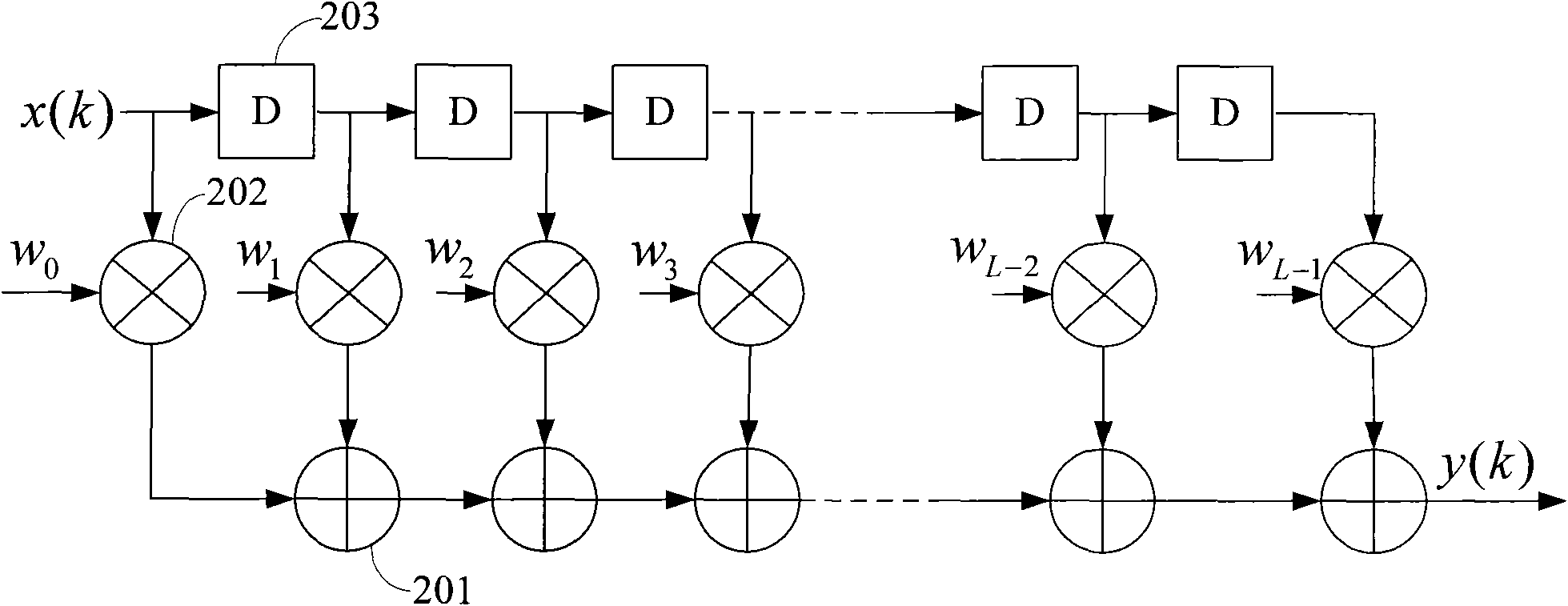
  • Figure 3
    Figure 3
Patent Text Reader

Abstract

The invention provides a blind equalization method and a blind equalization device. A blind equalization module delays an external input signal to acquire L received signals, and a conjugate signal of the received signals are acquired according to the L received signals; an error signal is calculated according to a blind equalization output signals and an error correction signal output by a filter; the error signal is subjected to nonlinear quantization to form a quantization error signal serving as an enable signal, and a first adjustment subsystem is calculated according to the conjugate signal of the received signals; shifting places is calculated according to relationships and steps of the error signal, a first error signal threshold value and a second error signal threshold value and 0; and the first adjustment subsystem is shifted according to the shifting places; and a second adjustment subsystem updates a blind equalization coefficient, and outputs the updated blind equalization coefficient to the filter. The method and the device can reduce calculation amount, retain a large amount of information of the error signal and improve stability and convergence rate.
Need to check novelty before this filing date? Find Prior Art

Description

technical field

[0001] The invention relates to digital wireless communication technology, in particular to a blind equalization method and a blind equalization device. Background technique

[0002] In a digital communication system, Intersymbol Interference (ISI) is prone to occur due to the frequency selectivity, distortion and dispersion characteristics of the channel. Currently, equalization techniques are commonly used to overcome ISI. In the traditional equalization technology, before the sending end and the receiving end start communicating, the sending end needs to send the known training sequence of the receiving end to detect the equalizer, which greatly reduces the transmission efficiency. In order to improve the transmission efficiency, a blind equalization technique that does not require training sequence detection is proposed. The blind equalization technique utilizes the specific probability and statistical characteristics of the signal, saves the resources o...

Examples

Embodiment Construction

[0069] In order to make the object, technical solution, and advantages of the present invention clearer, the present invention will be further described in detail below with reference to the accompanying drawings and examples.

[0070] In the blind equalization device and blind equalization method provided by the present invention, the blind equalization module uses a nonlinear quantization unit to perform nonlinear quantization on the error signal, and outputs the second calculation result related to the step size and the first result as the enabling signal, reducing the While occupying multiplication resources, a large amount of information of the error signal is retained, the stability and convergence speed are improved, the step size is converted into a shift number, and the multiplication operation of the step size and complex numbers is realized by using the shifter, which further reduces the multiplication resources. Occupied, reducing the amount of calculation.

[0071...