
Method for recording and analyzing electrocardiogram of arrhythmia
A recording analysis, arrhythmia technology, applied in diagnostic recording/measurement, medical science, sensors, etc., can solve the problem of lack of full-process data overlay browsing
- Summary
- Abstract
- Description
- Claims
- Application Information
AI Technical Summary
Problems solved by technology
Method used
Image

Examples
Embodiment Construction
[0017] The electrocardiogram recording and analysis method for arrhythmia of the present invention will be further described in conjunction with specific embodiments below.
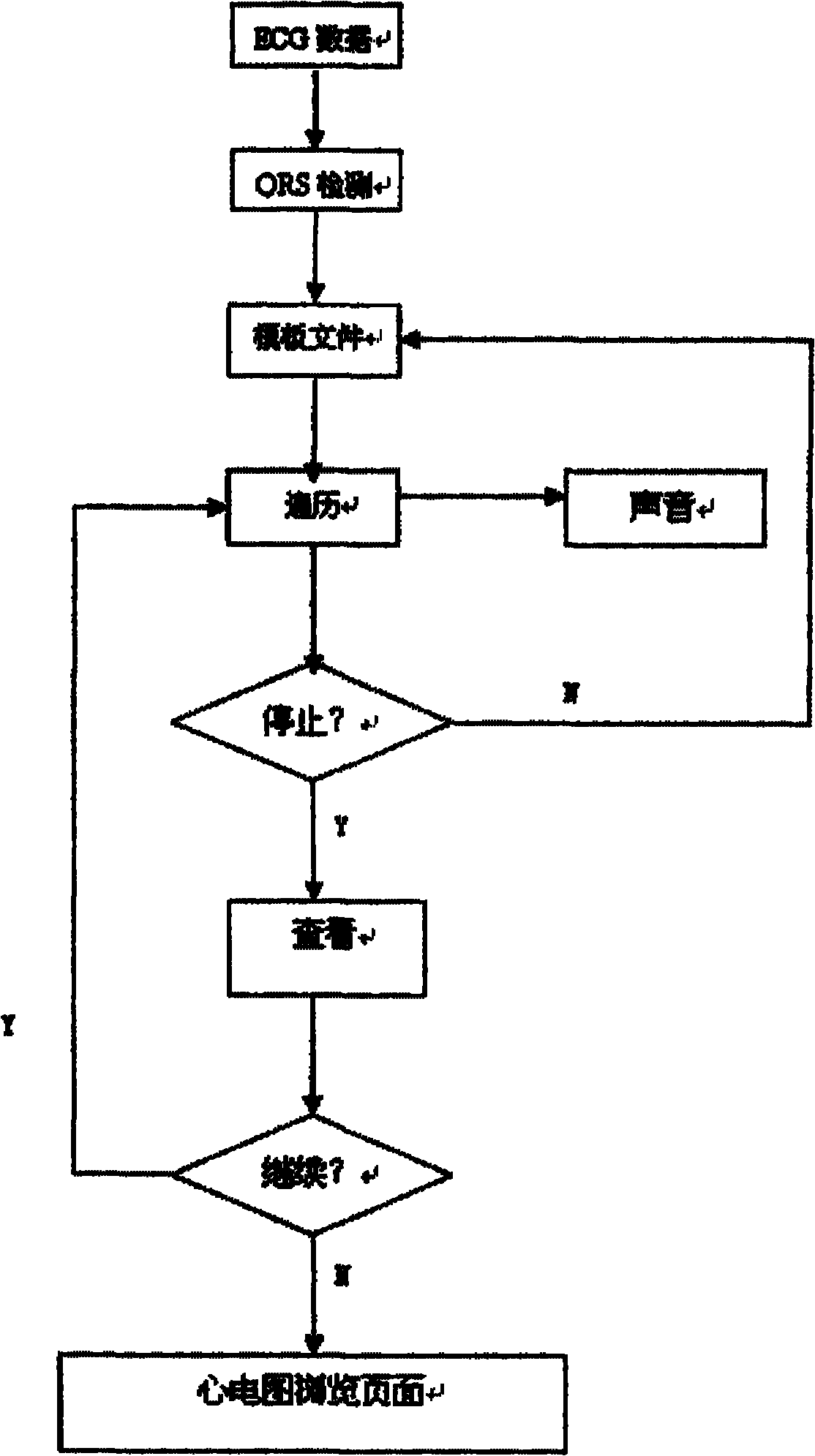
[0018] as attached figure 1 As shown, in the existing electrocardiogram device, after the ECG playback software in the computer reads the electrocardiogram data, it first detects the QRS waveform, and then classifies it into a specific template to generate a template file. The electrocardiogram recording analysis method for arrhythmia of the present invention is based on the template file, traverses the template file according to a certain playback speed, and selects a half-minute QRS wave group for superimposition. When superimposed, the standard deviation of RR (the R wave duration of two consecutive QRS waves) for 30 seconds in a normal rhythm is not large, and the N (sinus beat), SVE (supraventricular beat), and VE (ventricular beat) waves The nature of the group, QRS width, RR interval, etc. are ver...
PUM
 Login to View More
 Abstract
Description
Claims
Application Information
 Login to View More