Fault predicting and diagnosing method suitable for dynamic complex system

A complex system and fault prediction technology, applied in character and pattern recognition, instruments, computer components, etc., can solve problems such as high fault prediction model, complex operating environment, and difficulty in establishing accuracy, so as to improve practicability, accuracy, and operation Simple, versatile effects

CN102208028BInactive Publication Date: 2013-06-19BEIHANG UNIV
1 Cites 1 Cited by

Patent Information

Authority / Receiving Office
CN · China
Patent Type
Patents(China)
Current Assignee / Owner
Publication Date
2013-06-19
Estimated Expiration
Not applicable · inactive patent

Smart Images

  • Figure 1
    Figure 1
  • Figure 2
    Figure 2
  • Figure 3
    Figure 3
Patent Text Reader

Abstract

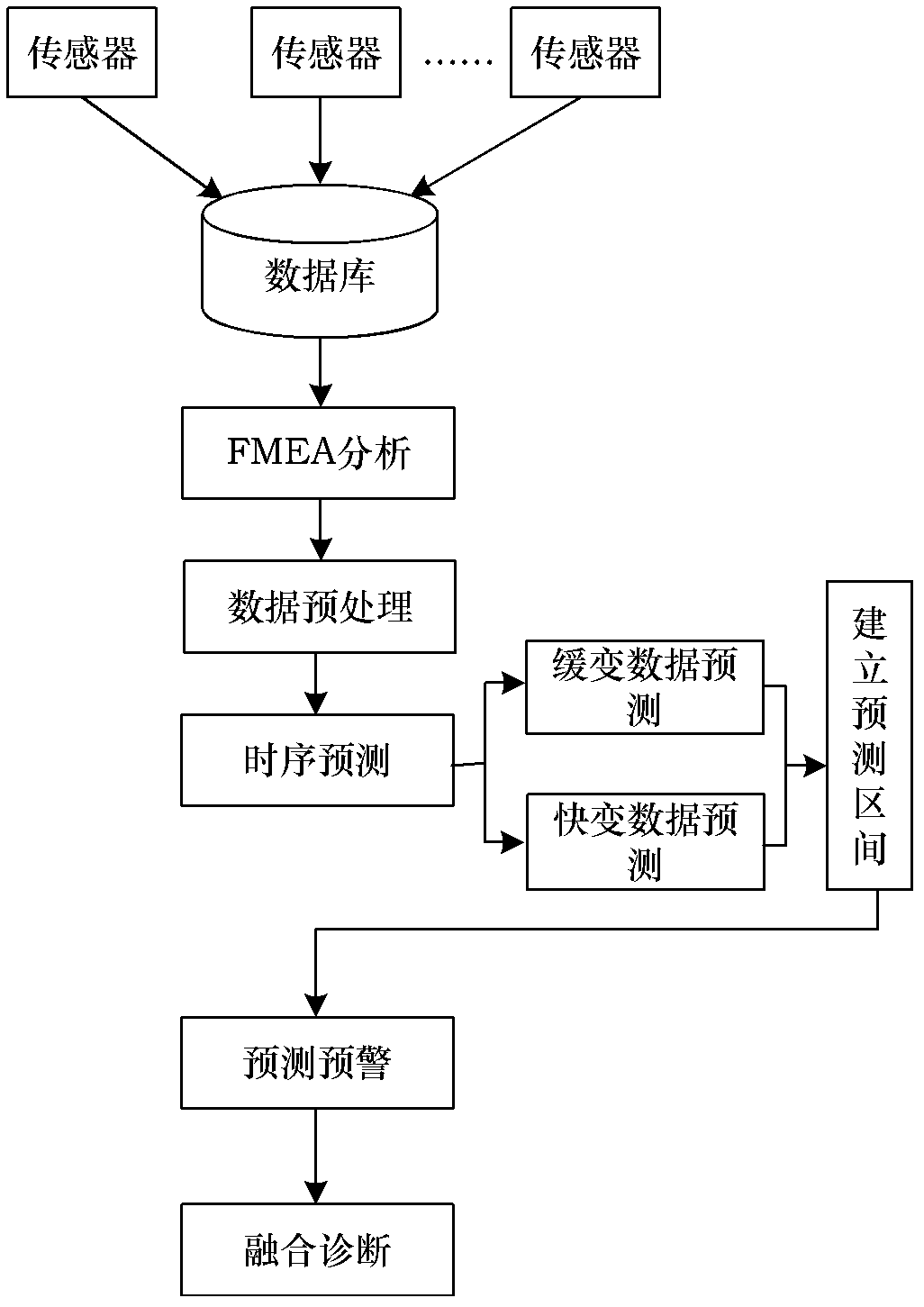
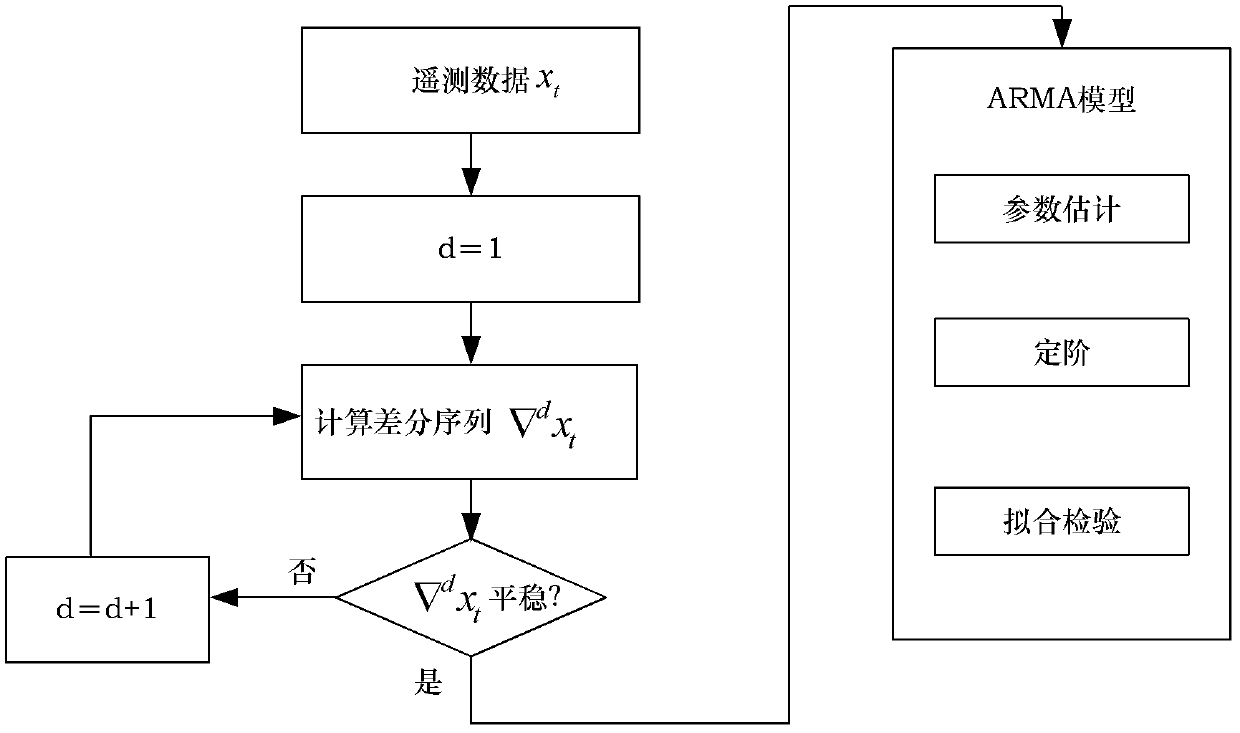
The invention provides a fault predicting and diagnosing method suitable for a dynamic complex system. The method can be applied in the field of fault prediction and diagnosis of dynamic complex systems of spacecrafts and the like. The method comprises the following steps of: performing failure mode and effect analysis (FMEA) on the dynamic complex system to obtain a main fault mode and corresponding performance detection parameters, dividing the performance detection parameters into slowly variable data and fast variable data, pre-processing the performance detection parameters, establishingan autoregressive moving average model (ARMA) aiming at the slowly variable data to perform time sequence prediction, establishing a multi-resolution wavelet neural network aiming at the fast variable data to perform time sequence prediction, performing fault early warning on the time sequence prediction results by establishing a prediction interval model, and performing fault diagnosis by establishing a D-S (Dempster-Shafer) evidence theory-based multi-signal fusion model. The method can be used for predicting and diagnosing the faults of the dynamic complex system with high precision, and has strong universality.
Need to check novelty before this filing date? Find Prior Art

Description

technical field

[0001] The invention belongs to the field of fault prediction and diagnosis of dynamic complex systems such as spacecraft, and provides a set of fault prediction and diagnosis methods for systems in the field with complex structures and a large amount of performance monitoring parameter data. Background technique

[0002] Fault prediction refers to predicting the time and type of failure of the system in the future time period based on the past and present state of the system, aiming at uncertain events, using existing knowledge, and using predictive reasoning methods to find out the cause and occurrence of failure. Faulty parts, providing theoretical basis for planned repair and maintenance.

[0003] Failure prediction techniques were originally developed for mechanical applications and are used in helicopters and complex mechanical systems and HUMS subsystems. For fault prediction technology, it can be divided into four categories from the perspective of t...

Examples

Embodiment

[0108] This embodiment takes my country's small satellite power system as the prediction object, and the small satellite power system is a typical dynamic and complex system. Due to the complex structure of the small satellite power supply system, the lack of a unified physical model, and the complex fault mechanism, it meets the fault prediction problem of a dynamic and complex system to be solved by the present invention. Through the detailed elaboration of this embodiment, the implementation process and engineering application process of the present invention are further described.

[0109] The steps of applying the fault prediction and diagnosis method proposed by the present invention to the small satellite power supply system in the embodiment of the present invention are as follows:

[0110] Step 1: Perform FMEA analysis on the small satellite power system to obtain the main failure modes of the small satellite power system and the performance monitoring parameters asso...