Determination method for orthogonal non-woven three-dimensional rectangular fabric permeability
A technology for fabric penetration and determination methods, which is applied in the fields of permeability/surface area analysis, measurement device, suspension and porous material analysis, etc. It can solve the problems of complicated operation process, difficult to obtain experimental results, time-consuming and labor-intensive, and save manpower and material resources. , Overcome the effect of low test efficiency
- Summary
- Abstract
- Description
- Claims
- Application Information
AI Technical Summary
Problems solved by technology
Method used
Image

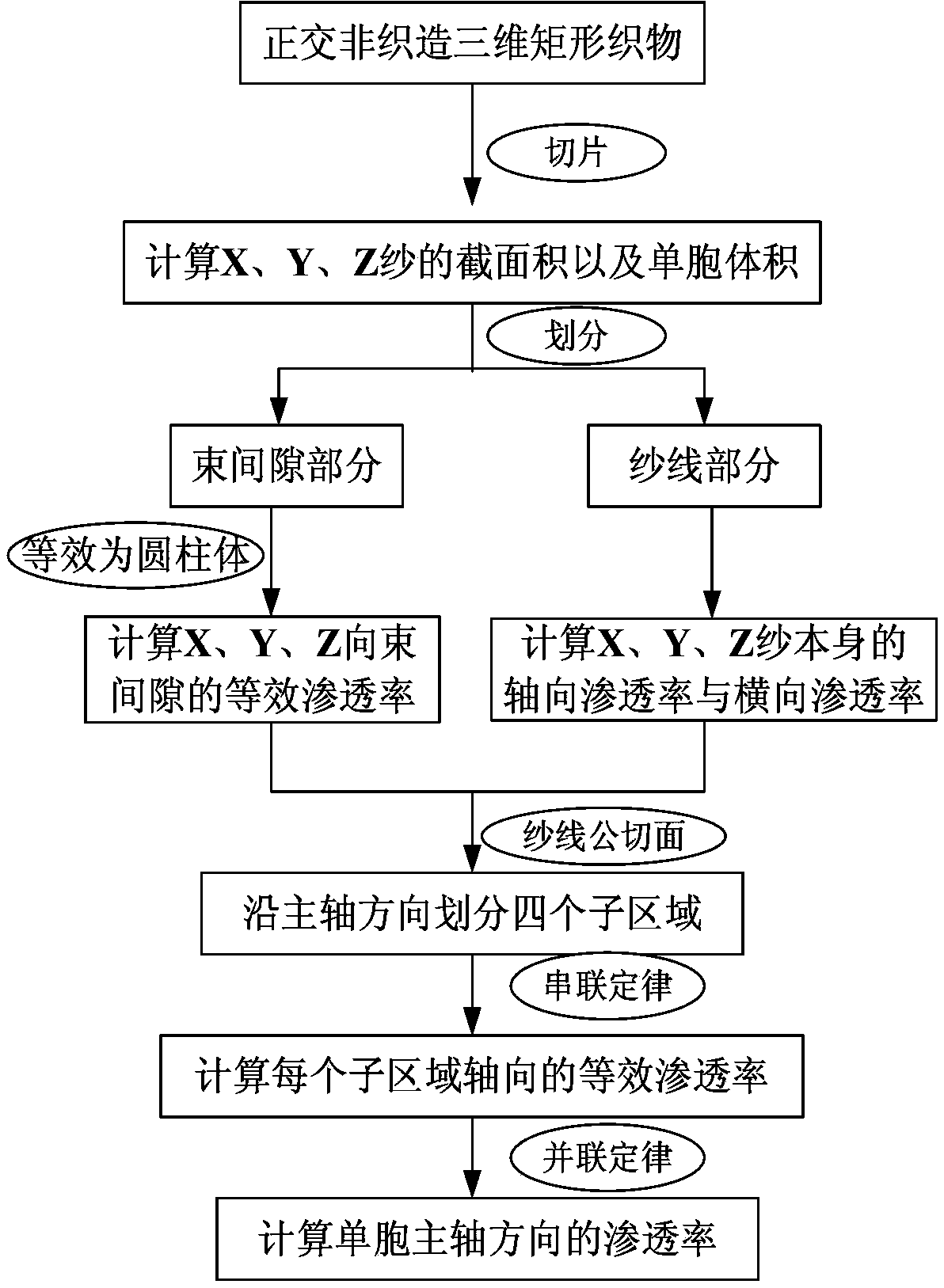
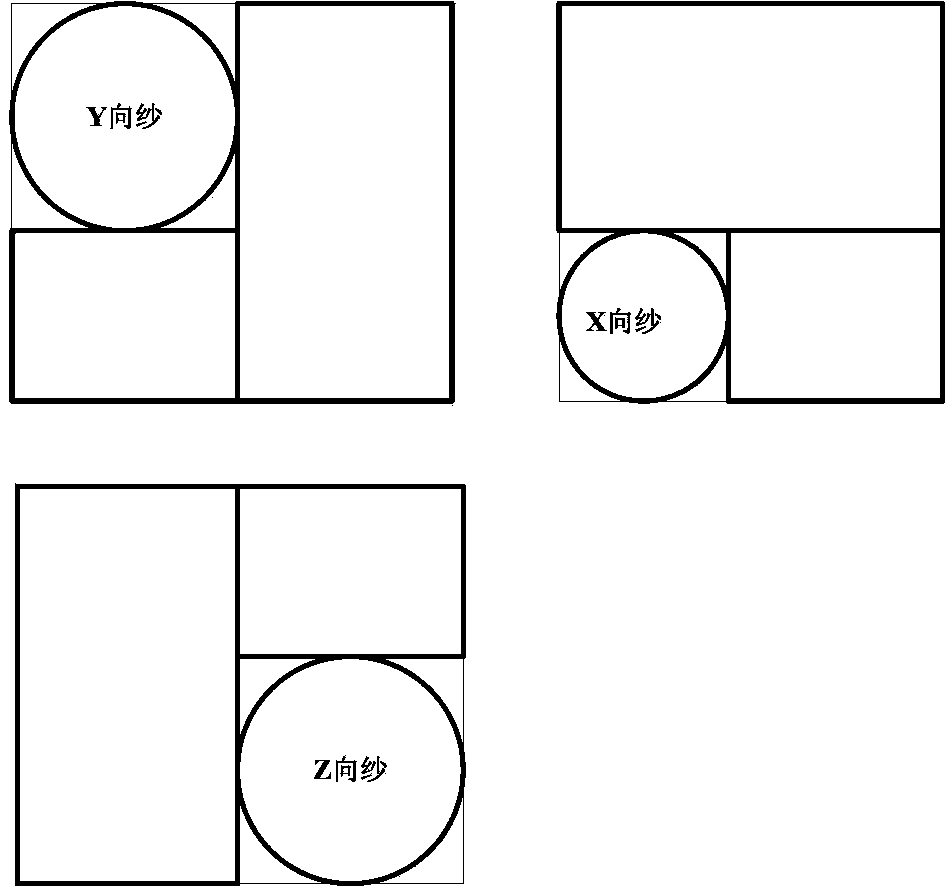
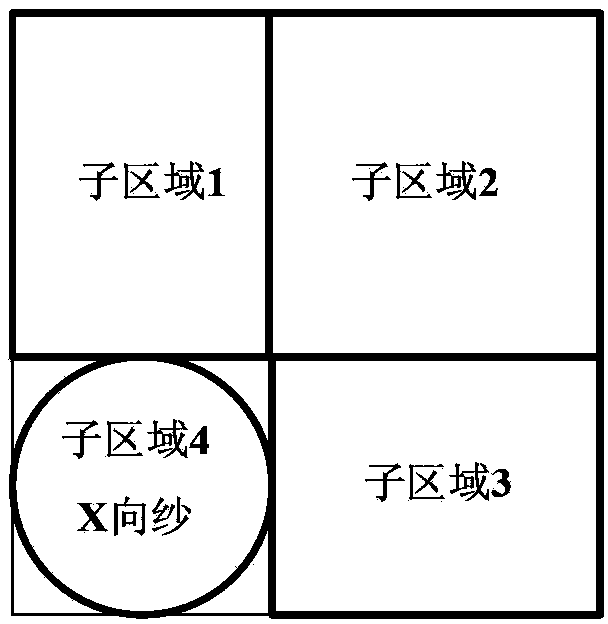
Examples
specific Embodiment
[0134] The object is a glass fiber orthogonal non-woven three-dimensional rectangular fabric, and the specifications of the shaft yarns in the X, Y, and Z directions are different, and the specific parameters are different.
[0135] X axis yarn: single filament diameter is 11μm, single bundle 2000 filaments;
[0136] Y axis yarn: single filament diameter is 7.5μm, single bundle 4400 filaments;
[0137] Z axis yarn: single filament diameter is 21μm, 900 filaments per bundle.
[0138] (1) After the fabric is shaped, slice it, observe the cross-section perpendicular to each main axis, use the IPP image analysis software to calculate the cross-sectional area of each bundle of yarn, and use the area equivalent method to convert the yarn section into a circle shape:
[0139] A x ≈3.2×10 -7 m 2 ;A y ≈3.0×10 -7 m 2 A z ≈4.16×10 -7 m 2
[0140] According to the formula (1), it can be obtained
[0141] D. x ≈2.02mm;D y ≈1.95mm;D z ≈2.30mm;
[0142] (2) The typical un...
PUM
| Property | Measurement | Unit |
|---|---|---|
| diameter | aaaaa | aaaaa |
| diameter | aaaaa | aaaaa |
| diameter | aaaaa | aaaaa |
Abstract
Description
Claims
Application Information
 Login to View More