Arc-discharge prevention charging method and system for energy accumulation type electric traction vehicle

An electric traction and charging system technology, applied in electric vehicles, vehicle components, battery circuit devices, etc., can solve the problems of arcing between the power receiver and the power supply rail, and the burning of the power supply rail of the power receiver, so as to improve the service life and avoid burning. Effect

CN103401288AActive Publication Date: 2013-11-20ZHUZHOU ELECTRIC LOCOMOTIVE CO
4 Cites 20 Cited by

Patent Information

Authority / Receiving Office
CN · China
Patent Type
Applications(China)
Current Assignee / Owner
Publication Date
2013-11-20

Smart Images

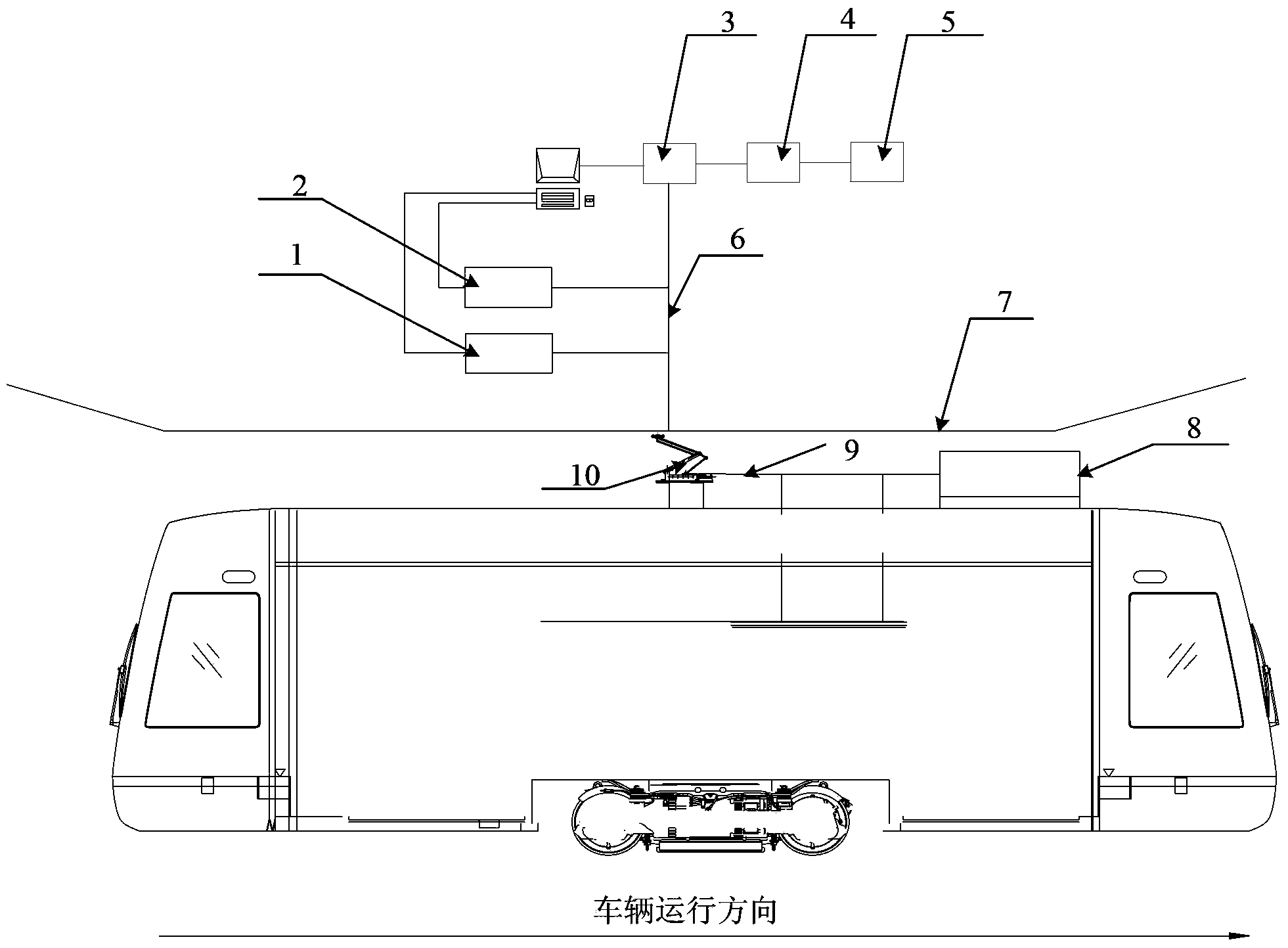
  • Figure 1
    Figure 1
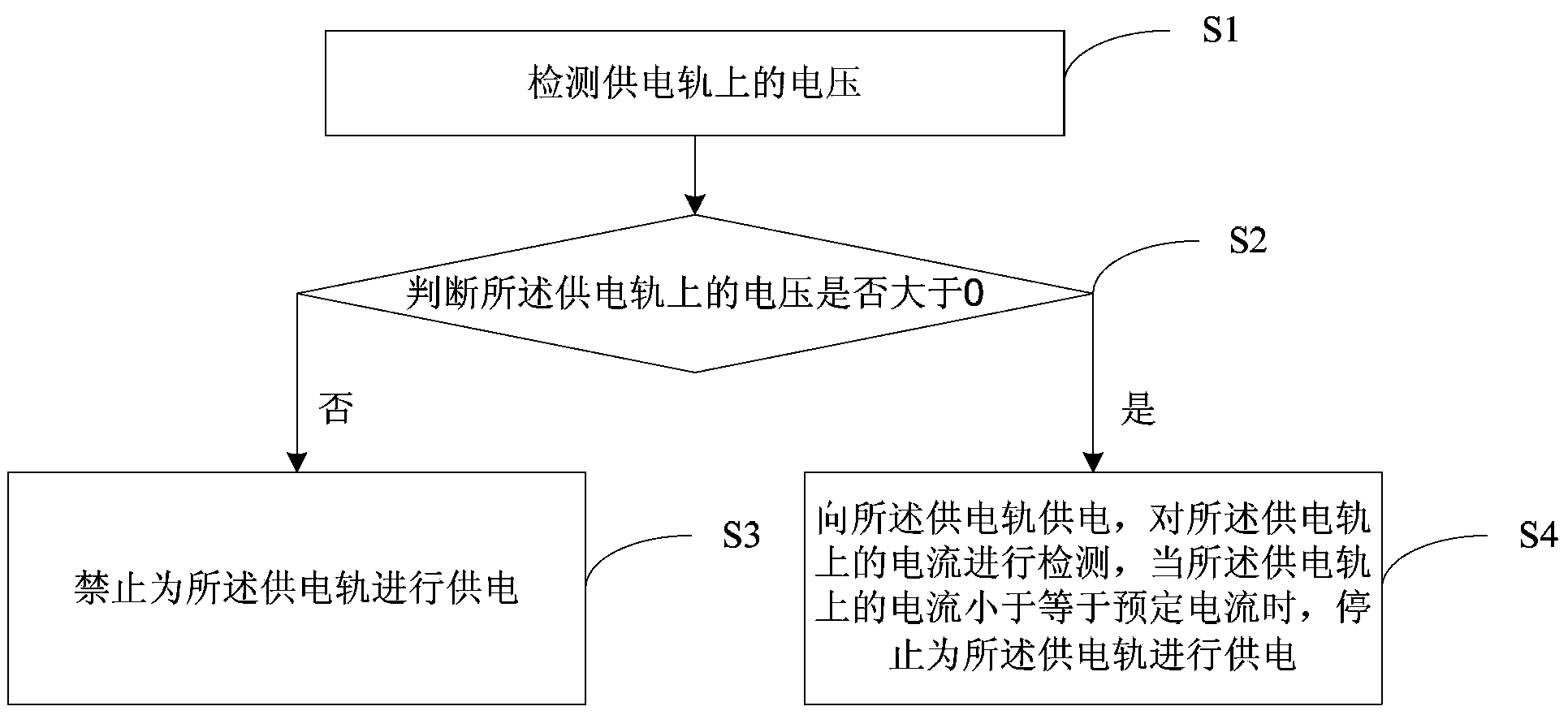
  • Figure 2
    Figure 2
Patent Text Reader

Abstract

The invention discloses an arc-discharge prevention charging method for an energy accumulation type electric traction vehicle. The arc-discharge prevention charging method comprises the following steps of (1) detecting voltage on a power rail; (2) judging whether the voltage on the power rail is more than 0, and if the voltage on the power rail is not more than 0, executing the step (3), otherwise executing the step (4); (3) forbidding power supply to the power rail; (4) supplying power to the power rail, detecting current on the power rail, and if the current on the power rail is less than or equal to preset current, stopping the power supply to the power rail. When the power is supplied to the power rail, a power receiving system is in good contact with the power rail; furthermore, when the power receiving system is separated from the power rail, the power supply to the power rail is stopped; therefore in the processes of contact and separation between the power receiving system and the power rail, electric arc is not produced, so that the phenomenon that the power receiving system and the power rail are burned by the electric arc is effectively avoided; the service lives of the power receiving system and the power rail are effectively prolonged. The invention also discloses a charging system capable of executing the charging method.
Need to check novelty before this filing date? Find Prior Art

Description

technical field

[0001] The invention relates to the technical field of energy storage electric traction vehicles, and more specifically, to a charging method and device for preventing arcing of energy storage electric traction vehicles. Background technique

[0002] Energy storage power supplies generally include lead-acid batteries, alkaline batteries, lithium batteries, and supercapacitor energy storage power supplies. Since the first three energy storage power supplies require chemical reactions during charging, the temperature rise of the electrolyte in the power supply is related to charging. The current is proportional to the current. In order to avoid damage to the power supply caused by overcharging, the charging current needs to be controlled during the charging process. The supercapacitor does not need to undergo chemical reactions during the charging process, and the internal resistance of the supercapacitor itself is very small, so it can be charged with a large ...

Examples

Embodiment Construction

[0045] One of the core purposes of the present invention is to provide a charging method for preventing arcing of an energy storage type electric traction vehicle, so as to avoid damage between the power receiving system and the power supply rail of the vehicle when the vehicle enters the station to start charging and when the vehicle leaves the station to stop charging. arc between

[0046] Another core of the present invention is to provide a charging system for preventing arcing of an energy storage type electric traction vehicle that can realize the above charging method.

[0047] The following will clearly and completely describe the technical solutions in the embodiments of the present invention with reference to the accompanying drawings in the embodiments of the present invention. Obviously, the described embodiments are only some, not all, embodiments of the present invention. Based on the embodiments of the present invention, all other embodiments obtained by persons...