
A Human Eye Positioning Method Based on Point-by-Point Scanning
A point-by-point scanning and human eye positioning technology, which is applied in the direction of instruments, character and pattern recognition, computer components, etc., can solve problems such as difficult and effective positioning, and achieve the effects of small error rate, narrowed scanning range, and weakened interference
- Summary
- Abstract
- Description
- Claims
- Application Information
AI Technical Summary
Problems solved by technology
Method used
Image


Examples
Embodiment Construction
[0025] Below in conjunction with accompanying drawing and specific embodiment the present invention is described in further detail:
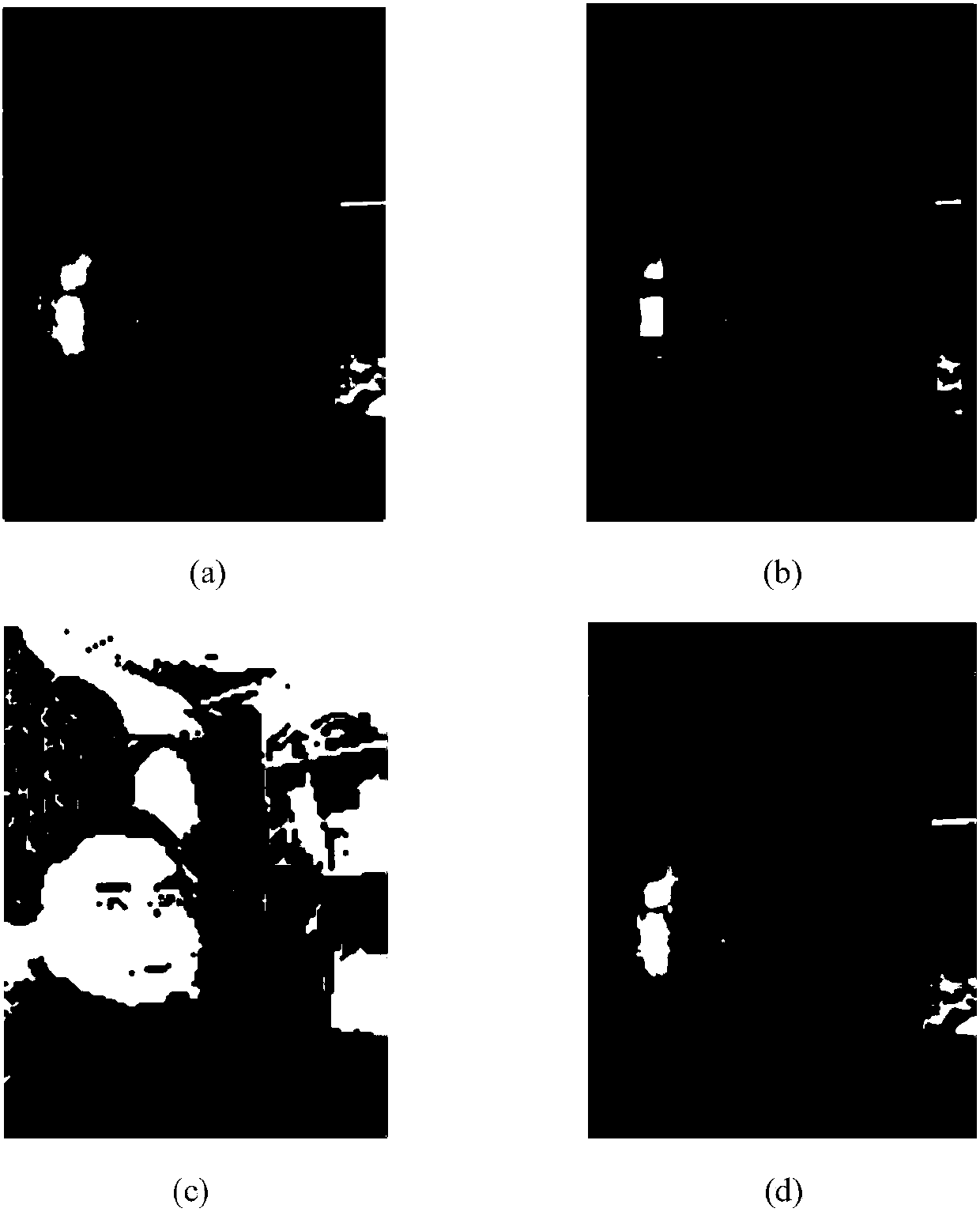
[0026] 1. The grid analysis method is used to obtain face images, such as figure 1 shown, including the following steps:
[0027] (a) Read in the original image containing the face, the original image is as figure 1 (a);
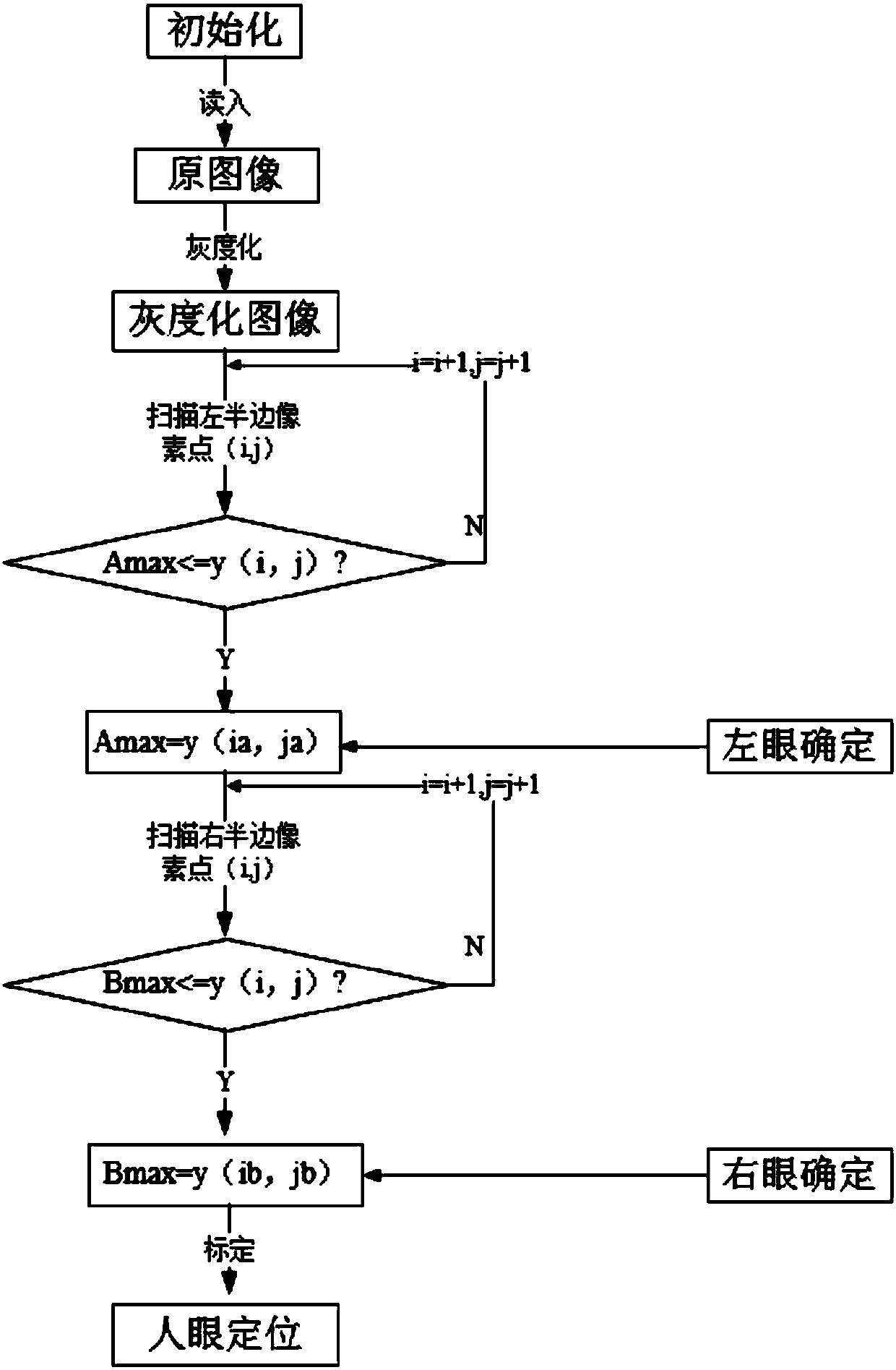
[0028] (b) If the image data is a three-dimensional RGB color image, the image needs to be converted into a one-dimensional image through image grayscale processing. The specific method is: according to the importance of the three indicators R, G, and B, the color image R, G, B The three components of G and B are weighted average with different weights. According to the formula f(i,j)=0.30R(i,j)+0.59G(i,j)+0.11B(i,j), the weighted average of the three components of R, G and B can get a more reasonable gray scale image, thus converting the 3D color image into a 1D grayscale image.
[0029] (c) Divide the processed image in...
PUM
 Login to View More
 Abstract
Description
Claims
Application Information
 Login to View More