Method for detecting concentration of acrylamide in solution

A technology of acrylamide and concentration, which is applied in the field of chemical detection to achieve the effects of rapid detection, increased surface area and high sensitivity

CN104634853AActive Publication Date: 2015-05-20浙江永金生物科技有限公司
1 Cites 25 Cited by

Patent Information

Authority / Receiving Office
CN · China
Patent Type
Applications(China)
Current Assignee / Owner
Publication Date
2015-05-20

Smart Images

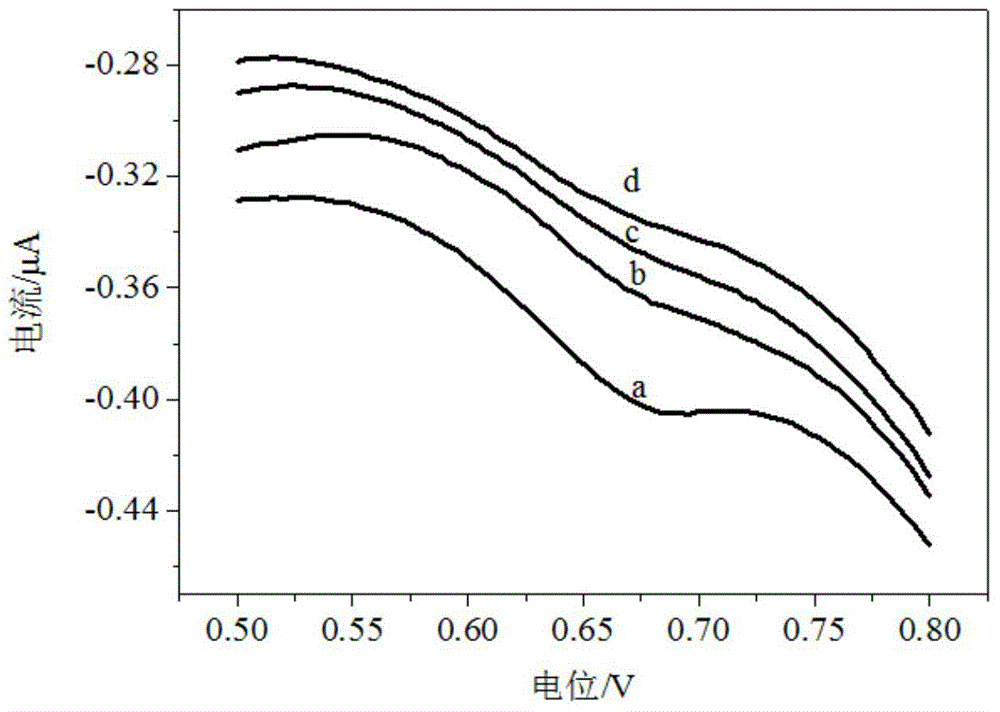
  • Figure 1
    Figure 1
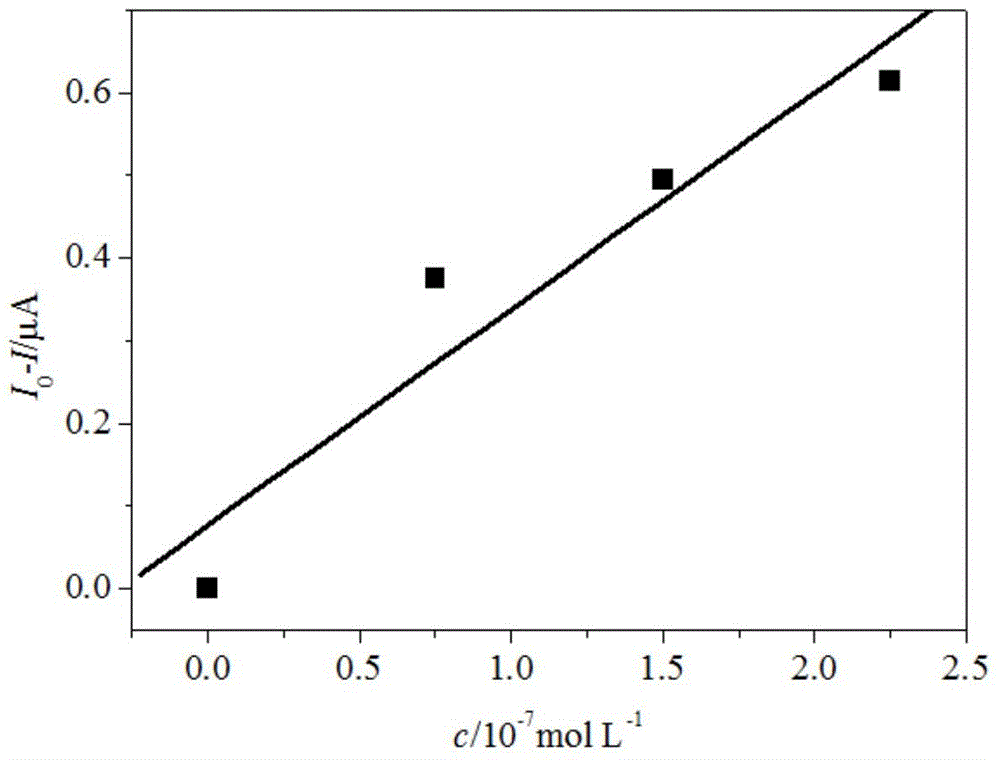
  • Figure 2
    Figure 2
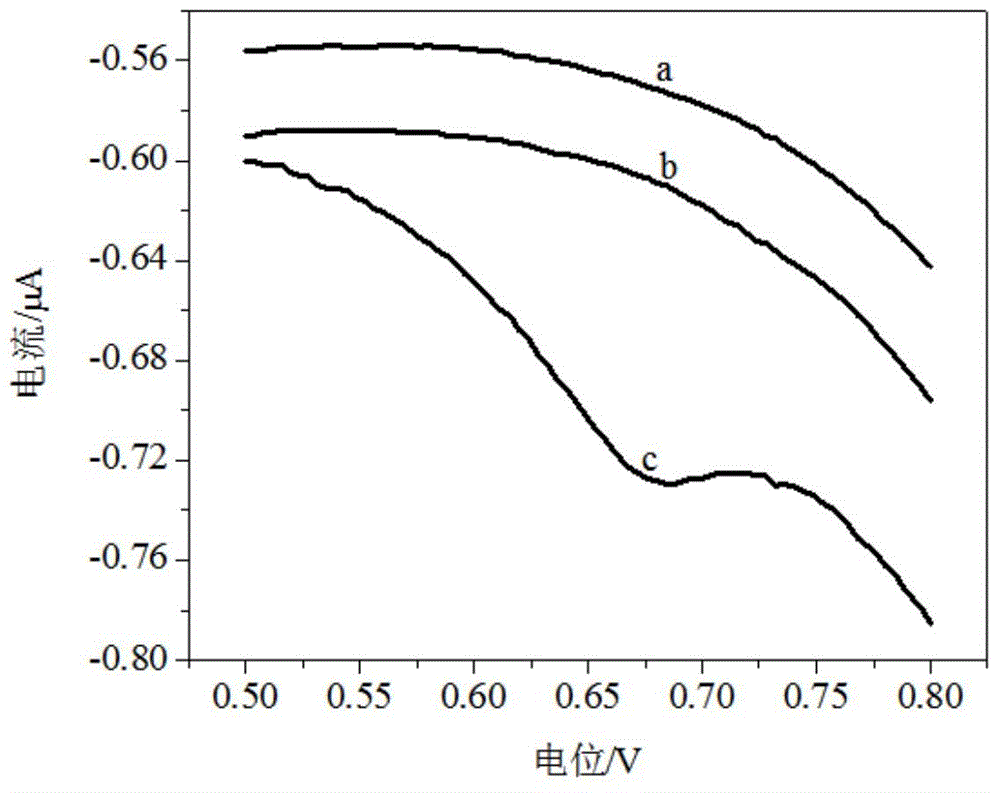
  • Figure 3
    Figure 3
Patent Text Reader

Abstract

The invention provides a method for detecting the concentration of acrylamide in a solution. The method comprises the steps of detecting acrylamide in a sample solution by using a three-electrode system and a differential pulse voltammetry; and obtaining the concentration of acrylamide in the sample solution according to a differential pulse voltammetry curve of acrylamide, wherein a working electrode in the three-electrode system is an aminated graphene and single-chain DNA modified electrode. The invention also provides concrete steps for detecting the concentration of acrylamide in the solution and a preparation method of the working electrode. The content of acrylamide in the solution can be rapidly and quantitatively detected, and the detection limit of acrylamide can be up to 5.1*10<-8>mol / L.
Need to check novelty before this filing date? Find Prior Art

Description

technical field

[0001] The invention belongs to the technical field of chemical detection, and in particular relates to a method for detecting the concentration of acrylamide in a solution. Background technique

[0002] Acrylamide has mutagenic effects in both in vivo and in vitro tests, and can cause gene mutations and chromosomal abnormalities in mammalian somatic and germ cells, such as micronucleus formation, sister chromatid exchange, polyploidy, aneuploidy, and others Abnormal mitosis, etc., dominant lethal test was positive. It was also proved that the metabolite glycidamide of acrylamide is its main mutagenic active substance. Animal experiments have found that acrylamide can cause tumors in various organs of rats, including mammary gland, thyroid gland, testis, adrenal gland, central nervous system, oral cavity, uterus, and pituitary gland. The International Agency for Research on Cancer (IARC) evaluated its carcinogenicity in 1994, and listed acrylamide as a type...

Examples

Embodiment 1

[0042] Electrochemical workstation: CHI760E;

[0043] Three-electrode system: the working electrode is an electrode modified by aminated graphene and single-stranded DNA, the auxiliary electrode is a platinum electrode, and the reference electrode is an Ag / AgCl electrode; the sequence of the single-stranded DNA is 5'-AAAAAAAAAGGAAAAAAAAA-(CH 2 ) 6 -SH-3'.

[0044]Buffer solution: pH value is 7.0, 0.2mol / L phosphate buffer solution;

[0045] Standard stock solution: 2×10 -4 mol / L standard acrylamide solution; dilute the standard stock solution with buffer solution to obtain the required concentration of acrylamide standard solution;

[0046] Treatment of the glassy carbon electrode before modification: Polish the electrode with 1.0 μm, 0.3 μm, and 0.05 μm polishing powder on the polishing cloth, rinse with ultrapure water, and sonicate in acetone, 0.5M sulfuric acid, and ultrapure water for about 3 minutes. Clean with ultrapure water every time after ultrasonic;

[0047] M...