
Aspergillus fumigatus strain TMS-26 for producing taxol
A technology of TMS-26 and paclitaxel, applied in the field of applied microbiology, can solve the problems of low yield of paclitaxel and inability to meet the minimum requirements for industrial production and the like
- Summary
- Abstract
- Description
- Claims
- Application Information
AI Technical Summary
Problems solved by technology
Method used
Image

Examples
Embodiment 1
[0012] Screening of taxol-producing endophytic fungi from Taxus mandia
[0013] (1) culture medium
[0014] PDA solid medium: 200g potato, 20g glucose, 15g agar, 1000mL tap water, natural pH.
[0015] PDA liquid medium: 200g potato, 20g glucose, 1000mL tap water, natural pH.
[0016] All the above mediums were autoclaved at 121°C for 30 minutes before use.
[0017] (2) Isolation and purification of bacterial strains
[0018] The explant material in this experiment comes from the 9-year-old Mandia yew introduced and cultivated in the Expo Garden of Northwest A&F University. Rinse the collected yew roots, stems, leaves and bark in running tap water for 3 to 5 minutes to remove dust and impurities, then rinse with sterile water three times, transfer to a clean bench, and use Blot the surface moisture with sterile filter paper. Then carry out surface disinfection treatment of explants, first soak with 75% ethanol for 30s, rinse with sterile water for 3 to 5 times after comple...
Embodiment 2
[0021] Screening of paclitaxel-producing strains
[0022] (1) Strain liquid fermentation
[0023] Activate the preserved strains. After the activation is completed, use a sterile scalpel to cut out 0.5×0.5cm uniformly grown bacterial blocks with culture medium in a clean workbench, and then insert them into 100mL triangles containing 50mL PDA liquid medium. In the bottle, seal it with parafilm, and do three parallels for each strain. After the inoculation, the inoculated Erlenmeyer flask was placed in a constant temperature oscillator for fermentation and culture. The culture conditions were 28°C, 160r / min and dark culture for 10-12 days. During the culture process, the growth of each strain was observed and recorded every day. When the fermentation liquid in the bottle was relatively viscous, the color deepened, and the mycelial balls began to crack, the fermentation was stopped, and it was taken out for the next experiment.
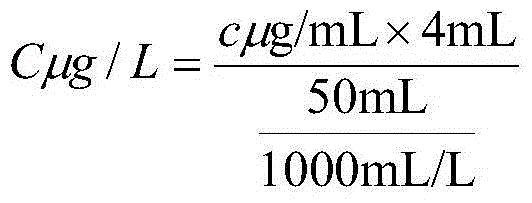
[0024] (2) Extraction of paclitaxel in fermenta...
Embodiment 3
[0037] Identification of strains
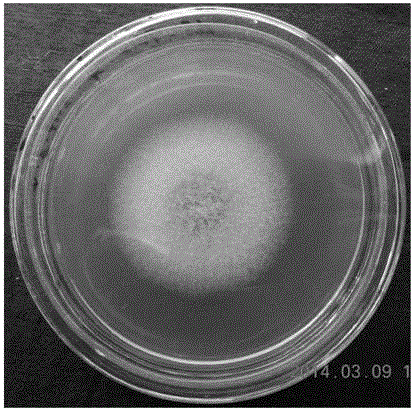
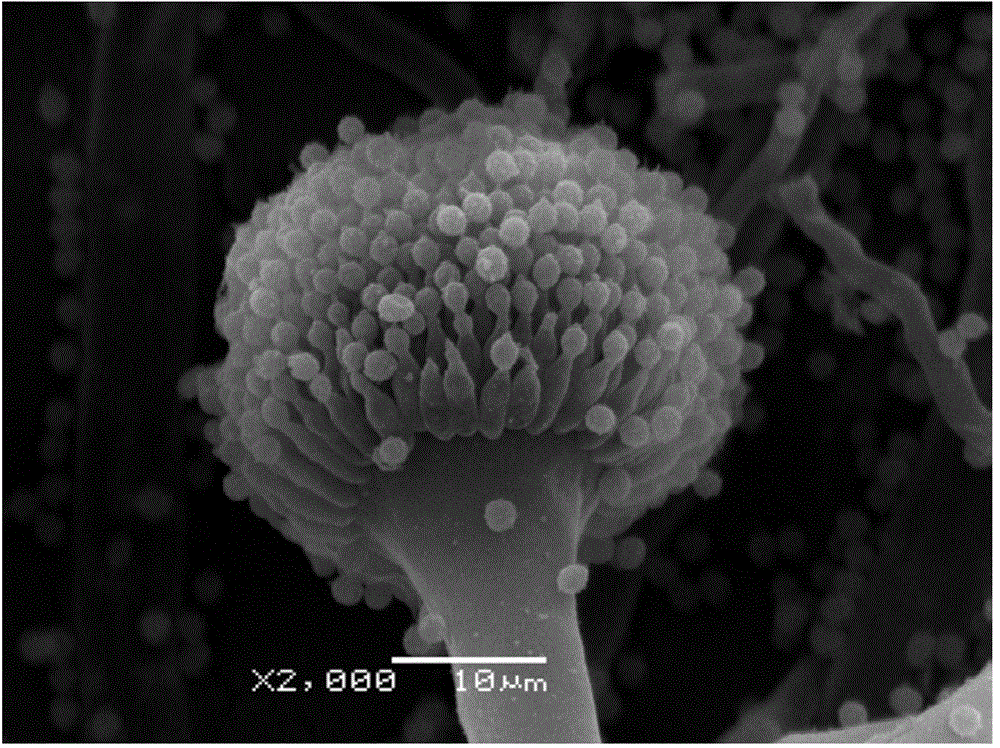
[0038] Observe the colony morphology of the high-yield strain on the PDA plate, and observe the hyphae and spore morphology of the strain with an optical microscope and a scanning electron microscope, and compare the morphological characteristics of the high-yield strain obtained in the "Handbook of Fungal Identification" written by Mr. Wei Jingchao, The preliminary classification and identification results of high-yield strains were obtained. Then PCR amplifies the 18SrDNA sequence and the ITS sequence of the high-yielding bacterial strain obtained and analyzes it. The basic process is as follows:
[0039] The total genomic DNA of the strain was extracted by CTAB method, and the general primers for filamentous fungi were:
[0040] 18SrDNA sequence:
[0041] 18S-NS1: 5'-GTAGTCATATGCTTGTCTC-3',
[0042] 18S-NS8: 5'-TCCGCAGGTTCACCTACGGA-3'.
[0043] ITS sequence:
[0044] ITS1: 5'-TCCGTAGGTGAACCTGCGG-3',
[0045] ITS4: 5'-TCCTCCGCTTATTGAT...
PUM
| Property | Measurement | Unit |
|---|---|---|
| diameter | aaaaa | aaaaa |
| diameter | aaaaa | aaaaa |
Abstract
Description
Claims
Application Information
 Login to View More