
Microbial agent and application thereof
A microbial inoculum, Lactobacillus technology, applied in the direction of microorganisms, microorganism-based methods, applications, etc., can solve the problem of difficult to achieve stable fermentation effect, unclear interaction principle, few, only two or three kinds of problems. , to achieve the effect of inhibiting pathogenic microorganisms, improving disease and pest resistance, and developing rhizomes
- Summary
- Abstract
- Description
- Claims
- Application Information
AI Technical Summary
Problems solved by technology
Method used
Image

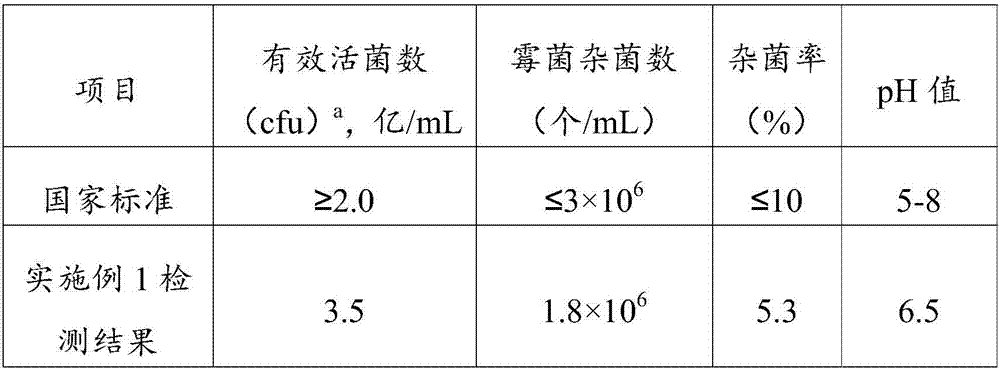
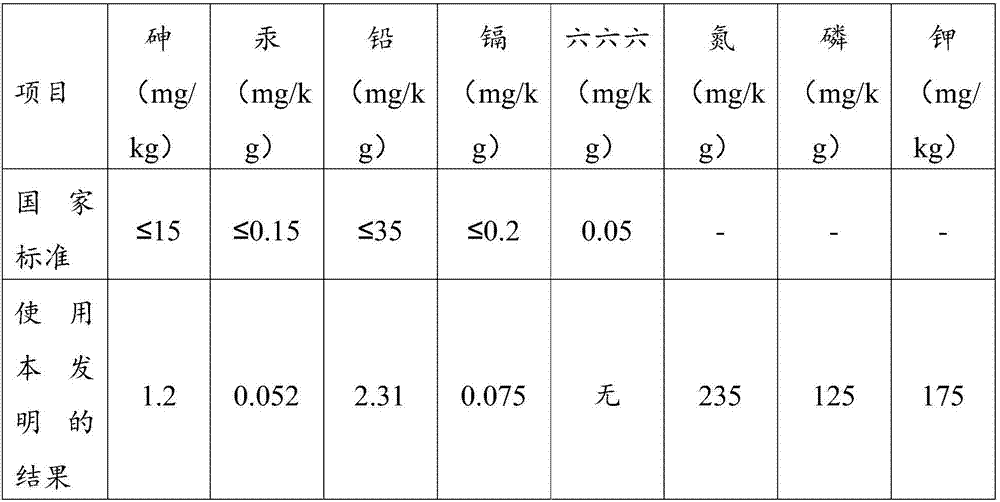
Examples
Embodiment 1
[0030] A microbial bacterial agent, including Lactobacillus parafarraginis ZH1, Clavispora lusitaniae, Photosynthetic Bacteria, Bacillus subtilis and Actinomycete.
[0031] The content of effective bacteria in the above-mentioned microbial bacterial agent is 350 million / mL.
[0032] Using the above-mentioned microbial inoculum as a soil improver in soil improvement, add 1000 times the weight of water to the above-mentioned microbial inoculum to obtain a dilution of the microbial inoculum, and spray 5000L of the microbial inoculum evenly in each mu of land Diluent.
[0033] The above-mentioned microbial bacterial agent is used as a foliar fertilizer, and the above-mentioned microbial bacterial agent is diluted 1000 times to obtain a diluted solution. When the plant grows a second true leaf, the above-mentioned diluted solution is sprayed on the plant leaf surface as a foliar fertilizer.
Embodiment 2
[0035] A microbial agent, including Lactobacillus parafarraginis ZH1, Clavispora lusitaniae, Photosynthetic Bacteria, Bacillus subtilis and Actinomycete, yeast flour, peptone, cornmeal, bran and saline.
[0036] The content of effective bacteria in the above-mentioned microbial bacterial agent is 400 million / mL.
[0037] Utilize above-mentioned microbial bacterial agent to ferment cow dung and chicken manure to make organic fertilizer, comprise the following steps:
[0038] (1) Cow dung, chicken manure and the microbial inoculant are mixed evenly;
[0039] (2) Fermenting the mixture obtained in step (1), when the fermentation temperature is 50° C., heat preservation and fermentation for 30 days to obtain the organic fertilizer.
Embodiment 3
[0041] A microbial agent, including Lactobacillus parafarraginis ZH1, Clavispora lusitaniae, Photosynthetic Bacteria, Bacillus subtilis and Actinomycete, yeast flour, peptone, cornmeal, bran and saline.
[0042] The content of effective bacteria in the above-mentioned microbial bacterial agent is 500 million / mL.
[0043]Fermenting pig manure, chicken manure, wheat straw, rice husk and rice bran to make organic fertilizer by using the above-mentioned microbial bacterial agent includes the following steps:
[0044] (1) Mix 0.5kg of pig manure, 0.5kg of chicken manure, 0.5kg of wheat straw, 0.5kg of rice husk, 0.5kg of rice bran and 1L of the microbial agent;
[0045] (2) Ferment the mixture obtained in step (1). When the fermentation temperature is 60°C, heat-preserve and ferment for 20 days, then dehumidify the fermented end product and granulate it with a granulator to make organic fertilizer granules. The temperature during the graining process does not exceed 65°C.
PUM
 Login to View More
 Abstract
Description
Claims
Application Information
 Login to View More