
Easy-to-process composite premix reliving diarrhea for weaning rabbit
A compound premix and easy-to-process technology, which is applied in animal feed, additional food elements, applications, etc., can solve problems such as affecting feeding of young rabbits, expensive enteric-coated coating, easy resistance to antibiotics, etc., to promote non-specificity Effect of immune system and specific immune system function, increase feed intake and feed conversion rate, and maintain intestinal microecological balance
- Summary
- Abstract
- Description
- Claims
- Application Information
AI Technical Summary
Problems solved by technology
Method used
Image


Examples
Embodiment 1
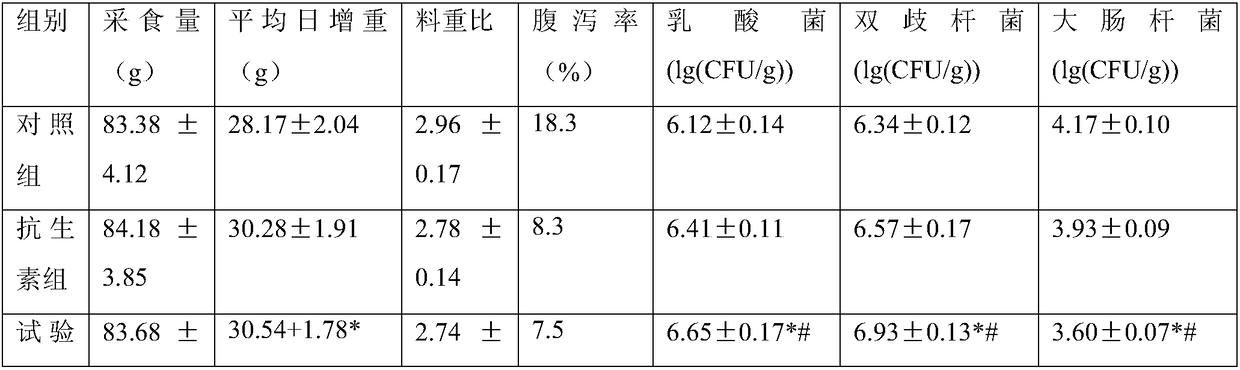
[0031] This embodiment improves the compound premix for diarrhea in weaned rabbits. 1kg of the compound premix includes 200g of mannooligosaccharides, 40g of 10% oregano oil, 200g of sodium butyrate, 60g of 10% allicin, and antioxidant ethoxyquinoline 20g, and make up the rest 1kg with zeolite powder. After the above-mentioned components are weighed, they are uniformly mixed according to conventional methods, and the uniformity of the mixing can be less than 5 when the coefficient of variation is less than 5. Add the processed premix to the full price feed of weaned rabbits at 4kg per ton. The full-price feed can be combined with the NRC nutritional standards, the growth and development characteristics of the rabbits and the feed resources in the region to design the basic diet.
Embodiment 2
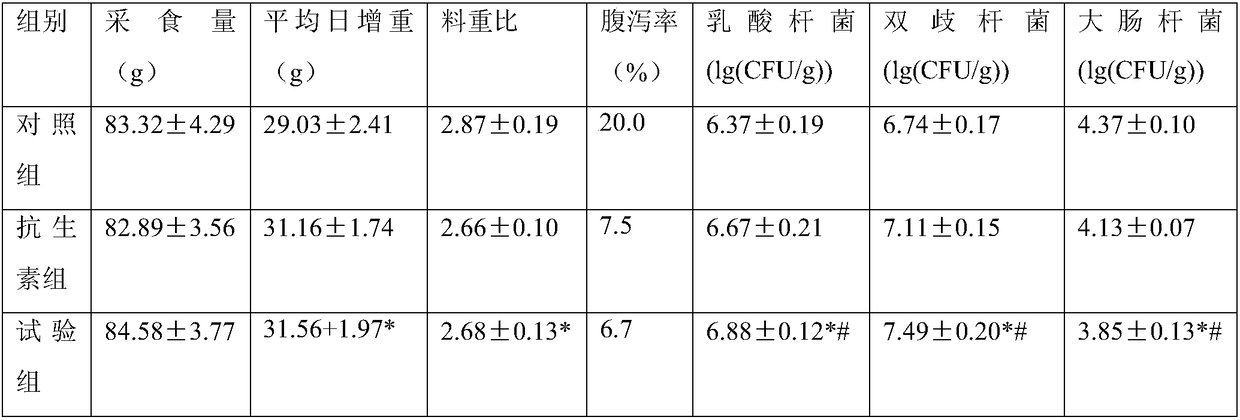
[0033] This embodiment improves the compound premix for diarrhea in weaned rabbits. 1kg of the compound premix includes 250g of mannooligosaccharides, 30g of 10% oregano oil, 150g of sodium butyrate, 80g of 10% allicin, and antioxidant ethoxyquinoline 20g, and make up the rest 1kg with zeolite powder. The premix was processed according to the method of Example 1. And the processed premix is added to the full price feed of weaned rabbits at 4kg per ton. The full-price feed can be combined with the NRC nutritional standards, the growth and development characteristics of the rabbits and the feed resources in the region to design the basic diet.
PUM
 Login to View More
 Abstract
Description
Claims
Application Information
 Login to View More