
AGF-based multi-focus image fusion method and system
A multi-focus image and fusion method technology, applied in the field of optical image processing, can solve the problems of inaccurate determination of the focus area, incomplete representation of the details of the fusion image, loss of details, etc., and achieve the effect of eliminating the "block effect".
- Summary
- Abstract
- Description
- Claims
- Application Information
AI Technical Summary
Problems solved by technology
Method used
Image

Examples
Embodiment example 1
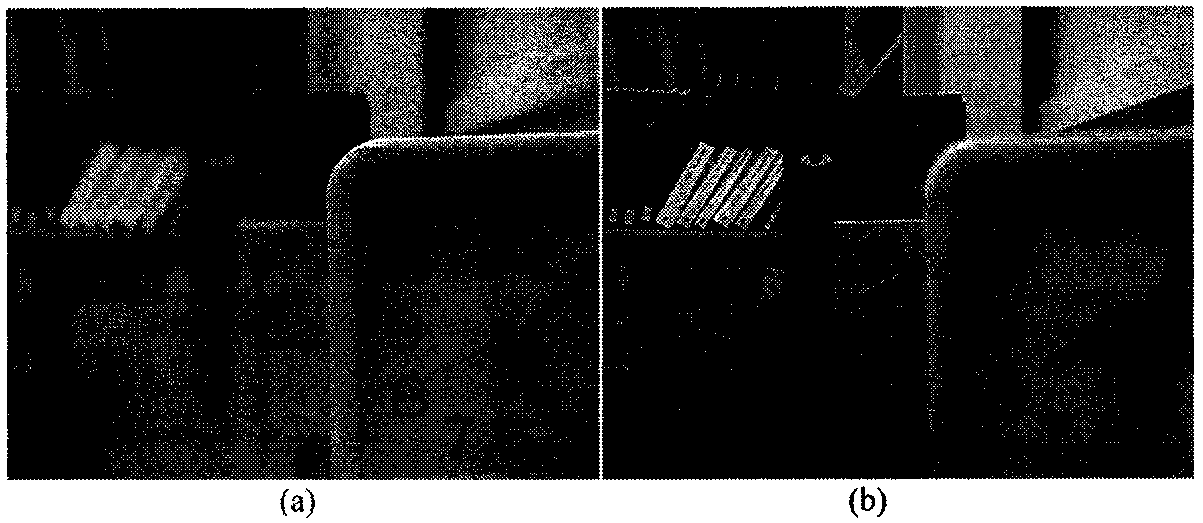
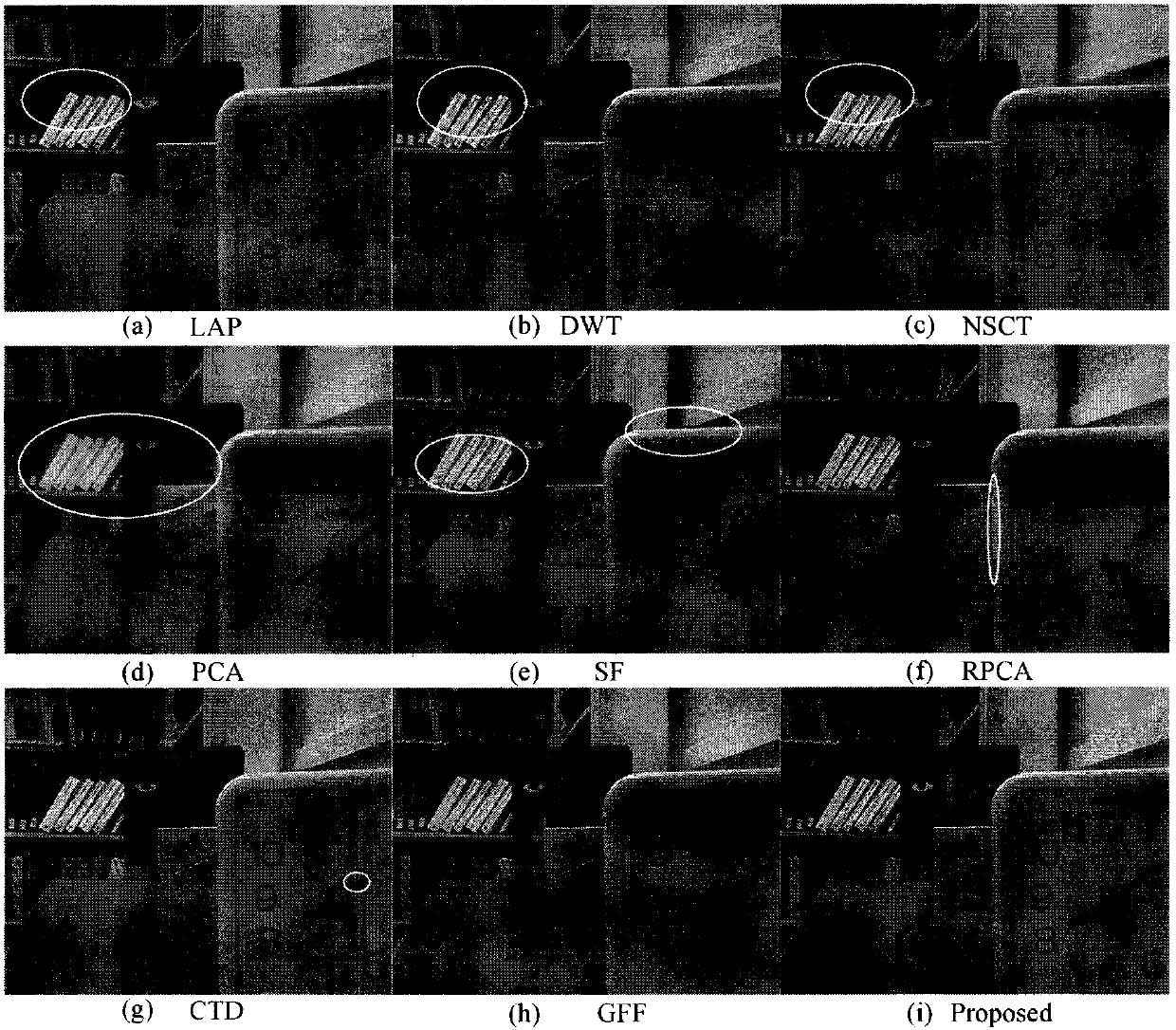
[0124] Following the scheme of the present invention, this implementation case 1 is figure 2 The two source images shown in (a) and (b) are fused, and the processing results are as follows image 3 Shown in Propose. Simultaneously use Laplacian (LAP), wavelet transform (DWT), non-subsampling based contourlet transform (NSCT), principal component analysis (PCA) method, spatial frequency (SF), robust principal component analysis (RPCA) , Cartoon Texture Image Decomposition (CTD), Guided Filtering (GFF) eight image fusion methods figure 2 The two source images shown in (a) and (b) are fused, and the quality of the fused images of different fusion methods is evaluated, and the results are shown in Table 1.
[0125] Table 1 Multi-focus image 'Disk' fusion image quality evaluation.
[0126]
Embodiment example 2
[0128] Following the scheme of the present invention, this implementation case is Figure 4 The two source images shown in (a) and (b) are fused, and the processing results are as follows Figure 5 Shown in Proposed.
[0129] Simultaneous Laplacian (LAP), wavelet transform (DWT), non-subsampling based contourlet transform (NSCT), principal component analysis (PCA) method, spatial frequency (SF), robust principal component analysis (RPCA), Eight image fusion methods of cartoon texture image decomposition (CTD) and guided filtering (GFF) Figure 4 The two source images (a) and (b) shown are fused, and the quality of the fused images of different fusion methods is evaluated, and the results shown in Table 2 are calculated.
[0130] Table 2 Multi-focus image 'Toy' fusion image quality evaluation.
[0131]
[0132] In Table 1 and Table 2: Method represents the method; the fusion method includes eight types: Laplacian (LAP), wavelet transform (DWT), non-subsampling-based conto...
PUM
 Login to View More
 Abstract
Description
Claims
Application Information
 Login to View More