
Flow state identification-based radial gate overflow calculation method
A kind of arc gate, flow state technology, applied in the direction of calculation, design optimization/simulation, special data processing application, etc.
Patent Information
- Authority / Receiving Office
- CN · China
- Current Assignee / Owner
- Publication Date
- 2018-09-04
Smart Images
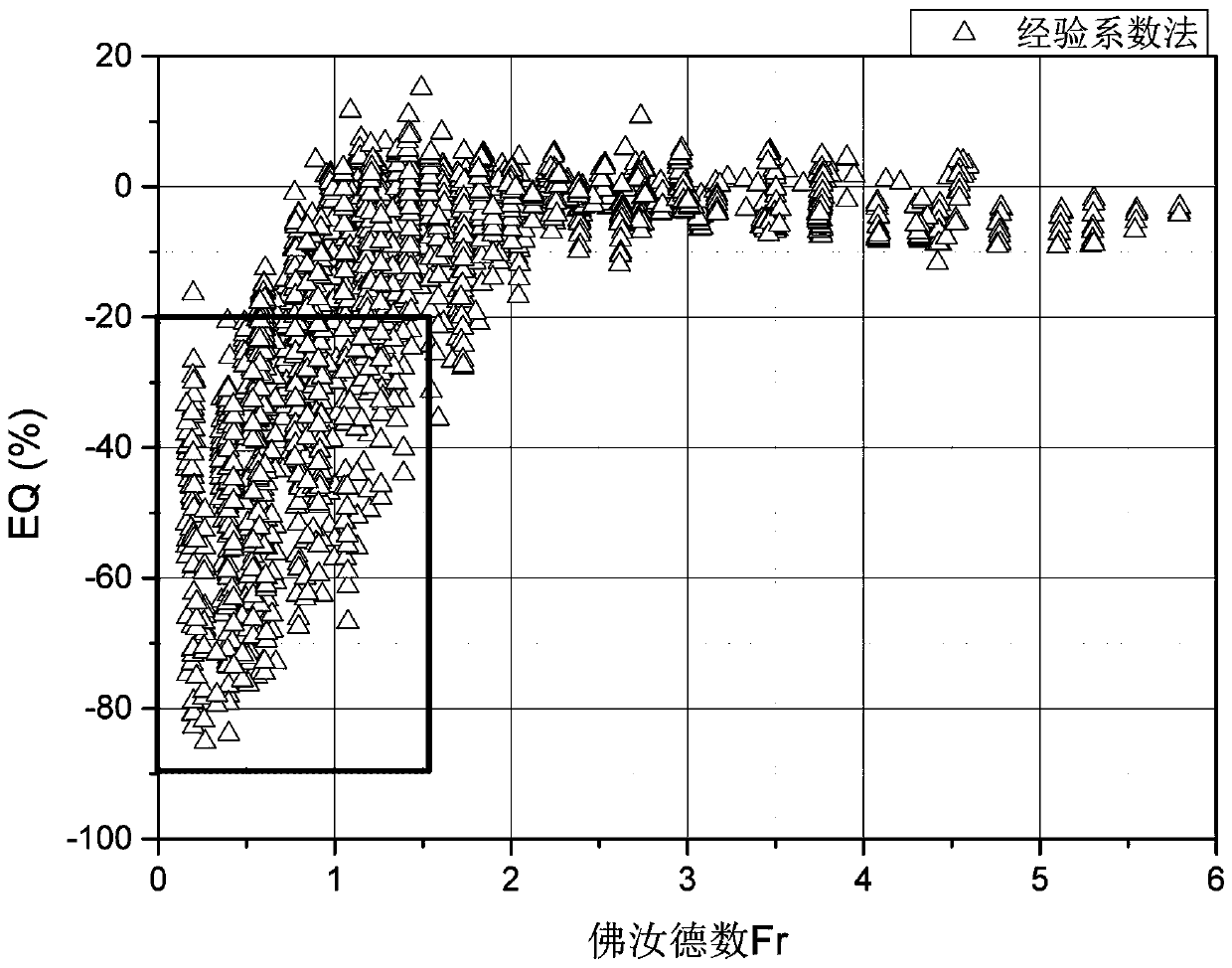
Figure 1 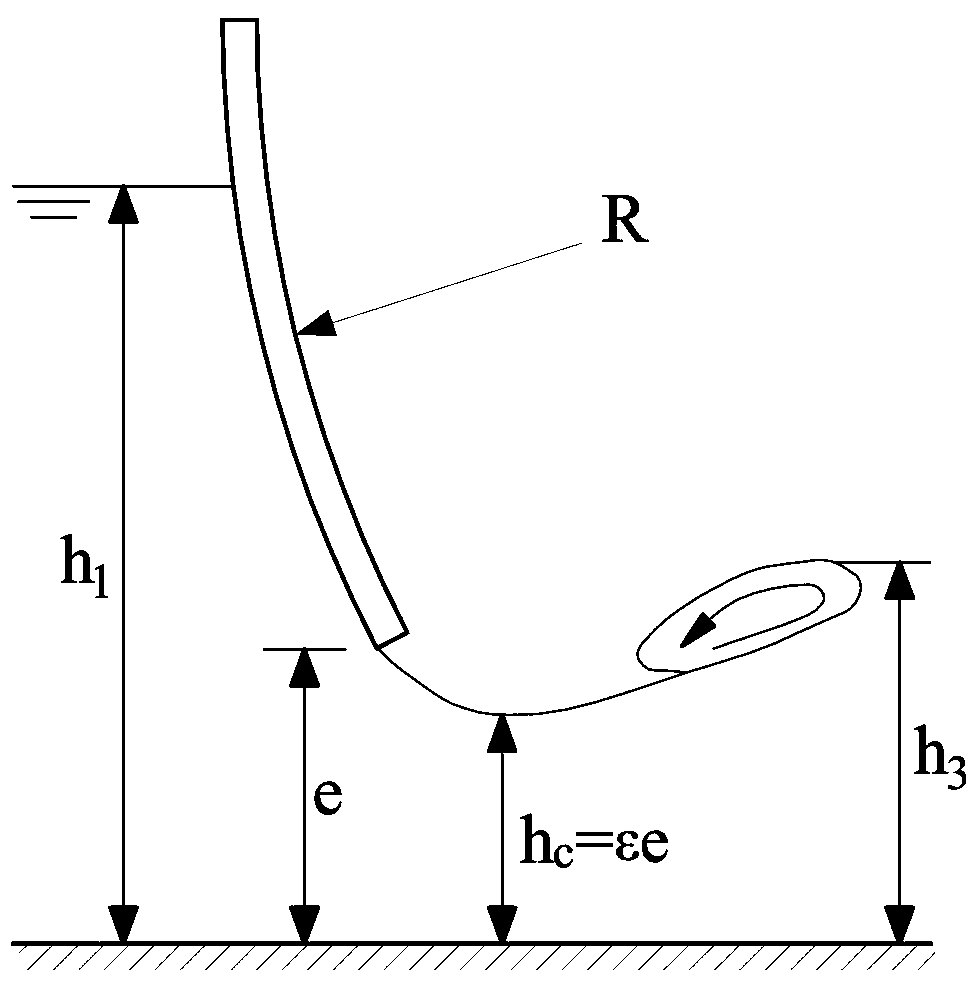
Figure 2 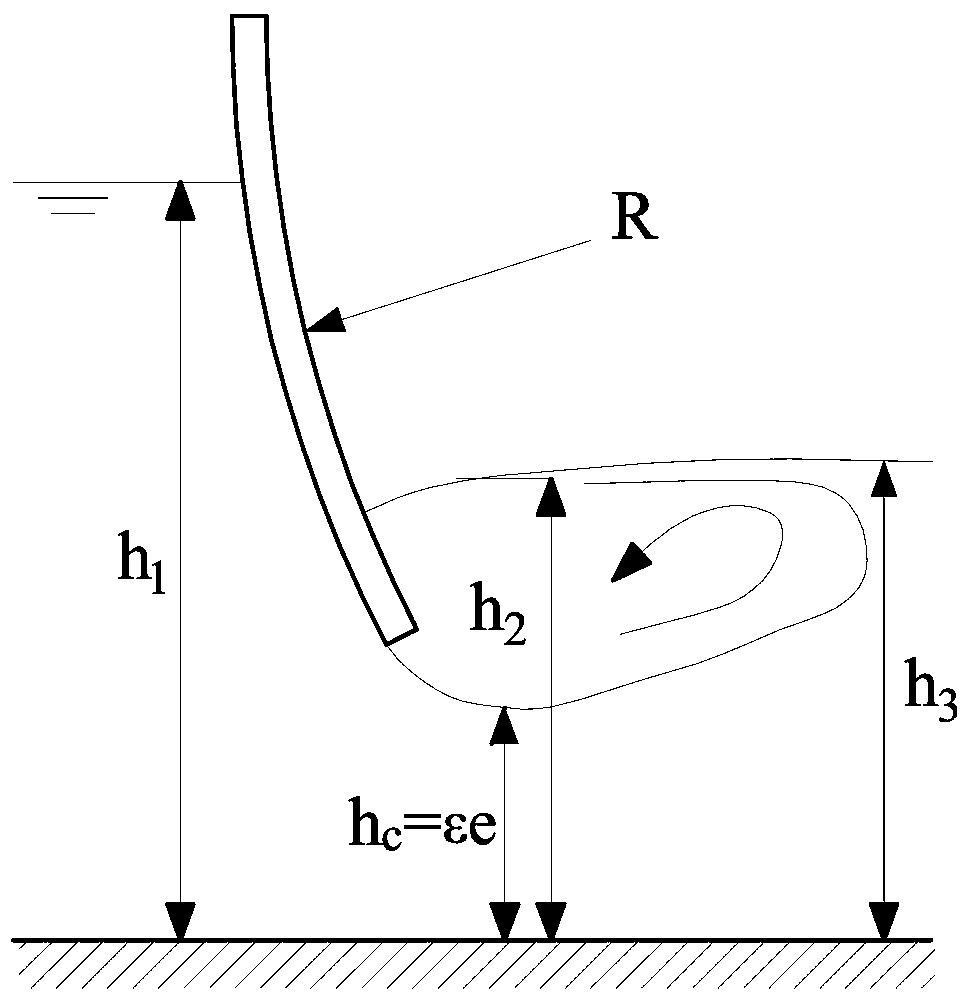
Figure 3
Abstract
Description
technical field
[0001] The invention relates to an arc gate overcurrent calculation method based on flow state identification, which is a hydraulic calculation method and an engineering calculation method for arc gate overcurrent. Background technique
[0002] Arc gate is a widely used gate type, and this type of gate can be seen in many water conservancy projects. The cross-sectional shape of this gate body is characterized by a smooth curved curve extending from the water surface to the bottom of the water. It has the characteristics of small opening force, good flow state, and convenient operation. It is a relatively excellent gate gate. shape. In the existing flow calculation methods of arc gates, the empirical coefficient model of the outflow from the gate hole can be used for free flow and the submerged flow with high Froude number in the contraction section, but for the flow with low Froude number The calculation accuracy of submerged outflow is poor, and the maximu...
Examples
Embodiment 1
[0048] This embodiment is a method for calculating the overcurrent of an arc gate based on flow state identification.
[0049] The traditional hydraulic calculation of water flow through the sluice mainly adopts the empirical coefficient model, and the calculation steps are as follows:
[0050] 1) Determine the flow state of the outflow from the gate hole: h 3 ≤ h c "for free flow; h 3 > h c "Submerged outflow.
[0051] 2) Calculate the flow coefficient using different empirical relational formulas:
[0052] Flow Coefficient of Free Outflow mu 0 :
[0053] ( )
[0054]Discharge coefficient of submerged outflow mu s :
[0055]
[0056] ( )
[0057] 3) Calculation of gate hole flow:
[0058] ( )
[0059] In the formula: Q is the gate flow; mu is the flow coefficient; e is the gate opening; b is the overcurrent width of gate hole; g is the acceleration of gravity; θ is the opening angle of the arc door; σ is the submergence coeffici...
Embodiment 2
[0100] This embodiment is an improvement of the first embodiment, and is a refinement of the first embodiment regarding the calculation of the discharge coefficient. The flow coefficient described in this example mu The calculation formula is as follows:
[0101] Discharge coefficient of free hole flow mu 0 Calculation formula:
[0102] ;
[0103] Discharge coefficient of submerged orifice flow with high Froude number mu s1 Calculation formula:
[0104] ;
[0105] Discharge coefficient of submerged orifice flow with low Froude number mu s2 Calculation formula:
[0106] ;
[0107] in, P is the height of the gate shaft of the arc gate; R is the radius of the arc gate; a 0 , b 1 , b 2 , b 3 is a parameter related to the form of the gate. The parameters related to the gate form can only be determined after the specific analysis of various gate forms in the design gate. Gate form includes: single-hole gate, or multi-hole gate, gate and channel width...
Embodiment 3
[0109] This embodiment is an improvement of the above embodiment, and is a refinement of the gate parameters in the above embodiment. The flow coefficient described in this implementation mu is the discharge coefficient of a single-hole gate with gate width equal to the width of the downstream channel:
[0110] Discharge coefficient of free hole flow mu 01 :
[0111] ;
[0112] Discharge coefficient of submerged orifice flow with high Froude number mu s11 :
[0113] ;
[0114] Discharge coefficient of submerged orifice flow with low Froude number mu s21 :
[0115] .
[0116] In this embodiment, a single-hole gate whose gate width is equal to the width of the downstream channel is taken as an example, and the least square method is used to estimate the model parameters, and the flow coefficient relational expressions of different flow states are obtained.