
Monoclonal antibody specifically binding to canine adenovirus, pharmaceutical composition, kit and application thereof
A technology of monoclonal antibody and canine adenovirus, which is applied in antiviral agents, antibodies, antiviral immunoglobulin, etc., can solve the problems of low sensitivity, mass infection, high price, etc., to reduce mortality, reduce false negatives, The effect of reducing morbidity
- Summary
- Abstract
- Description
- Claims
- Application Information
AI Technical Summary
Problems solved by technology
Method used
Image

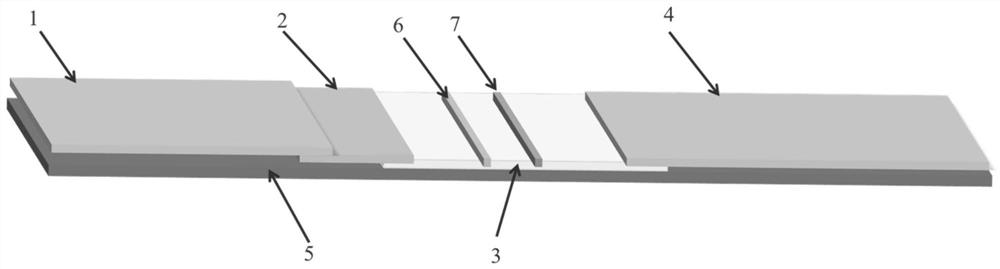
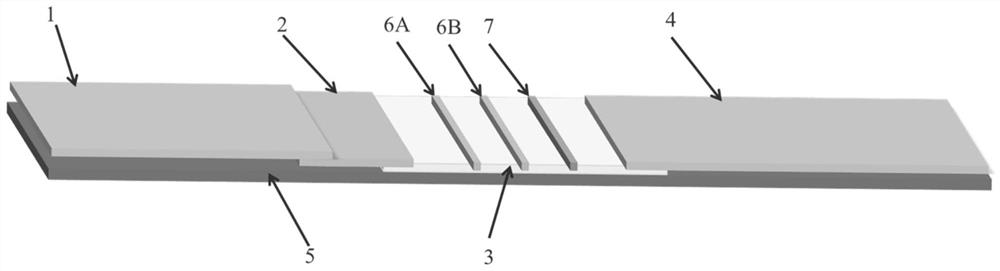
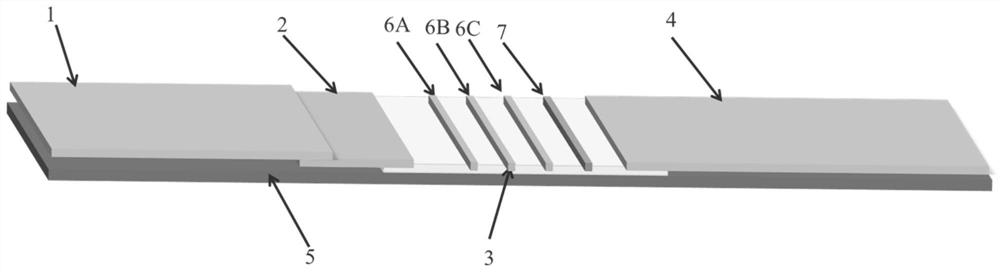
Examples
Embodiment approach
[0027] As an embodiment of the present invention, the antibody is a monoclonal antibody and a genetically engineered antibody; wherein, the genetically engineered antibody includes a single-chain antibody, a chimeric monoclonal antibody, a modified monoclonal antibody, and a canine monoclonal antibody or a fragment of said antibody; said antibody or said fragment of said antibody still retains the ability to specifically bind canine adenovirus.
[0028] As an embodiment of the present invention, the antibody is a monoclonal antibody 1A1, the amino acid sequence of the heavy chain variable region of the monoclonal antibody 1A1 is the amino acid sequence shown in SEQ.ID No.2, and its light chain variable region is The amino acid sequence is the amino acid sequence shown in SEQ.ID No.4.
[0029] Said monoclonal antibody 1A1, the amino acid sequence of the heavy chain variable region is SEQ.ID No.2, and the amino acid sequence of the light chain variable region is SEQ.ID No.4; the...
Embodiment 1
[0062] Embodiment 1 Existing product detection clinical sample result analysis
[0063] The collected 193 samples of clinical dog and fox disease were tested by Century Yuanheng CAV PCR Detection Kit according to the instructions, and 124 samples were found to be positive, including 95 samples positive for CAV-1 and 29 samples for CAV-2, and 69 samples were negative. South Korea Anjie CAV-CDV colloidal gold test strips and American Aibo CAV colloidal gold detection test strips were tested according to the instructions of their respective kits. The results are shown in Table 6. It was found that the positive coincidence rate between commercial test strips and PCR was only 12% to 19%, and the total coincidence rate was only 44% to 48%. It relaxes vigilance and cannot be prevented and treated early. Through follow-up investigations, it was found that dogs and foxes with missed tests and false negatives were subsequently infected more seriously and became ill, and their excrement...
Embodiment 2
[0064] Example 2 Preparation, Purification, Identification and Testing of Canine Adenovirus Monoclonal Antibody
[0065] 2.1 Preparation and purification of canine adenovirus monoclonal antibody
[0066] Cultivate canine adenovirus and purify the virus according to the method in Ma Zhiyong et al. Emulsified with adjuvant, and immunized mice with a final content of 200 μg / ml. After the fourth immunization, the mice were subjected to cell fusion. Using the HI method (the CAV-1 Utrecht strain and the CAV-2 Toronto A26 / 61 strain purchased from ATCC were used for human "O" red blood cells according to the "Chinese Veterinary Pharmacopoeia" 2015 edition, and the HA test was used to prepare 8 units of antigen according to the results. Afterwards, the samples to be tested were subjected to hemagglutination inhibition test (HI titer detection, according to the "Chinese Veterinary Pharmacopoeia" 2015 edition) for subcloning screening, and 10 positive hybridoma cells were obtained. At ...
PUM
 Login to View More
 Abstract
Description
Claims
Application Information
 Login to View More