
Plant type biochar adsorbing heavy metal Cd in water body and preparation method and application of biochar
A plant-based, biochar technology, applied in the fields of water adsorption/sewage treatment, water pollutants, biofuels, etc., can solve the problems of increased air particulate matter, increased burden of air cleaning, etc., to reduce damage, realize resource utilization, and carbonization high rate effect
- Summary
- Abstract
- Description
- Claims
- Application Information
AI Technical Summary
Problems solved by technology
Method used
Image

Examples
Embodiment 1
[0025] This embodiment provides a pokeweed plant type biochar
[0026] (1) preparation method comprises the steps:
[0027] 1. Taking materials: Take 20 fresh pokeweed stems (fresh weight 576.43g), 20 pokeweed roots (fresh weight 79.34g), 20 pokeweed stems (fresh weight 286.83g) and 20 pokeweed stems with leaves removed. Whole pokeweed (that is, only the leaves of pokeweed are removed, and three parts of the stem and root are kept) (fresh weight 1061.21g).
[0028] 2. Crush: Cut these plants into pieces about 3 cm long, and put them into different crucibles.
[0029] 3. Drying: Place in an oven at 70°C for 15 hours.
[0030] 4. Soil burial and compaction: Dry the soil at 70°C for 20 hours, pass through an 80-mesh sieve, and set aside. The purpose of the soil is only to insulate the air, so it is not limited to the source of the soil. The pots containing the dried pokeweed stems, stalks, roots, and whole pokeweed with leaves removed were filled with soil, and the plants wer...
Embodiment 2
[0038] Example 2 Application of plant-type biochar in the adsorption of heavy metal Cd in water
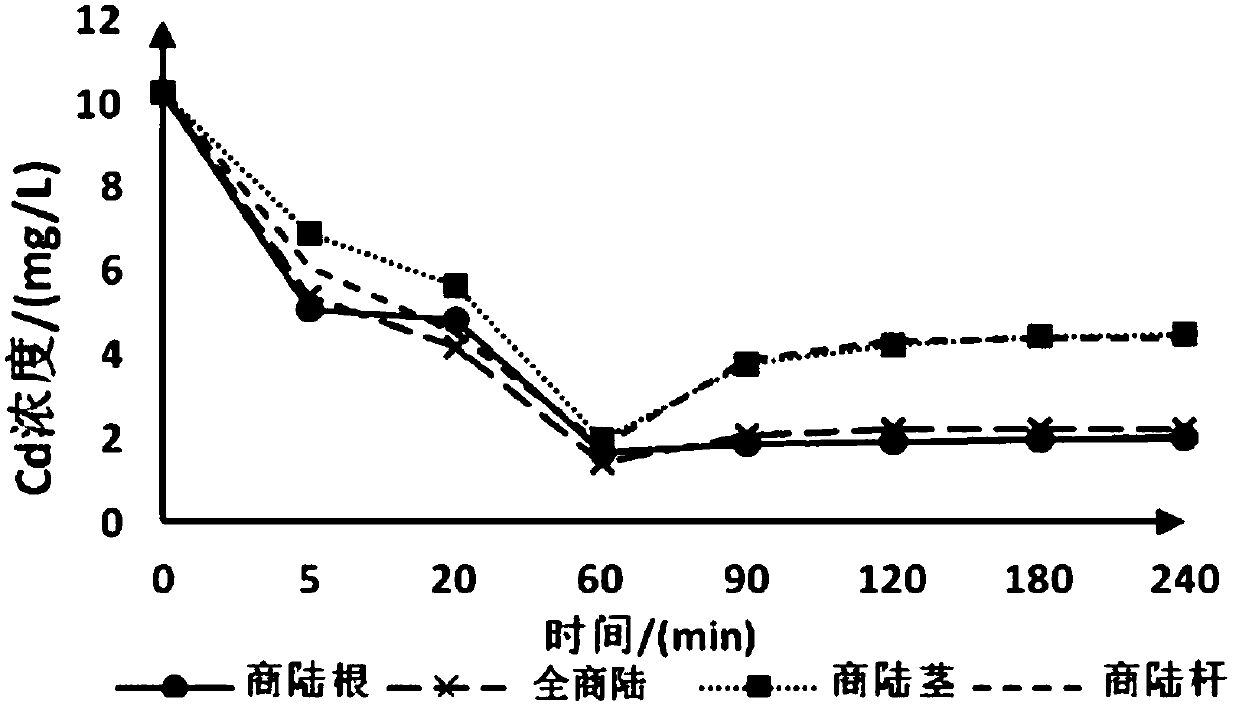
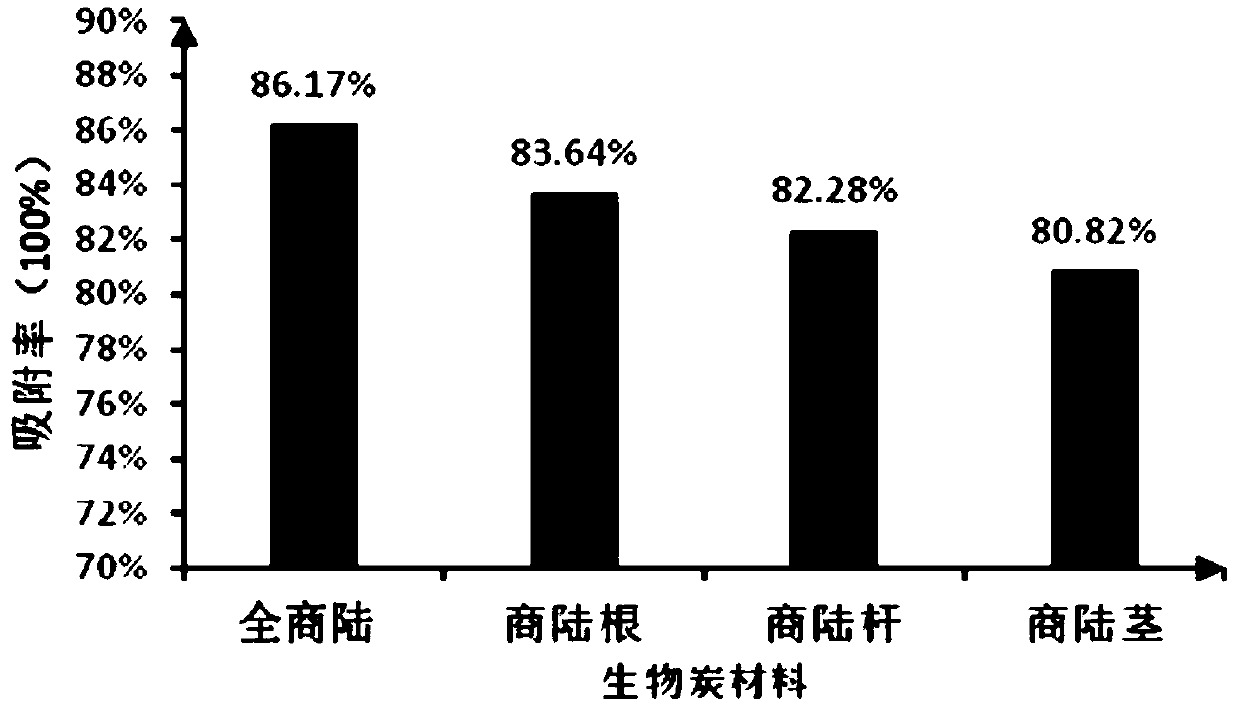
[0039] Method: Take 28 centrifuge tubes with a capacity of 50mL and divide them into seven groups. Each group takes 0.3 g of pokeweed stalk biochar, pokeweed root biochar, pokeweed stem biochar and leaf-removed whole pokeweed biochar prepared in Example 1 and adds them into different centrifuge tubes respectively, and then adds 20 mL of pokeweed at a concentration of 10.27mg / L of CdCl 2 solution, put it on the shaker (250r / min, 25°C), and start timing. Take out a group from the shaker at 5min, 20min, 60min, 90min, 120min, 180min, and 240min, respectively, and put the centrifuge tube in a centrifuge (5000r / min) for 10min to make the biochar precipitate at the bottom of the centrifuge tube . Filter the supernatant through a filter paper with a pore size of 0.45 μm, filter it into a labeled volumetric flask to measure the absorbance, convert the concentration according to the stan...
Embodiment 3
[0043] Influence of dosage of plant-type biochar and solution pH on adsorption effect
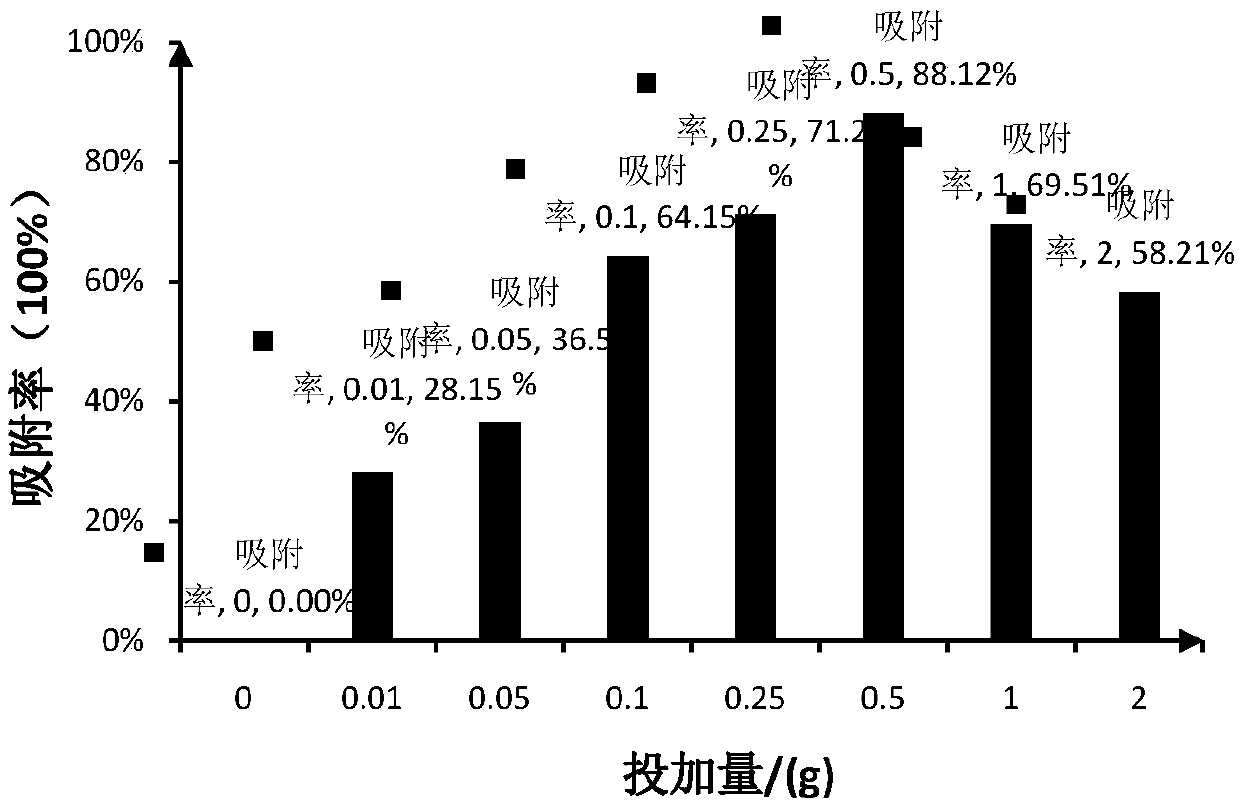
[0044] (1) Effect of the amount of plant-based biochar on the adsorption effect
PUM
 Login to View More
 Abstract
Description
Claims
Application Information
 Login to View More