
Plane track planning method of unmanned underwater vehicle (UUV) formation
A technology for unmanned aerial vehicle and track planning, which is applied to instruments, two-dimensional position/channel control, control/regulation systems, etc., and can solve problems such as poor optimization.
- Summary
- Abstract
- Description
- Claims
- Application Information
AI Technical Summary
Problems solved by technology
Method used
Image

Examples
Embodiment Construction
[0091] The present invention will be further described in detail below in conjunction with the accompanying drawings and specific embodiments.
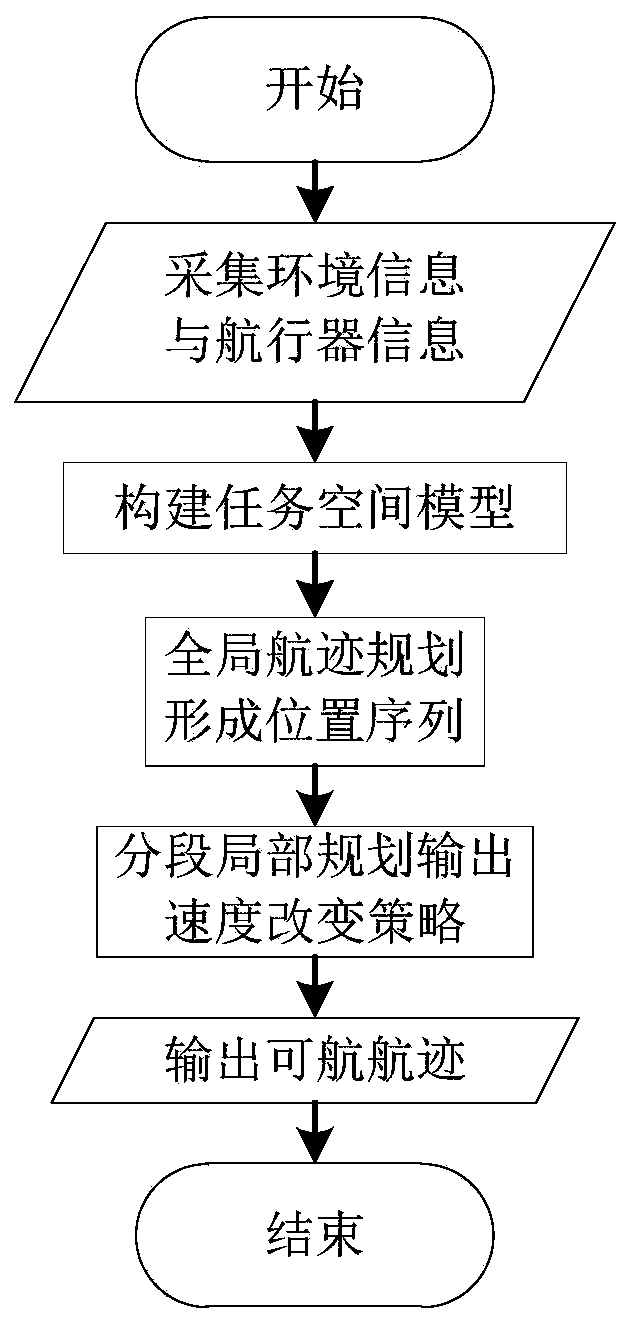
[0092] A method for planning a plane track of an underwater unmanned aerial vehicle formation, specifically comprising the following steps:
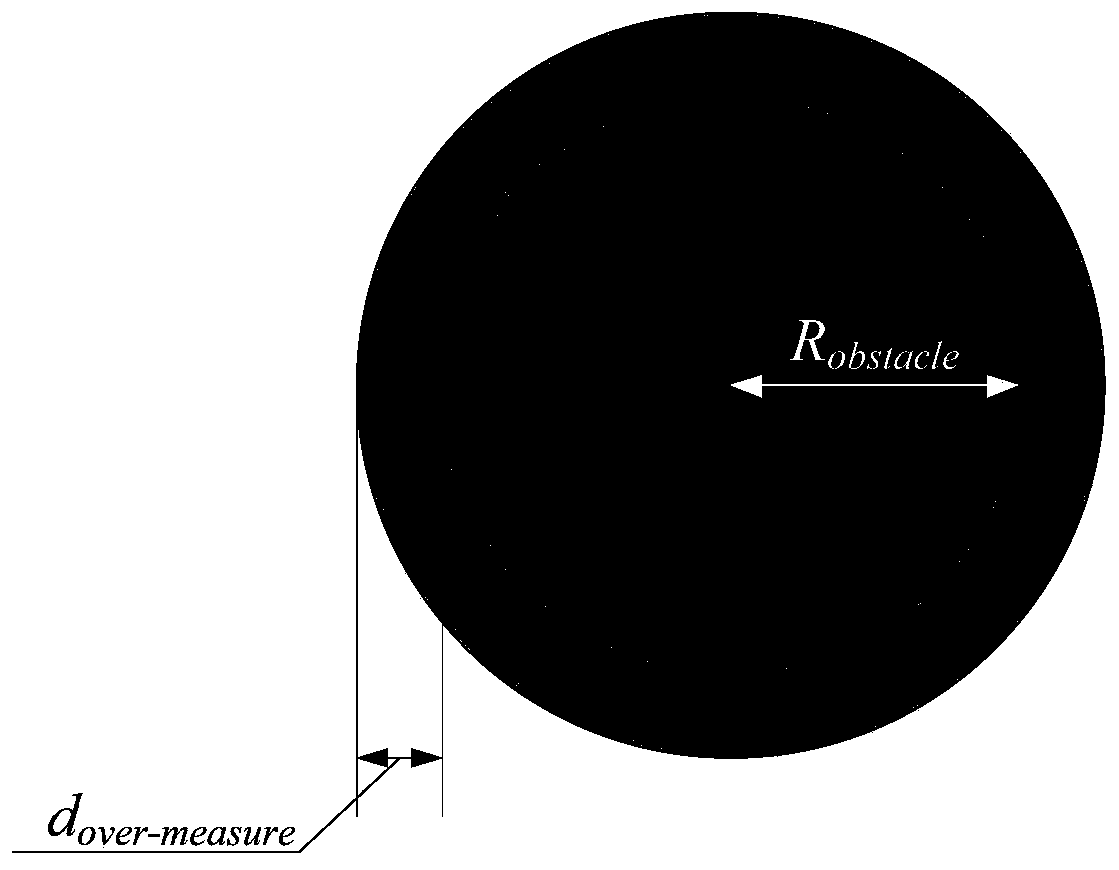
[0093] Step 1: According to the environmental information database or the environmental information detected by the sensor, construct the mission space model. Since the trajectory planning process is carried out in two-dimensional space, the mission space is described as: Ω={(x,y)|x min ≤x≤x max ,y min ≤y≤y max ,z≡C}, where the center of the basic unit circle of the obstacle zone is (x obstacle ,y obstacle ), the radius is R obstacle , the puffing distance is d over-measure , its model is attached as figure 2 shown;
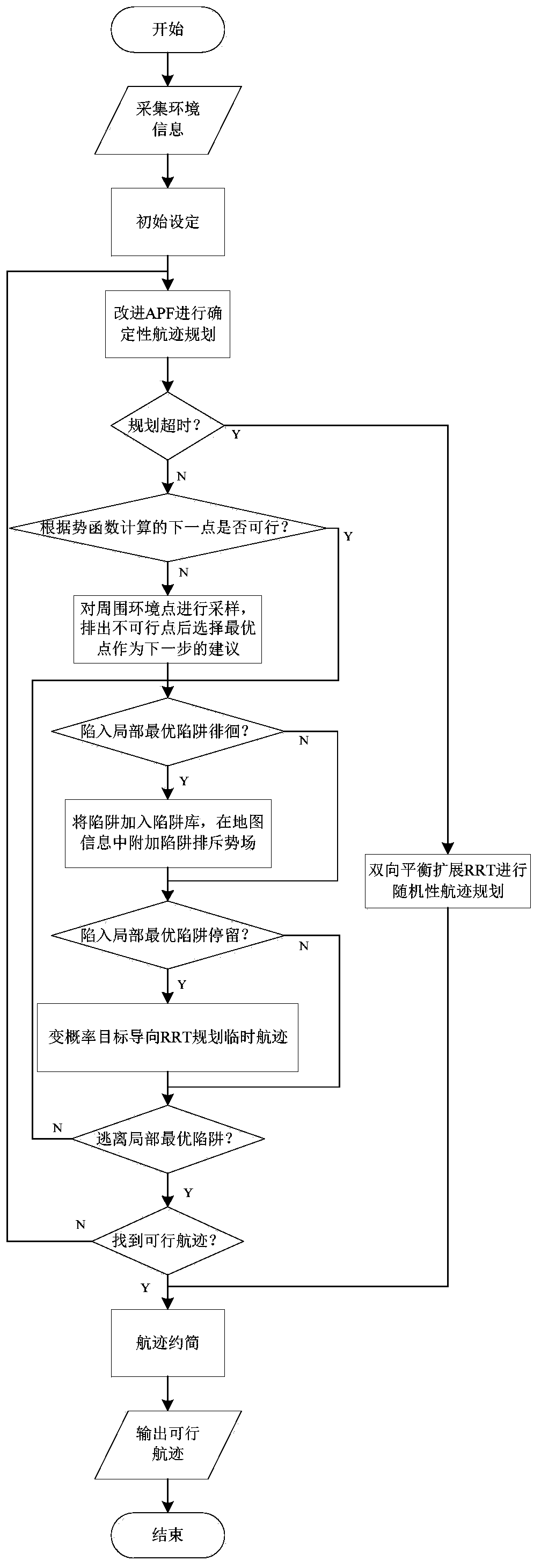
[0094] Step 2: Based on the static environment information, the artificial potential field method (APF) and the improved and fusion algorithm of the rapid expansion random...
PUM
 Login to View More
 Abstract
Description
Claims
Application Information
 Login to View More