
In-situ synchrotron radiation characterization method for crystallization kinetic characteristics of amorphous alloy
A technology for kinetic characteristics and amorphous alloys, applied in the field of in-situ synchrotron radiation characterization of crystallization kinetic characteristics of amorphous alloys, and nanocrystallization characteristics of amorphous alloys, can solve the problem of inability to analyze the law of atomic migration and diffusion And other issues
- Summary
- Abstract
- Description
- Claims
- Application Information
AI Technical Summary
Problems solved by technology
Method used
Image

Examples
Embodiment
[0026] The test adopts the atomic percentage as Zr 48 Cu 36 Al 8 Ag 8 amorphous alloys.
[0027] a. Select the nominal composition (atomic percentage) as Zr 48 Cu 36 Al 8 Ag 8 Amorphous alloys of Φ5×100mm were obtained by vacuum arc melting (repeated smelting 5 times) and copper mold suction casting, and cut into alloy samples of Φ5×0.5mm;
[0028] b. Place the sample in the diffraction optical path of synchrotron radiation (wavelength 0.01nm) for in-situ isothermal crystallization treatment, the treatment temperature is 470°C, and the radiation data collection frequency is 6 minutes;
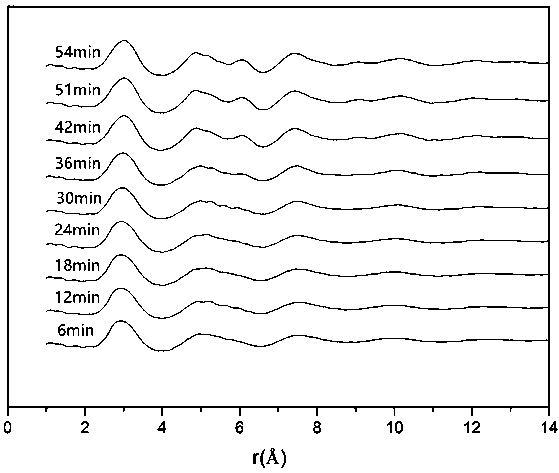
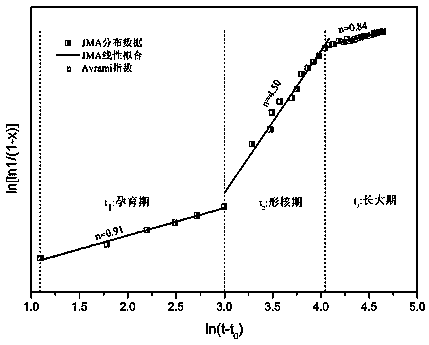
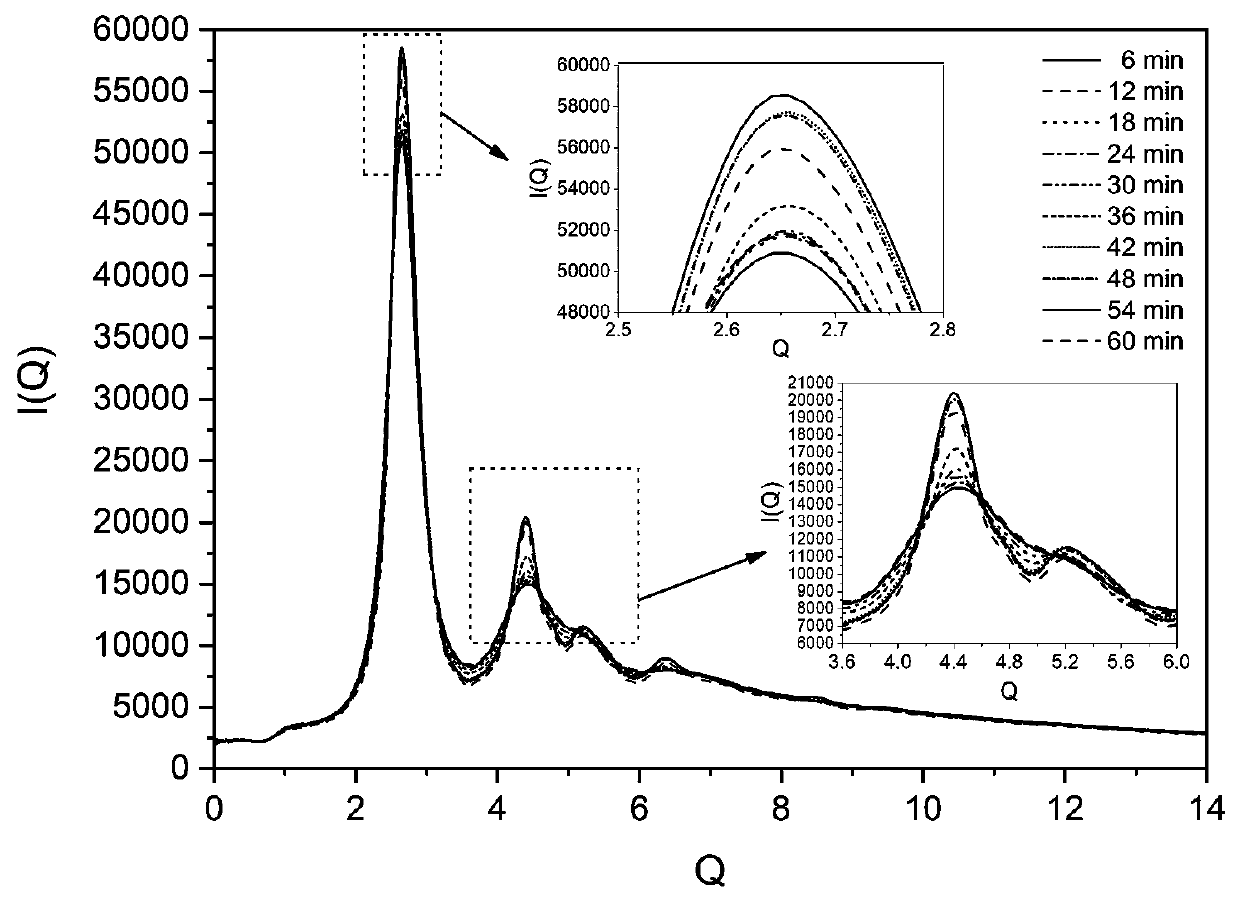
[0029] c. Correct and convert the obtained diffraction data to obtain the interference function I(Q) of the alloy, see attached figure 1 , each data point in the figure comes from the experimental data annealed every six minutes, and Fourier transform is performed to obtain the reduced radial distribution function G(r) and radial distribution function RDF(r), etc. See the attached image...
PUM
 Login to View More
 Abstract
Description
Claims
Application Information
 Login to View More