
Multi-reconnaissance-platform pulse-to-pulse agile radar radiation source frequency information association method
A technology of frequency information and radiation source, applied in the direction of instruments, character and pattern recognition, computer parts, etc., can solve the problems of false fusion, the frequency similarity of pulse agile radar radiation source is not very accurate, and improve the accuracy rate. Effect
- Summary
- Abstract
- Description
- Claims
- Application Information
AI Technical Summary
Problems solved by technology
Method used
Image

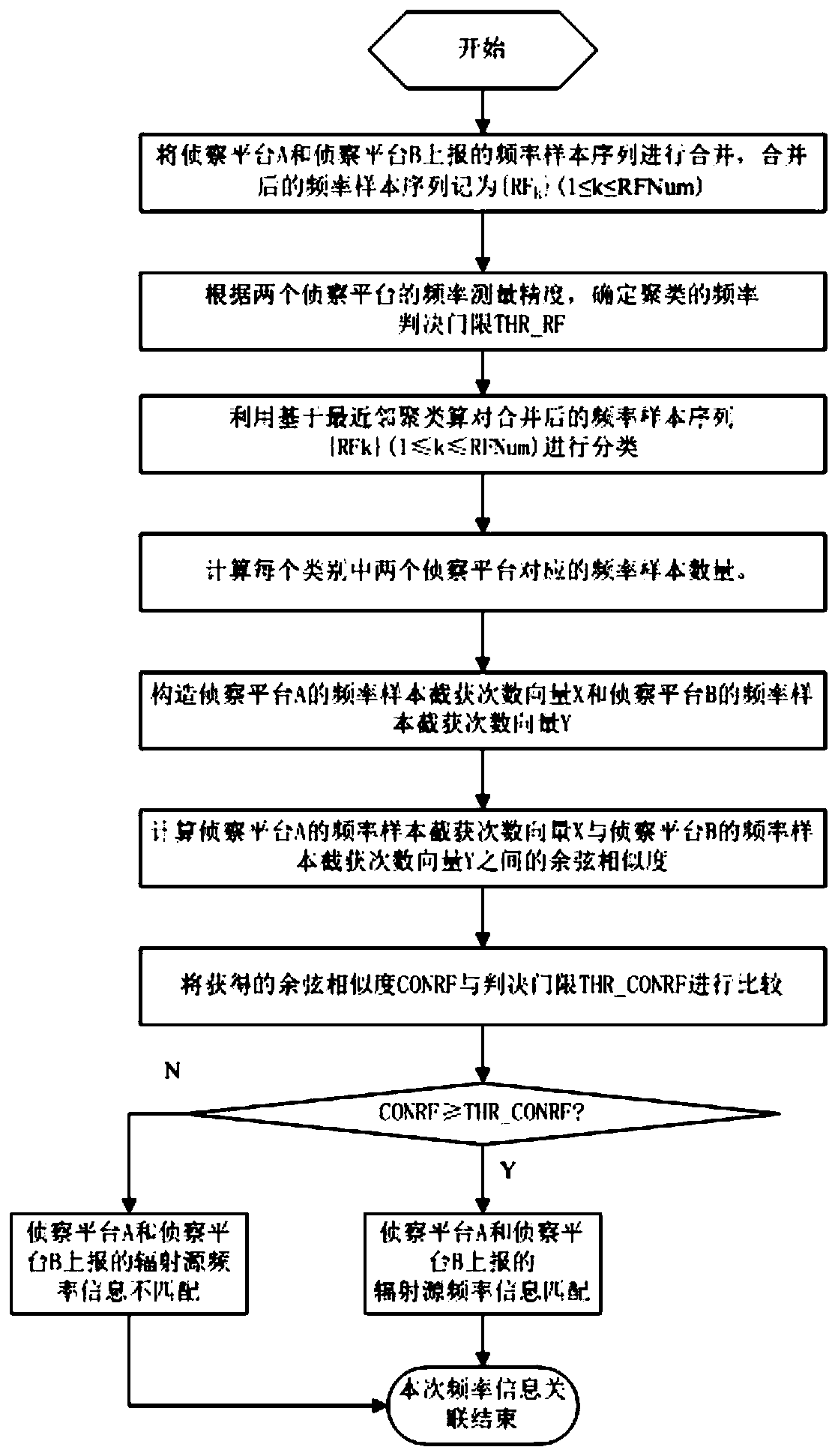
Examples
Embodiment
[0064] A pulse-to-pulse agility radar signal is simulated with a radar signal simulator, and the detailed parameter settings are shown in Table 1.
[0065] Table 1
[0066]
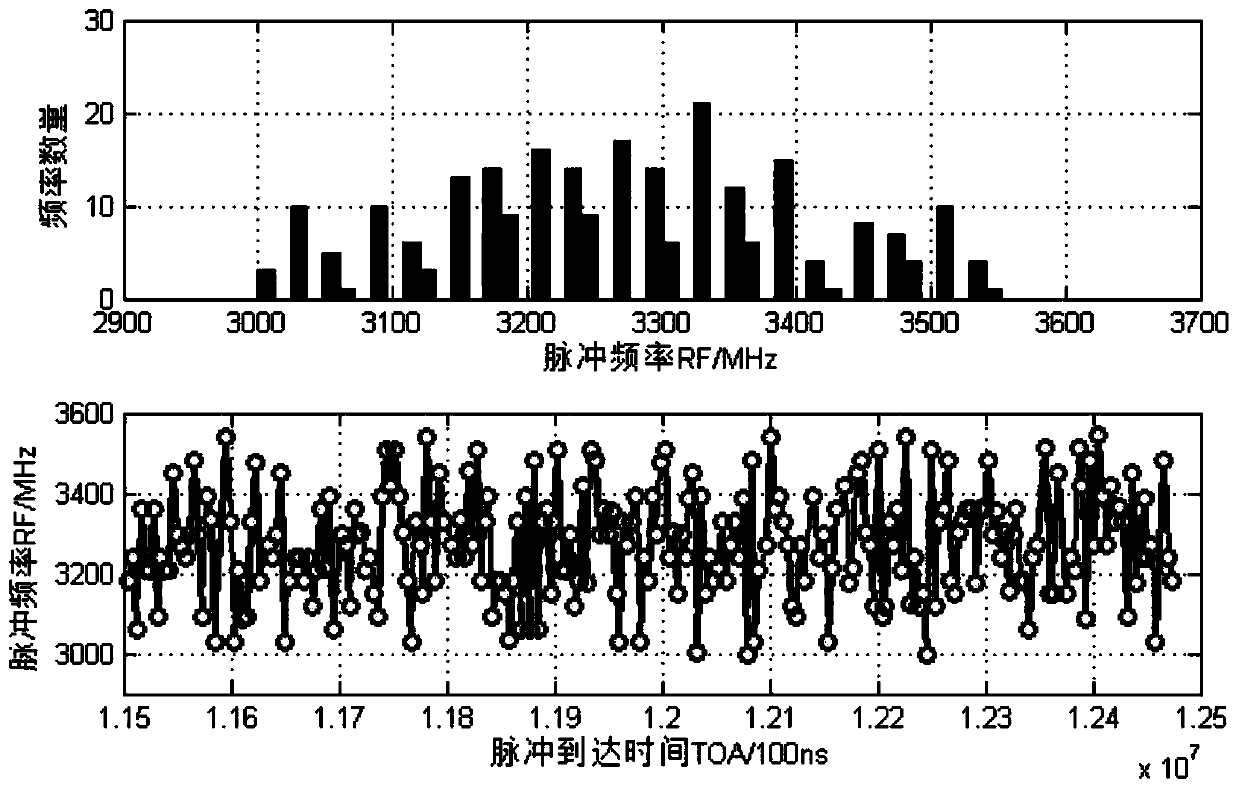
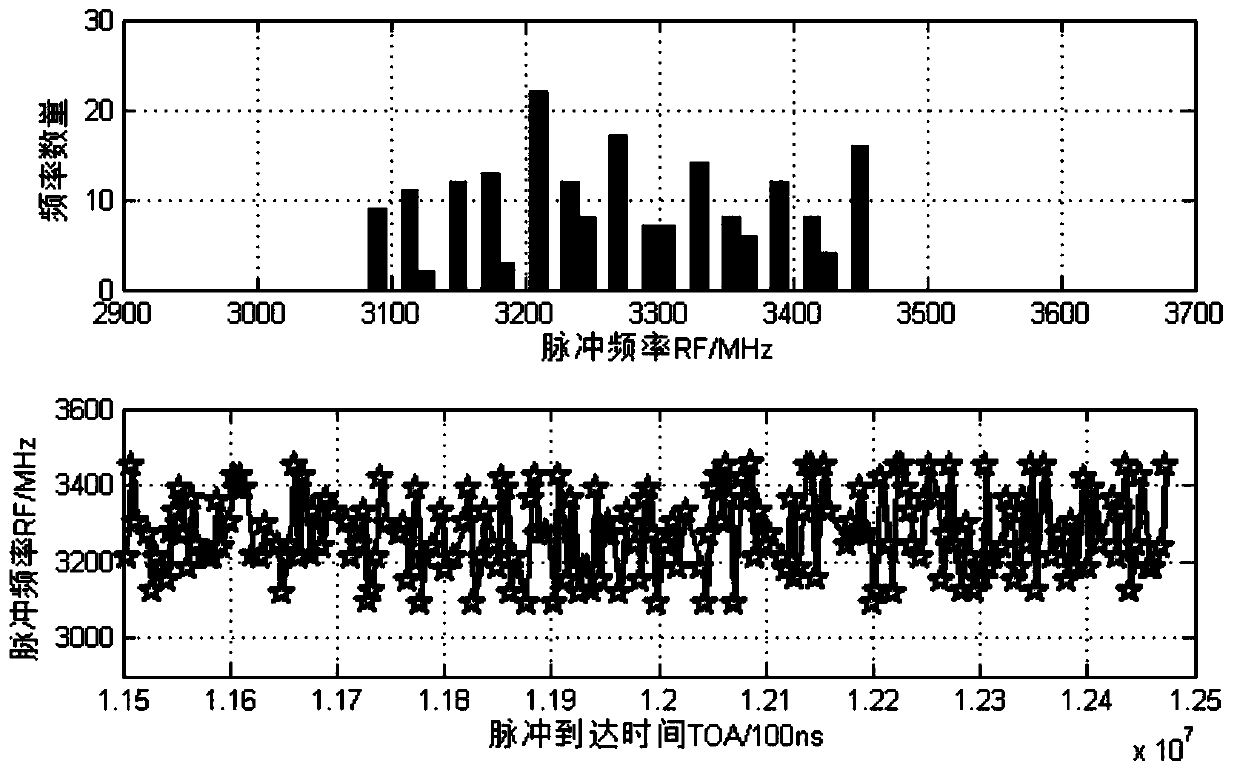
[0067] figure 2 with image 3 Shown are the statistical histogram and timing diagram of the frequency samples reported by reconnaissance platform A and reconnaissance platform B, respectively. Among them, reconnaissance platform A has a higher frequency measurement accuracy and a smaller pulse loss probability (15%). Merge the frequency sample sequences reported by reconnaissance platform A and reconnaissance platform B, and use the nearest neighbor clustering algorithm to classify the combined frequency sample sequences, the categories obtained after clustering and the frequencies corresponding to the two reconnaissance platforms in each category The sample size is shown in Table 2.
[0068] Table 2
[0069]
[0070]
[0071] Construct the frequency sample interception vector X of reconnai...
PUM
 Login to View More
 Abstract
Description
Claims
Application Information
 Login to View More