
Judgment method and system for electric vehicle battery system vibration test and storage medium
A technology for electric vehicle battery and vibration testing, which is applied in vibration testing, testing of machines/structural components, measuring devices, etc., which can solve the waste of time and money costs, the inability to accurately determine the failure location, and the inability to quantify the evaluation of electric vehicle battery systems Reliability and other issues to achieve the effect of saving time and cost, improving safety and reliability
- Summary
- Abstract
- Description
- Claims
- Application Information
AI Technical Summary
Problems solved by technology
Method used
Image

Examples
Embodiment 1
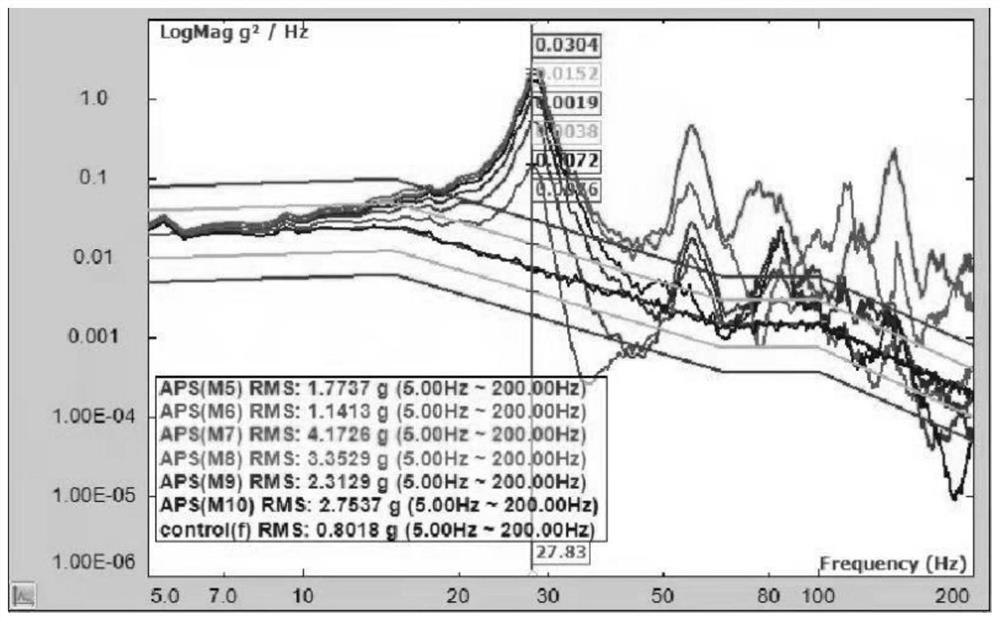
[0134] Embodiment 1, after the test is completed, the battery system is quantitatively analyzed through important index parameters, and then the reliability of the battery system is evaluated and the design improvement is guided. As we all know, during the vibration test, the modal frequency of the system will decrease, and the RMS index at the modal frequency will increase accordingly. So there are two sets of key evaluation metrics and in,
[0135]
[0136]
[0137] Usually the rate of change after the test is 3% to 5%. when or If any one of them is greater than 5%, the reliability of the evaluation system is poor, and there are still hidden dangers in a small number of products in large-scale products, which should be further optimized; when and Both are less than 3%, the system reliability is very high, and the structural strength has exceeded the required application environment by a lot, and can be streamlined and optimized in terms of light weight and ...
PUM
 Login to View More
 Abstract
Description
Claims
Application Information
 Login to View More