

Method for predicting phosphorylation site-specific kinase
A prediction method and phosphorylation technology, applied in the field of biological information, can solve the problems of false positives, inability to catalyze the prediction of kinases, loss of original information, etc., and achieve the effect of high prediction accuracy.
Patent Information
- Authority / Receiving Office
- CN · China
- Patent Type
- Applications(China)
- Current Assignee / Owner
- Publication Date
- 2021-09-28
Smart Images
Figure 1 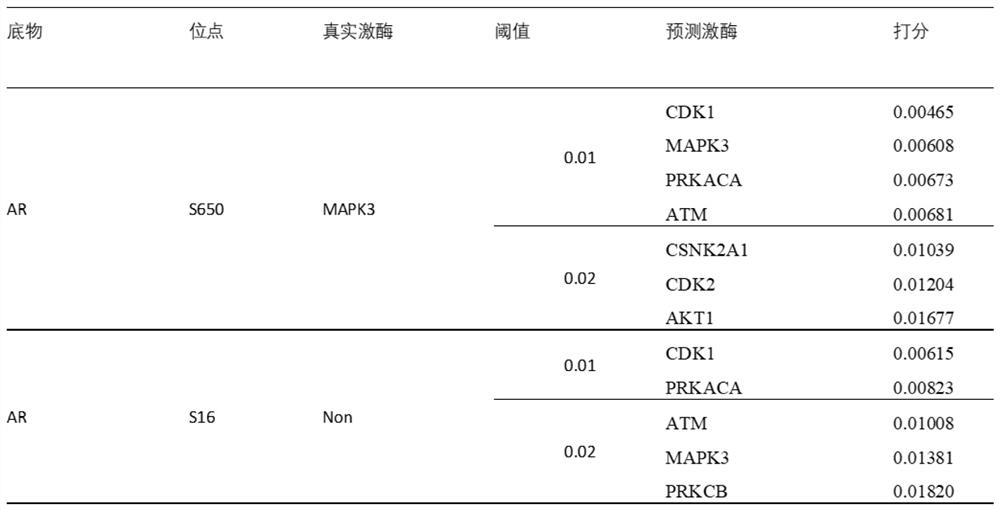
Figure 2 
Figure 3
Abstract
Description
technical field
[0001] The invention relates to the field of biological information, in particular to a method for predicting phosphorylation site-specific kinases. Background technique
[0002] Phosphorylation catalyzed by protein kinases is the most ubiquitous post-translational modification in eukaryotes and plays an important regulatory role in almost all cellular behaviors, including DNA repair, transcription regulation, apoptosis, immune response, metabolism and cell differentiation . More and more experimental studies have revealed that protein kinases can directly or indirectly affect the abnormal phosphorylation of proteins, and are involved in the occurrence and development of many serious diseases. Therefore, the study of the specific effect of kinases on protein phosphorylation sites is of great significance for understanding the regulatory mechanism of kinases in physiological and pathological processes and the design of drugs for related diseases.
[0003] Wi...
Examples
Embodiment Construction
[0071] The present invention is described in detail below with reference to accompanying drawing and embodiment:
[0072] figure 2 It is an example prediction using the present invention, and the prediction object is the 16th and 650th amino acid positions on the amino acid of the AR protein, both of which are serine (replaced by S16 and S650 below); S650 has been confirmed by the kinase MAPK3 Catalysis, and there is no kinase catalysis information for S16; figure 2 It shows the prediction scores of different kinases catalyzing S650 and S16. The smaller the score, the more likely it is catalyzed by the kinase. Note that only the kinase information within the prediction scoring threshold is displayed here.
[0073] according to figure 2 As shown, for the phosphorylation site S650, the present invention can predict its real catalytic kinase MAPK3, while for the non-kinase annotation site S16, the prediction score is generally higher than S650 (less catalytic possibility), b...