Unlock instant, AI-driven research and patent intelligence for your innovation.

Air cooling system for a building structure

a technology for building structures and cooling systems, applied in ventilation systems, lighting and heating apparatus, heating types, etc., can solve the problems of large and bulky structures that can be obtrusive, unsightly, and limited cooling

Active Publication Date: 2020-08-25
QC MFG
View PDF110 Cites 9 Cited by
  • Summary
  • Abstract
  • Description
  • Claims
  • Application Information

AI Technical Summary

Benefits of technology

The present invention is an air cooling system that is effective, efficient, low maintenance, and provides cooling for both the living space and attic area of a building. It constantly exchanges the air in the building with outside fresh air. The system has several features that work together to achieve its advantages, including being quiet, energy efficient, and having a similar cooling effectiveness to an air conditioner. These features make the system a more effective solution for cooling buildings than prior art systems, especially in terms of its ability to improve air quality and provide consistent cooling.

Problems solved by technology

Since fans are incapable of lowering the actual temperature of the air drawn into the building, their cooling effect is limited by the ambient air temperature.
While air conditioners are capable of lowering the temperature of the ambient air, they are not energy efficient or environmentally friendly.
While conventional evaporative coolers are energy-efficient and effective, the systems are typically enclosed in large and bulky structures that can be obtrusive and unsightly when placed adjacent to the exterior of the building structure.
The blower can force excessively moist and humid air into the building structure, leaving it damp and odorous.
Moreover, the high noise level generated by the motor, which is usually positioned immediately adjacent the exterior wall of the dwelling area, can also be bothersome, thus making using conventional evaporative coolers less desirable.
However, the design of this system is inherently limiting and incapable of effectively cooling a house, especially a house with large square footage.
One of the drawbacks is that the exhaust fans are typically low power fans and they are mounted openly in an attic located far away from the evaporative cooling unit.
These exhaust fans cannot effectively pull air from outside through the evaporative cooling unit and expel warm air from the attic, especially when there is a great distance between the fans and the cooling unit.
The inherent limitations of this design seem to suggest that in order for the system to work, it must rely in large part on convection of warm air to create upward air movement, which in turn draws outside air through the cooling unit.
When air is drawn through the cooling unit into the house in such a passive manner, the cooling effectiveness is likely to be very limited.
Additionally, the attic area is likely to be filled with warm air given the inherent inability of the exhaust fans to push all of the warm air out of the attic area.
Warm air in the attic in turn is likely to cause other areas of the house to be uncomfortably warm.

Method used

the structure of the environmentally friendly knitted fabric provided by the present invention; figure 2 Flow chart of the yarn wrapping machine for environmentally friendly knitted fabrics and storage devices; image 3 Is the parameter map of the yarn covering machine
View more

Image

Smart Image Click on the blue labels to locate them in the text.
Viewing Examples
Smart Image
  • Air cooling system for a building structure
  • Air cooling system for a building structure
  • Air cooling system for a building structure

Examples

Experimental program
Comparison scheme
Effect test

Embodiment Construction

,” one will understand how the features of the preferred embodiments provide advantages over prior art systems and devices.

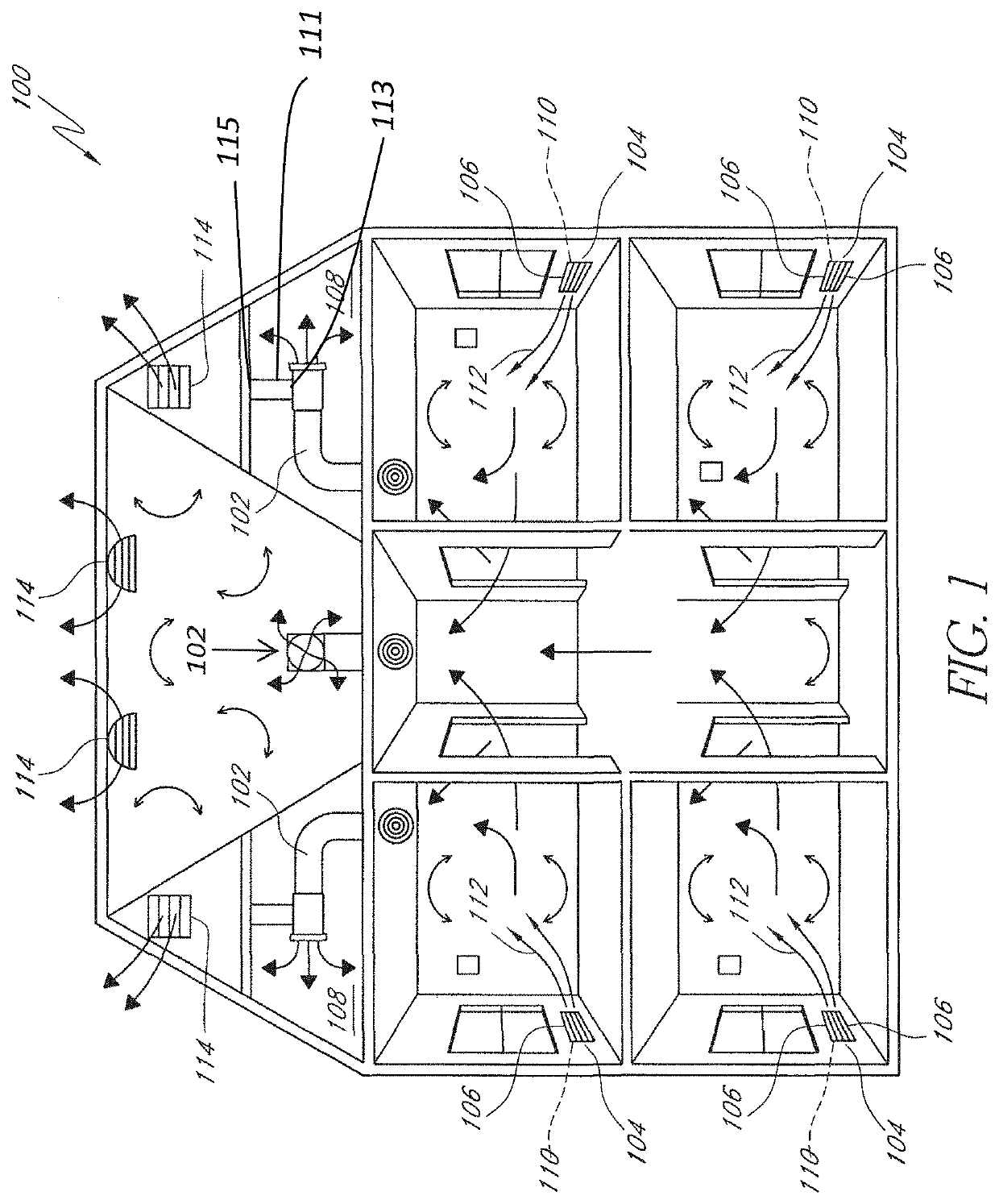
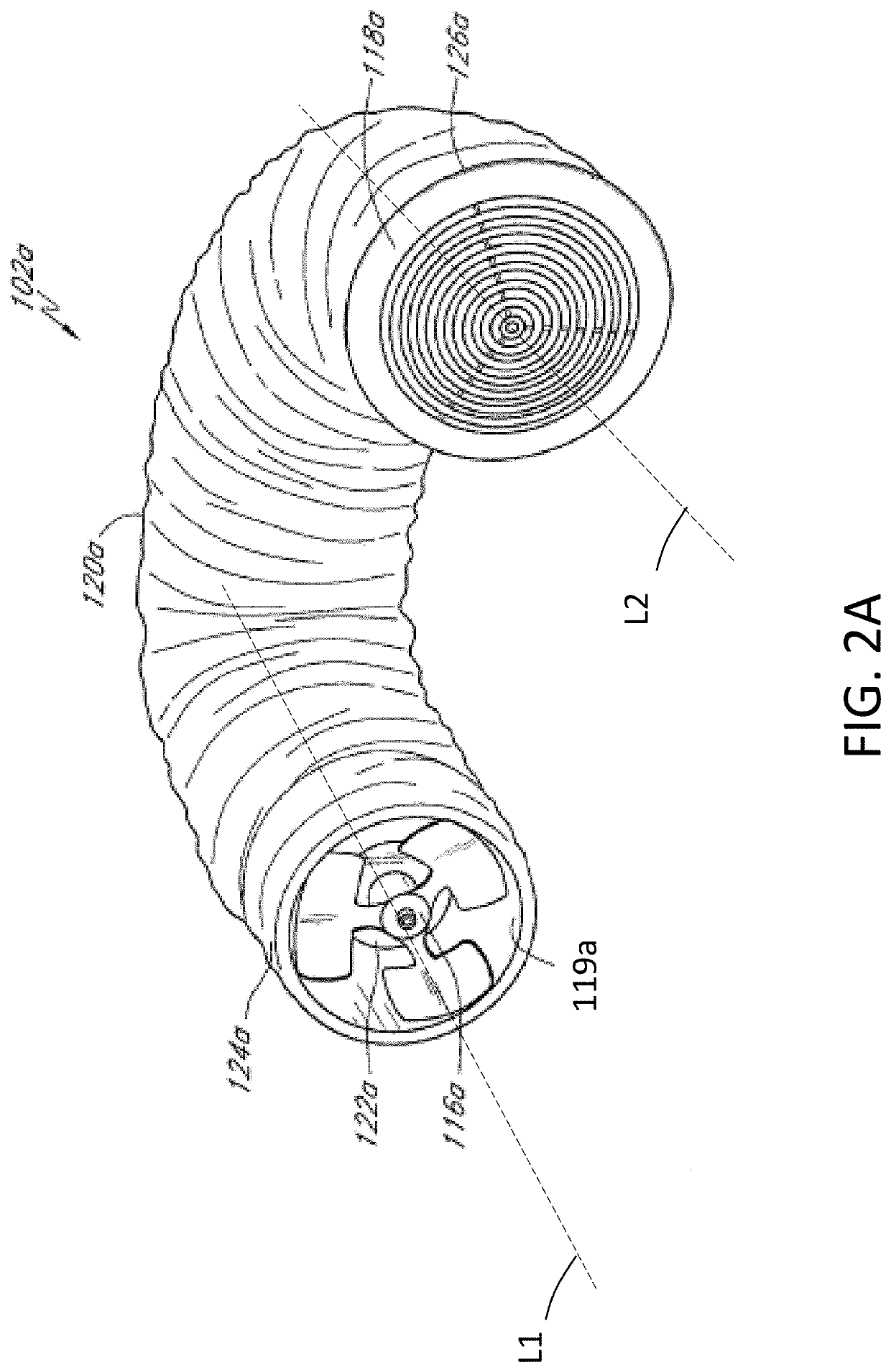
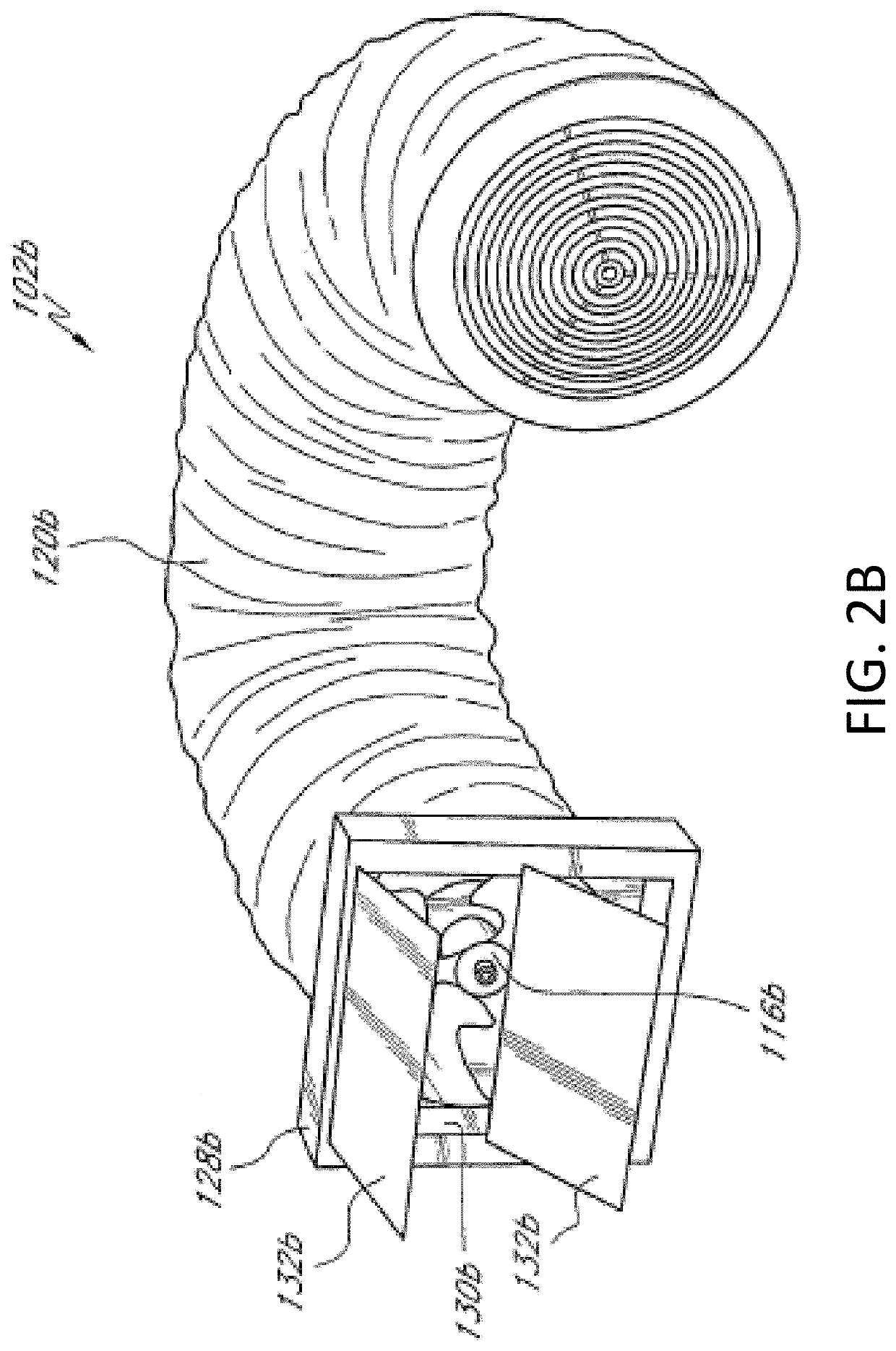
[0008]In one aspect, the preferred embodiments of the present invention provide an air cooling system for cooling a building structure, such as a residential building with a living area and an attic area. The system generally comprises a low profile evaporator system adapted to be mounted in a wall adjacent to the living area of the building structure, wherein the evaporator system comprises a housing and an evaporative cooling media disposed therein. The system further comprises a fan assembly, wherein the fan assembly comprises an air intake, a motorized fan having air flow capacity of at least 1000 cfm, and an acoustical and thermal insulating duct having an insulating R value of at least 4, wherein the insulating duct interconnects the motorized fan and the air intake. Preferably, the insulating duct is at least 4 feet long. Preferably, the motorized fan is ...

the structure of the environmentally friendly knitted fabric provided by the present invention; figure 2 Flow chart of the yarn wrapping machine for environmentally friendly knitted fabrics and storage devices; image 3 Is the parameter map of the yarn covering machine
Login to View More

PUM

No PUM Login to View More

Abstract

An energy efficient and quiet air cooling system for a building structure is provided. The air cooling system includes an evaporator system mounted in the wall of the building, a remotely mounted fan, an air intake, and a sound and heat insulating duct. The fan is mounted in the attic and configured to draw air from the living area of the building through the sound insulating duct with sufficient power to create a negative static pressure in the living area. The negative static pressure in turn causes outside air to flow through the evaporator system which removes heat from the outside air. The cooled air is in turn drawn into the building and pulled into the attic through the duct and expelled through the attic. The fan expels warm air into the attic, creating a positive pressure environment which causes the warm air to be expelled from the attic through natural vents.

Description

INCORPORATION BY REFERENCE TO ANY PRIORITY APPLICATIONS[0001]Any and all applications for which a foreign or domestic priority claim is identified in the Application Data Sheet as filed with the present application are hereby incorporated by reference under 37 CFR 1.57.BACKGROUND OF THE INVENTIONField of the Invention[0002]This invention relates generally to cooling systems for building structures, and more particularly, relates to an improved evaporative air cooling system.Description of the Related Art[0003]Fans, air conditioners, and various other systems have been developed for cooling residential and commercial building structures. Most fan systems are designed to create airflow inside a building. Since fans are incapable of lowering the actual temperature of the air drawn into the building, their cooling effect is limited by the ambient air temperature. While air conditioners are capable of lowering the temperature of the ambient air, they are not energy efficient or environme...

Claims

the structure of the environmentally friendly knitted fabric provided by the present invention; figure 2 Flow chart of the yarn wrapping machine for environmentally friendly knitted fabrics and storage devices; image 3 Is the parameter map of the yarn covering machine
Login to View More

Application Information

Patent Timeline
no application Login to View More
IPC IPC(8): F24F5/00F24F7/06F24F1/38F24F13/02F24F13/24
CPCF24F1/38F24F7/065F24F13/0218F24F5/0035F24F2013/242F24F13/06F24F13/08F24F11/72F24F13/24F24F2013/247Y02B30/54
Inventor STEVENSON, DANA CHARLES
Owner QC MFG