
Stator of rotary machine
a rotary machine and rotating shaft technology, applied in the direction of windings, conductor shapes/forms/construction, magnetic circuit stationary parts, etc., can solve the problems of difficult to make the coil end small, the terminal voltage cannot be easily changed, etc., to improve the cooling effect, reduce the coil end size, and prevent the occurrence of circulating current
- Summary
- Abstract
- Description
- Claims
- Application Information
AI Technical Summary
Benefits of technology
Problems solved by technology
Method used
Image

Examples
embodiments
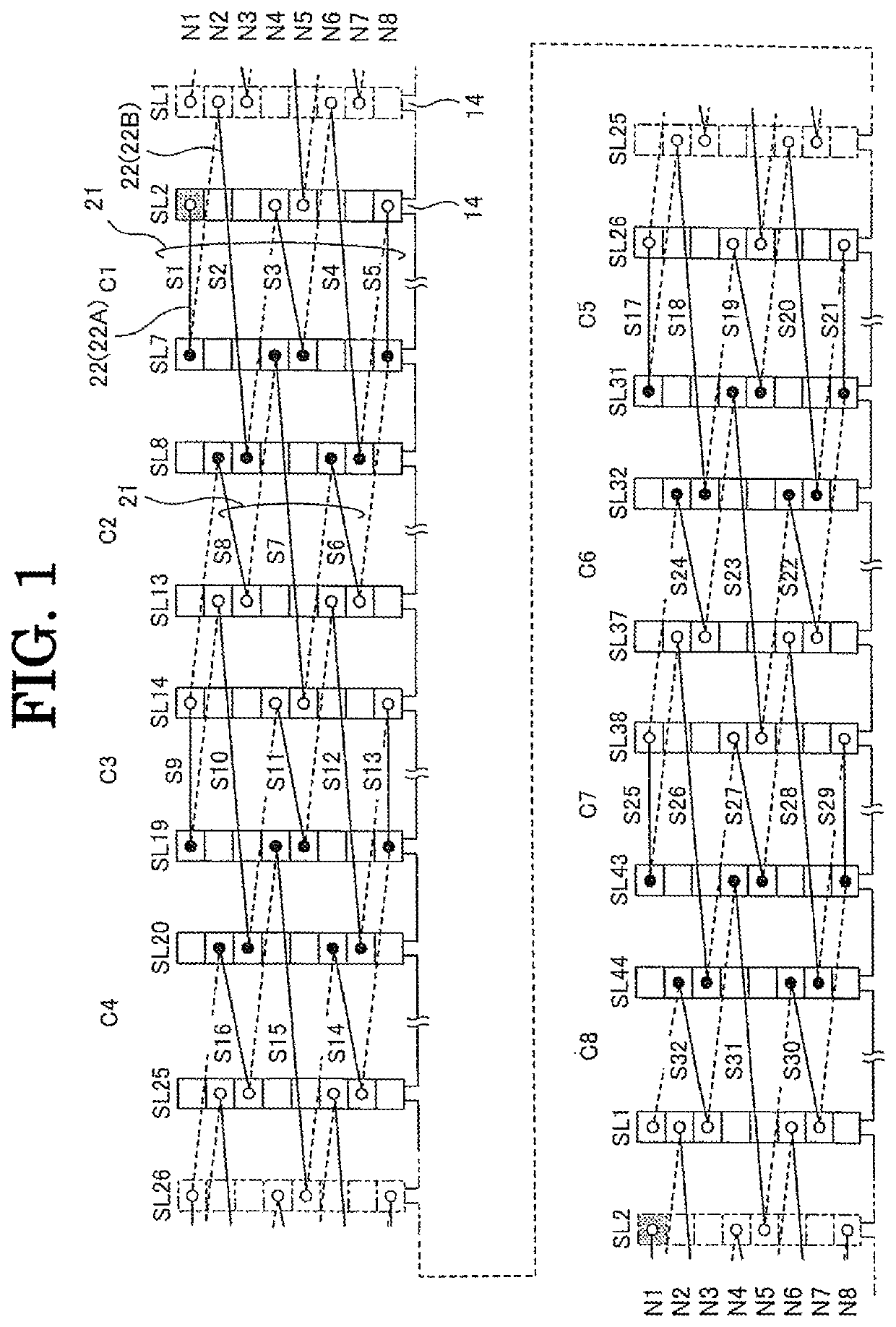
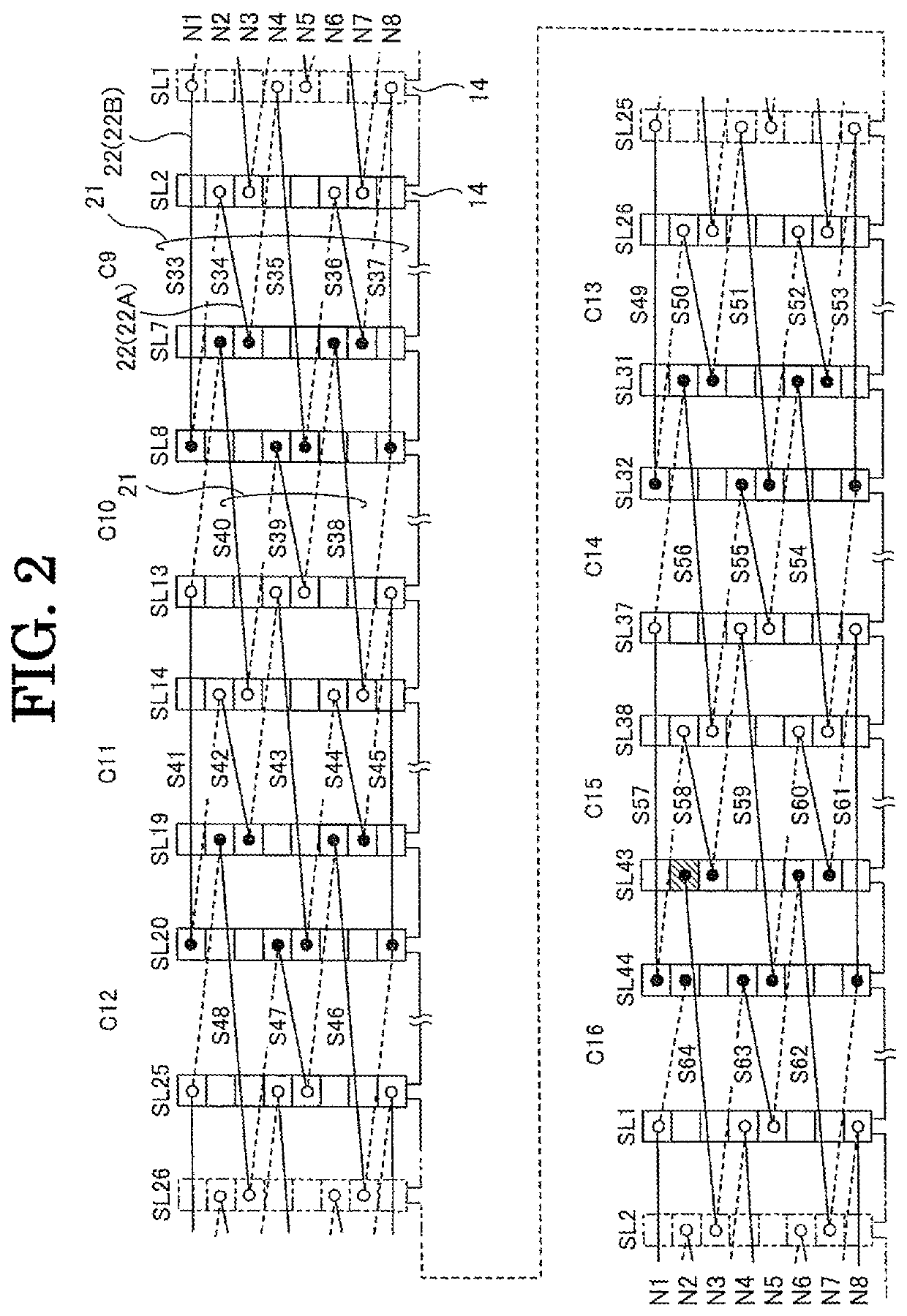
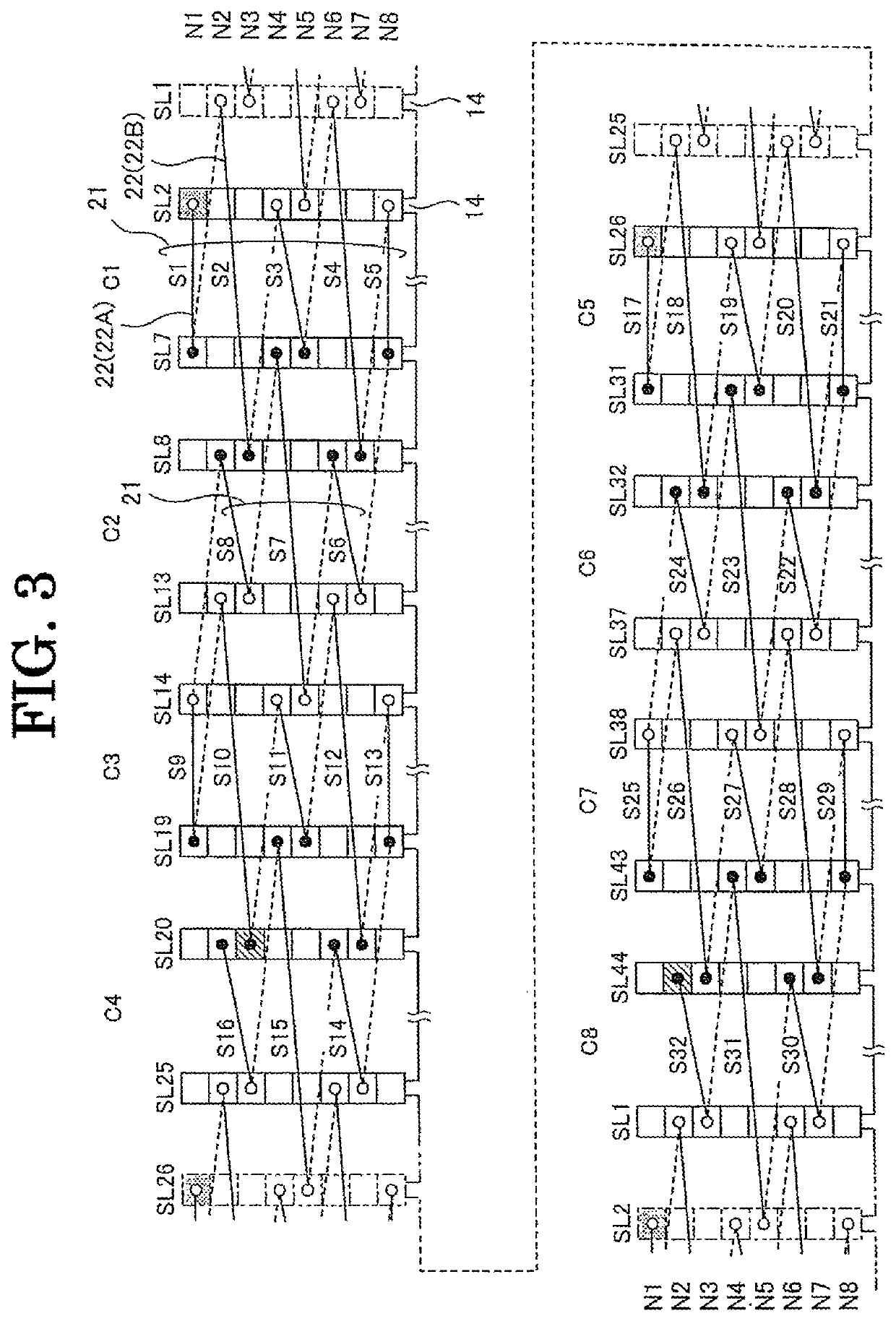
[0043]Using FIG. 1 to FIG. 6, the stator of the electric machine according to one embodiment of the present invention is explained in detail. The structure of the stator of the rotary machine according to the present embodiment is generally similar to the above-mentioned rotary machine stator 10 shown in FIG. 7 except each phase winding wire arrangement. Therefore, in the following explanation, members showing functions similar to the above-mentioned members shown in FIG. 7 are designated by the same signs, and the repetitive explanations are omitted.
[0044]FIG. 1 and FIG. 2 show a segments 22 arrangement example in the case of constituting U-phase winding by connecting U1 phase and U2 phase as partial windings in series. FIG. 1 shows U1 phase arrangement, and FIG. 2 shows U2 phase arrangement. Furthermore, FIG. 3 and FIG. 4 show a segments 22 arrangement example in the case of constituting U-phase winding by connecting U1 phase to U4 phase as partial windings in parallel. FIG. 3 sho...
PUM
 Login to View More
 Abstract
Description
Claims
Application Information
 Login to View More