[0009] The present invention increases the torque or speed capabilities of a high phase order
motor drive system by increasing the utilization of the active switching elements while remaining within the voltage and current limitations of same. A range of
harmonics is added to the inverter output waveform to increase the output voltage capacity of the inverter.
Harmonics may also be used to adjust the current waveform feeding the motor, thereby increasing the current output capability of the inverter. In a preferred embodiment, the motor is wound with an increased number of series turns to translate the additional available voltage into additional available slot current. In an alternative embodiment, a inverter voltage waveform is synthesized, producing an increased current output.FIGURES
[0020] In another embodiment, the number of series turns in the phase winding set is increased above that associated with sinusoidal drive. In this case, the increased voltage capability of the inverter is matched by an increased voltage requirement of the motor. The base speed of the
system remains the same; however, the current requirements of the motor operating in any given output state are reduced. This permits the use of power electronic switching elements with a lower current rating, or this permits the same power electronic switching elements to cause greater net slot current, resulting in greater mechanical output.
[0023] In a higher phase order machine, for example, in a thirty-phase machine, the results of adding
harmonic components is rather different. In a high phase order machine, these
harmonics will actually flow in the windings. This is even the case when
third harmonic components are part of the synthesized inverter output. However, in stark contrast to the
three phase machines, these
harmonic current flows do not greatly harm efficiency, and in fact beneficially produce torque. In a high phase order machine, all
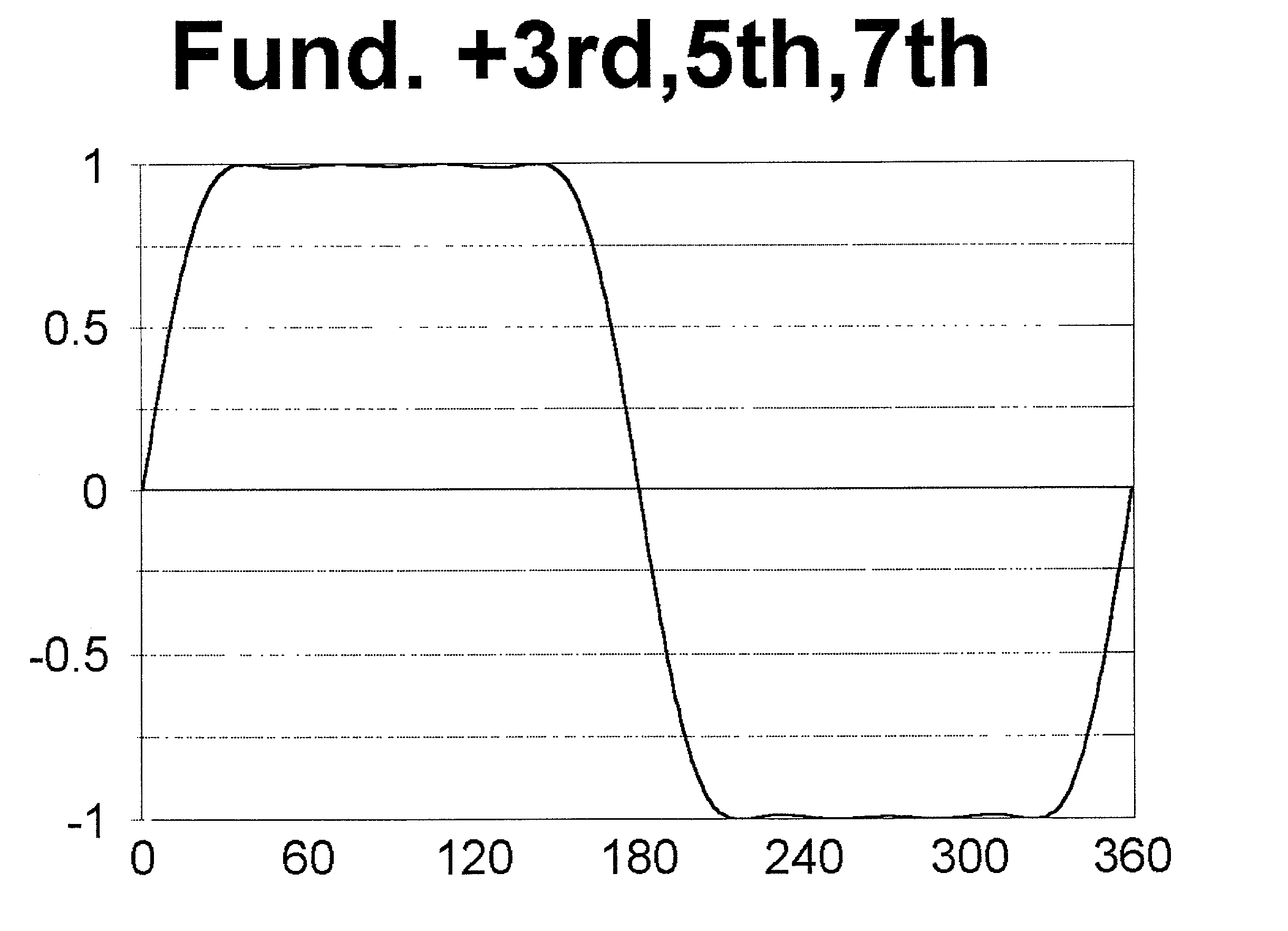
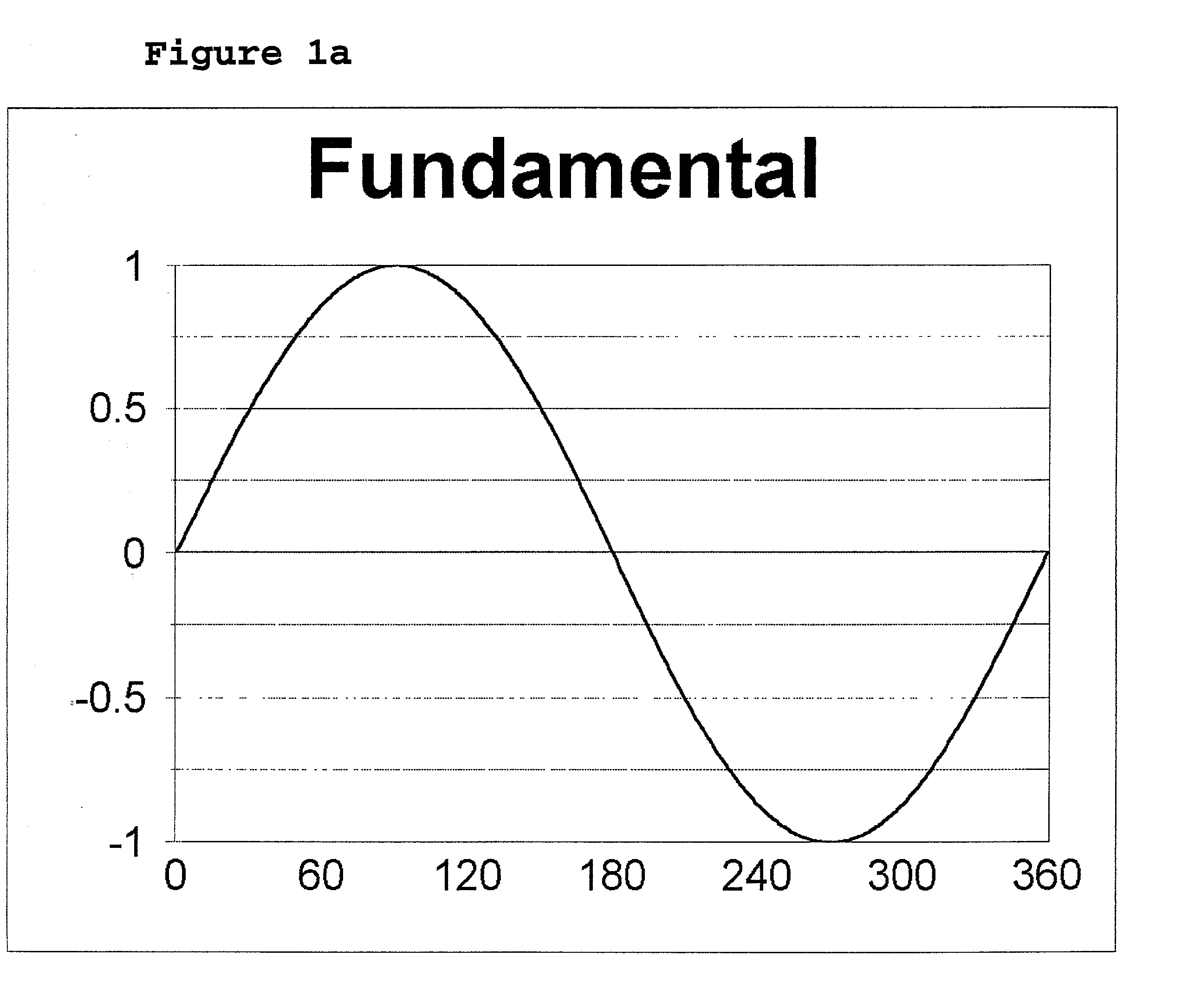
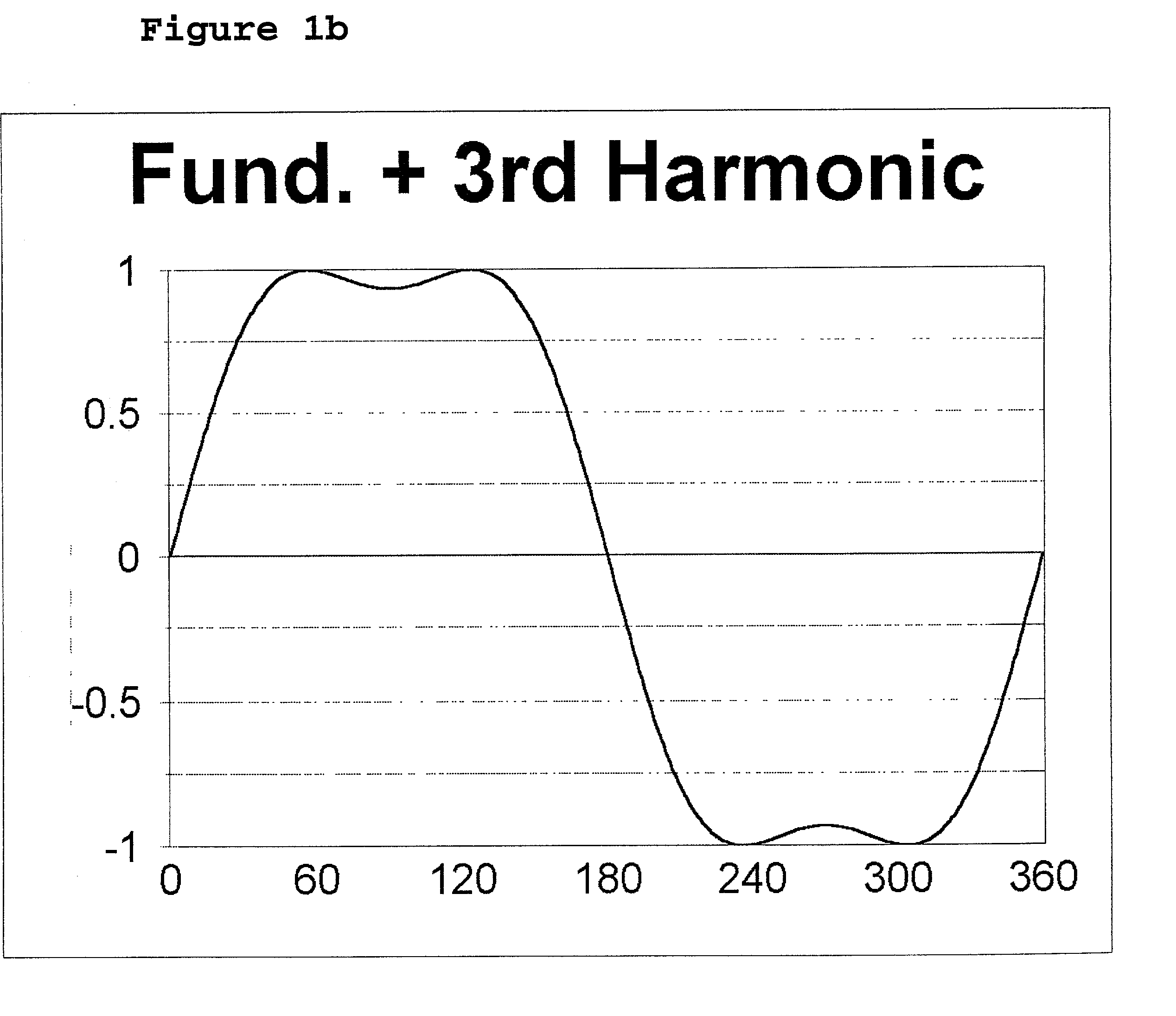
harmonics up to the phase count may be beneficially used to produce torque; thus the RMS content of the waveform may be increased by adding a plurality of odd-order harmonics. When added in correct ratios, these harmonics will also increase the fundamental voltage impressed upon the terminals of the motor.
[0024] The basic technique of changing the waveshape of a
limiting current flow in order to increase the ratio of RMS value to
peak value may also be used during
low speed operation. When the motor is operated at
low speed, the
terminal voltage requirements are greatly reduced, but current requirements remain high. A voltage waveform may be synthesized by the inverter with suitable voltage waveshape so as to cause current to flow in the motor windings, the current waveform having a
high ratio of RMS current to peak amplitude current. For a given peak inverter current, this increases the RMS current, and thus the torque available from the motor. Because of the necessary voltage waveform, the RMS versus peak
voltage ratio may be harmed; however, for
low speed operation this reduction in voltage capability is not a problem, as the motor
terminal voltage will be well below inverter capabilities at low
motor speed. The change in current waveform will increase the available overload torque during periods when such a waveform is synthesized, whilst allowing for a normal motor operational envelope at all other times.
[0027] As noted above, the ability to increase the inverter voltage RMS output capability may be used either to increase the base speed of the motor by providing sufficient voltage to operate at higher speed, or, by increasing the number of series turns, it may be used to increase the output torque capabilities of the
motor drive system. The ability to increase the ratio of current RMS value to current
peak value be used to increase the torque available from the
motor drive system by directly increasing slot current. Through the expedient of reducing the number of series turns, this increase in inverter output capability may be used to increase the motor base speed while maintaining the same low speed torque capabilities.
[0028] The range of these various embodiments may be summarized as follows: changing the voltage waveform to increase the voltage RMS output increases the voltage which the inverter may supply to the motor. Changing the voltage waveform to increase the current RMS output increases the current which the inverter may supply to the motor. These changes in output capability have well known effects upon motor capability, and may be utilized either with the number of series turns calculated for sinusoidal drive, or the number of series turns may be adjusted to accommodate the increase in voltage or current. These changes in inverter output capability may also be advantageously used by reducing the size and cost of the inverter, through a reduction in voltage or current requirements of the
power switching elements needed to provide a given motor mechanical output capability.


 Login to View More
  Login to View More