Sliding-window based signal monitoring

a sliding window and signal monitoring technology, applied in the direction of transmission monitoring, line-transmission, line-transmission details, etc., can solve the problems of difficult to adapt the signal monitor to system or application changes implying supervision of signals with other characteristics, the general detection mechanism capable of handling different types of signals under various conditions is normally very complex and requires extensive data processing, and the detection time latency is generally far too high to be acceptable, so as to reduce the overall complexity and the detection time latency. , to increas

US20050013354A1Inactive Publication Date: 2005-01-20TELEFON AB LM ERICSSON (PUBL)
4 Cites 10 Cited by

Patent Information

Authority / Receiving Office
US · United States
Patent Type
Applications(United States)
Current Assignee / Owner
Publication Date
2005-01-20
Estimated Expiration
Not applicable · inactive patent

Smart Images

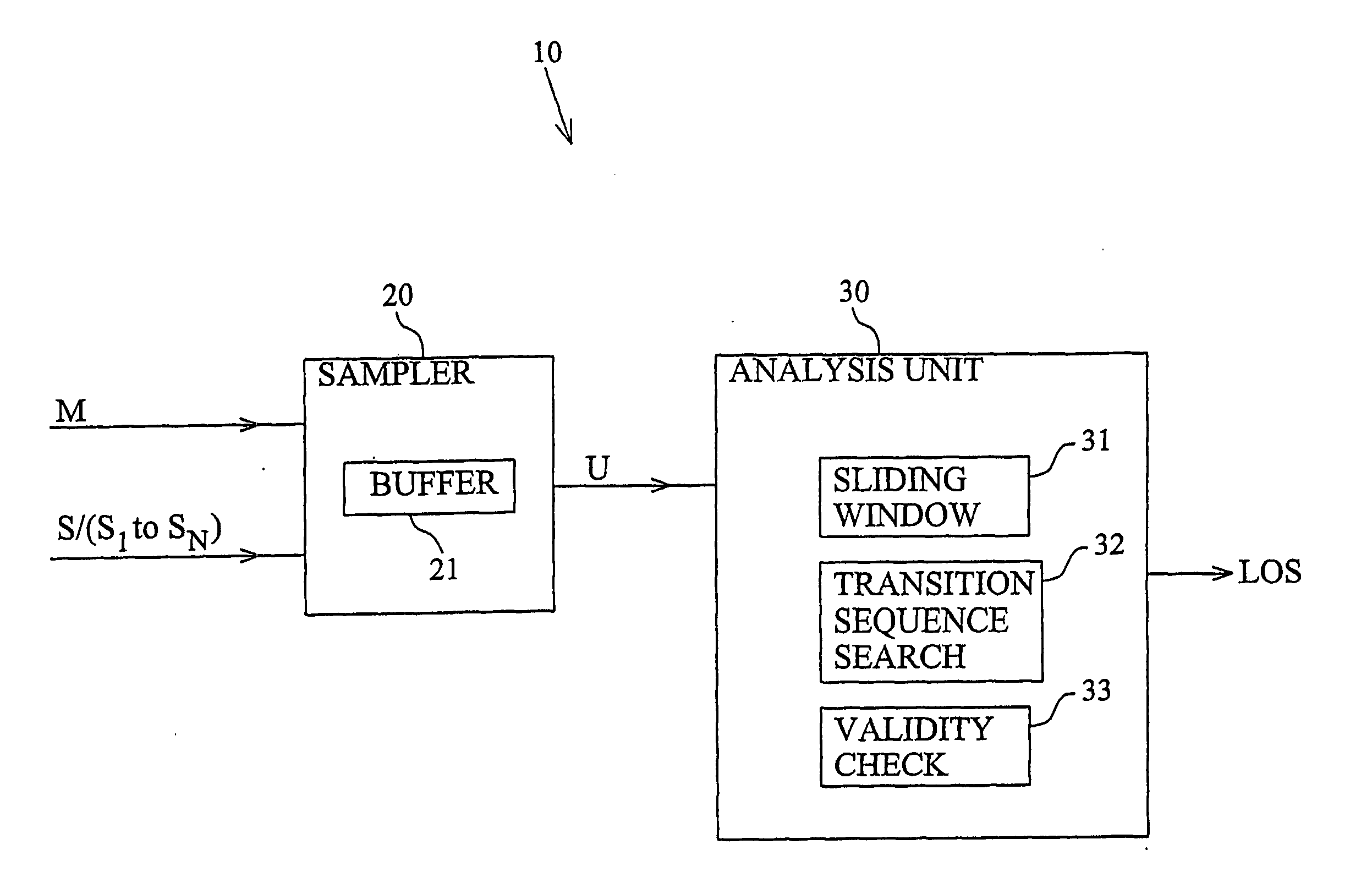
  • Figure 1
    Figure 1
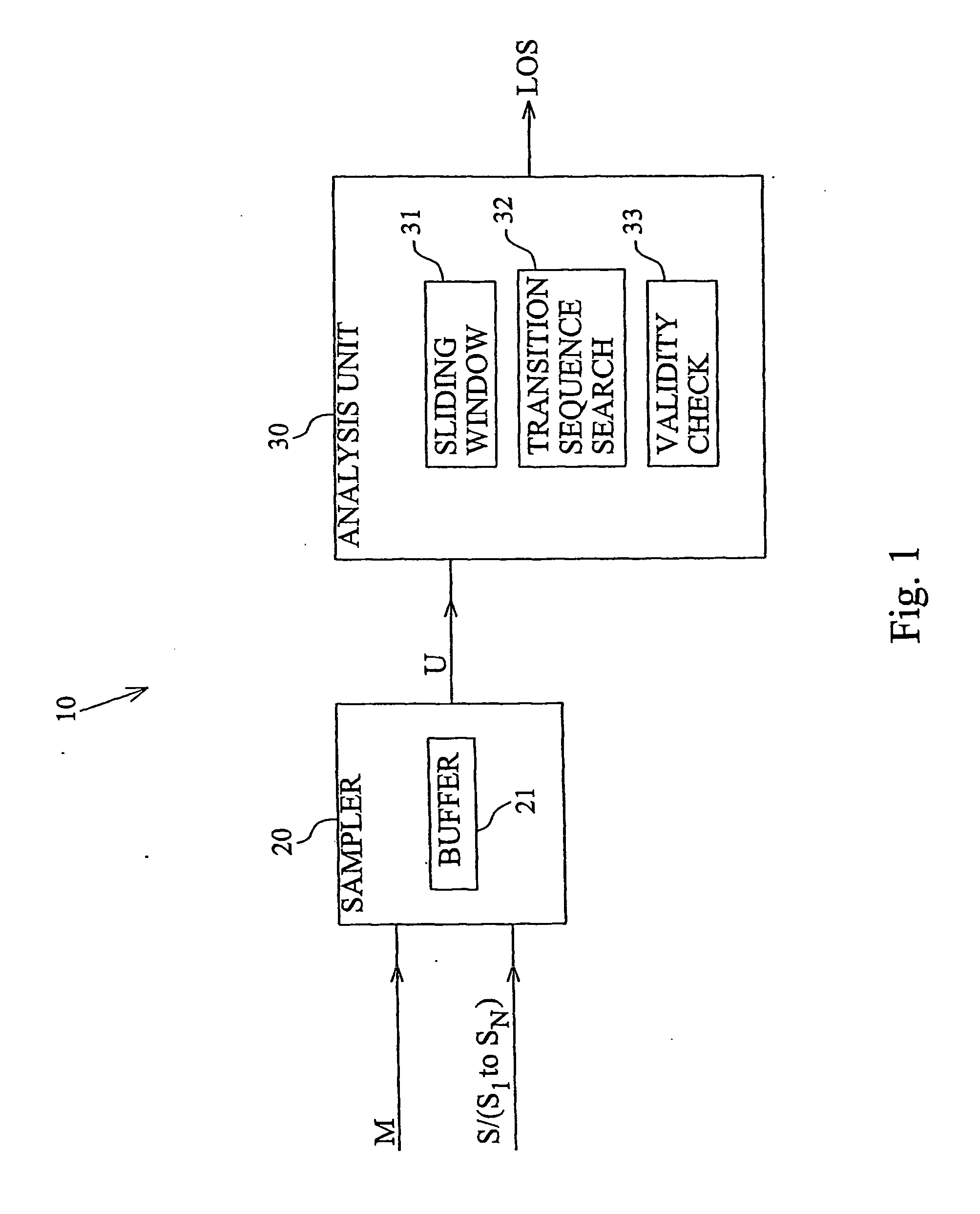
  • Figure 2
    Figure 2
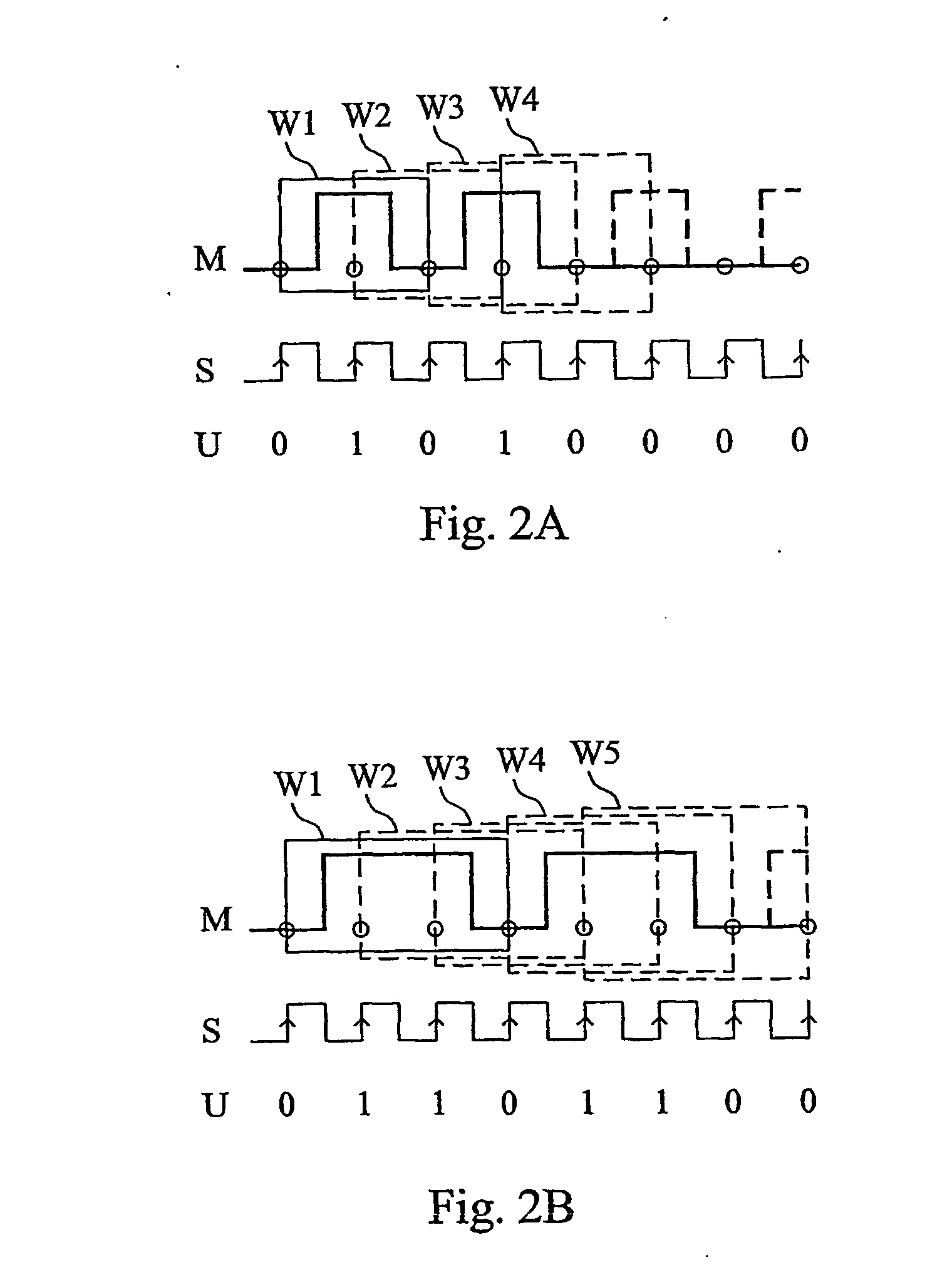
  • Figure 3
    Figure 3
Patent Text Reader

Abstract

The invention is generally directed towards monitoring of a signal (M), such as a clock signal or a data signal, by sampling the signal to obtain a discrete sample representation of the signal and analyzing the sample representation. The idea according to the invention is to slide a sample window (SW) over the sampled signal and determine whether the samples currently within the window include a valid transition sequence. In the general case, the existence of a valide signal is confirmed as long as a valid transition sequence is present in at least one of a predetermined number of consecutive sample windows. In order to reduce the need for oversampling in high-frequency applications, the invention furthermore proposes a multi-phase sampling technique according to which a number of phase-shifted sample clocks (S1 to SN) are generated for the purpose of sampling the signal to be monitored. Higher-frequency oversampling is thus replace by a higher resolution in the time domain.
Need to check novelty before this filing date? Find Prior Art

Description

TECHNICAL FIELD OF THE INVENTION The present invention generally relates to signal supervision, and more particularly to a method and device for signal monitoring. BACKGROUND OF THE INVENTION Supervision and monitoring of signals, such as clock signals and data signals, is of vital importance and signal monitors of various types can be found in many digital electronic systems such as telecommunication systems and other digital communication systems. For example, interfaces and clock paths for a synchronous digital system must continuously be supervised in order to maintain high reliability. Basically, a signal monitor is an arrangement for monitoring the behavior and / or status of a signal. As long as the signal behaves as normal, the signal monitor confirms the existence of a valid signal. On the other hand, if the signal behavior deviates from normal, an alarm is normally raised so that appropriate actions can be taken. The performance evaluation of a signal monitor is normally...

Examples

Embodiment Construction

Throughout the drawings, the same reference characters will be used for corresponding or similar elements.

The general idea according to the invention is to monitor a sampled signal by step-wise sliding a window of a predetermined number M of samples over the sampled signal, and determining whether the samples currently in the window include a valid transition sequence. In general, the existence of a valid signal is confirmed as long as a valid transition sequence is present in at least one of a predetermined number of consecutive windows. If the validity can not be confirmed, there is generally a signal failure, for example in the form of a stick low or stuck high fault.

As the name indicates, a transition sequence is a sequence of at least two transitions. Accordingly, a valid transition sequence may for example be a low-to-high “up” transition followed by a high-to-low “down” transition, or any other predefined sequence of transitions. Preferably, for pulse width detection, a ...